We now have a Pope that tweets. It’s big news. Now there seems to be close to a million people following Pope Benedict’s Twitter account @pontifex in a variety of languages.
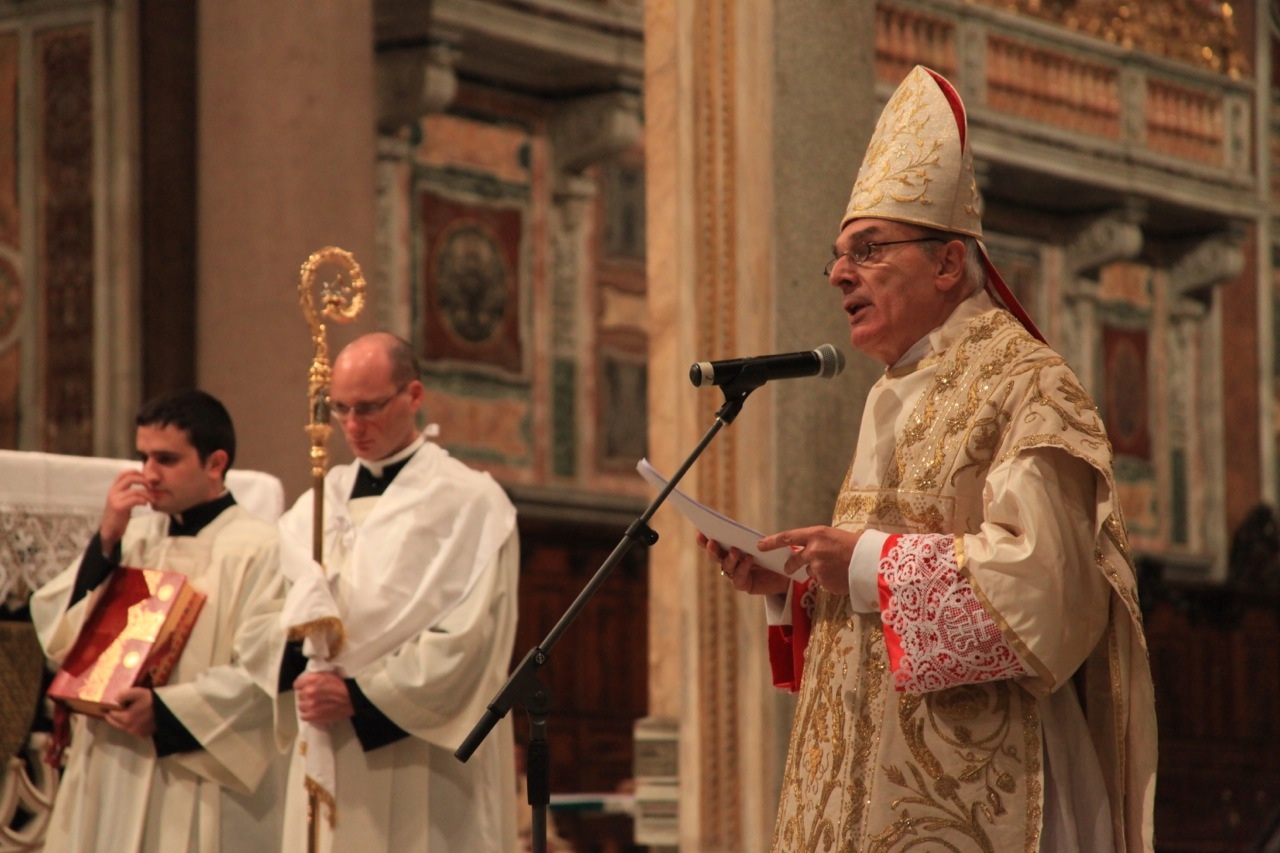
Massimo Camisasca, FSCB, ordained bishop
This is the fundamental reason for my episcopate: to
announce Christ, the Son of God made man, who underwent the Passion and the
Cross for love of us, is risen and so is living, and acts in the history of
mankind with the attractive force of his divine humanity through his Body in
history, which is the Christian people, his Church.
Communion
and Liberation, therefore, has chosen and chooses to indicate not a road, but
the road toward a solution to this existential drama. The road, as you have
affirmed so many times, is Christ. He is the Way, the Truth, and the Life, who
reaches the person in his day-to-day existence.
Mother Marie des Douleurs, the anniversary of death of a spiritual mother of mercy
Today marks the 29th anniversary of death of Mother Marie des Douleurs, known in history as Suzanne Wrotnowska (1902-1983), the foundress of the Congregation of Benedictines of Jesus Crucified. A true spiritual mother of all who need mercy, especially women who would not be able to enter the monastic life due physical impediments. Mother Marie’s spiritual maternity extended also to priests who haven’t repented of their sin.
In the eventide of my life, I have such a need of recollection, such a need to obey and to humble myself. I am unworthy of having been chosen to found the Congregation. I suffer being pulled between heaven and earth. The cross grows heavy. The Lord gave me as my portion the souls of guilty priests…my own soul disappears beneath an accumulation of iniquities! But I had asked for this humiliation! How is that the Lord was able to make use of so little a thing? His fidelity, His consuming love, this all my life, my light my death.
Thomas Merton, a light still shining
Hear with favor our prayers, which we humbly offer, O Lord, for the salvation of the soul of Father Louis (Thomas Merton), your servant and Priest, that he, who devoted a faithful ministry to your name, may rejoice in the perpetual company of your Saints.
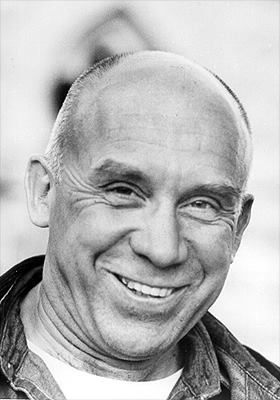
The famous Trappist monk, Thomas Merton (b. 1915) died on this date in 1968.
In very many ways Merton was a consummate human being: loved pleasure and engaged his freedom only to transform pleasure and his version of freedom with his embrace a life of prayer and silence as a Strict Observance Cistercian (a Trappist monk) in a Kentucky abbey. In the monastery Thomas Merton was known as Father M. Louis, a name I still prefer to use because of his commitment to the monastic life. At the command of his abbot, Merton wrote of his conversion in his 1949 best seller, The Seven Storey Mountain, introducing millions of people to the monastic life. No other book since this one has had such a critical impact on Catholics. His conversion story was only one of many books and essays published by Merton and even in death Merton continues to publish due to the finding of new materials or the repackaging of thought into new books. The irony of Merton’s life as a monk is that he died in Asia conferencing with an international and interfaith group of monks and nuns. His body was brought home in a steel casket on a military transport.
In his lifetime Merton was a voice of reason, a voice of sanity, a voice speaking the Word of God. As typical of public thinkers he became a voice and an influence for a variety of types of people, from artists, intellectuals, religious types, peace and nonviolence promoters and the like.
Key for me and dare I say for Benedictines of all stripes, Merton argued for a contemplative life which engages the reality of the world so that the monk, nun, oblate could intercede on behalf of the world for others (read The Sign of Jonas). Father Louis helps me to understand the Benedictine charism better when he says,
The Benedictine life is simply living the Gospel without fanfare…. The mainspring of everything in Saint Benedict is the love of Christ in Himself, in the poor, in the monastic community, in the individual brethren…. This is the key to the monastic life and spirit.
A life totally cut of is good for a few, like the Carthusians, but for Benedictines and the Cistercians (a reformed group of Benedictines) who form a school of prayer and love in Christ, nothing is out-of-bounds. Merton, indeed, opened the doors to a new manner of living the vitally important monastic life today.
He sought to be a saint, that is, be yourself, is the vocation that all of us ought to consider doing with seriousness. The Pope echoes this notion, so does Communion and Liberation. Great minds think alike.
Watch Father Jim Martin’s video presentation on Thomas Merton.
Thomas Merton’s work continues with the initiative of The Merton Institute for Contemplative Living.
Vatican Radio on iTunes
Vatican Radio launched an iPhone app on iTunes. The app is free. It lets you follow the Pope and the work of the Church throughout the world as well as providing you with other pertinent information and cultural engagement.
Christians lack nothing with Christ
The attribution to the following is given to Saint John Chrysostom but the citation has not been found, but the Pope quoted the saint in a recent Wednesday Audience. It’s a striking reflection for our spiritual life, it even can be used for our daily examen. The saint said,
do you lack? You have become immortal, you have become free, you have become a
son, you have become righteous, you have become a brother, you have become a
joint heir, with Christ you reign, with Christ you are glorified. Everything is
given to us, and – as it is written – ‘can we not expect that with him he will
freely give us all his gifts?'(Rom 8:32). Your first fruits (cf. 1 Cor
15:20.23) are adored by angels […]: what do you lack?
Immaculate Conception of the Blessed Virgin Mary
Lord our God, as we celebrate Mary, daughter of Zion and figure of the new Jerusalem that descends from heaven, we await the coming of your Son Jesus Christ in glory. Hasten the day of his coming, and all the nations, together with all of Israel, will find salvation in your eternal kingdom. We ask you this through the Holy Spirit, who consoles us and intercedes for us now and forever.
Today’s feast of the Immaculate Conception of the Blessed Virgin Mary ought to be interpreted on the basis of sacred Scripture (Zeph 3:14-18a; Gal 4:4-7; Lk 1:39-55), sacred Tradition and the Magisterium. This feast is best understood from the point of view of the eschatological context of Advent which focuses our attention essentially on the coming of the Lord at the end of time. Consider what the prayer above notes. Christians, remember, live in the end times now.
Mary’s conception (through her parents Anne and Joachim) celebrated in the liturgical season of Advent is a fitting time in which we long, really desire, the Lord’s coming. Our waiting for the Messiah, now for the second time, is a true hope of all hopes.
The Church in the Eastern Roman Empire, known as Byzantium, has observed this feast with great interest before it reached the Western Empire by the 10th century. In the East today is also called the Conception of Saint Anne. If you recall, the Franciscan and Doctor of the Church Saint Bonaventure has a clear teaching on the Immaculate Conception of Mary, defended and promoted by other Franciscan theologians and made part of Catholic dogma in 1854.
The precise Catholic theological teaching of the Immaculate Conception is not shared by some Protestant ecclesial communities and the Orthodox Churches. “For them, Mary’s conception has the value of a sign: through the divine intervention that was needed to heal Anne of her infertility, all of humanity has been healed of its sterility, brought on by sin, and has become the womb capable of welcoming the Word’s Incarnation. It is the Lord himself who, in his infinite mercy, prepares the way for his decisive intervention in history.” In many ways there is not that much difference in substance but acknowledged nonetheless here.
Under the title of the Immaculate Conception, Mary is the patroness of the United States of America.
Saint Ambrose
O God, who made the Bishop Saint Ambrose a teacher of the Catholic faith and a model of apostolic courage, raise up in your Church men after your own heart to govern her with courage and wisdom.
The prayers for todays Mass that honors the ecclesial memory of one of the famous saints are key to pinpointing what the Church most revers about the man who was concerned about right-thinking and right-praying Christians. Who was Ambrose? The Collects tells us that he was a bishop, saint teacher, model of courage seen in the apostles and capable of good governance, that is, he had courage and wisdom. What moved Ambrose? Again, the collects tell us he was constantly inspired by the light of faith.
The Church recalls Saint Ambrose of Milan (340?-397), bishop and Doctor of the Church. Ambrose was born in Trier to a Roman family: his father was praetorian prefect of Gaul and educated in Rome In about 372 he began his public service as prefect of Liguria and Emilia, whose capital was Milan.
Let’s recall that the ecclesial tradition indicates that the gospel was brought to Milan by Saint Barnabas and that the city’s first bishop was Saint Anathalon. In 374 the bishopric of Milan became vacant. An astute Ambrose tried to work with the conflict between orthodox Catholics and Arians over the appointment of a new bishop. His words were convincing and hopeful that the people demanded –not the pope– that he become the bishop of Milan.
Ambrose’s personal holiness was such that he gave his material belongs to the poor and to the Church. We attentive to the prayerful reading of the Scriptures and praying the Liturgy. He was a very attentive bishop as the Good Shepherd. Works of charity and clear teaching was attractive to many. As bishop he defended the rights of the Church and tried to correct the errors of the Arian heresy with learning, firmness and gentleness.
The Divine Office that we pray today is still peppered with Ambrose’s hymns.
Saints beget saints. Ambrose was central to the conversion of St Augustine to Catholicism.
Pope Benedict gave his own catechesis on this great saint today. Ambrose is the “Icon of Christ.”
Saint Nicholas
We humbly implore your mercy, Lord: protect us in all dangers through the prayers of the Bishop Saint Nicholas, that the way of salvation may lie open before us.
Today’s saint restores the human dignity to his people and brings supernatural light to them, that is, he carries Jesus Christ to others.
Most people today have lost sight of who the real Nicholas is: he moves from being a bishop, one who offers the Divine Liturgy, wonder-worker, and a man of great charity in his teaching truth and helping the poor. We recognize in Saint Nicholas today not a man love and adherence to Christ but someone who represents insipidity. Nicholas is far from the commercial mindset. Hopefully we can target the reality and sweep away silliness.
Two Benedictines who blog give a little more insight into Saint Nicholas: Dom David and Dom Mark Daniel.
Advent Holy Hour for the Year of Faith, preached by Archbishop Daniel Cronin, East Haven, CT, December 6
The Most Reverend Daniel A. Cronin, Archbishop Emeritus of Hartford, is coming to East Haven on Thursday, December 6, 2012 to preside and preach during an Advent Evening of Reflection, with a focus upon the “Year of Faith.”
The presentation begins at 7:00 PM and takes place at Our Lady of Pompeii Church, 355 Foxon Road, in East Haven.
The reflection will be offered in the context of a Holy Hour, to also include prayers, readings from Scripture, and the Adoration of the Blessed Sacrament.
Join us for prayer and let friends know.