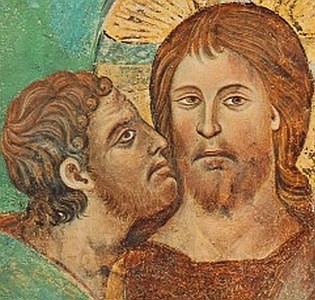
St. Symeon the New Theologian, The Discourses, (Paulist Press, 202-203)
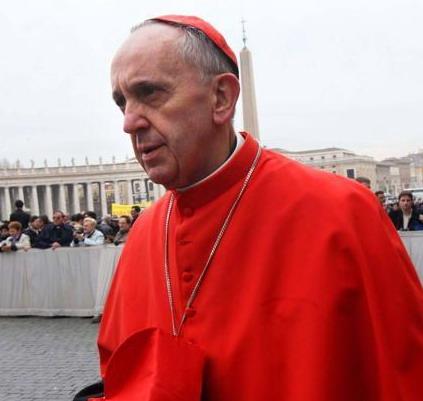
The Vatican Information Service reported today that a documentary will be published on the new pontificate. The documentary is titled, “Francesco – Elezione di un Papa che viene dalla fine del mondo” (Francis: Election of a Pope from the Ends of the Earth) … made in collaboration with the Officina della Comunicazione (OC) and the Italian newspaper, Il Corriere della Sera.
The DVD will be distributed as a supplement to the Friday, 2 April edition of the newspaper.” On its own the Italian version will cost 10.90 euro; English, Spanish and French editions are planned.
“The documentary registers the events following Pope Benedict XVI’s renunciation of the papacy, the days of the Sede Vacante, and the conclave that brought the election of Cardinal Jorge Mario Bergoglio as the new Pope. Through images and previously unpublished interviews with four cardinals–Cardinal Angelo Comastri, archpriest of the Basilica of St. Peter; Cardinal Oscar Rodriguez Maradiaga, archbishop of Tegucigalpa, Honduras; Cardinal Gianfranco Ravasi, president of the Pontifical Council for Culture; and Cardinal Angelo Sodano, dean of the College of Cardinals–it reconstructs the most important stages of this period, culminating in the meeting of the two pontiffs this past Saturday, 23 March, in Castel Gandolfo.”
Spy Wednesday, Wednesday in Holy Week, is unique as the sacred Liturgy prepares us to pray the sacred Triduum in a more devoted, sincere way. The gospel for today unfolds the drama. Hence, Spy Wednesday a pious way to commemorate and remind ourselves how, why and for what Judas Iscariot’s betrayal of Jesus for thirty pieces of silver is a learning experience for each of us. The betrayal of Jesus by Judas –a friend of the Lord’s, a member of the 12 Apostles, a man responsibility– continues until today to make us pause and to ask what happened; Judas’ tortured ending grieve us.
The mystery of the dramatic events concerning Judas and Jesus shows us the value God places on the gift of free will. The sinfulness of some of our choices are too often motivated by money, power, and fame, the desire to be right on everything, to point fingers without looking deeply within our selves. Consider the various things Pope Francis has said since his election about the devil and his enticements. In the Liturgy we pray for the grace to have the power of the enemy driven from us thus attaining the grace of the resurrection.
The first Wednesday General Audience of Pope Francis was delivered today. Indeed, Pope Francis is moving us away from the narcissism in which we find ourselves, either personally, or as a Church. The Pope’s text follows, and Vatican Radio’s carrying of the English portion of the address.
I am pleased to welcome you to my first general audience. With deep gratitude and veneration I am taking up the “witness” from the hands of my beloved predecessor, Benedict XVI. After Easter we will resume the catechesis on the Year of Faith. Today I would like to focus a little on Holy Week. With Palm Sunday we began this week – the center of the whole liturgical year – in which we accompany Jesus in His Passion, Death and Resurrection.
But what does it mean for us to live Holy Week? What does it means to follow Jesus on His way to the Cross on Calvary and the Resurrection? In His earthly mission, Jesus walked the streets of the Holy Land; He called twelve simple people to remain with Him, to share His journey and continue His mission; He chose them among the people full of faith in the promises of God. He spoke to everyone, without distinction, to the great and the lowly; to the rich young man and the poor widow, the powerful and the weak; He brought the mercy and forgiveness of God to all; He healed, comforted, understood, gave hope, He led all to the presence of God, who is interested in every man and woman, like a good father and a good mother is interested in each child. God did not wait for us to go to Him, but He moved towards us, without calculation, without measures. This is how God is: He is always the first, He moves towards us. Jesus lived the daily realities of most ordinary people: He was moved by the crowd that seemed like a flock without a shepherd, and He cried in front of the suffering of Martha and Mary on the death of their brother Lazarus; He called a tax collector to be His disciple and also suffered the betrayal of a friend. In Christ, God has given us the assurance that He is with us, in our midst. “Foxes”, Jesus said, “have dens and birds of the sky have nests, but the Son of Man has nowhere to rest His head” (Mt 8:20). Jesus did not have a home because His house is the people — that is, us; His mission is to open all God’s doors, to be the loving presence of God.
Continue reading Following Jesus means stepping outside ourselves, Pope tells us today
13 years ago an essay in the Colombia Magazine appeared in 2000. The archbishop who wrote, “Renewing God’s House” speaks about our standing with the Lord; the gesture of standing is new way of being present, it is a presence which requires us to intellectually, spiritually and affectively present in the very following of the Lord in light of the various gifts He’s given. Jesus Christ asks us to help Him carry the cross, just like he did with Simon, and Benedict, and Francis and Dominic and countless others, to help Him in repairing the house He’s built. The strength in what Archbishop Chaput is talking about is a communal work of standing with Christ, in the midst of sinners, and in setting our face on the Lord in the way He’s proposed. Grace received in Baptism, Confirmation and the Holy Eucharist will sustain us, together, as true brothers and sisters. “Renewing God’s House” is an essay worth reading on Spy Wednesday.
Reading the notes from the pre-conclave meetings of the cardinals meeting in the General Congregation is not usual reading material for most people. One has to admit that it is interesting to know what the cardinals think and what they verbalize with regard to the life of the Church and the proposal for future ministry. Zenit.org published today the notes of Jorge Cardinal Bergoglio (now Pope Francis). Nothing really new except that now we know with better certainty the perspective of the made elected the Supreme Pontiff. The notes follow:
The archbishop of Havana says that a speech given by Cardinal Jorge Bergoglio (now Pope Francis) during the cardinals’ pre-conclave meetings was “masterful” and “clear.”
Cardinal Jaime Lucas Ortega y Alamino spoke of Cardinal Bergoglio’s speech at a Mass on Saturday in Cuba, having returned home from his trip to Rome to bid farewell to Benedict, participate in the conclave, and welcome Francis.
Cardinal Ortega said that Cardinal Bergoglio gave him the handwritten notes of the speech, and the permission to share the contents.
“Allow me to let you know, almost as an absolute first fruit, the thought of the Holy Father Francis on the mission of the Church,” Cardinal Ortega said.
Continue reading Private notes of Jorge Bergoglio from pre-conclave meetings published
Pope Gregory XVI, a Benedictine monk, made gambling on papal elections punishable by excommunication.
When Jorge Mario Bergoglio was elected the 266th Roman Pontiff he was listed among a rather small and elite group of men who had their intellectual and spiritual formation in religious life. Bergoglio is a member of the Society of Jesus. But who are the others?
Gregory I, Boniface IV, Adeodatus II, Leo IV, John IX, Leo VII, Stephen IX, Gregory VII, Victor, III, Urban II, Paschal II, Gelasius, II, Celestine V, Clement VI, Urban V, Pius VII, Gregory XVI
Honorius II, Innocent II, Lucius II, Adrian IV, Gregory VIII, Eugene IV
Nicholas IV, Sixtus IV, Sixtus V, Clement XIVSecular Franciscans have 2Pius IX, Leo XIII
Innocent V, Benedict XI, Pius V, Benedict XIII
Eugene III, Benedict XII
Paul IV
Francis
Today is the anniversary of death in 1991 of the famed Archbishop Marcel François Marie Joseph Lefebvre founder of the Society of St Pius X (SSPX).
Tonight, 15th of Nissan, begins the annual days prayer remembering the liberation of the captive Jews in Egypt by God. The theological reality of the Passover is not merely relating to events of 3000 years ago, but an active remembrance (liturgically called anamnesis) that God leads us to freedom today: from slavery of sin to the grace of freedom; from being chained to unfaithfulness to the freedom of love and mercy. Christians will hear echoes in what is believed about Jesus and Holy Week. All leavened foods will be destroyed, needed cleaning done, and time for prayer and fasting. Read the Book of Exodus. The ritual mean of the sedar is a mix of biblical narrative, song and friendship. Passover ends on April 2 (in Israel the observance is 7 days, other places it’s 8).
The Holy Father unites himself, and us, with our Jewish brethren:
A few days on from our meeting, and with renewed gratitude for your having desired to honour the celebration of the beginning of my ministry with your presence and that of other distinguished members of the Jewish community, I take great pleasure in extending my warmest best wishes to you and Rome’s entire Jewish community on the occasion of the Great Feast of Pesach. May the Almighty, who freed His people from slavery in Egypt to guide them to the Promised Land continue to deliver you from all evil and to accompany you with His blessing. I ask you to pray for me, as I assure you of my prayers for you, confident that we can deepen [our] ties of mutual esteem and friendship.
Francis