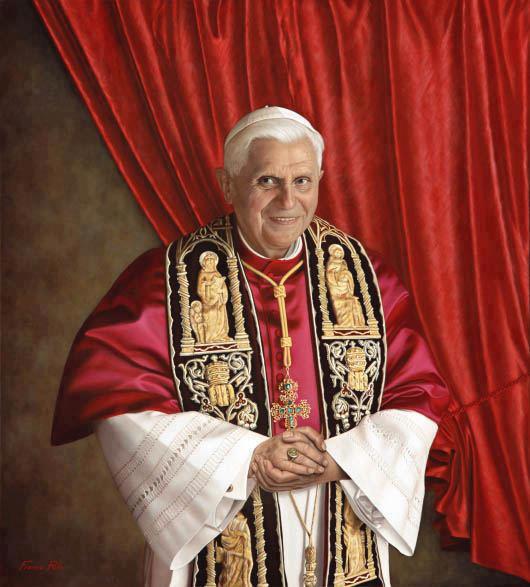
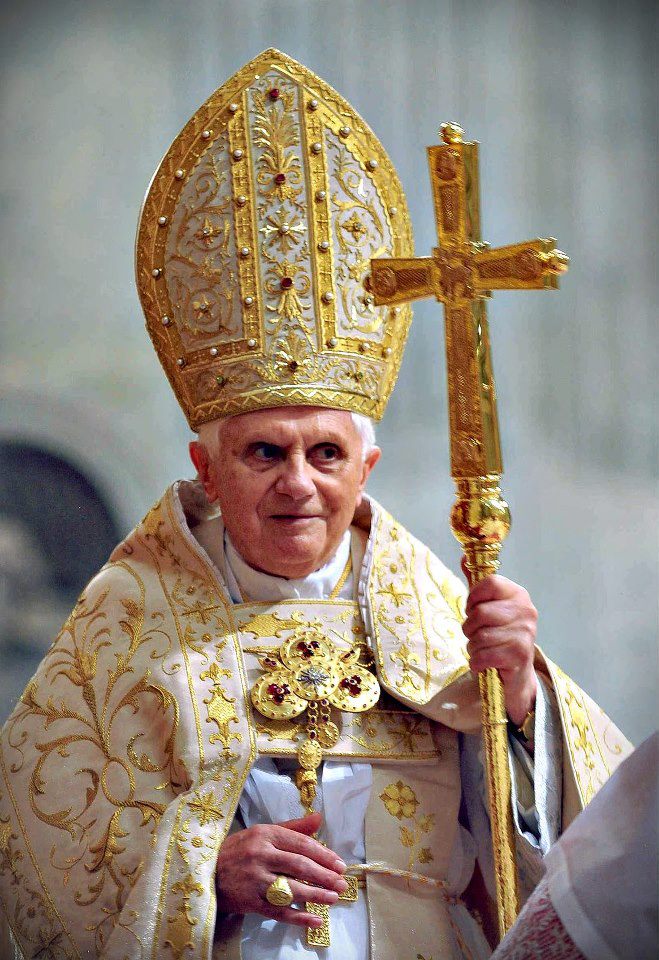
Today is the 8th anniversary of election of His Holiness Benedict XVI, pope emeritus of Rome. His pontificate came to an end on 28 February 2013. A blessed day to Benedict!
Rome Reports marks the anniversary.
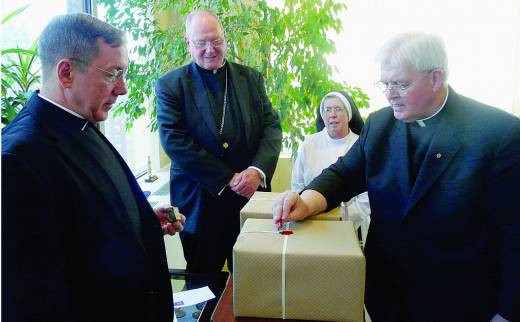
The process of becoming a saint, if you are not a John Paul II or a Mother Terese can take some time. When I heard the news of the completion of US side of Rose Hawthorne’s cause for canonization was made, the other day from a Dominican priest friend, a “praise God” rang out! The last significant ecclesial judgement made on the sanctity of Rose Hawthorne was in 2003 when she was declared to be a Servant of God.
Servant of God Rose Hawthorne (1851-1926), was founder of the Dominican Sisters of Hawthorne, led unusual life as a wife, mother, and convert. Rose was born in Lenox, MA, and died in Hawthorne, NY. In religion she is known as Mother Mary Alphonsa, OP. Rose worked to comfort the poor dying of cancer. The diocesan phase for cause of canonization was opened by Cardinal Edward Michael Egan. Rose Hawthorne was declared Servant of God on February 4, 2003. Father Gabriel B. O’Donnell, OP, is the postulator. On 9 April, the necessary documentation signed by the archbishop of New York, Timothy Cardinal Dolan. On 20 April 2013 Father O’Donnell will be delivering this phase concerning Rose’ heroic virtue and the writing of the historical report to Rome’s Congregation of Saints. For more info: www.hawthorne-dominicans.org
The Catholic New York reports the story.
Hawthorne is one 10 people with connections in the State of New York who are being considered for sainthood.
It seems the only possible means to process the Boston tragedy which is being lived today gives voice to man’s desire to speaking with the Infinite, speaking with the Triune.
The heart is deeply moved by the power of music notes. Indeed, music has the power of the heart because it has the ability “to sense infallibly the true and the genuine.”
Some of my thinking on music recently has been informed by the thinking of Pope Benedict XVI who had a profound appreciation for music as reaching the inner depths of the souls. In his book, A New Song for the Lord, then Cardinal Ratzinger said, “faith becoming music is part of the process of the Word becoming flesh“ (p.122 ). And in his book Salt of the Earth, he answers a statement about Mozart:
You are a great lover of Mozart.
Yes! Although we moved around a very great deal in my childhood, the family basically always remained in the area between the Inn and the Salzach. And the largest and most important and best parts of my youth I spent in Traunstein, which very much reflects the influence of Salzburg. You might say that there Mozart thoroughly penetrated our souls, and his music still touches me very deeply, because it is so luminous and yet at the same time so deep. His music is by no means just entertainment; it contains the whole tragedy of human existence.
There aren’t too many experiences in life that you can claim to experience a “thoroughly penetrated our souls“ which also illumines the soul. Hence, what we experience in music is not mere entertainment.
In response to an email I sent about my friend Paul J. Murray’s this Sunday’s program, “A Concert for Peace,“ a friend of mine, Jane, sent me this article because like many of us, she has been moved by the beauty of music. Like Jane, I, too, was moved by parts of this article this regard, and I recommend that you consider the author’s expertise.
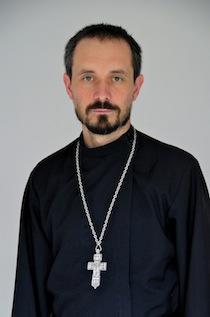
There is a new auxiliary bishop for Greek Catholic Archeparchy of Presov, Slovakia, Jesuit Father Milan Lach. He is the first Jesuit to be elected a bishop during the pontificate of Pope Francis.
Bishop-elect Lach will join another Jesuit who serves as the Archbishop of Presov, Ján Babjak, 59. The archeparchy has more than 140 thousand people. Archbishop Babjak was just here in the USA making a pastoral visit.
Bishop-elect Milan, 39, has been the vice-dean of the the Faculty of Theology of the University of Trnava. Lach entered the Society of Jesus (the Jesuits) in 1995 and ordained priest in 2001. For 2 years he worked at the Centre of Spirituality East-West of Michal Lacko, where he was also the Jesuit superior. In the 2009 he was awarded a degree in spirituality at the Pontifical Oriental Institute and livingnext door at the Pontifical Russian College.
In 2010 he became a member of the editorial board of the theology journal, Verba Theologica.
Mnohaja l’ita!

The small, rural Scilian town of Trapani apparently is a crossroads of culture and history. It is now dealing with the murder of an elderly priest for allegedly giving bad homilies. His assailant, 33 and unemployed, wanted to teach Father a lesson one what he was saying in the pulpit. In some reports, Father Michele DiStefano is said to have spoken in a public fashion of the wrong-doings (sins?) of his people. I hope he wasn’t revealing what he heard in the confessional.

The second reading in the daily Office of Readings are generally stunning. Most focus on the paschal mysteries, that is, the Mysteries of Easter that we live. As Catholics, are we reborn in the Spirit? You bet we are. It is the consistent teaching of the Church and those we call “the Fathers of the Church.” Don’t be fooled: Protestants aren’t the only ones reborn in baptism (cf. Creed). Today’s reading is from the first apology in defense of the Christians by Saint Justin, martyr.
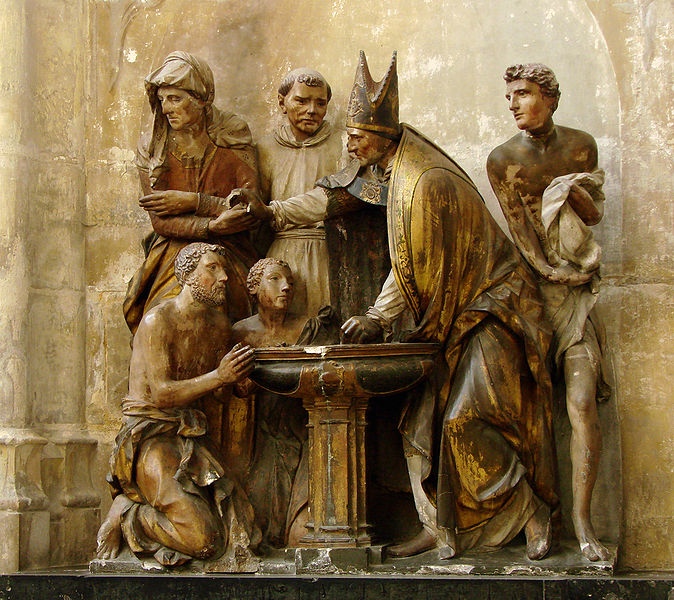
Our new birth, a new humanity, is a baptismal regeneration
Through Christ we received new life and we consecrated ourselves to God. I will explain the way in which we did this. Those who believe what we teach is true and who give assurance of their ability to live according to that teaching are taught to ask God’s forgiveness for their sins by prayer and fasting and we pray and fast with them. We then lead them to a place where there is water and they are reborn in the same way as we were reborn; that is to say, they are washed in the water in the name of God, the Father and Lord of the whole universe, of our Savior Jesus Christ and of the Holy Spirit. This is done because Christ said: Unless you are born again you will not enter the kingdom of heaven, and it is impossible for anyone, having once been born, to re-enter his mother’s womb.
An explanation of how repentant sinners are to be freed from their sins is given through the prophet Isaiah in the words: Wash yourselves and be clean. Remove the evil from your souls; learn to do what is right. Be just to the orphan, vindicate the widow. Come, let us reason together, says the Lord. If your sins are like scarlet, I will make them white as wool; if they are like crimson, I will make them white as snow. But if you do not heed me, you shall be devoured by the sword. The mouth of the Lord has spoken.
Continue reading Catholics are reborn and have a new humanity through baptism
What does the Church’s teach about tithing today?
The question of tithing is better addressed first, by looking at the bible. The Church’s practice is based on the revealed word of God. The biblical warrant can’t be ignored. What does sacred Scripture tell us about a believer’s responsibility and duty to tithe?
There is also the witness of Abraham giving the priest Melchizedek offering God who in turn gave the best of the wine and bread (see Genesis 14).
In the Book of Deuteronomy we hear: “Each year you shall tithe all the produce that grows in the field you have sown…so that the Levite who has no share in the heritage with you and also the alien, the orphan and the widow who belong to your community, may come and eat their fill so that the Lord your God may bless you in all that you undertake” (14:22, 29).
Or, in Leviticus we read: “The tithes of the herd and the flock shall be determined by ceding to the Lord as sacred every tenth animal as they are counted by the herdsman’s rod” (27:32).
Or, in the Book of Numbers, “Give the Levites these instructions: When you receive from the Israelites the tithe I have assigned you from them as your heritage, you are to make a contribution from them to the Lord, a tithe of the tithes…” (18:26).
In Proverbs, “Honor the Lord with your wealth, with first fruits of all your produce; then will your barns be filled with grain, with new wine your vats will overflow” (3:9-10).
Malachi foretells, “Dare a man rob God? Yet you are robbing me! And you say, ‘How do we rob you?’ In tithes and offerings! You are indeed accursed, for you, the whole nation, rob me. Bring the whole tithe into the storehouse, that there may be food in my house and try me in this way, says the Lord of hosts; Shall I not open for you the floodgates of heaven to pour down blessings upon you without measure?” (3:8-10).
Or in Saint Luke, we hear: “Give and gifts will be given to you; a good measure, packed together, shaken down, and overflowing, will be poured into your lap. For the measure with which you measure will in return to measured out to you” (6:38).
Again from Saint Luke we hear: “Then he said to the crowd, ‘Take care to guard against all greed, for though one may be rich, one’s life does not consist of possessions'” (12:15).
At 1 Corinthians 16:2, Saint Paul writes, “On the first day of the week [Sunday] each of you should set aside whatever he can afford.”
At 2 Corinthians 9:5-8, “So I thought it necessary to encourage the brothers to go on ahead to you and arrange in advance for your promised gift [donation], so that in this way it might be ready as a bountiful gift and not as an exaction. Consider this: Whoever sows sparingly will also reap sparingly, and whoever sows bountifully will also reap bountifully. Each must do as already determined without sadness or compulsion, for God loves a cheerful giver. Moreover, God is able to make every grace abundant for you, so that in all things, always having all you need, you may have an abundance for every good work.”
Or, in 1 Timothy, where Saint Paul says: “Tell the rich in the present age not to be proud and not to rely on so uncertain a thing as wealth but rather on God, who richly provides us with all things for our enjoyment. Tell them to do good, to be rich in good works, to be generous, ready to share, thus accumulating as treasure a good foundation for the future, so as to win the life that is true life” (6:17-19).
The concept of tithing is defined as one-tenth of one’s income. Historically, it has been associated with giving God the first fruits of creation in recognition of His place in our lives as Creator. Today, we focus more on financial support of the Church and Church-related charities. The tithe looks back to the ancient agrarian practice of offering God a small portion of the flock and harvest to express gratitude on the part of those who enjoy the fruits of the harvest and animal life around them. The best is always offered to the Lord. To reserve the best for one’s self is, well, selfish. The sacrifice, if it is true, speaks of one’s dependence on God the Creator of heaven and earth because God sustains our life.
Through the years, especially after the move from the farm to industry, tithing meant pledging one-tenth of one’s income to the support of the Church, that is, the support of the Church’s brick and mortar, many works of charity, the education and development programs of the people and the upkeep of the clergy. Do we ask what it means to have tithe today, and what it means when we decide not to meet the 10 percent standard? What about the moral obligation to help the poor and provide the appropriate support to the Church and Church-related charities. The obligation to tithe does not end at age 65. The 10 percent is a number in response to the question of what do I give.
Church legislation after the Edict of Milan (in the 4th century) speaks of tithes in terms of Church’s diakonia, the service to the poor and marginalized. There was no public assistance in the sense that we know it today. The Ecumenical Council of Trent (1545-1563) on the obligation of Catholics to tithe:
The payment of tithes is due to God; and they who refuse to pay them, or hinder those who give them, usurp the property of another. Wherefore, the holy Synod enjoins on all, of whatsoever rank and condition they be, to whom it belongs to pay tithes, that they henceforth pay in full the tithes, to which they are bound in law, to the cathedral church, or to whatsoever other churches, or persons, they are lawfully due. And they who either withhold them, or hinder them (from being paid), shall be excommunicated; nor be absolved from this crime, until after full restitution has been made. It further exhorts all and each, that, of their Christian charity, and the duty which they owe to their own pastors, they grudge not, out of the good things that are given them by God, to assist bountifully those bishops and parish priests who preside over the poorer churches; to the praise of God, and to maintain the dignity of their own pastors who watch for them.
The Council of Trent had a most direct perspective on tithe that’s not held in the same way today. Many pastors won’t talk to the Catholic congregation about the responsibility and duty to tithe perhaps as a residue of Trent’s hard-hitting manner. They are afraid of money, and they are tired of listening to some members of the congregation moan and groan. The fact is, a good pastor needs to speak about money issues; not to do so is wrong-headed. The Christian sense of the tithe was not given based on the charity needed by the Church, the poor or needs of the priests. A tithe, according to Scripture was given in recognition and gratitude for the blessings that God had bestowed; every person (believer) had a desire to tithe to God.
Hence, you don’t hear about proper stewardship today except if one’s attention is drawn to one of the “precepts of the Church” which talks about sustaining the good works of the parish. Nowadays we have some financial appeals for a limited amount of income: the diocese, alumni funds, religious orders, cancer research, the ASPCA, and the like. However, charitable giving to the Church ought to be central to our life of faith. How we use money is critical in the eyes of God, in spiritual life, and in the life we live in society. Recall that the precepts the Church are formative and they are disciplinary. The precepts of the Church form one’s life of faith and one’s conscience and the offer a way of ordering one’s good works. For example, the other precepts include: praying Mass on Sundays and holy days, receiving Holy Eucharist, confessing one’s sins once a year, observing the Church’s teaching on the sacrament of Marriage, and making a financially supporting of the Church.
Tithing, however, is not merely about money. Like I have mentioned, it is about the spiritual life. Keenly, tithing is about who and what we worship. This past Sunday Pope Francis took canonical possession of the Basilica of St Paul outside the Walls and during his homily he spoke the worship of the Divine Majesty in these terms: “Worshipping is stripping ourselves of our idols, even the most hidden ones, and choosing the Lord as the centre, as the highway of our lives.” The improper use of money, the refusal to tithe in a faith-filled manner is not Christian, it is not Catholic and certainly not human. The question becomes not who is your God, but what is your God. Tithing is a conscious decision to not be to consumed by consumerism and “possessed by your possessions.”
How and what we tithe in 2013 is different than what it was 25 and 50 and 2000 years ago. Time is a significant commodity, one that may be more valuable than our money. The time spent washing the altar linens, or doing shopping for the priest or an elderly person, or spending time with the youth group, or doing any number of things is a noteworthy tithe. Catholic families could — in the spirit and biblical teaching of the tithe — budget an agreed-upon percentage of family income to be distributed annually to charitable works, not just “good causes”; some families have constructed the tithe of 10% to a 5 percent of income and five hours a week of community service. Works of charity change us, and the work to change the circumstances of others.
Perhaps the Catholic Church ought to look at tithing as an investment the work of today and in the future. It’s about “paying it forward. Psalm 24 tells us, “The Lord’s are the earth and its fullness: the world and those who dwell in it.” We all would do well to remember that the Lord will never be outdone in generosity.
“How does School of Community become a point of comparison? First of all, it must be read by clarifying the meaning of the words together –not an interpretation of the words, but the literal sequence […] Secondly, space must be given to the exemplification of a comparison between what one lives and what one has read. One must ask himself how what he read and tried to understand literally judges life.”
Fr Giussani (published in Traces, 1992) and quoted in Fr Julián Carrón’s notes for his March 20, 2013 School of Community