Litany in honor of St Norbert

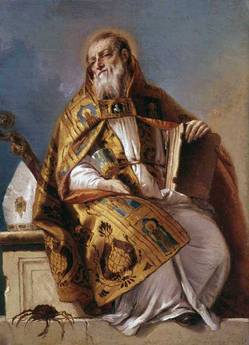
St Norbert founder and bishop.jpg

The Litany in honor of our holy father Saint Norbert

Lord, have mercy on us,
Christ, have mercy on us,
Lord, have mercy on us,
Christ, hear us,
Christ, graciously hear us,

God, the Father of Heaven, have mercy on us,
God, the Son, Redeemer of the world,
God, the Holy Spirit,
Holy Trinity, one God,

Holy Mary, pray for us,
Holy Mother of God,
Holy Virgin of virgins,
Queen of the White-robed Order,

Thou who had a great love for St. Norbert,
Holy Father Norbert, pray for us,

St. Norbert, whose birth was foretold from Heaven,
St. Norbert, who was marvellously converted by God,
St. Norbert, mirror of true penance,
St. Norbert, who did trample earthly pomps under foot,
St. Norbert, despiser of the world,
St. Norbert, who did conquer thy passions and affections,
St. Norbert, who did gain the victory over temptations,
St. Norbert, who did quell and cast down devils,
St. Norbert, restorer of peace and concord,
St. Norbert, who did walk barefoot,
St. Norbert, who did practise mortification,
St. Norbert, lover of the Cross,
St. Norbert, pattern of abstinence,
St. Norbert, most strict observer of fasting,
St. Norbert, who did yourself practice and teach silence,
St. Norbert, who did receive the white habit from the Mother of God,
St. Norbert, most constant in faith,
St. Norbert, most firm in hope,
St. Norbert, most fervent in charity,
St. Norbert, zealous lover of chastity,
St. Norbert, model of poverty,
St. Norbert, mirror of obedience,
St. Norbert, vigilant teacher of discipline,

St. Norbert, defender of the true faith,
St. Norbert, choice vindicator of the Blessed Sacrament,
St. Norbert, pillar of the Catholic Church,
St. Norbert, flower of sanctity and brightness of all virtue,
St. Norbert, light of prayer and contemplation,
St. Norbert, pattern of perfection,
St. Norbert, leader of the white-robed army,
St. Norbert, patriarch of the Premonstratensians,
St. Norbert, father and protector of thy Order,
St. Norbert, primate of Germany,
St. Norbert, worker of miracles,
St. Norbert, wonderful Discerner of spirits,
St. Norbert, imitator of Jesus Christ,
St. Norbert, follower of the Apostles,
St. Norbert, who was like to the Martyrs,
St. Norbert, gem of Pontiffs,
St. Norbert, Glory of Confessors,
St. Norbert, companion of virgins,
St. Norbert, colleague of all Saints,
St. Norbert, admirable in his translation,

Be merciful, spare us, O Lord, 
Be merciful, graciously hear us, O Lord, 

From the neglect of Thy commandments, deliver us, O Lord, 
From the transgression of our vows,
From uncleanness of mind and body,
From the spirit of fornication,
From a proud and sad spirit,
From the snares of the devil,
From overwhelming temptation,
From the disorder of our passions,
From the blindness of self-love,
From the obstinacy of self-will,
From an evil and unprovided death,

Through the wonderful conversion of St. Norbert,
Through his austere penance,
Through his ardent zeal in preaching,
Through his exemplary life,
Through all his virtues,
Through his holy death,
Through his wonderful translation,
Through his glorious crown in Heaven,
Through his merits and intercession,
We sinners, beseech Thee, hear us,  

That Thou would grant us true sorrow and contrition of heart, we beseech Thee, hear us, 
That Thou would grant us a true conversion of life,
That Thou would grant us obedience to our Rule and preserve us in the same,
That Thou would make faith, hope and charity to grow in us,
That Thou would make us zealous observers of our three vows,
That Thou would grant us the gift of prayer,
That Thou would bestow upon us the seven gifts of the Holy Spirit,
That Thou would vouchsafe to govern and preserve Thy holy Church,
That Thou would vouchsafe to extend and preserve the Premonstratensian Order,
That Thou would vouchsafe to strengthen the Abbot General and all the Abbots of the Order with a perfect spirit,
That Thou would vouchsafe to grant us the crown of perseverance,
That Thou would give grace to the living and to the departed eternal rest,

Lamb of God, Who takes away the sins of the world, spare us, O Lord, 
Lamb of God, Who takes away the sins of the world, have mercy on us.
Christ hear us,

Christ graciously hear us,
Lord have mercy on us,
Christ, have mercy on us,
Lord, have mercy on us,

(quietly)  Our Father who art in heaven, hallowed be Thy name.  Thy kingdom come, thy will be done on earth as it is in heaven.  Give us this day our daily bread, and forgive us our trespasses as we forgive those who trespass against us …

V.  And lead us not into temptation,
R.  But deliver us from evil.

V. Pray for us, O Holy Father Norbert,
R.  That we may be made worthy of the promises of Christ.

V.  O Lord, hear my prayer,
R.  And let my cry come unto Thee.

V.  The Lord be with you,
R.  And also with you.

Let us pray.

O God, Who did make of Blessed Norbert, Thy Confessor and Bishop, an excellent preacher of the Word, and by his means did enrich Thy Church with new offspring, grant, we beseech Thee, that through his intercession we may put in practice by Thy grace what he taught us, both in word and work.

Awake, O Lord, in Thy Church the Spirit by Whom St. Norbert, Thy Confessor and Bishop was guided, in order that, filled with the same spirit, we may love what he loved and live as he taught us.

O Lord, grant to us Thy servant’s constancy in Thy faith and service, that, rooted in Divine charity, we may not be conquered by any temptation. Through Christ Our Lord.  Amen.

Praised be the Blessed Sacrament of the Altar and the Immaculate Conception of the Blessed Virgin Mary.

Praised be Jesus Christ.  Amen

When you meet Christ, you accept his history

Father Sergius Bulgakov expressed himself very adequately when he said: “He who has once met Christ, His Savior, on his own personal path, and has felt His Divinity, has, in that very moment, accepted all fundamental Christian dogmas — Virgin Birth, incarnation, Second Glorious Advent, the Coming of the Comforter, the Holy Trinity. To this I want to add: Or else he has not yet met Christ, or, at any rate, has not recognized him.”

— Father Georges Florovsky in The Work of the Holy Spirit in Revelation

“The food we throw away is as if stolen from the table of the poor,” the Pope teaches

The are several great things we have to attend to with the Pope’s address today in Rome. Two quick ones: “losing the attitude of wonder, contemplation, listening to creation; thus we are no longer able to read what Benedict XVI calls “the rhythm of the love story of God and man.” WOW! Bingo!


We live in an era where disposability and waste is routine: shoes, cars, pencils, clothes, human life, etc. Don’t like it, not the “right color”, it is not right for me: all these sentiments are clear indications that you and I are careful on how and why we use our material and human resources. The Pope in his weekly Wednesday audience today drew our attention to the reality of waste. During the pontificate of John Paul II we Catholics were introduced to the concept of solidarity. But we were also introduced dramatically to the concept of encounter with the Lord, and with one another. The examination of conscience we will do today ought elicit some painful realizations that I hope will encourage meaningful and concrete change in how we relate to God, the other person, and to creation. Call what Francis did many things: naming the culture of death, pointing to a mentality of waste, singling a need to change our behavior so that the poor may eat. Francis’ teaching is not new –it re-proposes the beauty of our Catholic teaching. Pope Francis exposes a deep wound in our relationships that needs healing.


What is our response? What response can we find with the help of the Benedictines, the Dominicans, the Franciscans? What can the laity do with the clergy to be more attentive to these rhythms of God’s love story???


Pope Francis….


6.0 Waste management DSCF0030.JPG

Today I want to focus on the issue of the environment, which I have already spoken of on several occasions. Today we also mark World Environment Day, sponsored by the United Nations, which sends a strong reminder of the need to eliminate the waste and disposal of food.

When we talk about the environment, about creation, my thoughts turn to the first pages of the Bible, the Book of Genesis, which states that God placed man and woman on earth to cultivate and care for it (cf. 2:15). And the question comes to my mind: What does cultivating and caring for the earth mean? Are we truly cultivating and caring for creation? Or are we exploiting and neglecting it? The verb “to cultivate” reminds me of the care that the farmer has for his land so that it bear fruit, and it is shared: how much attention, passion and dedication! Cultivating and caring for creation is God’s indication given to each one of us not only at the beginning of history; it is part of His project; it means nurturing the world with responsibility and transforming it into a garden, a habitable place for everyone. Benedict XVI recalled several times that this task entrusted to us by God the Creator requires us to grasp the rhythm and logic of creation. But we are often driven by pride of domination, of possessions, manipulation, of exploitation; we do not “care” for it, we do not respect it, we do not consider it as a free gift that we must care for. We are losing the attitude of wonder, contemplation, listening to creation; thus we are no longer able to read what Benedict XVI calls “the rhythm of the love story of God and man.” Why does this happen? Why do we think and live in a horizontal manner, we have moved away from God, we no longer read His signs.

Continue reading “The food we throw away is as if stolen from the table of the poor,” the Pope teaches

Blessed Mary Elizabeth Hesselblad

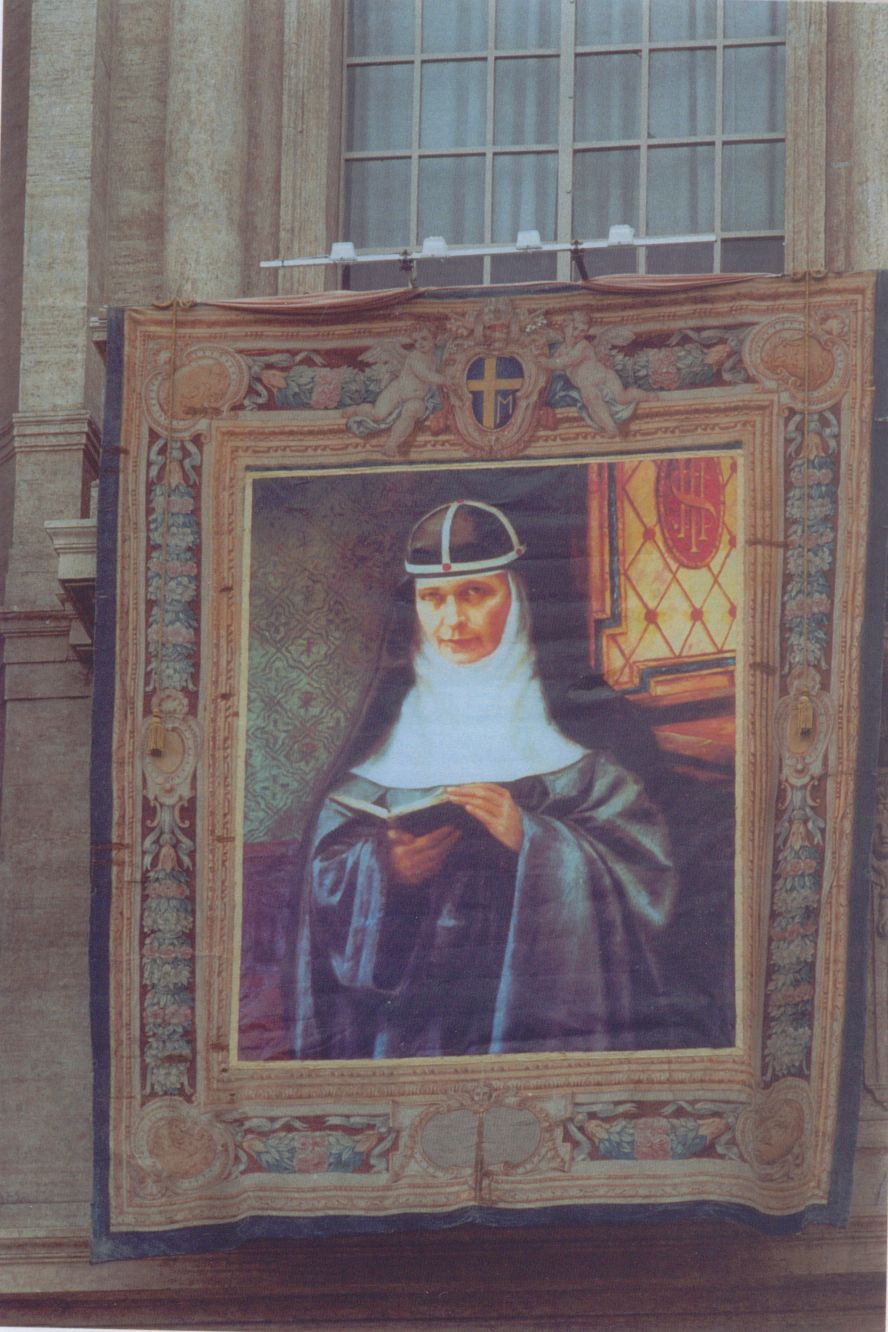
ME Hesselblad.jpgThe Sisters of Saint Birgitta honor their second foundress, “Bridget the Second,” the woman who restored the Order of the Most Holy Savior, Blessed Mary Elizabeth Hesselblad. Her liturgical feast celebrated today.

Blessed Mary Elizabeth immigrated to the USA and converted to Catholicism through a Jesuit at Georgetown University. In time she felt called to refound the ancient order first founded by the Swedish saint Bridget, the Order of the Most Holy Saviour in the mid-14th century. The order is a semi-contemplative order of nuns officially approved by the Holy See on 7 July 1940, though it came together in 1911. The nuns run retreat houses and have some ecumenical work with the Protestant communities.
The Order of the Most Holy Saviour is a fascinating part of our Catholic ecclesial history in that the order of nuns and priests were part of a double monastery dedicated to the Lord’s passion. The chaplains were under the rule of the abbess. The nuns have foundations in different parts of the world while there is one priory of monks in Oregon and they don’t actively collaborate with the nuns.
Mother Mary Elizabeth taught, “We must nourish a great love for God and our neighbors; a strong love, an ardent love, a love that burns away imperfections, a love that gently bears an act of impatience, or a bitter word, a love that lets an inadvertence or act of neglect pass without comment, a love that lends itself readily to an act of charity.”
Video part II

The Bridgettines have a convent and retreat house in Darien, CT (in the Diocese of Bridgeport).
In addition to Blessed Mary Elizabeth Hesselblad, the Church raised up and bestowed the title of blessed on Mother Mary Riccarda Beauchamp Hambrough, Mother Mary Catherine Flannagan and Sister Mary Magdalen  Moccia on 21 October 2011.
Blessed Mary Elizabeth, pray for us.
Enhanced by Zemanta

The Jesuits by the numbers

Ignatius Loyola

Statistics are not that interesting unless you’re bean counter. Even then the numbers don’t account for everything that’s happening in the Church and in a group. Admittedly, there needs to be room for the work of the Holy Spirit.


Having said all this, if you want to see how culture and theology are working together –or not– you need to look at the numbers. There is a claim that the largest order of men in the Church is the Society of Jesus, founded in 1540; if you bring together the various Franciscan groups of men they’d likely outnumber the Jesuits.

Several years ago Father Peter Hans Kolvenbach said that looking at the original charism of the Society the vocation to be a Jesuit was given to very few men. In the course of history, and for particular reasons, the Society exploded in numbers surpassing expectation and control. And yet, there has been a tremendous amount of good done through Ignatian spirituality, but there has been a demonstrable chaos wreaked by the same. It looks as though the chaos is lessening but it will take another generation or two for a more authentic living of the charism of Saint Ignatius and the first Jesuits to be fully lived again.

To give you a sense of the scope of the Jesuits worldwide consider this information for today:

  • There are 83 provinces, 6 Independent Regions and 10 Dependent Regions;
  • Roman Houses (including the Jesuit curia) 403;
  • As of 1 January 2013, the total number of Jesuits was 17,287: 12,298 priests, 1,400 brothers, 2,878 scholastics, and 711 novices – a net loss of 337 members from 1 January 2012.
Compare total numbers in the USA:
2012: 2547
2013: 2467
Compare total numbers worldwide:
1974: 29,436
1984: 25,724
1994: 23,179
2004: 20,408
2013: 17,287
Enhanced by Zemanta

Vatican Bank begins to change image

Ernst von Freyberg.jpeg

In an article on May 30, 2013 by Rachel Donadio for the NY TimesVatican Bank Looks to Shed Its Image as an Offshore Haven does look into the Vatican Bank’s recent past. Before his retirement in February, Pope Benedict appointed Ernst von Freyberg, 54,  as the new head of the bank that causes a lot of distraction. Officially, the real name for the Vatican bank is the Institute for Religious Works (IOR) or sometimes the IOR is called the Institute for the Works of Religion. The IOR is not a commercial bank like Chase or TD Bank.


Mr von Freyberg is a German citizen, an accomplished businessman with strong Catholic roots and who is a member of the Order of Malta, a group of faith Catholics who serve the Church and society by defending the faith and serving the needs of the sick and poor. 


I, for one, would like to see the IOR vanish. In my opinion, there is a little need for the IOR. But I am happy to hear von Freyberg say, 


“Our mission is to serve and shine,” the bank’s president, Ernst von Freyberg, said with a smile. “Our first pillar is transparency.” He spoke from an office in the medieval tower that houses the bank inside the Vatican, beneath a painting depicting a Gospel lesson, “Render unto Caesar what is Caesar’s, and to God, what is God’s.”

Enhanced by Zemanta

Continue reading Vatican Bank begins to change image

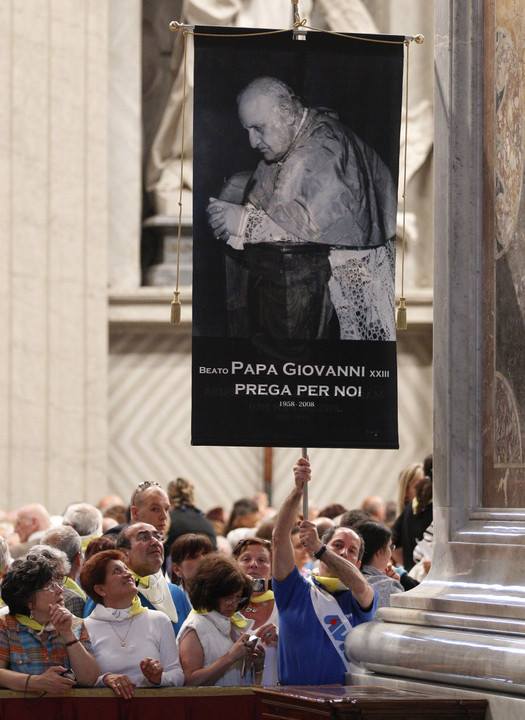
Pope Francis shows the import of Blessed John XXIII on his anniversary of death

Bergamo prays for John 23.jpg

Dear friends of the Diocese of Bergamo,

I am pleased to welcome you here, at the tomb of the Apostle Peter, in this place that is home to every Catholic. I affectionately greet your Pastor, Bishop Francesco Beschi, and thank him for the kind words he addressed to me on behalf of all.

Exactly fifty years ago, just at this moment, Blessed John XXIII left this world. Those who, like me, [are of] a certain age, retain a vivid memory of the commotion that spread everywhere in those days: St. Peter’s Square had become a sanctuary in the open, day and night welcoming the faithful of all ages and social conditions, in trepidation and prayer for the Pope’s health. The whole world had recognized in Pope John a pastor and a father: a shepherd because [he was] father. What made him such? How could he reach the hearts of so many different people, even many non-Christians? To answer this question, we can refer to his episcopal motto, oboedientia et pax: obedience and peace. “These words,” noted the then-Archbishop Roncalli on the eve of his episcopal ordination, “are [in a way] my story and my life.” (Journal of a Soul, retreat in preparation for consecration as bishop, 13-17 March 1925).

Continue reading Pope Francis shows the import of Blessed John XXIII on his anniversary of death

Saint Charles Lwanga and companions

lwanga.jpg

The Church honors Saint Charles Lwanga, and his companions, today, who were burned at the stake for belief in Jesus Christ. They were the embodiment of a real love for God and his people. 


The Ugandan martyrs died because they refused to renounce his Christianity. Their death was also the result of the anger of a king who made sexual advances on Charles and others who refused. They were serious about the Christian faith. It was on this date in 1886, the solemnity of the Ascension that Charles and 21 others were killed.


The Church through the Servant of God Pope Paul VI canonized the Uganda Martyrs in 1964; they were beatified in 1920.


Here is a commentary by Father Barron on Saint Charles wherein he discusses the saint’s legacy, spiritual and societal.


Saint Charles is the patron saint of the African Catholic Youth Action. May he and his companions be our guide in living the Christian faith in times of difficulty.

Enhanced by Zemanta

Anniversary of death of Pope John XXIII, the Mosul martyrs, and a Trappist

John 23 death.jpg

In daily life most of occasionally remember the passing of a loved with a visit to the cemetery, saying a prayer for the peaceful repose of the soul, perhaps having a Mass offered for the loved. These are normal Catholic practices in remembering the dead. But when you are a pope similar things happen, but just like with loved ones, there comes a point that we just don’t actively remember anymore. Do we actively remember the dead? In my family, I think I am the only one to keep the memory of loved ones known, and try to beg God for mercy on the dead. This is a sad stage in our the evolving of our society.

Today happens to be anniversary of death that I am recalling, four people from widely different backgrounds and vocations:

  • Blessed Pope John XXIII‘s 50 years since his death
  • Aunt Helen, 2002
  • Dom Basil Pennington, OCSO, monk, abbot, and author, Spencer, MA, 2005
  • Father Raghed Ganni and 3 subdeacons killed in Mosul, Iraq, 2007
John XXIII, was the supreme pontiff less than 5 years, was the smiling pope who called the Second Vatican Council, Aunt Helen was a wife and mother, Dom Basil was a Trappist monk of St Joseph’s Abbey, Spencer, MA who was a prolific writer on the spiritual life and on Cistercian life, and Father Raghed Ganni and the subdeacons we gunned down for being Christian in a context of Islamic persecution. Of note, pilgrims from Blessed John’s native region in Italy will be at Mass today and meet with Pope Francis. It is a good thing to remember our loved ones. They still are a part of our lives; they make up our DNA.
Let’s offer a prayer for all these people asking God the Father of Mercies to be gentle and loving. But let’s ask these people to ask God to bestow mercy upon us.