Creation is evidence of God’s existence

Paul Walker on creationHear what to selections of Scripture say that echo Paul Walker’s statement,

“When I see the heavens, the work of thy fingers, the moon and the stars which thou hast established; what is man that thou art mindful of him, and the son of man that thou dost care for him?” (Psalm 8)

For what can be known about God is perfectly plain to them, since God has made it plain to them: ever since the creation of the world, the invisible existence of God and his everlasting power have been clearly seen by the mind’s understanding of created things. (Romans 1: 19-20)

Pope Benedict said the following about the place of images (created things) in Christian faith:

But since God has now been seen in the flesh and lived among men, I represent that part of God which is visible. I do not venerate matter, but the Creator of matter, who became matter for my sake and deigned to live in matter and bring about my salvation through matter. I will not cease therefore to venerate that matter through which my salvation was achieved.

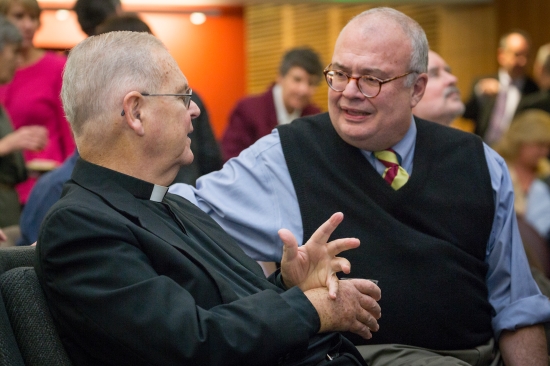
Fr. Harrington Receives Heartfelt Tributes

Daniel Harrington SJOne of my former professors of Scripture is battling cancer.  Please offer a prayer for him. Jesuit Father Daniel Harrington was honored for his tremendous work in sacred Scripture. His notes and wisdom are still fresh in my mind. He is in his final year of teaching; this coming semester he is scheduled to teach three courses. Father Harrington’s many years of teaching, writing and research is a testament to the hard work of faith and reason that we ardently need.

The Harvard educated Jesuit priest served as editor of New Testament Abstracts since 1972; edited the eighteen-volume Sacra Pagina series of New Testament Commentaries (Liturgical Press) and wrote “The Word “ column for America magazine for three years. His bibliography, however,  is more extensive. Not long ago Harrington and Christopher R. Matthews published Encountering Jesus in the Scriptures (Paulist Press, 2013), a collection of scholarly essays exploring who Jesus was in the first century—and what he means for us today. Putting biblical theology to work for the people of God in the Archdiocese of Boston, Harrington has been on the staff at St. Agnes Church in Arlington and at St. Peter’s in Cambridge.

Father Harrington remarked,

“It has been my privilege as a member of the Society of Jesus for more than 50 years to immerse myself in the study of the Bible — the ancient languages, the forms of expression, the culture settings and the theological significance.”

“The old saying ‘If you love what you do, you will never work a day in your life’ certainly applies to me. It’s all been a joy.”

Read about the event here.

Sainthood Cause of the Martyrs of Algeria, opened

Cause of the Martyrs of AlgeriaThe Order of Cistercians of the Strict Observance (the Trappists) announced that,

On October 7, Archbishop Bader of Algiers, with the agreement of the Abbot General and his Council, appointed Father Thomas Georgeon, monk of La Trappe and present Secretary of the Abbot General, as postulator of the cause of Archbishop Claverie and his 18 companions (among them our 7 brothers of Tibhirine). The appointment was approved by the Congregation for the Causes of Saints on October 11, 2013.

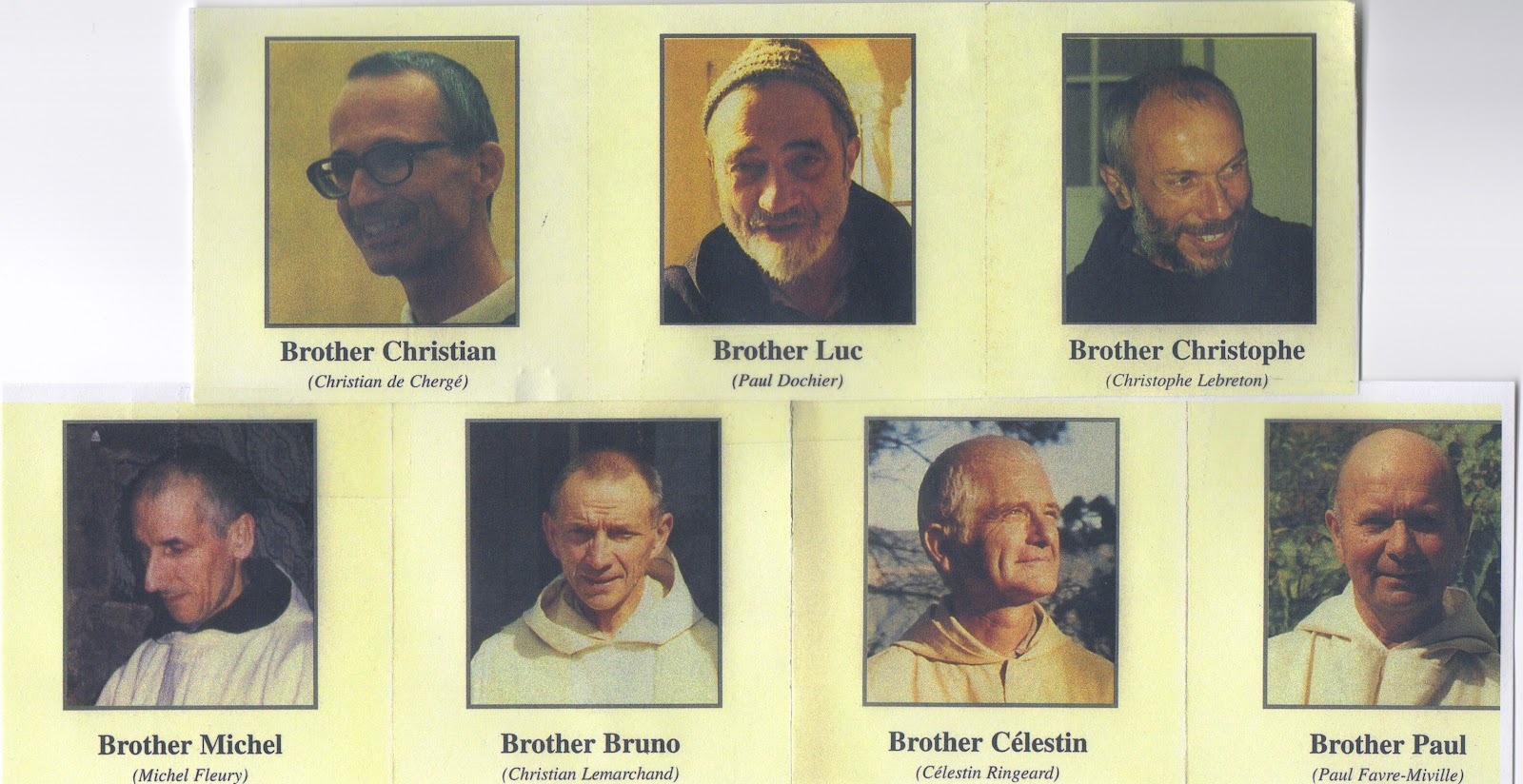
The 7 monks of the Monastery of Notre-Dame de l’Atlas were killed 26/27 March 1996. The Atlas Martyrs:

  • Dom Christian (de Chergé) – prior of the community
  • Brother Luc (Paul Dochier)
  • Father Christophe (Lebreton)
  • Brother Michel (Fleury)
  • Father Célestin (Ringeard)
  • Father Bruno (born Christian Lemarchand)
  • Brother Paul (Favre-Miville).

A 2010 film on the monks was released, “Of God and Men” which was well-received.

You may want to read Christian Salenson’s Christian de Chergé: A Theology of Hope (Cistercian Publications, 2012).

Islamist rebels control Monastery of St Thekla, Maaloula, Syria

While information is not consistent and the reports are “unconfirmed,” at least in their details, numerous sources, including Vatican diplomats who have been in contact with the Greek Orthodox Patriarchate of Antioch, say that Islamist rebels have taken control of the venerable Monastery of St Thekla in Maaloula, Syria, and have kidnapped a number of nuns, including the Abbess, and possibly set about sacking the monastery, one of the most ancient ones in Christendom. AsiaNews.it has this report.
Various reports can be accessed through the blog Ad Orientem.
Father Charles Baz writes,
“Mother Alexandra, I have been following most of the Arabic news agencies all day, thinking at first it was a rumor, but sadly it is not. Mother Pelagia Sayyaf, a dear friend of our family and to many in the US, is among them. This attack on Ma’aloula seems much worse and ferocious compared to September’s. May God pacify the situation and have these nuns released.”
He also says:
“All the news sources are mentioning only Ma’aloula, Al-Nabak, and Al-Yarbood. These three towns are clustered together and collectively are distant from Saidnaya. The news agency are clear about the fact that this battle, distinct from others, is politico-religious, since Ma’aloula and the rest of the Qalamoun region gives neither the government nor the rebels any strategic edge. Sadly, it is only a religious-motivated aggression. Let us pray for the safety of the nuns and the orphans lest any harm befalls them. Some news agencies are stating that already some nuns have been killed Monday in the Yarbood vicinity. All this has to be verified still, and hopefully not true.”
Please join in prayer for the safety of the Nuns, the soldiers who were guarding the monastery, and all concerned.

Saint Francis Xavier

Francis Xavier with mapThe holy Francis Xavier is recognized as one of the Church’s greatest missionaries. More than anything I see Xavier as a man with a great humanity who had an intense love for the Lord, His Church and for those given to him as friends. The Gospel only has a vitality if the minister reflects the tenderness of the Savior. It is the experience of the Lord’s gaze upon us that we can turn toward others. Hence, it was Xavier’s capacity to love and to work for his Lord that allowed him to be build the Body of Christ in Asia.

We know the story. Xavier was born near Pamplona, Spain, in 1506, the youngest child in a large family. While attending to studies at the University of Paris he met Ignatius of Loyola, who gave him the Exercises. Sensing the call to serve the Lord in a different way, he joined other early companions who became the first members of the Company of Jesus (the Society of Jesus, aka, the Jesuits). Xavier was ordained a priest and missioned to be first missionary to the East — coast of India.

Catholics were not doing well and things turned around with Xavier’s praying the Mass, the faithful administration of the sacraments, his preaching and teaching the faith. Xavier was renown for baptizing thousands. His missionary activity lasted for 11 years.

Georg Schurhammer’s three-volume biography of Francis Xavier is a wonderful gift to read. The intensity of his love is remarkable.

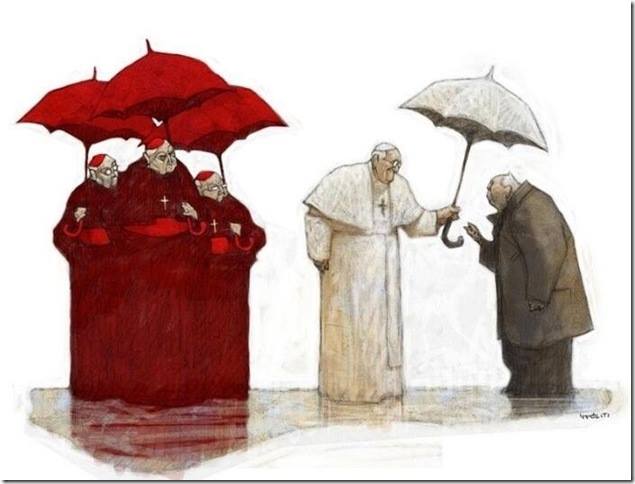
Pope meets the Council of Cardinals, again

C 8The Pope and the Council of Cardinals begin their second meeting today, and running until Thursday. His Holiness established the agenda to study the need for substantial reform of the Roman Curia, to consider other proposals for change, and to advise the Pope on general matters of Church governance. Several changes have been already announced. Various Congregations will be visiting with the Council.

The next scheduled meeting of the Council will happen on 17-18 February, the eve of the Pope’s first consistory for the creation of new cardinals, set for 22 February. The Consistory will give the Pope the opportunity to meet with the College of Cardinals since his last meeting with him following his election to the See of Peter.

Francis meets Benjamin Netanyahu

Benjamin Netanyahu and Pope Francis Dec 2 2013Pope Francis  received Benjamin Netanyahu, Prime Minister of the State of Israel, in private audience, today. The story is here.

As usual is the exchange of gifts. “The Israeli Premiere presented the Pope with a book in Spanish on the Inquisition written by his father who was an historian. He also presented him with a silver “hanukkhah”, a Jewish candle-holder with nine candleholders. On his part, the Pope presented Netanyahu with a bronze bas-relief of Saint Paul.”

Watch Thou, O Lord

Perhaps you would like to join me in praying this prayer following the prayers at evening (Vespers) each night. It echoes the theme of “keeping watch” with Christ.

Evening Prayer of Saint Augustine

Watch Thou, O Lord, with those who wake, or watch, or weep tonight, and give Thine Angels and Saints charge over those who sleep.

O Lord Jesus Christ,

Tend Thy sick ones,

Rest Thy weary ones,

Bless Thy dying ones,

Soothe Thy suffering ones,

Pity Thy afflicted ones,

Shield Thy joyful ones,

And all for Thy love’s sake.


Evening Prayer Antiphon:

Protect us, Lord, as we stay awake,
watch over us as we sleep,
that awake, we may keep watch with Christ,
and asleep, rest in his peace.

Saint Nahum, prophet

ThNahume Catholic Church honors the Old Testament prophets on canon of saints, they’re listed in the Martyrologium Romanum. Today, the Church liturgical recalls Saint Nahum, the prophet:

Commemoratio sancti Nahum, prophetae, qui Deum praedicavit cursum temporum regentem et populos in iustitia iudicantem.

“The memorial of St. Nahum, the prophet, who preached that God was ruling the path of time and was judging the peoples in justice.”

Have you read from the book of Nahum? Do you know where it is in the Bible? It is between Micah and Habakkuk. He is one of the 12 minor prophets in sacred Scripture. The prophetic message uttered by Nahum differs from other prophets in that he does not issue a call to repentance, nor does he denounce Israel for infidelity to God. Some scholars take Nahum’s work as history.

Historically, there is not much documentation on the Prophet Nahum. His name means “God consoles.” We know that he was from the town Alqosh (what is likely now Galillee) living close to the end of the Assyrian reign. Nahum warns Ninevah of its destruction (612 BC).

Some members of the Church ask Saint Nahum to intercede on behalf of those with mental disorders. The Latin, Byzantine and Armenian Churches honor Nahum on different days.