Epiphany Sunday

EpiphanyToday the Latin Church celebrates the Solemnity of the Epiphany, a move that slightly changes the idea of the 12 Days of Christmas; this move is less than optimal but I can see why it is done given that Catholics will not come to worship God on the actual day. The traditional day is that the Epiphany is observed on is January 6.

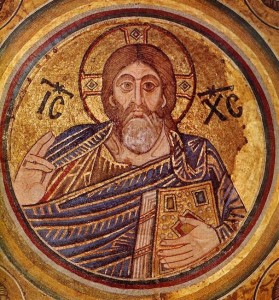
The feast of the Epiphany is an earlier feast than the celebration of Christmas. Theologically an epiphany is a manifestation, a revelation of God; Epiphany is also called Theophany. Think of Moses meeting God on the Mount in the experience of the burning bush.

Yet, the feast is not only about the recognition of the Wise Men –though important because the Magi demonstrate that we, from all nations, ought to adore the Lord– but in the feast we keenly see that Jesus’ mission is revealed and accepted. In the sacred Liturgy we pray at Vespers (in the Latin Church) the antiphons note that the Lord is baptized in the Jordan by his cousin, John, and that that his first miracle of changing water into wine; thus setting the trajectory of salvation history in motion. The spinning out of a Sunday celebrating the Lord’s baptism is a later fact.

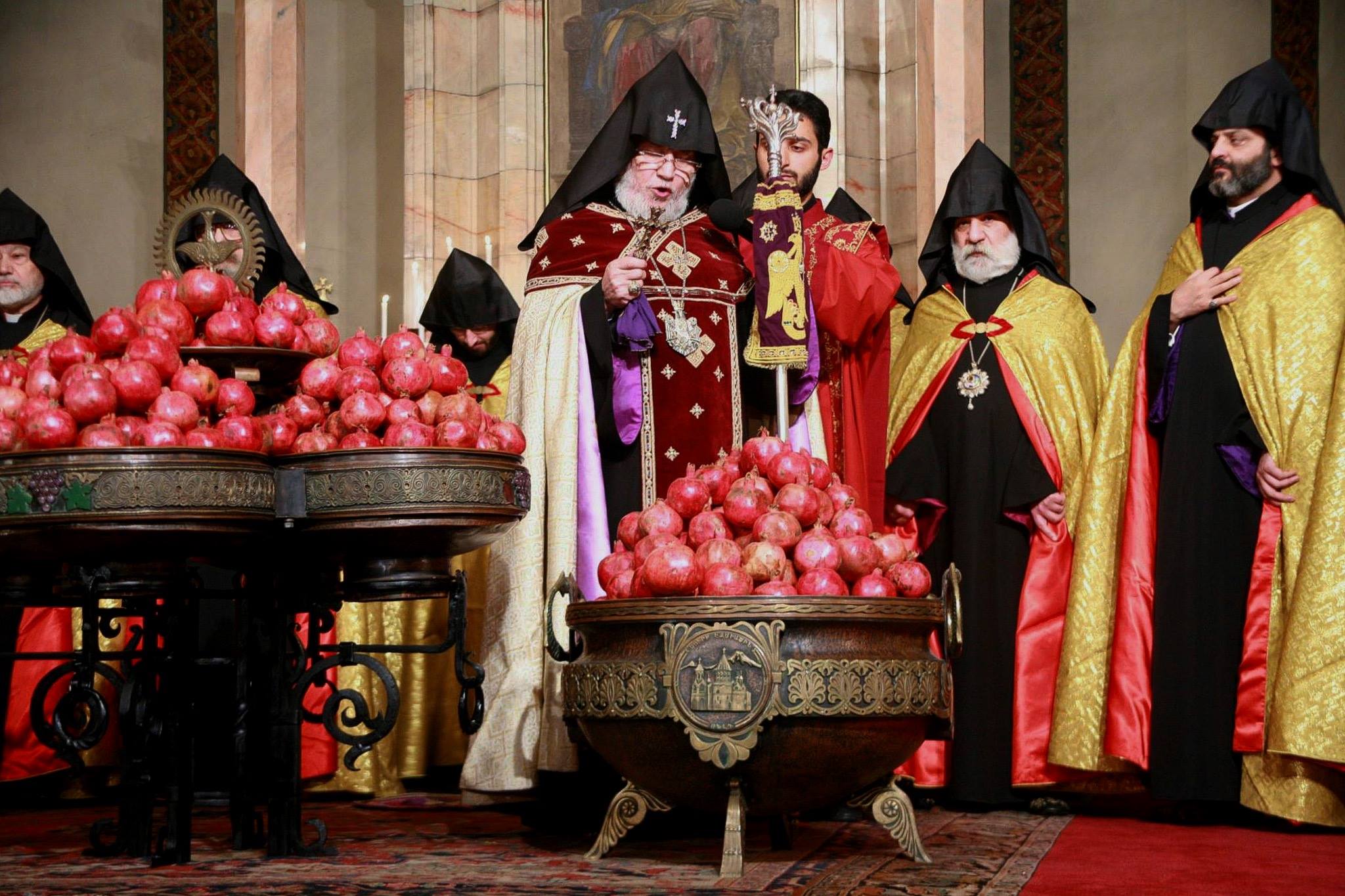
A side note, the Eastern Churches maintain the Epiphany is a holy day –the Maronites have it as a day of obligation. The Epiphany is such  significant feast that it must not be overlooked or casually winked-at. Several customs of the churches in the period of the Epiphany come to mind: blessing of incense and chalk, the blessing of water, the blessing of homes, the blessing of fruits (remember the Armenian blessing of pomegranates that I posted the other!).

Saint Leo the Great preached: “This is the day that Abraham saw and was glad. Knowing that in his offspring, that is, in Christ, the children of his faith would be blessed, and for seeing that his faith would make him the father of all nations, he gave glory to God in complete confidence he was able to do what he had promised.”

And Saint Basil the Great said this in a homily: “Stars cross the sky, wise men journey from pagan lands, earth receives its savior in a cave. Let there be no one without a gift to offer, no one without gratitude as we celebrate the salvation of the world, the birthday of the human race. Now it is no longer, Dust you are and to dust you shall return, but “You are joined to heaven and into heaven you shall be taken up.”

Both reflections by these saints ought to give us some important data: that God fulfills his promises and that we are given the gift of eternal life now (not only at death in a definitive way). The prayers of the Liturgy not spoken of here but hinted at pray that our hearts and minds be changed unto that what is of God. They speak of conversion, of truly accepting the fact of Jesus as Lord and Savior. Hence we can say that every Liturgy is an epiphany!


Saint Elizabeth Ann Seton

St Elizabeth Ann SetonElizabeth Ann Seton was a woman of great and persevering generosity and service – as a wife, a mother, a widow, and as a religious. She was canonized on September 14, 1975 by Pope Paul VI. At that time he told the Church in America, “Elizabeth Ann Bayley Seton is a Saint! She is the first daughter of the United States of America to be glorified with this incomparable attribute!”

Mother Seton came to Baltimore and then to Emmitsburg to educate the young and the poor, a healing of body, mind and spirit. Her discipleship with the Lord as Master was informed by her femininity, her spousal relationship with her husband, her motherhood, her conversion to the Church of Rome and most importantly, her spousal relationship with Jesus Christ. As a consequence of Seton’s intense faith in Christ and the sacrament of the Church Seton was able to follow the invitation of the Sulpician who invited her to serve the Church in a new way. The founding of the Daughters of Charity was just one concrete way of living of the spiritual and corporal works. As we know, love knows no limitations; where man’s mercy may have limitations, God’s mercy does not and that was Seton’s message.

When death was imminent and it came on January 2, 1821, Mother Seton said as her final words: “Be children of the Church!” Hers was the message she learned from experience and from Ignatian spirituality, “sentire cum ecclesiae.” Her words were an exhortation to be a close and intimate friend of Jesus, a mature offspring of the Divine Master.

For Mother Seton, and therefore for us who are close to her, our vocation is to bear witness to that mercy in ministries of the mission, education and healing formed by charity. The gospel knows no other way.

Saint Odilo of Cluny

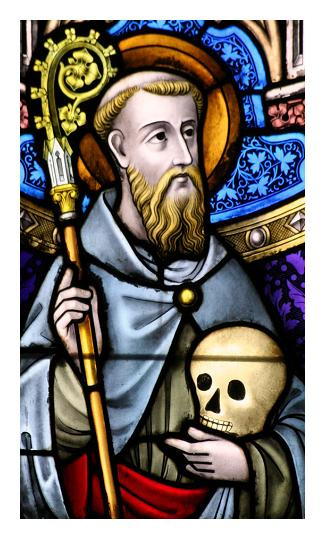
odiloSaint Odilo of Cluny (962-1049) is remembered for his intense Benedictine life at Cluny and as the 5th abbot of Cluny he oversaw the expansion of the Cluniac reform but he’s best remembered for his concern for he poor souls in purgatory. There is some debate if he was the 5th or the 3rd abbot of Cluny. However, Odilo’s importance lies in the fact that he instituted the commemoration of All Souls (c. 1030) as a yearly liturgical remembrance. The Church from the earliest days prayed for the dead with some regularity. Theologically he had a significant interest in the Incarnation.

Hence two things of Christian life had Saint Odilo’s attention: the care of the poor and the souls of the dead. Of the latter concern also impacted the prior –he decreed that Mass be offered and a monetary offering be made for the poor. He made almsgiving connect with fasting and prayer for the dead: it is not only a lenten piece of Christian spirituality but something that gives a renewed flavor to living the gospel.  Odilo instructed that the offering of food given to twelve poor people (as much food as the monks would eat at the main meal).

Regarding the monastic life, Abbot Odilo showed great solicitude for the observance of the monastic life by visiting the monasteries under his guidance on a regular basis. The monasteries following the Rule of Cluny really formed these Benedictines into an “order” because of a centralized authority system and the appointment of superiors in the priories (versus the typical election of a superior found in Benedictinism). Thus, he ensured that decadence that has a habit of creeping into a monk’s life was averted.

Saint Odilo has several possible dates for his liturgical memorial: January 1, 2, or 3; 19 at Cluny; April 29 as part of the feast of the Seven Abbots of Cluny and February 6 in Switzerland. Take your pick. But I think, generally, Odilo’s liturgical memorial is bridged with under the title of “Abbots of Cluny” on April 29.

The antiphon “Odilo showed wondrously what was the charity of his heart, who, while pitying sufferings of the faithful departed, yearly decreased them by a sweet refreshment, alleluia.”

Holy Name of Jesus

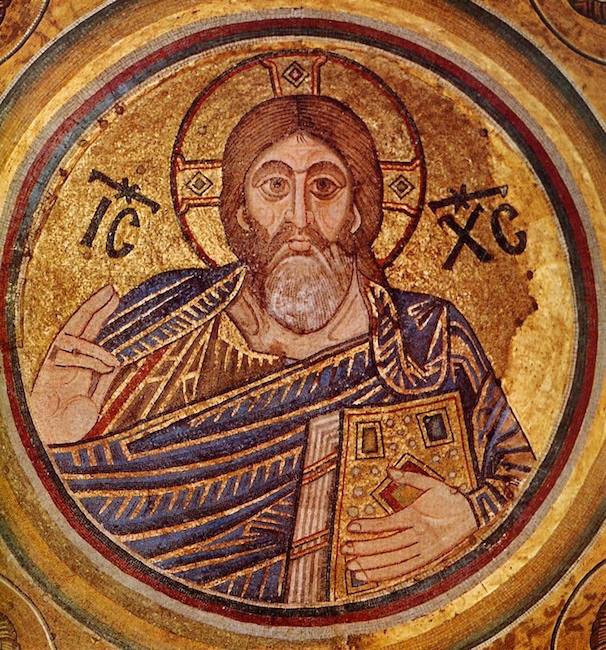
JesusMay the Most Holy Name of Jesus be praised and worshiped now and forever! By no other name are we saved!

Saint Bernadine of Siena preached:

“O glorious name, graceful name, lovely and excellent name! Through you crime slackens, enemies are conquered, the oppressed are liberated, those who suffer difficulties are strengthened and delighted! You, honor of believers, you, teacher of preachers, you, giver of strength to those who labor, you, supporter of the tired. Desires revive with the light and warmth of your fire, suffrages are asked for, contemplative souls are inebriated, and all those who triumph in the heavenly glory are glorified. And you, most sweet Jesus, make us reign with them through your most Holy Name.”

The Catechism teaches (430-435):

Jesus means in Hebrew: “God saves.” At the annunciation, the angel Gabriel gave him the name Jesus as his proper name, which expresses both his identity and his mission. Since God alone can forgive sins, it is God who, in Jesus his eternal Son made man, “will save his people from their sins”. In Jesus, God recapitulates all of his history of salvation on behalf of men.

In the history of salvation God was not content to deliver Israel “out of the house of bondage” by bringing them out of Egypt. He also saves them from their sin. Because sin is always an offence against God, only he can forgive it.  For this reason Israel, becoming more and more aware of the universality of sin, will no longer be able to seek salvation except by invoking the name of the Redeemer God.

The name “Jesus” signifies that the very name of God is present in the person of his Son, made man for the universal and definitive redemption from sins. It is the divine name that alone brings salvation, and henceforth all can invoke his name, for Jesus united himself to all men through his Incarnation, so that “there is no other name under heaven given among men by which we must be saved.”

The name of the Saviour God was invoked only once in the year by the high priest in atonement for the sins of Israel, after he had sprinkled the mercy seat in the Holy of Holies with the sacrificial blood. the mercy seat was the place of God’s presence. When St. Paul speaks of Jesus whom “God put forward as an expiation by his blood”, he means that in Christ’s humanity “God was in Christ reconciling the world to himself.”

Jesus’ Resurrection glorifies the name of the Saviour God, for from that time on it is the name of Jesus that fully manifests the supreme power of the “name which is above every name”. The evil spirits fear his name; in his name his disciples perform miracles, for the Father grants all they ask in this name.

The name of Jesus is at the heart of Christian prayer. All liturgical prayers conclude with the words “through our Lord Jesus Christ”. The Hail Mary reaches its high point in the words “blessed is the fruit of thy womb, Jesus.” the Eastern prayer of the heart, the Jesus Prayer, says: “Lord Jesus Christ, Son of God, have mercy on me, a sinner.” Many Christians, such as St. Joan of Arc, have died with the one word “Jesus” on their lips.
Blessing of pomegranates by the Armenian Catholicos Karekin II

Karekin blessing pompegranates 2015Here is a unique Christian tradition with the 2015 Blessing of pomegranates by His Holiness,  Karekin II, Catholicos of All Armenians in the Mother See of Holy Etchmiadzin. It is a tradition on New Year’s Eve (or day).

The custom of blessing fruits was known among the Israelites; the Jewish custom originated in that the first harvest was offered to the temple: harvest gifts included wheat, barley, grapes, figs, pomegranates, olives and honey.

Pomegranates are considered by many faith traditions to be the fruit of the tree of knowledge and they are also a symbol of plenty and life.

In the Christian Church, the pomegranate symbolically represents the Church. “The seeds of the pomegranate, though separated by thin membranes yet hold tight together, same way Christian Church holds all Christians around the world together in Christ’s love; though separate but not divided. Pomegranate shows unity in diversity. The crown of Pomegranate represents Jesus’ crown and His sovereignty over the world. The red color symbolizes His Salvific Blood that was shed for All. It also contains 365 seeds as the number of days in a year symbolizing new life in Christ the new year.”

Armenia accepted Christianity as its official religion in AD 301.

Pope Francis’ prayer intentions for January 2015

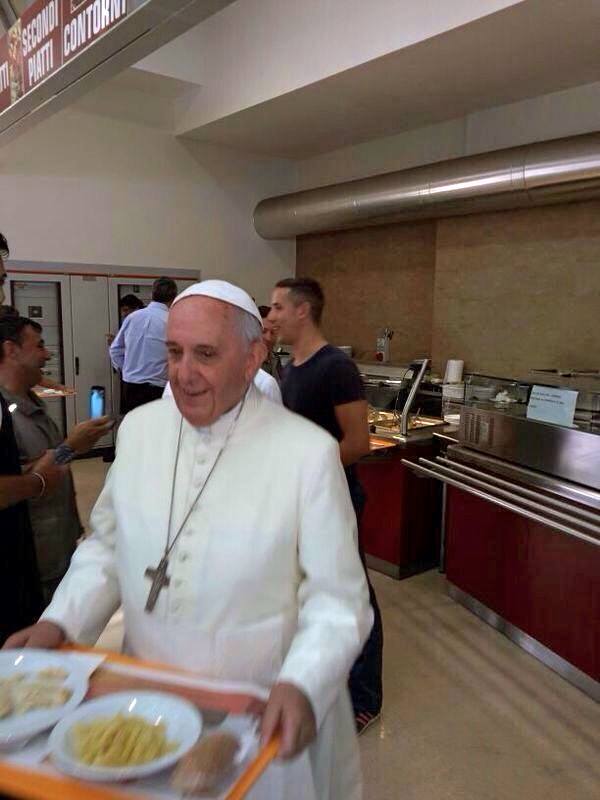
cafeteria CatholicA new year of grace. A new year to be grateful for the graces we receive freely from the Divine Majesty. It is also a time to be aware of the needs of the world and the Church before the Throne of Grace. Here are the two intentions of Pope Francis for the month of January 2015. Sts Peter and Paul, pray for us.


The General Intention: That those from diverse religious traditions and all people of good will may work together for peace.


The Missionary Intention: That in this year dedicated to consecrated life, religious men and women may rediscover the joy of following Christ and strive to serve the poor with zeal.

Plenary Indulgence: Te Deum on Dec. 31 Veni Creator on Jan. 1

§ 1. A plenary indulgence is granted to the Christian faithful who, in a church or in an oratory, are present [take part] in a recitation or solemn chant of: …
1° the hymn Veni Creator … on the first day of the year, imploring divine assistance for the whole of the coming year…

2° the Te Deum hymn, on the last day of the year, in thanksgiving to God for the favors received in the course of the entire year.

(Reference: Enchiridion Indulgentiarum, 4th editional. concessiones.)
The indulgence is acquired under the usual conditions. i.e., to Confess mortal and venial sin within eight days prior to or after the day on which the indulgence is offered, to pray for the intentions of the Holy Father.

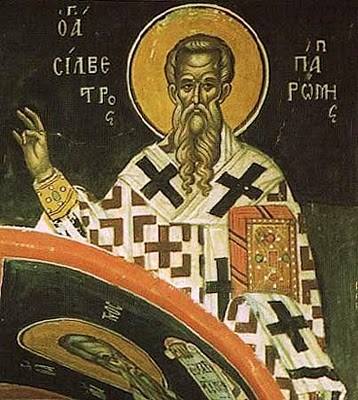
Saint Sylvester

St SylvesterOn this final day of the civil year Mother Church honors the memory of Pope Saint Sylvester, who guided the Church with his teaching and life during the persecutions of Diocletian, and during the period of Arianism and the Council of Nicæa. That his feast day is so close to Christmas ought to indicate to us that he had concern for the Christology of Catholic belief and life.

Pope Sylvester’s pontifical ministry saw the construction of great churches in Rome by Constantine, namely the basilica and baptistery of the Lateran near the former imperial Lateran palace where the pope lived (he now resides at the Vatican), the basilica of the Sessorian palace (the Basilica of Santa Croce where the relics of the holy passion are located), the first Church of St. Peter on Vatican Hill, and several cemeterial churches over the graves of martyrs.

More to the point for this blog, and the desire to live in a theology of communion, the sainted Pope contributed to the development of the sacred Liturgy of the Roman Church and drew together the first martyrology of Roman martyrs. Moreover, Sylvester established of the Roman school of chant and music.

Pope Saint Sylvester is buried at the Church connected with the Catacomb of Priscilla.

“People have been stripped of their dignity,” US Chaldean bishop says

Francis KalabatTestimony of Bishop Francis Kalabat from the St. Thomas the Apostle Chaldean Catholic Diocese

Senate Subcommittee on International Operations and Organizations, Democracy and Global Women’s Issues

December 9, 2014

Madam Chair, Ranking Member, members of the committee: My name is Francis Kalabat and I serve as Bishop of the Chaldean Diocese of St. Thomas in North America, which includes 12 churches in Michigan and Illinois representing more than 175,000 Chaldean Catholics in communion with Rome and His Holiness Pope Francis.

Thank you for allowing me to testify before you today. As I speak, the process of the eradication of Christians in Iraq and throughout the Middle East continues. Ten years ago, in Iraq alone, there were over 350 Churches; today there are fewer than forty. Many have been bombed or destroyed; others, especially in the historically Christian villages of northern Iraq, are being used as Islamic State facilities.

I am here today to give testimony to the suffering of our people in Iraq and throughout the diaspora in Jordan, Lebanon, Syria and Turkey, and to seek further assistance from this body, Congress as a whole and the executive branch. The United States has a unique role and obligation in this conflict. Not only because we are the standard bearer and protector of international human rights, but also because the plight of Christians in Iraq today is a direct result of the U.S.-led invasion of Iraq in 2003.

That effort, the poorly planned and executed goal of regime change and the more recent withdrawal of U.S. troops, left in its wake a weakened and decentralized national government, sectarian warfare and the practice of government by tribes or in some cases government by gang. The lack of national unity and a tepid Iraqi military has left a dangerous void—a void filled, hopefully only temporarily, by Islamic State—a group that is the anathema to the West, to Judeo-Christian values and to civilized international norms. This has meant devastating consequences to the people of Iraq, especially Christians who are being systematically uprooted from their homes in the historical birthplace of Christianity.

A couple hundred thousand Christian Iraqis have fled their homes since the militant Islamic State group swept through much of the north in June. Islamic State has been turning churches into prisons in the Iraq city of Mosul, which used to be the site of a large Christian community before it was driven out by this terrorist group. As an example, Fides News Agency reported last Tuesday that a number of detainees were recently sent to the ancient Chaldean church of the Immaculate Conception in the eastern part of the city. Sources have shared that the historically important St. George Monastery in the north has also been turned into a place for female detention, raising fears that women might be abused. Our Churches have been destroyed and many of our ancient manuscripts dating back to the tenth century have been destroyed in an effort to wipe out our identity.

1

Mosul has been emptied of Christians who, under the implementation of Sharia law, have been forced to convert to Islam, pay a tax, leave their homes or die for their faith. Many have been killed in the name of religion.

Allow me to quote from a letter from Sr. Maria Hanna, Prioress of the Dominican Sisters of St. Catherine of Siena in Iraq.

“After four months of exile there are no signs of hope that the situation here in Iraq will be resolved peacefully. Unable to think or make decisions, everything is vague and we feel as if we have been living a nightmare. Christianity in Iraq is bleeding; so many families have left, and many are leaving to Lebanon, Jordan, and Turkey, preparing themselves for second immigration and an uncertain future. We know not how long these families will be able to tolerate the burden and survive financially.

“The conditions remain the same for those of us in Iraq. Many still are forced to stay in unfinished buildings on construction sites. In one place, a mall has been remodeled to accommodate families, with the hall divided merely with partitions. Although they are better than tents, they resemble dark, damp cages with no ventilation. Most difficult of all is the lack of privacy.

“There have been some attempts to provide containers and rent houses and flats, but this is not enough as the number of displaced people increases each day. Many come from cold mountainous places. Psychologically, people are tired, worried, confused, and irritated – who would blame them? They are jobless, their children do not attend school, and young people are still waiting to start their academic year at the university – some tried to register at Kurdish universities, but they were not accepted. All this is causing tremendous strain on the families, and the result is abuse and relationships that are unhealthy. The problems are totally overwhelming, and it seems as if our efforts are amounting to nothing.

“People have been stripped of their dignity….”

Members of this Committee, I submit to you that when people lose their dignity, they despair and despair is a dark, lonely place. But as our Savior Jesus Christ has taught us, “Where there is despair, he will bring hope.” But it is incumbent on us—the United States, western nations and all God- loving people everywhere, to be the tools and the manifestation of this hope. Therefore, I call on this sub-committee and the United States government to resolve the following:

  1. 1)  Our Diocese here has raised more than $1.5 million to aid the internally displaced Christians and other minorities now living in Kurdistan. Banking laws and regulations and other stipulations should not inhibit this money from reaching the people who need it.
  2. 2)  The Kurdish government should be provided resources by the U.S. specifically to aid people displaced by this current conflagration. The Kurdish Regional Government lacks resources to aid our growing refugee community and the arms to combat these terrorists.
  3. 3)  Pressure should be placed on the central government in Baghdad to take a more active stance on the growing problem of Iraqi refugees. The central government has done virtually nothing to support our community and is primarily concerned with the preservation of sectarian political power. Christians are being used as pawns because we have lived in what is known as disputed areas in Iraq.
  1. 4)  The U.S. and the international community must immediately intervene to provide direct

    humanitarian aid to the displaced Christians and other minorities in the regions of Erbil and

    Dohuk in northern Iraq.

  2. 5)  Christian and other minority villages that have been overrun by ragtag Islamic State militants

    must immediately be liberated with U.S. military assistance and refugees provided safe

    passage to return to their villages and homes.

  3. 6)  The Christian and other minority villages must be protected by a U.S.-led international force

    under the supervision of either the U.S. or United Nations, if other governments will participate. The air strikes alone are accomplishing very little and costing taxpayers a bundle.

  4. 7)  Syria must not follow the same path as Iraq. The United States’ involvement in Syria is just as vague as that in Iraq and is leading to the same brutality. This only leads us to ask: Who’s next in the Middle East?

Senators, I submit to you that the U.S. must finish what it started; Islamic State must be defeated quickly and permanently. They are a menace to the Iraqi and Syrian people and will be a permanent threat to the West if they are not dismantled. The situation that the ancient Christian people of Iraq find themselves in today is the direct result of 20 years of failed U.S. policy in Iraq. An additional 2.2 million Christians in Syria are facing the same fate. Our response and future actions as a government cannot be borne just from a sense of humanitarian responsibility but rather the moral obligation that accompanies the direct role that the U.S has played in the destabilization of Iraq and the region.

Thank you.