Saint Josephine Bakhita

When Pope Benedict XVI published his encyclical on Hope, Spes Salvi he showed the world a new aspect of hope in the person of a tremendously beautiful saint of the 20th century: Saint Josephine Bakhita. One priest called her “a superlative example of one who found hope.” YES, indeed!!!!!

In Spe Salvi, Benedict wrote:

3. Yet at this point a question arises: in what does this hope consist which, as hope, is “redemption”? The essence of the answer is given in the phrase from the Letter to the Ephesians quoted above: the Ephesians, before their encounter with Christ, were without hope because they were “without God in the world”. To come to know God—the true God—means to receive hope. We who have always lived with the Christian concept of God, and have grown accustomed to it, have almost ceased to notice that we possess the hope that ensues from a real encounter with this God. The example of a saint of our time can to some degree help us understand what it means to have a real encounter with this God for the first time. I am thinking of the African Josephine Bakhita, canonized by Pope John Paul II. She was born around 1869—she herself did not know the precise date—in Darfur in Sudan. At the age of nine, she was kidnapped by slave-traders, beaten till she bled, and sold five times in the slave-markets of Sudan. Eventually she found herself working as a slave for the mother and the wife of a general, and there she was flogged every day till she bled; as a result of this she bore 144 scars throughout her life. Finally, in 1882, she was bought by an Italian merchant for the Italian consul Callisto Legnani, who returned to Italy as the Mahdists advanced. Here, after the terrifying “masters” who had owned her up to that point, Bakhita came to know a totally different kind of “master”—in Venetian dialect, which she was now learning, she used the name “paron” for the living God, the God of Jesus Christ. Up to that time she had known only masters who despised and maltreated her, or at best considered her a useful slave. Now, however, she heard that there is a “paron” above all masters, the Lord of all lords, and that this Lord is good, goodness in person. She came to know that this Lord even knew her, that he had created her—that he actually loved her. She too was loved, and by none other than the supreme “Paron”, before whom all other masters are themselves no more than lowly servants. She was known and loved and she was awaited. What is more, this master had himself accepted the destiny of being flogged and now he was waiting for her “at the Father’s right hand”. Now she had “hope” —no longer simply the modest hope of finding masters who would be less cruel, but the great hope: “I am definitively loved and whatever happens to meI am awaited by this Love. And so my life is good.” Through the knowledge of this hope she was “redeemed”, no longer a slave, but a free child of God. She understood what Paul meant when he reminded the Ephesians that previously they were without hope and without God in the world—without hope because without God. Hence, when she was about to be taken back to Sudan, Bakhita refused; she did not wish to be separated again from her “Paron”. On 9 January 1890, she was baptized and confirmed and received her first Holy Communion from the hands of the Patriarch of Venice. On 8 December 1896, in Verona, she took her vows in the Congregation of the Canossian Sisters and from that time onwards, besides her work in the sacristy and in the porter’s lodge at the convent, she made several journeys round Italy in order to promote the missions: the liberation that she had received through her encounter with the God of Jesus Christ, she felt she had to extend, it had to be handed on to others, to the greatest possible number of people. The hope born in her which had “redeemed” her she could not keep to herself; this hope had to reach many, to reach everybody.

The concept of faith-based hope in the New Testament and the early Church

4. We have raised the question: can our encounter with the God who in Christ has shown us his face and opened his heart be for us too not just “informative” but “performative”—that is to say, can it change our lives, so that we know we are redeemed through the hope that it expresses? Before attempting to answer the question, let us return once more to the early Church. It is not difficult to realize that the experience of the African slave-girl Bakhita was also the experience of many in the period of nascent Christianity who were beaten and condemned to slavery……

5. We must add a further point of view. The First Letter to the Corinthians (1:18-31) tells us that many of the early Christians belonged to the lower social strata, and precisely for this reason were open to the experience of new hope, as we saw in the example of Bakhita……
Saint Joan de Lestonnac 

St Joan de LestonnacYou know you are in the digital age when you learn about a saint that has an interesting place in people’s lives. This morning I learned of one of today’s liturgical memorials: St. Joan de Lestonnac.

According to a biographer, Saint Joan “was born in Bordeaux, France, in 1556. She married at the age of seventeen. The happy marriage produced four children, but her husband died suddenly in 1597. After her children were raised, she entered the Cistercian monastery at Toulouse [at the age of 46]. Joan was forced to leave the Cistercians when she became afflicted with poor health. She returned to Bordeaux with the idea of forming a new congregation, and several young girls joined her as novices. They ministered to victims of a plague that struck Bordeaux, and they were determined to counteract the evils of heresy promulgated by Calvinism. Thus was formed the Order of the Company of Mary our Lady of Bordeaux. In 1608, Joan and her companions received the religious habit from the Archbishop of Bordeaux. Joan was elected superior in 1610, and many miracles occurred at her tomb. She was canonized in 1949 by Pope Pius XII.”

One interesting point for me is that Saint Joan’s concern for souls lost to Calvinism was aided by members of the Society of Jesus. Another biographer writes:

“Two Jesuit priests, Fathers de Bordes and Raymond, whilst they celebrated Mass, received an understanding that they should assist in founding an order to counteract the surrounding heresies and that Joan must be the first superior.  The rule and constitutions of the Order were founded on those of St. Ignatius and the first house was opened in the Holy Ghost priory at Bordeaux.”

AND, “Finally, her great love shown by her patient example even whilst she was being emotionally, spiritually, psychologically and physically abused, with her reputation being ruined as a result of lies and hatred, she still remained firm in her Faith and love of God, even converting the person who was so mean and cruel to her.  Let us remember the extraordinary example of this beautiful and incredible woman always!  St. Joan is a true feminist, true to her Faith, true to her abilities and never afraid to love, even her most vicious enemies!  God be praised for this magnificent lady!”

Saint Joan’s body, as a sign of holiness, remains incorrupt.

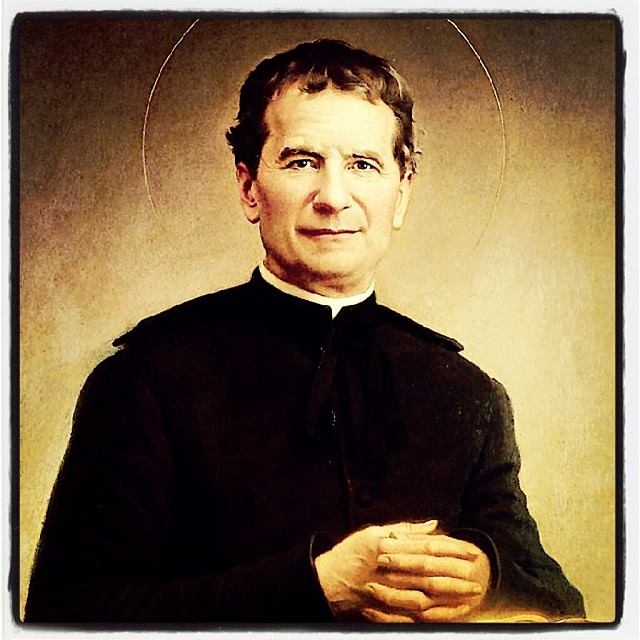
Saint John Bosco

St John BoscoToday we have the liturgical memorial of Saint John Bosco. Prayers of gratitude for his witness and that of the Salesians.

“Do you want our Lord to give you many graces? Visit him often. Do you want him to give you few graces? Visit him seldom. Visits to the Blessed Sacrament are powerful and indispensable means of overcoming the attacks of the devil. Make frequent visits to Jesus in the Blessed Sacrament and the devil will be powerless against you.”

“There must be no hostility in our minds, no contempt in our eyes, no insult on our lips. We must use mercy for the present and have hope for the future, as is fitting for true fathers who are eager for real correction and improvement.”

“It is easier to become angry than to restrain oneself, and to threaten a boy than to persuade him. Yes, indeed, it is more fitting to be persistent in punishing our own impatience and pride than to correct the boys. We must be firm but kind, and be patient with them.”

St. John Bosco, pray for us!

St Paul’s Conversion

Conversion of St PaulO glorious St. Paul, who from a persecutor of Christianity, didst become a most ardent apostle of zeal; and who, to make known the Savior Jesus Christ unto the ends of the world, didst suffer with joy imprisonment, scourging, stoning, ship-wrecks and persecutions of every kind, and in the end didst shed thy blood to the last drop, obtain for us the grace to receive, as favors of the Divine Mercy, infirmities, tribulations, and misfortunes of the present life, so that the vicissitudes of this our exile will not render us cold in the service of God, but will render us always more faithful and more fervent.  Amen.

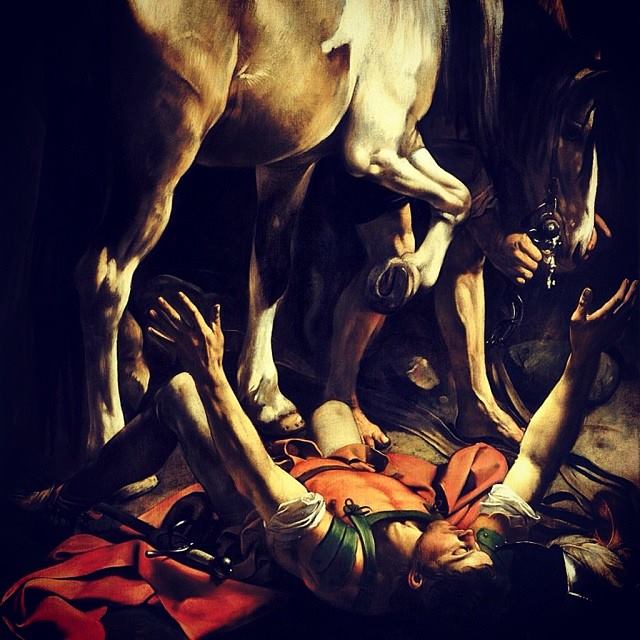
The 25th of January this year is a Sunday so the feast is not commemorated in the NO Liturgy but a clued-in preacher will be able to link the Scripture readings with Paul’s move from persecutor to Apostle of Jesus Christ. The missionary impulse of the Church needs to follow the paradigm we find in Paul: meet the Lord first, know and love the Lord, and then share call to holiness to all nations.

Saint Francis de Sales

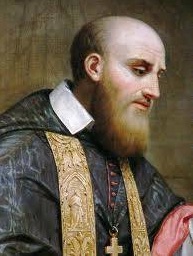
St Francis de Sales“Ask for nothing, refuse nothing,” Saint Francis de Sales, 1567-1622.

Saint Francis de Sales, tireless teacher, bishop and Doctor of the Church, pray for us!

Why not read some of his classic texts:

– “Introduction to the Devout Life” –> http://ow.ly/HS4vq
– “Treatise on the Love of God” –> http://ow.ly/HS4zQ
– “The Catholic Controversy” –> http://ow.ly/HS4Cb

A blessed feast day  to all Visitation Sisters and all members of the extended Salesian family!

Saint Marianne Cope

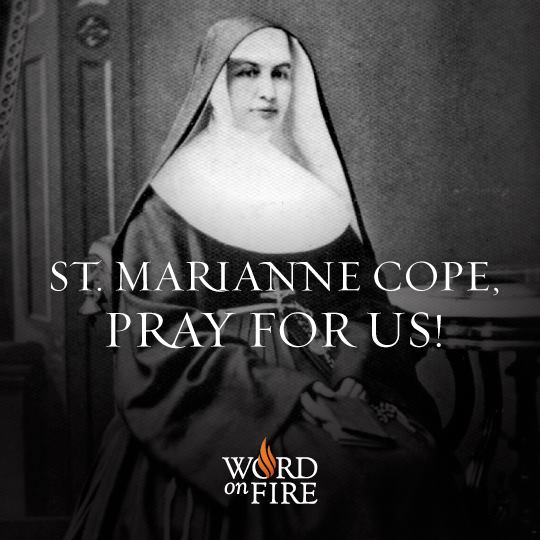
Marrianne CopeToday’s the feast of one of our great American saints, Saint Marianne Cope, a Franciscan sister who spent 35 years ministering to people living with Hansen’s Disease (called leprosy) on the island of Molokai in Hawaii. Cope is part of a small group of American saints.

Saint Marianne (1838-1918) was a close collaborator of the famous Saint Damian DeVeuster of Molokai.

Cope’s venerable body was recently returned to the Diocese of Hawaii.

Bishop Larry Silva said this in a homily:

When Mother Marianne made her famous statement that she was hungry for the work, it was not because she needed more to do.  It was because she knew that her own deep hunger pangs for the true bread of life would be better satisfied if she met the Eucharistic Lord in those she fed, in those she clothed, in those she nursed, and in those least of the least whom she set free from a prison of self-pity, no matter how justified it might be. Who will make the rest of the world as hungry as was our beloved St. Marianne?

More about her inspiring life can be found on her order’s website, the Sisters of St. Francis:  https://sosf.org/st-marianne-cope/

Robert Louis Stevenson wrote a poem:

To the Reverend Sister Marianne,  Matron of the Bishop Home, Kalaupapa. 

To see the infinite pity of this place,
The mangled limb, the devastated face,
The innocent sufferers smiling at the rod,
A fool were tempted to deny his God.
He sees, and shrinks; but if he look again,
Lo, beauty springing from the breasts of pain!
He marks the sisters on the painful shores,
And even a fool is silent and adores.

Saint Sebastian

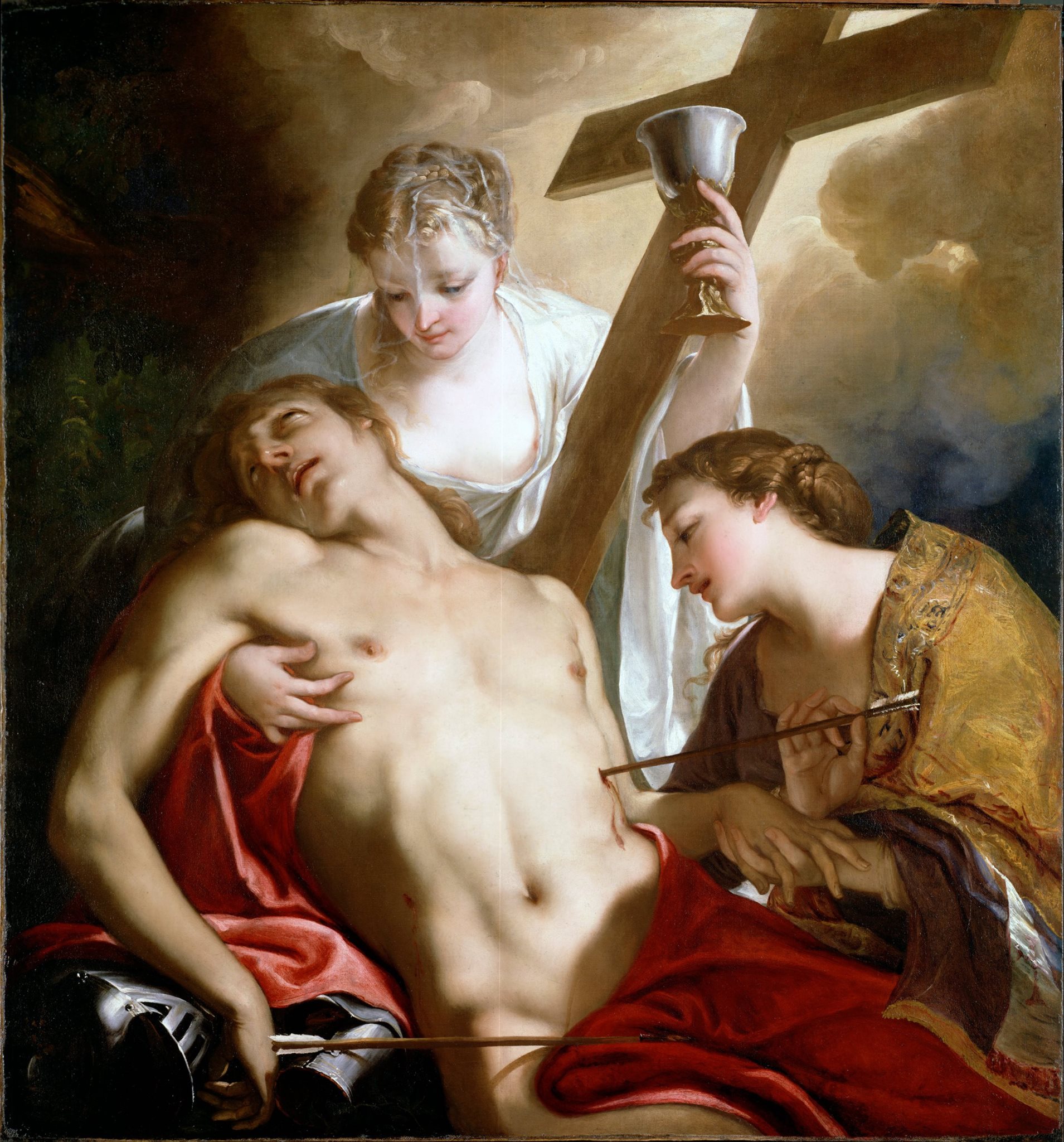
St SebastianAt this morning’s Mass the Church commemorated the memory of two early martyrs of the Faith, Saints Fabian and Sebastian. When we recited the entrance antiphon mention was made of not fearing the words of the godless and when the priest prayed the opening prayer I noted that through the intercession of these two martyrs we hope to progress in the communion of the faith and service in courage. I also was struck in the Letter to the Hebrews that the author exhorts us to hope in the promises of Jesus who is both our anchor and our priest. Indeed, God remembers his covenant. That’s the hope I rely upon.

Here is a piece on Sebastian:

Saint Sebastian was an officer in the Roman army, esteemed even by the pagans as a good soldier, and honored by the Church ever since as a champion of Jesus Christ. Born at Narbonne, Sebastian came to Rome about the year 284 and entered the lists against the powers of evil. He found the twin brothers Marcus and Marcellinus in prison for the faith, and when they were close to yielding to the entreaties of their relatives, encouraged them to despise flesh and blood, and to die for Christ. God confirmed his words by miracles: light shone around him while he spoke; he cured the sick by his prayers; and in this divine strength he led multitudes to the faith, among them the Prefect of Rome, with his son Tiburtius.

He saw his disciples die before him, and one of them came back from heaven to tell him that his own end was near. It was in a contest of fervor and charity that Saint Sebastian found the occasion of martyrdom. The Governor-Prefect of Rome was converted to the faith and afterwards retired to his estates in Campania, taking with him a great number of his fellow-converts to this place of safety. It was a question whether Polycarp the priest or Saint Sebastian should accompany the neophytes. Each was eager to stay and face the danger at Rome; finally the Pope decided that the Roman church could not spare the services of Sebastian, who therefore remained amid the perils in the city.

He continued to labor at his post of danger until he was betrayed by a false disciple. He was led before Diocletian and, at the emperor’s command, pierced with arrows and left for dead. God raised him up again, cured, and of his own accord he went before the emperor and conjured him to halt the persecution of the Church. Again sentenced, he was beaten to death by clubs, and crowned his labors by the merit of a double martyrdom.

Reflection. Your ordinary occupations will give you opportunities of laboring for the faith. Ask help from Saint Sebastian, both wise and prudent.

Little Pictorial Lives of the Saints, a compilation based on Butler’s Lives of the Saints and other sources by John Gilmary Shea (Benziger Brothers: New York, 1894).

Saint Anthony of Egypt

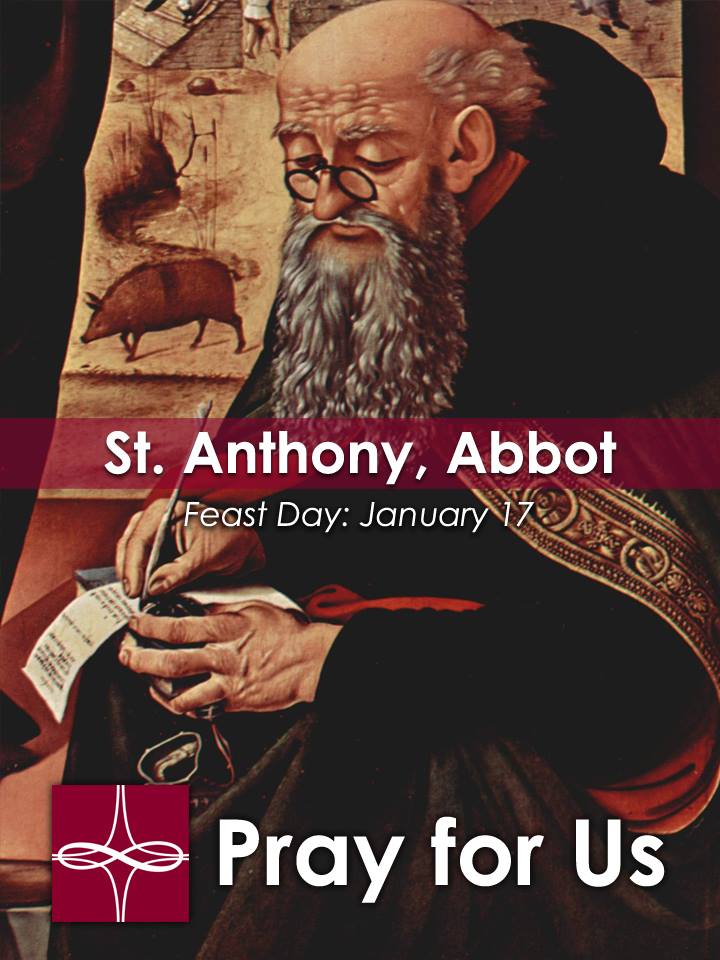
Anthony of the DesertToday, the Church recalls the memory of Saint Antony, Abbot (251-356) ~ “Father of Monasticism”! The saint was born in Egypt: he listened to and then followed the words of the Gospel and gave all his material things to the poor. Anthony left civilization as it was known then and went into the wilderness to begin a life of penitence, living in absolute poverty, praying, meditating, and supporting himself by manual work. He suffered many temptations, both physical and spiritual, but he overcame them. As you would expect, disciples found his manner of life and teaching attractive: his wisdom, love, moderation, and holiness. He gave support to the victims of the persecutions of Diocletian, and helping Saint Athanasius in his fight against the Arians. He lived to be over a hundred years old.

Saint Anthony of the Desert taught,

“One should not say that it is impossible to reach a virtuous life; but one should say that it is not easy. Nor do those who have reached it find it easy to maintain. Those who are devout and whose intellect enjoys the love of God participate in the life of virtue; the ordinary intellect, however, is worldly and wavering, producing both good and evil thoughts, because it is changeful by nature and directed towards material things. But the intellect that enjoys the love of God punishes the evil which arises spontaneously because of man’s laziness.”

Saint Elizabeth Ann Seton

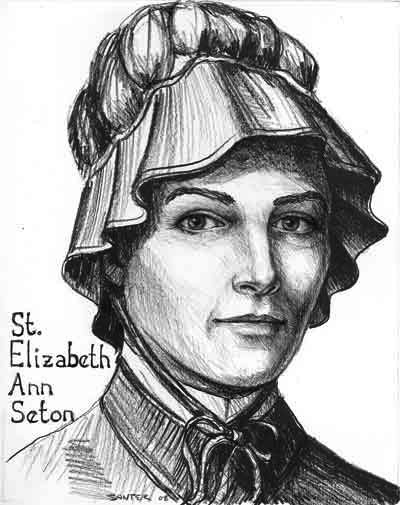
St Elizabeth Ann SetonElizabeth Ann Seton was a woman of great and persevering generosity and service – as a wife, a mother, a widow, and as a religious. She was canonized on September 14, 1975 by Pope Paul VI. At that time he told the Church in America, “Elizabeth Ann Bayley Seton is a Saint! She is the first daughter of the United States of America to be glorified with this incomparable attribute!”

Mother Seton came to Baltimore and then to Emmitsburg to educate the young and the poor, a healing of body, mind and spirit. Her discipleship with the Lord as Master was informed by her femininity, her spousal relationship with her husband, her motherhood, her conversion to the Church of Rome and most importantly, her spousal relationship with Jesus Christ. As a consequence of Seton’s intense faith in Christ and the sacrament of the Church Seton was able to follow the invitation of the Sulpician who invited her to serve the Church in a new way. The founding of the Daughters of Charity was just one concrete way of living of the spiritual and corporal works. As we know, love knows no limitations; where man’s mercy may have limitations, God’s mercy does not and that was Seton’s message.

When death was imminent and it came on January 2, 1821, Mother Seton said as her final words: “Be children of the Church!” Hers was the message she learned from experience and from Ignatian spirituality, “sentire cum ecclesiae.” Her words were an exhortation to be a close and intimate friend of Jesus, a mature offspring of the Divine Master.

For Mother Seton, and therefore for us who are close to her, our vocation is to bear witness to that mercy in ministries of the mission, education and healing formed by charity. The gospel knows no other way.

Saint Sylvester

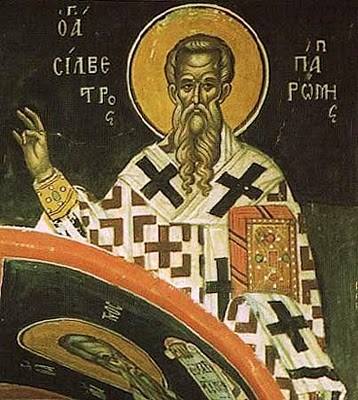
St SylvesterOn this final day of the civil year Mother Church honors the memory of Pope Saint Sylvester, who guided the Church with his teaching and life during the persecutions of Diocletian, and during the period of Arianism and the Council of Nicæa. That his feast day is so close to Christmas ought to indicate to us that he had concern for the Christology of Catholic belief and life.

Pope Sylvester’s pontifical ministry saw the construction of great churches in Rome by Constantine, namely the basilica and baptistery of the Lateran near the former imperial Lateran palace where the pope lived (he now resides at the Vatican), the basilica of the Sessorian palace (the Basilica of Santa Croce where the relics of the holy passion are located), the first Church of St. Peter on Vatican Hill, and several cemeterial churches over the graves of martyrs.

More to the point for this blog, and the desire to live in a theology of communion, the sainted Pope contributed to the development of the sacred Liturgy of the Roman Church and drew together the first martyrology of Roman martyrs. Moreover, Sylvester established of the Roman school of chant and music.

Pope Saint Sylvester is buried at the Church connected with the Catacomb of Priscilla.