The truth of the Liturgy opens the door to salvation

The liturgical wars of the past years are not over, they’re not even close to coming to an end. Too many people have a stake in what will happen with the promulgation of the new Roman Missal in English and then the forthcoming translations of the Divine Office, and sacraments. I look forward to the day when the newly approved psalms get inserted in the daily use of the Church’s rites, especially in monasteries where being in conformity with the mind of the Church is not always a value. Ultimately we have to say that the various “insights”, agendas, ways of doing things and thinking are in conflict with the whole of the Church’s Tradition of continuity. While it is quite fine to be novel in the place where you live and perhaps in the market and work place, no doubt these places rely on new ways of doing things to “spice up life,” novelty has no place in liturgical theology, liturgical texts, rubrics, gestures and homilies. What is often missing in the work of liturgical theology and the praxis of the “faith community” is Christ, the true seeking of God’s face under the power of the Holy Spirit. How is it that we can claim to be one Church, one faith, working out salvation as proposed be Christ and the Church?

For me, Father Roman Guardini sets the stage of what the truth of the sacred Liturgy is and what its virtue is for the believer.
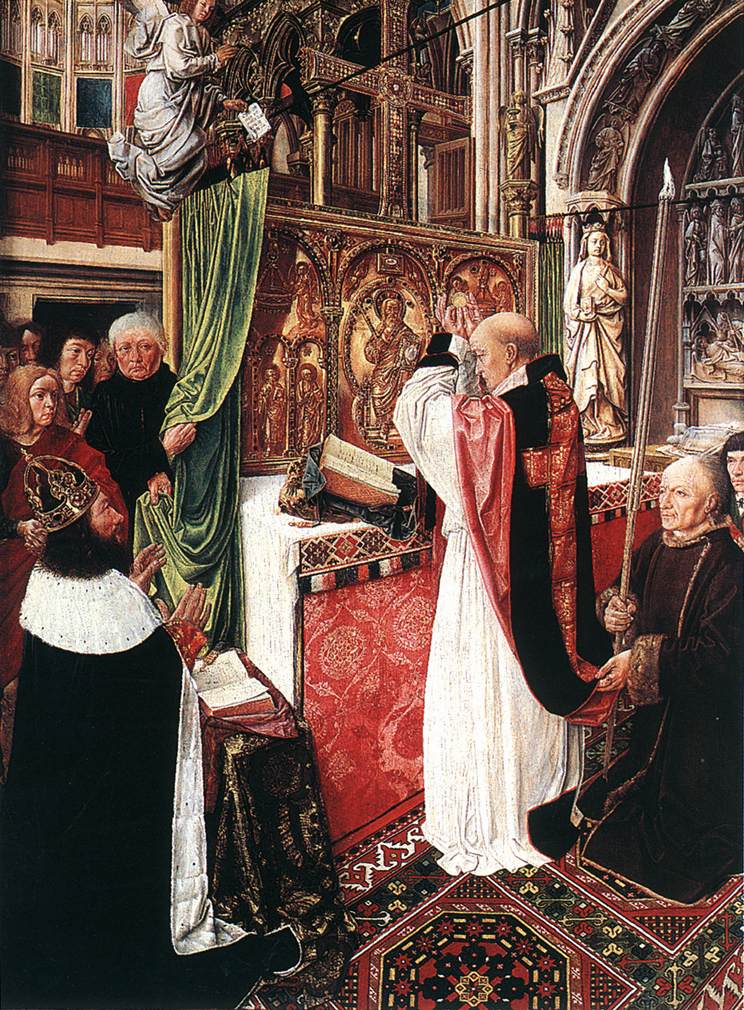
Mass of St Giles Master of St Giles.jpgThe Church has not built up the Opus Dei for the pleasure of forming beautiful symbols, choice language, and graceful, stately gestures, but she has done it — in so far as it is not completely devoted to the worship of God — for the sake of our desperate spiritual need. It is to give expression to the events of the Christian’s inner life: the assimilation, through the Holy Ghost, of the life of the creature to the life of God in Christ; the actual and genuine rebirth of the creature into a new existence; the development and nourishment of this life; its stretching forth from God in the Blessed Sacrament and the means of grace, towards God in prayer and sacrifice; and all this in the continual mystic renewal of Christ’s life in the course of the ecclesiastical year. The fulfillment of all these processes by the set forms of language, gesture, and instruments, their revelation, teaching, accomplishment and acceptance by the faithful, together constitute the liturgy. We see, then, that it is primarily concerned with reality, with the approach of a real creature to a real God, and with the profoundly real and serious matter of redemption. There is here no question of creating beauty, but of finding salvation for sin-stricken humanity. Here truth is at stake, and the fate of the soul, and real — yes, ultimately the only real — life. All this it is which must be revealed, expressed, sought after, found and imparted by every possible means and method; and when this is accomplished, lo! it is turned into beauty.

This is not a matter for amazement, since the principle here at work is the principle of truth and of mastery over form. The interior element has been expressed clearly and truthfully, the whole superabundance of life has found its utterance, and the fathomless profundities have been plainly mapped out. It is only to be expected that a gleam of the utmost splendor should shine forth at such a manifestation of truth.

For us, however, the liturgy must chiefly be regarded from the standpoint of salvation. We should steadfastly endeavor to convince ourselves of its truth and its importance in our lives. When we recite the prayers and psalms of the liturgy, we are to praise God, nothing more. When we assist at Holy Mass, we must know that we are close to the fount of all grace. When we are present at an ordination, the significance of the proceedings must lie for us in the fact that the grace of God has taken possession of a fragment of human life. We are not concerned here with the question of powerfully symbolic gestures, as if we were in a spiritual theater, but we have to see that our real souls should approach a little nearer to the real God, for the sake of all our most personal, profoundly serious affairs.

For it is only thus that perception of liturgical beauty will be vouchsafed to us. It is only when we participate in liturgical action with the earnestness begotten of deep personal interest that we become aware why, and in what perfection, this vital essence is revealed. It is only when we premise the truth of the liturgy that our eyes are opened to its beauty.

The degree of perception varies, according to our aesthetic sensitiveness. Perhaps it will merely be a pleasant feeling of which we are not even particularly conscious, of the profound appropriateness of both language and actions for the expression of spiritual realities, a sensation of quiet spontaneity, a consciousness that everything is right and exactly as it should be. Then perhaps an offertory suddenly flashes in upon us, so that it gleams before us like a jewel. Or bit by bit the whole sweep of the Mass is revealed, just as from out the vanishing mist the peaks and summits and slopes of a mountain chain stand out in relief, shining and clear, so that we imagine we are looking at them for the first time. Or it may be that in the midst of prayer the soul will be pervaded by that gentle, blithe gladness which rises into sheer rapture. Or else the book will sink from our hands, while, penetrated with awe, we taste the meaning of utter and blissful tranquility, conscious that the final and eternal verities which satisfy all longing have here found their perfect expression. But these moments are fleeting, and we must be content to accept them as they come or are sent. On the whole, however, and as far as everyday life is concerned, this precept holds good, “Seek first the kingdom of God and His justice, and all else shall be added to you” — all else, even the glorious experience of beauty.


Father Romano Guardini, The Spirit of the Liturgy (New York: Crossroad Publishing, 1998, p 83ff, reprint of 1930 Sheed & Ward edition, trans., Ada Lane).

No applause at the sacred Liturgy

B16 No Applause.jpg
Hat tip to Fr Guy Selvester at Shouts in the Piazza for posting this image. Indeed, the sacred Liturgy is worship of the Blessed Trinity not a time for introducing secular measures of approval and disapproval. I was at a priest friend’s funeral today and after the homily was finished a member of the laity started the congregation in an applause. Not only was it out of place it bore no relation to the reality of the meaning of the Sacrifice of the Mass being celebrated by the Archbishop of Hartford (himself seemingly surprised yet he drew more attention to the fact that it happened). Not that my friend Father Brian didn’t deserved some thoughtful acknowledgement for his extraordinary human and priestly qualities but at his Mass of Christian Burial applause was out of place. Paying attention to human sentiment and emotion is very important but there are appropriate times for external awareness. Something similar happened after a music piece was perforned earlier this week at a Mass which I attended for a friend’s nephew who took his life. No doubt we were all feeling the rawness of emotion of a young man’s suicide but is the Liturgy the place for secular displays of feeling. My friend Father Ambrose has fought for keeping applause out of the school Mass at St Louis Abbey’s conventual Mass celebrated with the student body in attendance…

A “new liturgical movement” according to Pope Benedict

Some may have heard the idea “the new liturgical movement” used nowadays to describe a recovery of the sacred Liturgy that understands a continuity in the Liturgy that has existed through the ages and not just made up by scholars and hacks. John Allen explores the origin of this idea according to the thinking of Pope Benedict in a brief NCR article, “What Benedict means by a ‘new liturgical movement.’

I would also recommend the book referenced by John Allen, Milestones. It is necessary reading for all sorts of things, not just trying to understand Joseph Ratzinger.

Blessing of a Bonfire, the Vigil of the Nativity of St John the Baptist

A long forgotten tradition on the Vigil of the Nativity of Saint John the Baptist is the Blessing of a Bonfire. Confusion exists because in some people’s minds the 1964 Roman Ritual was suppressed because it’s absent in the US Bishops’ Book of Blessings but it is advocated for in the Directory on Popular Piety.

Since it’s not seen often in the USA it will be seen as esoteric. But those of concerned with Catholic identity and the flourishing of the sacred Liturgy in parishes, monasteries and religious communities. This blessing is one of the most ancient blessings.

Since St Augustine was the one to establish the feast day of the Baptist’s birth, six months prior to the Savior’s and in the summer solstice after the longest day of the year and when daylight incrementally lessens, a celebration of  “light of the World” manifested by the Forerunner, it is an appropriate liturgical observance. Plus, the liturgical catechesis is limitless in this rite.

Because St John the Baptist’s testimony to identity of Jesus as the true light which shines in the darkness of the world, the priest doing this rite can bring together several spiritual “themes” for expanding the heart. One can preach on John as the light-bearer before Christ; “he must increase, but I must decrease”; “I say to you, among those born of women there is not a greater prophet than John the Baptist.”

The Rite

Priest: Our help is in the name of the Lord.

All: Who made heaven and earth.

P: The Lord be with you.

All: May He also be with you.

bonfire.jpg

Let us pray. Lord God, almighty Father, the light that never fails and the source of all light, sanctify + this new fire, and grant that after the darkness of this life we may come unsullied to you who are light eternal; through Christ our Lord.

All: Amen.

The fire is sprinkled with holy water; after which the clergy
and the people sing the following hymn Hymn: Ut queant laxis

1. Ut queant laxis resonáre fibris Mira gestórum fámuli tuórum, Solve pollúti lábii reátum, Sancte Joánnes.

2. Núntius celso véniens Olympo Te patri magnum fore nascitúrum, Nomen, et vitae sériem geréndae Ordinae promit.

3. Ille promíssi dúbius supérni, Pérdidit promptae módulos loquélae: Sed reformásti genitus perémptae Organa vocis.

4. Ventris obstrúso récubans cubíli Sénseras Regem thálamo manéntem: Hinc parens nati méritis utérque Abdita pandit.

5. Sit decus Patri, genitaéque Proli et tibi, compare utriúsque virtus, Spíritus semper, Deus unus, omni Témporis aevo. Amen.

(the same in English)

1. O for your spirit, holy John, to chasten Lips sin-polluted, fettered tongues to loosen; So by your children might your deeds of wonder Meetly be chanted.

2. Lo! a swift herald, from the skies descending, Bears to your father promise of your greatness; How he shall name you, what your future story, Duly revealing.

3. Scarcely believing message so transcendent, Him for a season power of speech forsaketh, Till, at your wondrous birth, again returneth, Voice to the voiceless.

4. You, in your mother’s womb all darkly cradled, Knew your great Monarch, biding in His chamber, Whence the two parents, through their offspring’s merits, Mysteries uttered.

5. Praise to the Father, to the Son begotten, And to the Spirit, equal power possessing, One God whose glory, through the lapse of ages, Ever resounding. Amen.

P: There was a man sent from God.

All: Whose name was John.

Let us pray. God, who by reason of the birth of blessed John have made this day praiseworthy, give your people the grace of spiritual joy, and keep the hearts of your faithful fixed on the way that leads to everlasting salvation; through Christ our Lord.

All: Amen.

Philip T. Weller, The Roman Ritual (The Bruce Publishing Company, Milwaukee, WI, 1964).

Marriage and being in the state of sin

Father Z has a key blog post addressing the fruitfulness of the sacrament of Marriage, if received in a state of mortal sin. How often do we seriously think about the fruitfulness of the sacraments we receive and how that fruitfulness spills over into our everyday lives? Is it old fashion for a priest (anyone else) to insist that the couple entering into marriage make a good confession prior to marriage ceremony? No, I don’t think it’s quaint. Actually, I think it is not only an essential part of the “marriage event” but a sacramental moment in following more closely Christ and building a culture of love among the spouses, plus it contributes to engaging our freedom. Ask yourself, why wouldn’t you want to be in “good graces” with God, self and your spouse-to-be? God’s mercy is open to all and it is a wonderful thing to live in…

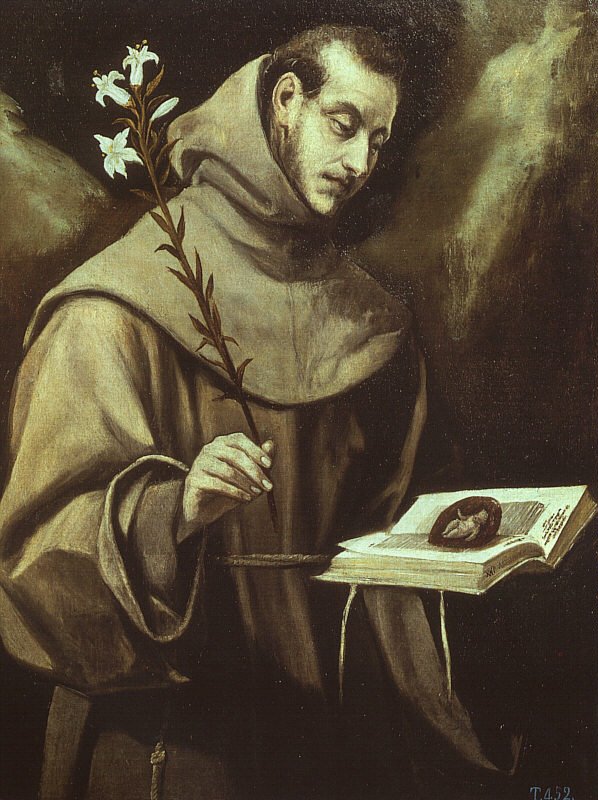
Blessing of Lilies on the Feast of Saint Anthony of Padua

The Spirit of God is upon me; he has anointed me. He sent me to bring good news to the poor, and to heal the broken hearted.

St Anthony with the Lily.jpg

V. Our help is in the name of the Lord.
R. Who made heaven and earth.

V. The Lord be with you.
R. And with your spirit.

O God, the Creator and Preserver of mankind, thou Who art the lover of holy purity, the giver of spiritual grace, the dispenser of eternal salvation, bless + these lilies we bring on this day in thanksgiving to thee and in honor of Saint Anthony, thy Confessor. Pour out on them heavenly dew by the saving + sign of the most holy cross, O God of love! Thou hast endowed these lilies with delicious fragrance to be a comfort and help to those on their sickbeds. Wherefore, imbue them with so great strength that whether they are used in a home, in a sickroom, or carried about one’s person, they may have power, through the intercession of Saint Anthony, to drive out evil spirits, to safeguard chastity, to turn away illness, and to bestow on thy servants peace and grace.

V. Pray for us, blessed Anthony.
R. That we may be made worthy of the promises of Christ.

May the devout and constant intercession of Blessed Anthony, thy Confessor, come to our aid, we beseech thee, O Lord, that we may become of thy grace in this life, and merit everlasting joys in the next.

Trinity Sunday

trinity3.jpgAlmighty everlasting God, who granted to Your servants, in the profession of the true Faith, to recognize the glory of the eternal Trinity and to adore Its Unity in the might of majesty: we beseech You; that, in the steadfastness of that same Faith, we may always be defended from all adversities.


What do we, as Catholics, the Church, believe about the Holy Trinity? Much, in fact. Here are three paragraphs from the Catechism of the Catholic Church:

“The mystery of the Most Holy Trinity is the central mystery of Christian faith and life. It is the mystery of God in himself. It is therefore the source of all the other mysteries of faith, the light that enlightens them. It is the most fundamental and essential teaching in the ‘hierarchy of the truths of faith’. [GCD 43.] The whole history of salvation is identical with the history of the way and the means by which the one true God, Father, Son and Holy Spirit, reveals himself to men ‘and reconciles and unites with himself those who turn away from sin’. [GCD 47.]” (CCC 234)

 “The Trinity is a mystery of faith in the strict sense, one of the ‘mysteries that are hidden in God, which can never be known unless they are revealed by God’. [Dei Filius 4: DS 3015.] To be sure, God has left traces of his Trinitarian being in his work of creation and in his Revelation throughout the Old Testament. But his inmost Being as Holy Trinity is a mystery that is inaccessible to reason alone or even to Israel’s faith before the Incarnation of God’s Son and the sending of the Holy Spirit.” (CCC 237)

“The whole divine economy is the common work of the three divine persons. For as the Trinity has only one and the same natures so too does it have only one and the same operation: ‘The Father, the Son and the Holy Spirit are not three principles of creation but one principle.’ [Council of Florence (1442): DS 1331; cf. Council of Constantinople II (553): DS 421.] However, each divine person performs the common work according to his unique personal property. Thus the Church confesses, following the New Testament, ‘one God and Father from whom all things are, and one Lord Jesus Christ, through whom all things are, and one Holy Spirit in whom all things are’. [Council of Constantinople II: DS 421.] It is above all the divine missions of the Son’s Incarnation and the gift of the Holy Spirit that show forth the properties of the divine persons.” (CCC 258)

Scripture is the audible sacrament

Just returning from Rome where I spent 8 days making a personal retreat of sorts that included time in prayer with the monks at Sant’Anselmo, I could not divorce the experience of hearing the Word of God proclaimed frequently throughout the day. Truly, it was a renewing experience of keeping God in front of me. And how else does one live as a follower of Christ but to keep His word and sacrament in front of the self?

The reality of Scripture and the Liturgy is a Benedictine experience, that is, a Catholic view of reality that does not separate faith from reason, Scripture from experience, worship from study and leisure. Scripture is so very much a part of our lives as Catholics that we often overlook its importance in our worship and formation as adopted sons and daughters of God through Jesus Christ. The Church from the very beginning proclaims and lives the sacred Scriptures because they document the covenantal relationship with God the Father. We know this fact through our sacred Liturgy: Lauds, Vespers, the Sacrifice of the Mass and our personal prayer offered each and every day. While some may not be able to pray Lauds, Vespers and Mass daily, prayers such as the Rosary, the Angelus and lectio divina provide ample grist for the heart’s mill helping us to seek God’s face. In Hebrews 4 we are reminded of the Word that created the cosmos and daily recreates us and this latter point is what we believe the sacraments to do: recreate us in God’s own image and likeness.
Augustine of Hippo spoke of the sacraments being a “visible word” we also know the sacred Scripture to be the audible sacrament. “If today you hear his voice, harden not your hearts.”

Consecration of a Paten and a Chalice at St Joseph’s Seminary

GT Walsh consecrating chalices2 May 14 2010.jpg

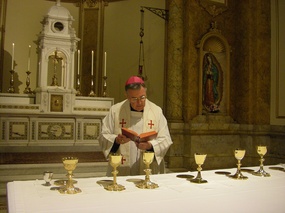
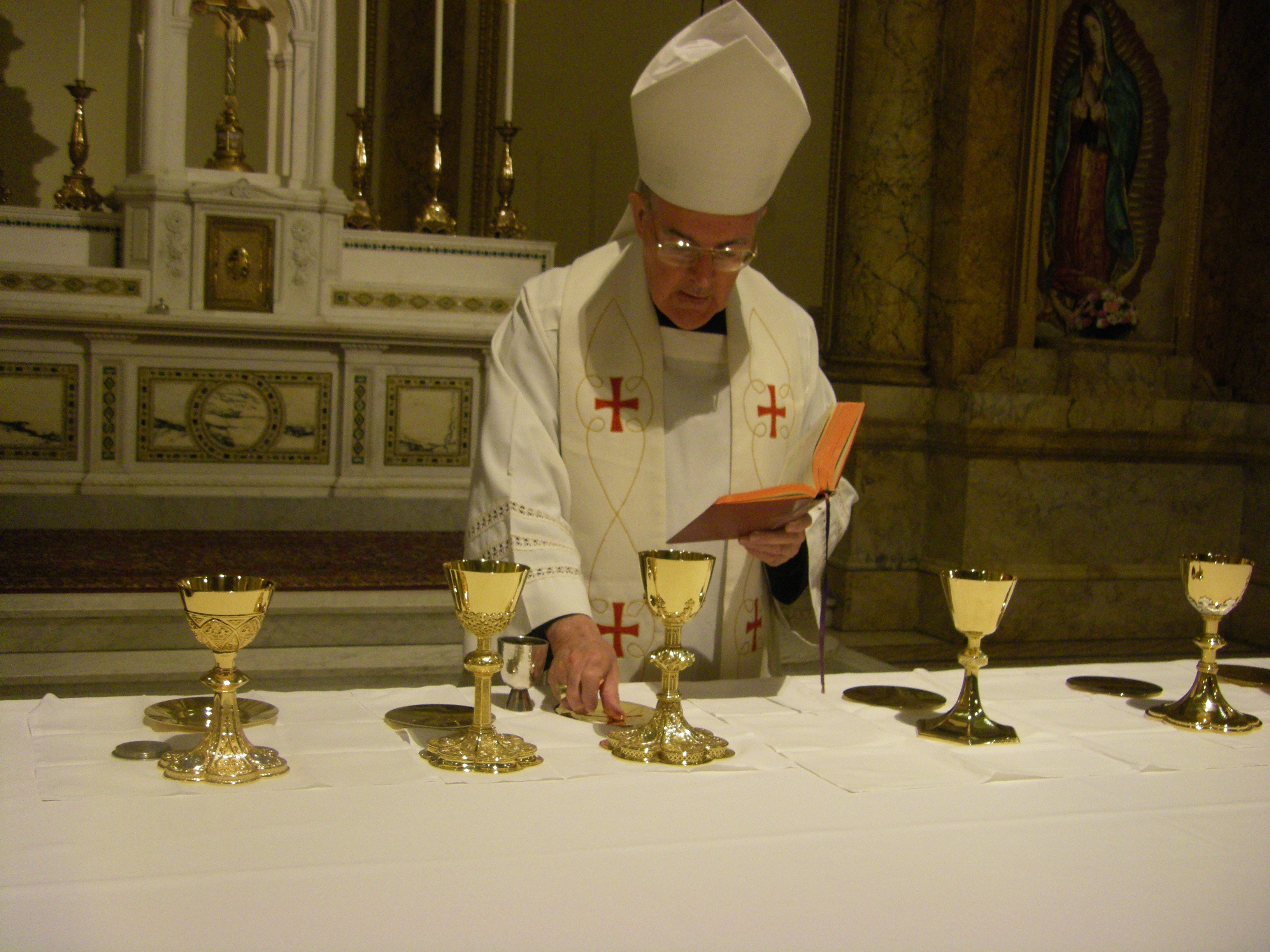
Today, following the last conference of our annual spiritual exercises, the Most Reverend Gerald T. Walsh, Rector of Saint Joseph’s Seminary, consecrated seven patens and chalices of those to be ordained priests tomorrow. That today is also the feast of Saint Matthias, an apostle, what a great day to consecrate chalices and patens.

It is important to note that while a priest can be delegated to consecrate these sacred items used for divine worship, the bishop, standing in the place of Christ with the fullness of priesthood, is the visible sign of unity with the Roman Pontiff. Moreover, the bishop is the chief liturgist and administrator of the sacraments in the diocese with all ministry, whether presbyteral or diaconal, oriented toward him for the salvation of God’s people. Hence, it is not merely a “nice” thing for the bishop to consecrate a priest’s paten and chalice, it is essential that he do it (if not impeded by some serious event) because of the nature of what is being done: living the sacramentality given to us by Christ himself. Catholics do not presume to do things on their own but they live in communion with the bishop, in harmony and order.

According to preparatory note, this consecration is typically done by a bishop but may be delegated to a priest. The consecration may take place on any day. The following are prepared: holy chrism and whatever materials necessary for cleansing and wiping the chalice and paten as well as the bishop’s hands. The chalice and paten should be placed on a table covered with a white-linen cloth or on the altar. It several chalices and patens are to be consecrated the bishop performs the anointings successively on each of them, but he says the orations only once and in the plural form. The bishop, standing and wearing the rochet, white stole, and gold-embroidered mitre, says:

Celebrant: Our help is in the name of the Lord.

All: Who made heaven and earth.

C: Let us pray, my dear brethren, that by the help of God’s grace this paten may be consecrated and hallowed for the purpose of breaking over the body of our Lord Jesus Christ, who suffered death on the cross for the salvation of us all.

Removing his mitre, says:

C: The Lord be with you.

All: May He also be with you.

C: Let us pray.

Almighty everlasting God, who instituted the laws of sacrifice, and ordered among other things that the sprinkled wheaten flour should be carried to the altar on plates of gold and silver; be pleased to bless, hallow, + and consecrate this paten, destined for the administration of the Eucharist of Jesus Christ, your Son, who for our salvation and that of all mankind chose to immolate Himself on the gibbet of the cross to you, God the Father, with whom He lives and reigns, forever and ever.

All: Amen.

Having put the mitre on, the bishop dips the thumb of his right hand into the holy chrism, anoints the paten from rim to rim in the form of a cross, then rubs the holy chrism all over the upper side of the paten saying:

GT Walsh consecrating chalices May 14 2010.jpg

Lord God, may you deign to consecrate and to hallow this paten by this anointing and our blessing, + in Christ Jesus our Lord, who lives and reigns with you forever and ever.

All: Amen.

Then he proceeds to the blessing of the chalice saying:

Let us pray, my dear brethren, that our Lord and God, by His heavenly grace and inspiration, may hallow this chalice, about to be consecrated for use in His ministry, and that He may add the fullness of His divine favor to the consecration performed by us; through Christ our Lord.

All: Amen.

Removing his mitre, says:

C: The Lord be with you.

All: May He also be with you.

GT Walsh consecrating chalices3 May 14 2010.jpgC: Let us pray.

O Lord our God, be pleased to bless + this chalice, made by your devout people for your holy service. Bestow that same blessing which you bestowed on the hallowed chalice of your servant, Melchisedech. And what we cannot make worthy of your altars by our craft and metals, do you nonetheless make worthy by your blessing; through Christ our Lord.

All: Amen.

With the mitre on, the bishop dips the thumb of his right hand into the holy chrism and anoints each chalice on the inside from rim to rim in the form of a cross saying:

Lord God, may it please you to consecrate and to hallow this chalice by this anointing and our blessing, + in Christ Jesus our Lord, who lives and reigns with you forever and ever.

All: Amen.

Removing his mitre, says:

C: The Lord be with you.

All: May He also be with you.

C: Let us pray.

Almighty everlasting God, we beg you to impart to our hands the virtue of your blessing, so that by our blessing + this vessel and paten may be hallowed and become, by the grace of the Holy Spirit, a new sepulchre for the body and blood of our Lord Jesus Christ; through Christ our Lord.

All: Amen.

The hands are now cleansed.

This rite is taken from the Roman Pontifical of 1962. It was published in Philip T. Weller’s 1964 The Roman Ritual: Complete Edition (the one volume). Thanks continuously goes to God for the fine work that Father Weller did for the Church is pulling together Roman Ritual in English.