Is there a desire for God still present today?

A few days ago I recommended seeing “Of Gods and Men.” Last week I saw the film and I have still been thinking of the movie, the monks, the hard work of inter-religious dialog. The testament of Dom Christian de Cherge can be read here. I highly recommend reading what Prior Christian said and what others think. A group of friends took time to see the movie together. Two friends brought a perspective of the film to my attention recently. The following is an an answer to those who ask whether a desire for God is still present in our times. Angelo Scola writes: 

I believe that the worldwide success of the film on the Tibhirine
monks [U.S. Title: “Of Gods and Men”] reflects a burning desire in the men and
women of any latitude to meet the face of God; it therefore reflects the real
need we all feel for authentic witnesses who may help us keep our gazes focused
upwards.

Authentic witness is, in fact, not limited to “giving a good example”.
It shines in all its wholeness as a method for practically knowing reality and
communicating truth. It is a primary value, standing above any other form of
knowledge and communication – scientific, philosophical, theological, artistic,
etc.
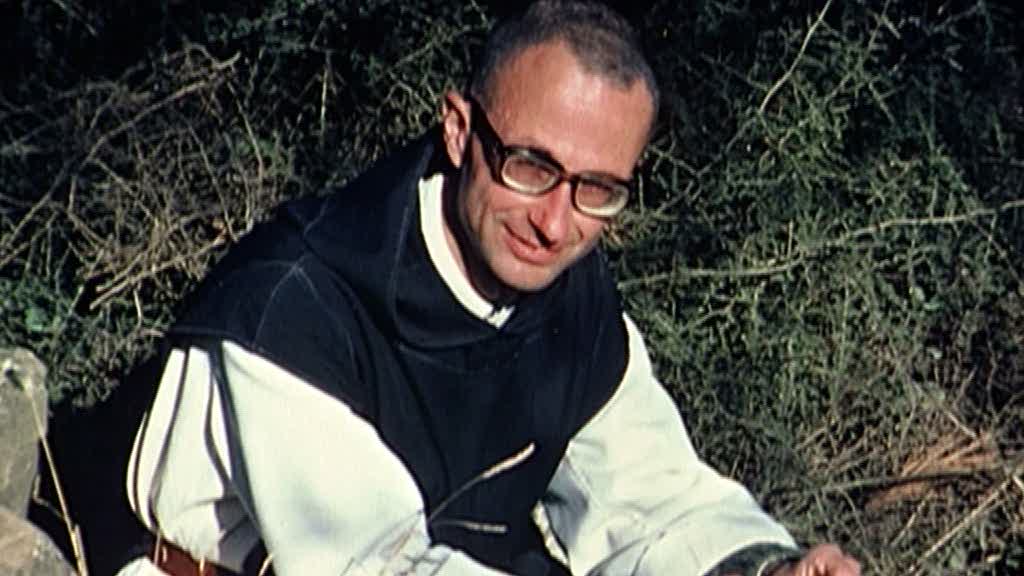
Christian de Chergé.jpg

A luminous example of this method is offered by the very words which Fr
Christian de Chergé, prior of the Trappist monastery of Notre-Dame de l’Atlas
in Tibhirine, Algeria, wrote in his spiritual will [noted above], a good three years before
he was massacred with his monks:

“When the time comes, I would like to be able
to have an instant of lucidity that would allow me to ask for the pardon of God
and that of men, my brothers, while forgiving with all my heart those who may
have hit me… I cannot see how I could, in fact, rejoice in that this people I
love could be accused of my assassination. It 

Continue reading Is there a desire for God still present today?

Peter J. Gomes, minister, dead at 68

Peter J. Gomes.jpgThe very colorful minister, the Reverend Peter J. Gomes, who served at Harvard for more than 40 years, died last evening. Reverend Gomes oversaw the ministries of Memorial Church and delivered a rousing Easter sermon each year. He was an accomplished and stimulating writer, teacher and preacher. 

Peter Gomes’ name is clearly connect with the Christian presence at Harvard. Any serious Christian aware of the landscape at Harvard had to negotiate the personality of Peter J. Gomes.
Peter Gomes would not be confused for his orthodox faith but he preached Christ. He appreciated the efforts of others to make Christ known and loved.
May God have mercy on Peter J. Gomes and embrace him with love. Let’s pray for his eternal rest.

Asma al-Assad on St John the Baptist

Syria should be on your radar screen if you have an interest in the life of the Church. It’s openness to
Christianity today is startling bad. Freedom of religion and human rights lack;
political oppression and basic needs are always in question. The current regime
very likely nervous given the recent wave of political take-back. John Juliet
Buck’s Vogue magazine article on the Syrian First Lady, Asma al-Assad, “
A Rose in
the Desert
” speaks to many issues in Syria, not least is religion. Thoughts of
St John the Baptist’s tomb hearken back to when in 2001 Pope John Paul II visited Syria
and prayed at the tomb of the Baptist.


At first thought Ms al-Assad’s deference to the importance of the Baptist is impressive but there’s something that strikes me as false given recent history of her husband’s family’s rule of Syria viz. religious freedom. Plus, her interest in Christianity in Syria is not because the gospel is true, good and beautiful; her interest in the Church is cultural. The gospel in this context has been reduced to a system of culture and ethics –exactly what it’s not. Syria is  Indeed, many religions have passed through those lands and one seems fairly certain that the current regime wants religions like Christianity to leave Syria and not turn back. Historically, Christianity has been in Syria since St Paul visited the country. It is the place, as we know, where the followers of Jesus were first called “Christians.” Christians in Syria comprise 10% of the population with the largest group being the Greek Orthodox Church.


For me here’s the relevant paragraph in the article:

Back in the car, Buck was answered about
his investigation “what religion the orphans are?” “It’s not relevant,” says
Asma al-Assad. “Let me try to explain it to you. That church is a part of my
heritage because it’s a Syrian church. The Umayyad Mosque is the
third-most-important holy Muslim site, but within the mosque is the tomb of
Saint John the Baptist. We all kneel in the mosque in front of the tomb of
Saint John the Baptist.
That’s how religions live together in Syria–a way that
I have never seen anywhere else in the world. We live side by side, and have
historically. All the religions and cultures that have passed through these
lands–the Armenians, Islam, Christianity, the Umayyads, the Ottomans–make up
who I am.”

Beatification ceremonies for John Paul II are FREE

The Prefecture of the Papal Household, having been
informed of the existence of unauthorised offers by some Tour Operators,
especially on internet, of assistance in procuring tickets, with a service
charge, for General Audiences and Papal ceremonies, particularly for the
Beatification of the Servant of God John Paul II on Sunday, May 1, wishes to
make it clear that:


1) For the Beatification Mass of Pope John Paul II, as made
clear from the outset
, no tickets are required.

2) The tickets provided by the
Prefecture of the Papal Household for General Audiences and Papal ceremonies
are always issued FREE of charge and no person or organization can request any
kind of payment.

The Thought of Henri Bremond


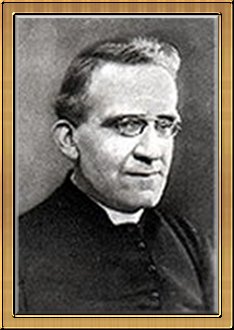
henri bremond.jpg

In the current
issue of La Civiltà Cattolica, Jesuit Father Antonio Spadaro wrote an
interesting essay, “The Thought of Henri Bremond.” Matters pertaining to faith
and reason, faith and culture interest me perhaps you. At least that’s what I
hope if you are a frequent reader of the Communio blog. Henri Bremond
(1865-1933) is a former a Jesuit priest, literary scholar and was in the middle
of the Modernist crisis. His literary output was terrific. Bremond was a member
of the illustrious Académie Française succeedingm(elected in 1923 holding seat
number 36). France also awarded the Lé d’honneur. The summary:

An attempt to
overcome the gap between faith and culture – In the years that saw the rise of
surrealism, of Freudian thought and of the modernist crisis, Henri Bremond
captured the separation that was growing between theology and culture
sanctioned by the Enlightenment. Bremond suffered in trying to find a
compromise in terms of language, seeking to show to a cultured audience the
best results of a religious sensibility and sought to show to his Catholic
readers the religious value of «profane» literature. Seeing the similarities
between a mystical and a poetic inspiration, he concluded that “it is up to the
mystic to explain the poet,” reversing a common axiom. The article, on the
occasion of the reissue of his Prayer and poetry, absent from Italian
bookstores for three decades, presents the main insights of the priest,
academician of France.

New tools… [for] new forms of consciousness: Vatican Radio at 80

Pius XI & G. Marconi 1931.jpgFebruary 12, 1931, Vatican Radio began its social networking capabilities for Pope Pius XI who had a particular interest in evangelization, especially in the foreign lands. Guglielmo Marconi (1874-1937), the physics Nobel Prize laureate became the father of wireless communication. Quoting Marconi, the Vatican Press Director Jesuit Father Frederico Lombardi recalled, “My inventions are to save humanity, not to destroy it.”

Read a few ideas on the founding of Vatican Radio.

Pope Pius XI exhorted his first listeners said, “Listen and hear, O Peoples of distant lands.”

Continue reading New tools… [for] new forms of consciousness: Vatican Radio at 80

Witches face jail time if spells fail

Romanian witches are soon to be licensed. Why, you
ask. So when their spells fail to provide the desired results, the government
can jail them. There’s a bill on parliament’s desk. On January 1, Romania
changed its laws witchcraft requiring receipts and prohibiting them from
exercising their craft near churches and schools.

Reno new editor of First Things

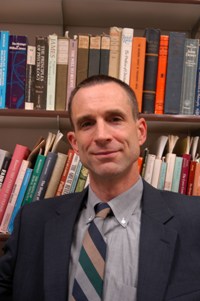
RR Reno.jpgThe Chairman of the Board of First Things, Robert Louis Wilken, announced that Russell R. Reno is the new editor of First Things.

RR Reno is the sometime professor of theological ethics at Creighton University. He earned a doctorate from Yale University.
Reno recently published Fighting the Noonday Devil and Other Essays Personal and Theological (Eerdmans, 2011).

The appointment is effective April 1. 

RR Reno’s the second successor to Father Richard John Neuhaus. Jody Bottum left the editorship a few months ago.

Enhanced by Zemanta

Four Chaplains Day


Four Chaplains.jpg

Besides being Saint Blase Day, today is also known as “Four
Chaplains Day.” The US Congress designated today to honor the 4 US Army chaplains who
were serving on the USAT Dorchester during World War II. 

Father John P. Washington
(Roman Catholic priest), Rev. Clark V. Poling (Dutch reformed), Rev. George L. Fox
(Methodist), and Rabbi Alexander D. Goode sacrificed their lives as their ship
went down. 672 of 902 men died.

All of the chaplains held the rank of lieutenant.

The Episcopal Church has designated February 3 a liturgical memorial for these chaplains.