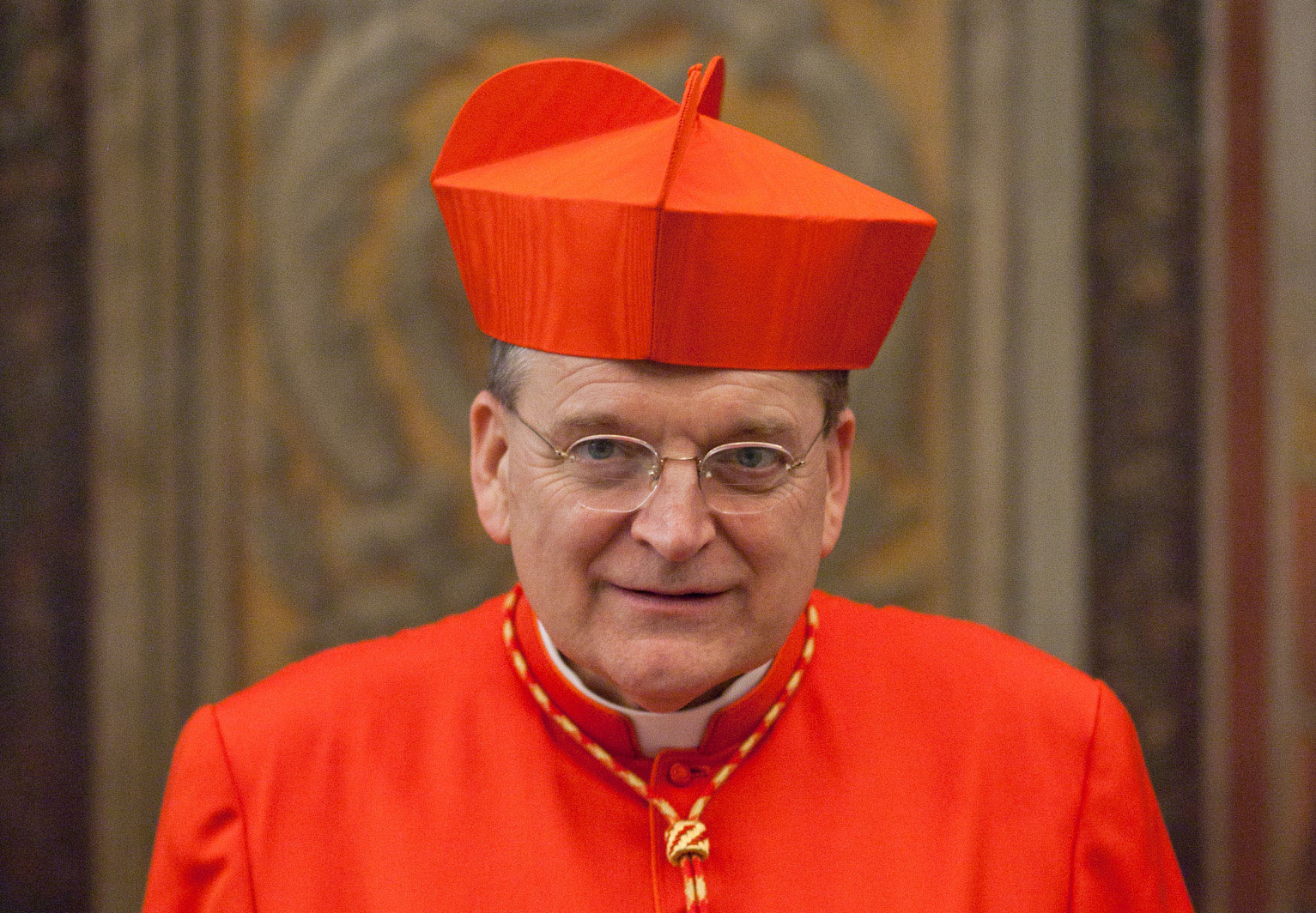
Solemnity of the Annunciation: Cardinal Burke to offer Mass March 25th
St. Mary Church, Greenwich, CT, 11:00 a.m., Solemn Pontifical Mass at the Throne, His Emminence Raymond Cardinal Burke, celebrant.
Solemnity of the Annunciation: Cardinal Burke to offer Mass March 25th
St. Mary Church, Greenwich, CT, 11:00 a.m., Solemn Pontifical Mass at the Throne, His Emminence Raymond Cardinal Burke, celebrant.
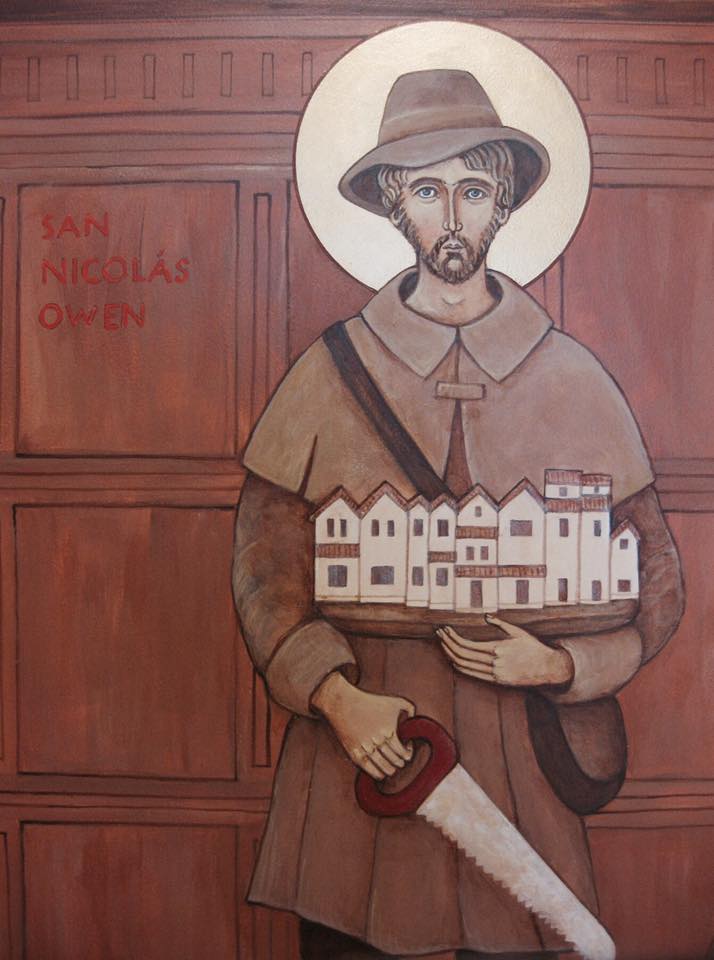 St. Nicholas Owen is one of the 40 Martyrs of England and Wales; he died in 1606. Own was the son of an Oxford carpenter becoming a carpenter himself. His personal mission was to secretly construct well-disguised ‘priest-holes’, or hiding places for hunted priests, during the night.
Nicholas Owen was a professed co-opperator (lay) brother of the Society of Jesus in England. On the mission, Owen served jail time for defending the martyred St. Edmund Campion. History shows that Nicholas masterminded the priest’s escape from the Tower of London and he was a wanted man after the Gunpowder Plot of 1605. His martyrdom was the usual English horror with his entrails burst open.

By your ascetic labors, God-bearing Benedict, / you were proven to be true to your name. / For you were the son of benediction, / and became a rule and model for all who emulate your life and cry: / “Glory to Him who gave you strength! / Glory to Him who granted you a crown! / Glory to Him who through you grants healing to all!” (Byzantine Troparion)
“I took for my patron and lord the glorious St. Joseph, and recommended myself earnestly to him. I saw clearly that both out of this my present trouble, and out of others of greater importance, relating to my honor and the loss of my soul, this my father and lord delivered me, and rendered me greater services than I knew how to ask for. I cannot call to mind that I have ever asked him at any time for anything which he has not granted; and I am filled with amazement when I consider the great favors which God has given me through this blessed Saint; the dangers from which he has delivered me, both of body and of soul.”
Saint Teresa of Avila
Autobiography, VI, 9
We can’t escape the fact that the paradigms of modern society are suffocating the intellect, the heart and the souls of men and women. What has efficacy for salvation? What conveys grace most authentically? It would be, I have come to believe, is the traditional form of the sacred Liturgy, either the older form of the Roman Rite or the Liturgies of the Eastern Churches (that of the liturgical families of Greece, Armenia, Syria and Egypt). There is Someone and Something that is transmitted the traditional forms of the Liturgy absent, minimized and moralized in the reformed rites of the 1960’s. While there are some good things that came about in some of the liturgical reforms, but there is a mystagogical diminishment therein. In fact, you could argue there has been a significant loss of shared transcendence available to the most humble of people. The Christian mystery, therefore, is highly reduced sense of the sign and symbol of Catholic worship of the Triune God.
In a First Things article, German philosopher Martin Mosebach publishes his thinking on this subject in “Return to Form: A Call for the Restoration of the Roman Rite” (April 2017). Pay close attention to Mosebach’s argument; it is a needed call to renew the Covenant and mark a path of redemption.

Meme by John the BlunderWorker
 The funeral rites were prayed last week for theologian Michael Novak in Washington, DC. The Oratorian Fathers in the District offered and preached the Mass. May God give Michael eternal light, happiness and peace!
It is said the Novak was one of the finest Catholic theologians of the USA, indeed for the Church. A man of great intellect AND charity. This fact comes out in a beautiful homily preached by Father Derek Cross, Orat., giving us a wonderful picture of how grace moved man. I urge your reading the homily.
In part,
More and more, as he grew older, Michael gravitated to the theme of caritas. In the Free Society Seminar at Bratislava, he developed a contemporary version of St Augustine’s City of God called Caritapolis. Later, he included a chapter on Caritapolis in The Universal Hunger for Liberty. He introduced the song “Ubi Caritas et Amor” to the daily Masses of the Free Society Seminar. It was his only musical request for today’s Mass, but he asked that it be sung twice. “Little children, love one another,” was said to be the aged Apostle John’s single and constant homily: a simple and profound wisdom that Michael made his own. To those who came to bid farewell before he died, he said repeatedly, “God loves you and you must love one another, that is all that matters.”
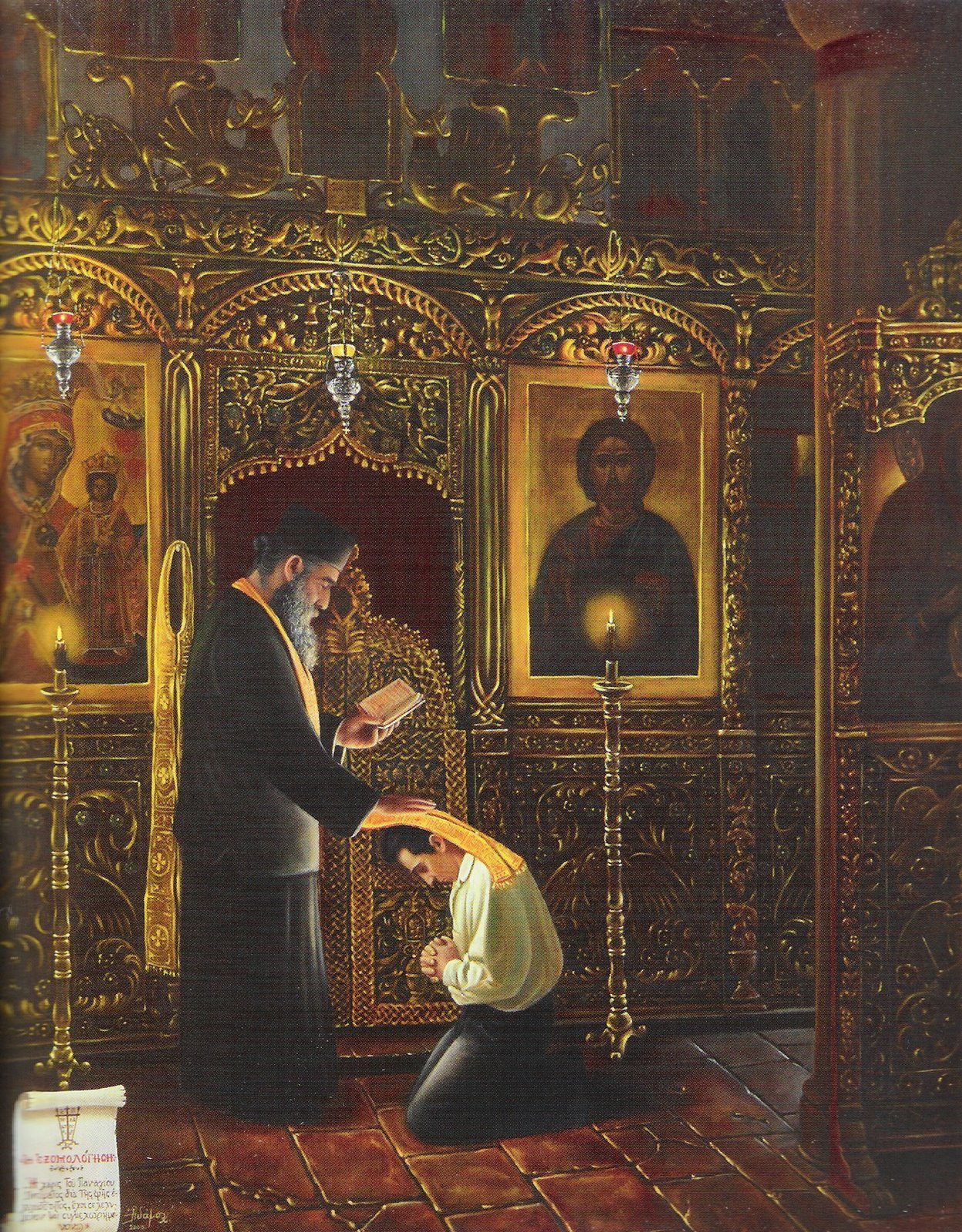 The Great Fast is a time for change. We try to spend more time focused on how to please God and others. When things take us away from God, we can sin. We need to confess our sins to God and change the things that lead us to sin. This is called “repentance.”
In the Liturgy we pray “that the rest of our lives may be spent in peace and repentance.” We do that by learning more about the ways of God and then putting them into practice in our lives.
When we think about God’s Commandments we are on the first step to repentance. When we were baptized the priest asked us to renounce Satan and his sinful ways. We promised to serve Christ the Son of God in faith and in truth. When we forget these promises, we sin. But the Lord never forgets His promise to us: “I am with you always, even to the end of the world.”
If we have fallen into sin we can repent and God will raise us up because He is always with us.
QUICK FACTS &THOUGHTS:
• In the Ten Commandments which God gave through Moses the first three concern life with God. Find them in your Bible or prayerbook.
• Do you honor God by praying to Him every day? By not using His name as a swear word? By sharing in the Liturgy every Sunday?
• The rest of the Commandments teach us to respect others. What are these Commandments? • How do you treat your parents? Are you violent with others? Do you take what belongs to others? Do you envy them for what they have?
• In the New Commandment which God gave through Christ we are called to love one another as God loves us. What do you do to show that you love God? That you love others?
• Prepare to go to Confession by loving God and others more during the Great Fast.
(Living with Christ Great Lent at Home)
 The word “rescue” doesn’t always connect in people’s monks with the life and work of a Benedictine monk, but when you read a recent article in The Atlantic, you will have a new appreciation of the connection. It is a fact that Father Columba Stewart, monk of St. John’s Abbey (Collegeville, MN) spends a great deal of time rescuing some of the world’s precious manuscripts from possible human destruction –think of ISIS– and natural decay in a project sponsored by Saint John’s Abbey and University —Hill Museum & Manuscript Library (HMML). The HMML project puts on microfilm and in digital format manuscripts the world has a rarely seen.
This is human project with Divine blessing; a true ecumenical and inter-faith project that reaches into the deep for the sake of something greater: Truth. What else could you expect a monk to do as a fruit of his contemplation? This, for me, is crucial consequence of the Incarnation of the Lord.
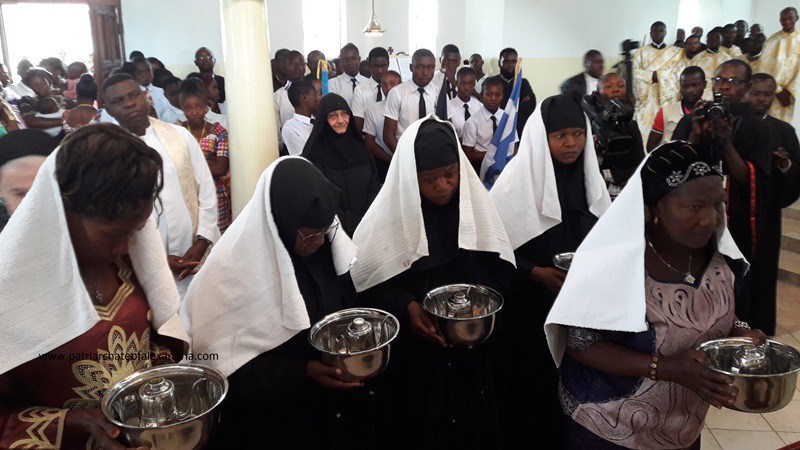 The Orthodox Church of Alexandria (Egypt and all of Africa) ordained a few women to the diaconate. His Beatitude Theodoros II, Pope and Patriarch of Alexandria and All Africa, did the ordination on February 17, 2017 in the Democratic Republic of Congo.
In a slight contrast, The Church of Greece officially “brought back” the female diaconate in 2004, though one Metropolitan had ordained a nun in 1986.
In this picture you see the women being tonsured a reader, which happens outside the altar (iconostasis) leading to being ordained deaconesses. A news brief is here.
Theologically in the Orthodox Church, ordination is not an ontological change. The Roman Church holds to a theology that says at priestly ordination the soul is changed ontologically. There is a hot debate in Roman Church about what happens to the man when ordained to the Order of Deacon (is there a change at the level of the soul?). That change happens when one receives the Mysteries of Initiation (scraments): baptism, chrismation Eucharist —one becomes a “new creation” in Jesus Christ. It may be more accurate to say that Pope Theodoros II consecrated but not ordained the women. In any event, this gesture is very significant and forward thinking and right.
Continuing in the ancient tradition Ordination, rather, is the setting apart for a specific task, for example as a reader, sub-deacon, deacon, priest, or bishop. Hence, the diakonia is lived according to rank: servant, elder, overseer. These women are being set aside for a specific task within the Alexandrian Church of Alexandria, a task which appropriately belongs to the order of deacons –the women were blessed into a minor order (cheirothesia). Yet, the exact nature of their diaconal ministry is unclear except to say they will be working for the mission of the Church. Also, absent from view is the liturgical text and rubrics used by the Alexandrian Pope. Some of the markers of this ordination are the towels and washing of the bishop’s hands, which are clearly pictured.
There is a Pan-Orthodox document (Consultation on Rhodes, 1988) stating that the church had, indeed, ordained females to the diaconate and recognized that, in some places, it had never fallen out of practice.
The Orthodox Church names women who fulfiled the ministry in the Order of Deacon and are saints: St Tatiana (January 12), St Olympias (July 25), and St Foebe (September 3).