Pope Benedict address priests, nuns, sisters & consecrated men & women


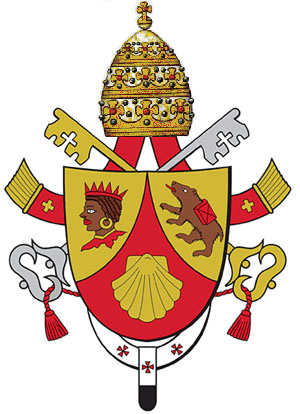
Benedict XVI arms.jpgAddress of the Holy Father Benedict XVI

To the Participants in the

Plenary Assembly of the Congregation

For Institutes of Consecrated Life

And Societies of Apostolic Life


Clementine Hall
Thursday, 20 November 2008


Your Eminences,
Venerable Brothers in the Episcopate and in the Priesthood,
Dear Brothers and Sisters,


I meet you with joy on the occasion of the Plenary Assembly of the Congregation for Institutes of Consecrated Life and Societies of Apostolic Life which is celebrating 100 years of life and activity. Indeed, a century has passed since my venerable Predecessor, St Pius X, with his Apostolic Constitution Sapienti Consilio of 29 June 1908, made your Dicastery autonomous as a Congregatio negotiis religiosorum sodalium praeposita, a name that has subsequently been modified several times. To commemorate this event you have planned a Congress on the coming 22 November with the significant title: “A hundred years at the service of the consecrated life”. Thus, I wish this appropriate initiative every success.


Today’s meeting is a particularly favourable opportunity for me to greet and thank all those who work in your Dicastery. I greet in the first place Cardinal Franc Rodé, the Prefect, to whom I am also grateful for expressing your common sentiments. Together with him I greet the Members of the Dicastery, the Secretary, the Undersecretaries and the other Officials who, with different tasks carry out their daily service with competence and wisdom in order to “promote and regulate” the practice of the evangelical counsels in the various forms of consecrated life, as well as the activity of the Societies of Apostolic Life (cf. Apostolic Constitution Pastor bonus, n. 105). Consecrated persons constitute a chosen portion of the People of God: to sustain them and to preserve their fidelity to the divine call, dear brothers and sisters, is your fundamental commitment which you carry out in accordance with thoroughly tested procedures thanks to the experience accumulated in the past 100 years of your activity. This service of the Congregation was even more assiduous in the decades following the Second Vatican Council that witnessed the effort for renewal, in both the lives and legislation of all the Religious and Secular Institutes and of the Societies of Apostolic Life. While I join you, therefore, in thanking God, the giver of every good, for the good fruits produced in these years by your Dicastery, I recall with grateful thoughts all those who in the course of the past century of its activity have spared no energy for the benefit of consecrated men and women.


This year the Plenary Assembly of your Congregation has focused on a topic particularly
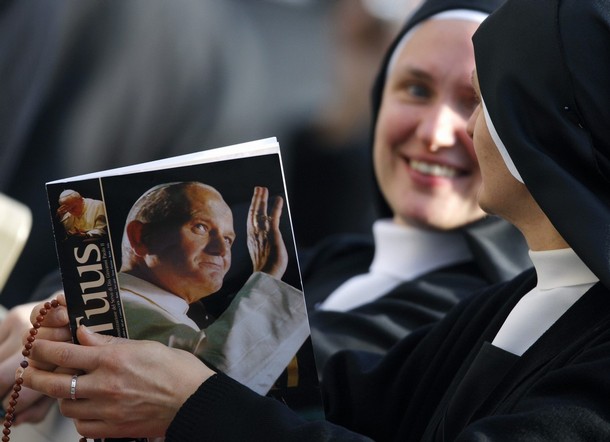
2 nuns.jpgdear to me: monasticism, a forma vitae that has always been inspired by the nascent Church which was brought into being at Pentecost (Acts 2: 42-47; 4: 32-35). From the conclusions of your work that has focused especially on female monastic life useful indications can be drawn to those monks and nuns who “seek God”, carrying out their vocation for the good of the whole Church. Recently too (cf. Address to the world of culture, Paris, 12 September 2008), I desired to highlight the exemplarity of monastic life in history, stressing that its aim is at the same time both simple and essential: quaerere Deum, to seek God and to seek him through Jesus Christ who has revealed him (cf. Jn 1: 18), to seek him by fixing one’s gaze on the invisible realities that are eternal (cf. 2 Cor 4: 18), in the expectation of our Saviour’s appearing in glory (cf. Ti 2: 13).


Christo omnino nihil praeponere [prefer nothing to Christ] (cf. Rule of Benedict 72, 11; Augustine, Enarr. in Ps 29: 9; Cyprian, Ad Fort 4). These words which the Rule of St Benedict takes from the previous tradition, clearly express the precious treasure of monastic life lived still today in both the Christian West and East. It is a pressing invitation to mould monastic life to the point of making it an evangelical memorial of the Church and, when it is authentically lived, “a reference point for all the baptized” (cf. John Paul II, Orientale lumen, n. 9). By virtue of the absolute primacy reserved for Christ, monasteries are called to be places in which room is made for the celebration of God’s glory, where the mysterious but real divine presence in the world is adored and praised, where one seeks to live the new commandment of love and mutual service, thus preparing for the final “revelation of the sons of God” (Rm 8: 19). When monks live the Gospel radically, when they dedicate themselves to integral contemplative life in profound spousal union with Christ, on whom this Congregation’s Instruction Verbi Sponsa (13 May 1999) extensively reflected, monasticism can constitute for all the forms of religious life and consecrated life a remembrance of what is essential and has primacy in the life of every baptized person: to seek Christ and put nothing before his love.


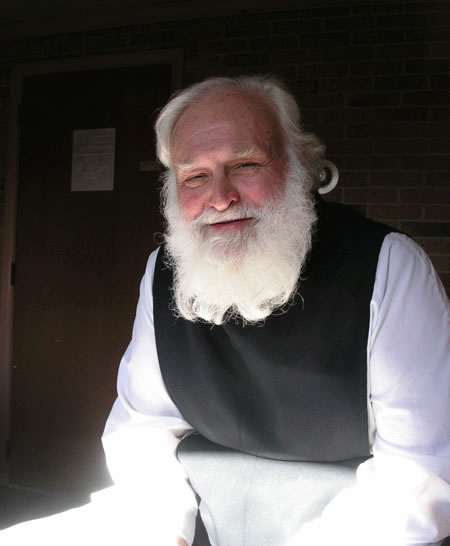
Trap2.jpgThe path pointed out by God for this quest and for this love is his Word itself, who in the books of the Sacred Scriptures, offers himself abundantly, for the reflection of men and women. The desire for God and love of his Word are therefore reciprocally nourished and bring forth in monastic life the unsupressable need for the opus Dei, the studium orationis and lectio divina, which is listening to the Word of God, accompanied by the great voices of the tradition of the Fathers and Saints, and also prayer, guided and sustained by this Word. The recent General Assembly of the Synod of Bishops, celebrated in Rome last month on the theme: The Word of God in the life and mission of the Church, renewing the appeal to all Christians to root their life in listening to the Word of God contained in Sacred Scripture has especially invited religious communities to make the Word of God their daily food, in particular through the practice of lectio divina (cf. Elenchus praepositionum, n. 4).


Dear brothers and sisters, those who enter the monastery seek there a spiritual oasis where they may learn to live as true disciples of Jesus in serene and persevering fraternal communion, welcoming possible guests as Christ himself (cf. Rule of Benedict, 53, 1). This is the witness that the Church asks of monasticism also in our time. Let us invoke Mary, Mother of the Lord, the “woman of listening”, who put
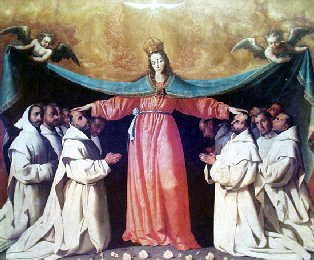
BVM sub tuum.jpgnothing before love for the Son of God, born of her, so that she may help communities of consecrated life and, especially, monastic communities to be faithful to their vocation and mission. May monasteries always be oases of ascetic life, where fascination for the spousal union with Christ is sensed, and where the choice of the Absolute of God is enveloped in a constant atmosphere of silence and contemplation. As I assure you of my prayers for this, I cordially impart the Apostolic Blessing to all of you who are taking part in the Plenary Assembly, to all those who work in your Dicastery and to the members of the various Institutes of Consecrated Life, especially those that are entirely contemplative. May the Lord pour out an abundance of his comforts upon each one.


Some data:

Currently, there are 12,876 monks living in 905 monasteries and 48,493 contemplative nuns living in 3,520 monasteries, two-thirds of which are found in Europe. Spain has, by far, the most of any country.

The story is carried here.


Saint Sylvester, abbot


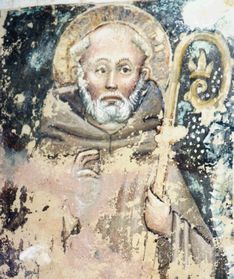
St Sylvester abbot2.jpgMost merciful God, Who, when the holy abbot Sylvester stood by the side of an open tomb meditating on the vanity of the things of this world, did vouchsafe to call him into the wilderness and there to adorn him with the merits of a most holy life; we humbly beseech Thee, that following his example and despising earthly things, we may enjoy eternal fellowship with Thee.


The Sylvestrine Benedictine charism has a constant devotion to the passion of Christ, a special relationship to Mary, the Mother of God. What Saint Sylvester gave his followers was the blessing of being true spiritual father with a genuine ability to attract and to form his disciples according to God’s own ways. The monks of this congregation seriously lived the vocation in simplicity and poverty for Christ and the Church.


In speaking to the venerable Sylvestrine Benedictines, Pope John Paul II said:


A contemplative and anxious to be consistent with the Gospel, Sylvester became a hermit, practicing a strict ascetical life and growing in a deep and vigorous spirituality. For his disciples he chose Saint Benedict’s Rule, wishing to build a community that would be dedicated to contemplation but would not ignore the surrounding social reality. In fact, he himself united a life of recollection, with the ministry of an esteemed spiritual fatherhood and the proclamation of the Gospel to the people of the region.

Father Chrysogonus Waddell, RIP

Fr Chrysogonus Waddell entered into the joy of the Lord on this solemnity
Father Chrysogonus.jpgof Christ the King. Born in 1930 to parents serving in the military and stationed in the Philippines, he joined the community of the Abbey of Gethsemani on August 2, 1950.

His ordination to the priesthood took place on May 31, 1958. Blessed with many talents and an exuberant spirit, Fr Chrysogonus returned the gifts generously and tirelessly. His musical compositions are known and played throughout the world.

His scholarly contributions are highly renowned and acclaimed. Humble and faithful, humorous and devout, he sought the face of the Lord with zeal and tenacity. May his song in heaven be jubilant and eternal!

A Kentucky obit.

Isaac Watts’ legacy continues, even 260 later

The Father of English Hymnody died 260 years ago today. I suppose if you write about 750 hymns you should be called a “father of something”…. There’s hardly a week that goes by that Isaac Watts’ music isn’t used. Watts, a well-educated man though he was prevented from studying at Oxford because of theological views.  He was considered a
Isaac Watts.jpgnonconformist, known as Congregationalist in the USA. Yale University holds the papers of Watts.


Watt’s originality is that he revolutionizes music written for sacred worship by using the philosophy known through the 16th century Protestant Reformers, namely that of John Calvin. The Reformers made a significant departure from the Roman Church’s use of psalmody for the entrance, gospel and communion antiphons at Mass and the Divine Office.  The ancient usage was jettisoned; the connection with Old Testament types rejected when the Psalms were rejected. The replacement music added extra-Biblical poetry and Christian experience for content, verse forms and metrical translations replaced chant, and congregational singing was employed figuring that the truth revealed in Scripture and doctrine about salvation in Jesus Christ would be more fully apprehended if the liturgical music was in the vernacular and “user friendly” hymns.


On another note, Isaac Watts’ poem “Against Idleness And Mischief” found in Divine Songs for Children, a poem that uses the bee as a model of hard work and later parodied in Alice’s Adventures in Wonderland.


How doth the little busy bee

Improve each shining hour,

And gather honey all the day

From every opening flower!


How skillfully she builds her cell!
Bee.jpg

How neat she spreads the wax!

And labours hard to store it well

With the sweet food she makes.


In works of labour or of skill,

I would be busy too;

For Satan finds some mischief still

For idle hands to do.


In books, or work, or healthful play,

Let my first years be passed,

That I may give for every day

Some good account at last.

Why the tetragrammaton (YHWH) is not allowed in the Liturgy

On August 10th I posted an article on the Pope’s prohibition of the use of tetragrammaton in the sacred Liturgy. You can read the original posting here.


A recent reflection on the restoration of this practice follows.


Why “Yahweh” Isn’t Used in Catholic Liturgy

Biblical Expert Says It Reflects Jewish Tradition

JERUSALEM, NOV. 21, 2008 (Zenit.org) – To understand the Vatican directive reiterating that the name of God revealed in the tetragrammaton YHWH is not to be pronounced in Catholic liturgy, it helps to know the history behind the Jewish tradition, says a biblical expert.

Father Michel Remaud, director of the Albert Decourtray Institute, a Christian institute of Jewish studies and Hebrew literature, explained to ZENIT that the message published in June by the Congregation for Divine Worship and the Sacraments reflects current Jewish practice.

The Vatican note explained: “The venerable biblical tradition of sacred Scripture, known as the Old Testament, displays a series of divine appellations, among which is the sacred name of God revealed in a tetragrammaton YHWH — hwhw.

YHWH.jpg“As an expression of the infinite greatness and majesty of God, it was held to be unpronounceable and hence was replaced during the reading of sacred Scripture by means of the use of an alternate name: ‘Adonai,’ which means ‘Lord.'”

Father Remaud said that “until almost the year 200 B.C., the divine name was pronounced every morning in the temple in the priestly blessing: ‘The Lord bless and keep you: The Lord make his face to shine upon you, and be gracious to you'” (Numbers 6:24-26).

He said this blessing originated out of the context of the next verse in Numbers: “So shall they put my name upon the people of Israel, and I will bless them.”

Left unsaid

Furthermore, the priest said that the Mishna, the Jewish law codified toward the end of the second century, “specifies that the name was pronounced in the temple ‘as it is written,’ while another denomination (Kinuy) was used in the rest of the country. After a certain period, the divine name was no longer pronounced in the temple’s daily liturgy.

“The Talmud leads one to understand that the decision was taken to avoid a magic use of the name by some.”


According to Father Remaud’s sources, ever “since the death of the high priest Simon the Righteous, about 195 B.C., the divine name was no longer pronounced in the daily liturgy.”

The expert compared the Talmud’s testimony with the Book of Sirach, which mentions Simon the Righteous in Chapter 50. Chapters 44-50 remember all “godly men” since Enoch, including Abraham, Moses and David.


Father Remaud said the seven-chapter passage ends with the high priest Simon pronouncing the divine name: “Then Simon came down, and lifted up his hands over the whole congregation of the sons of Israel, to pronounce the blessing of the Lord with his mouth, and to glory in his name; and they bowed down in worship a second time, to receive the blessing of the Most High” (Sirach 50:20-21).

Yom Kippur.jpgFrom the time of Simon the Righteous until the temple’s ruin, the name was only heard “as it is written” during the Yom Kippur liturgy at the temple of Jerusalem, where the high priest pronounced it 10 times, continued Father Remaud.


“On hearing the explicit name from the mouth of the high priest, the ‘cohanim’ [Aaron’s descendants] and the people present in the atrium knelt down, prostrated themselves with their face on the ground saying: ‘Blessed be the glorious name of his Kingdom forever.'”

The Mishna does not say that the high priest pronounced the divine name, but that the name “came out of his mouth,” he clarified.

A whisper


Moreover, continued Father Remaud, it seems that toward the end of the period of the second temple — 70 A.D. — the high priest now only pronounced the word in a whisper. This was explained in a childhood memory of Rabbi Tarphon (1st-2nd centuries), who recalls that even straining to hear, he could not hear the name.


The biblical scholar also noted that the formula of Exodus — “This is my name forever” (Exodus 3:15) — through a play of words in Hebrew is interpreted by the Talmud of Jerusalem as “This is my name to remain hidden.”


“Today, the divine name is never pronounced,” continued Father Remaud. “In the Yom Kippur office of the synagogue, which replaces the temple’s liturgy by the recitation of what took place when the temple existed, the people prostrated themselves in the synagogue when recalling — though not pronouncing — that the high priest pronounced the divine name.”


The Catholic priest noted that the first Christians called “Jesus by the term ‘Lord’ (Kyrios),” by which they “deliberately applied the term used in Greek to translate the divine name.”


“In Judaism’s liturgical tradition, this divine name was only pronounced in the liturgy of forgiveness of sins, on the day of Kippur,” he continued. “One might see an allusion to this tradition and to the purifying power of the Name, in this verse of the First Letter of St. John: ‘Your sins are forgiven for his names’ sake’ (1 John 2, 12).”

Krakow prayer meeting in 2009 sponsored by Sant’Egidio


Sant Egidio peace.jpgOn November 21, Andrea Riccardi, the founder of the international Community of Sant’Egidio announced that the next international inter-religious encounter, in 2009, will be in Krakow, Poland, honoring the memory of the Servant of God Pope John Paul II and to recall the terrible tragedy of Auschwitz, where evil manifested its ugly face.


World leaders, religious and political, have met for prayer periodically since 1986 when the landmark event was first lived in Assisi.


Sant Egidio member.jpg 

The H2O News video report.


The Community of Sant’Egidio has been in the United States since 1990, more info is found here.


The Wiki article is here.

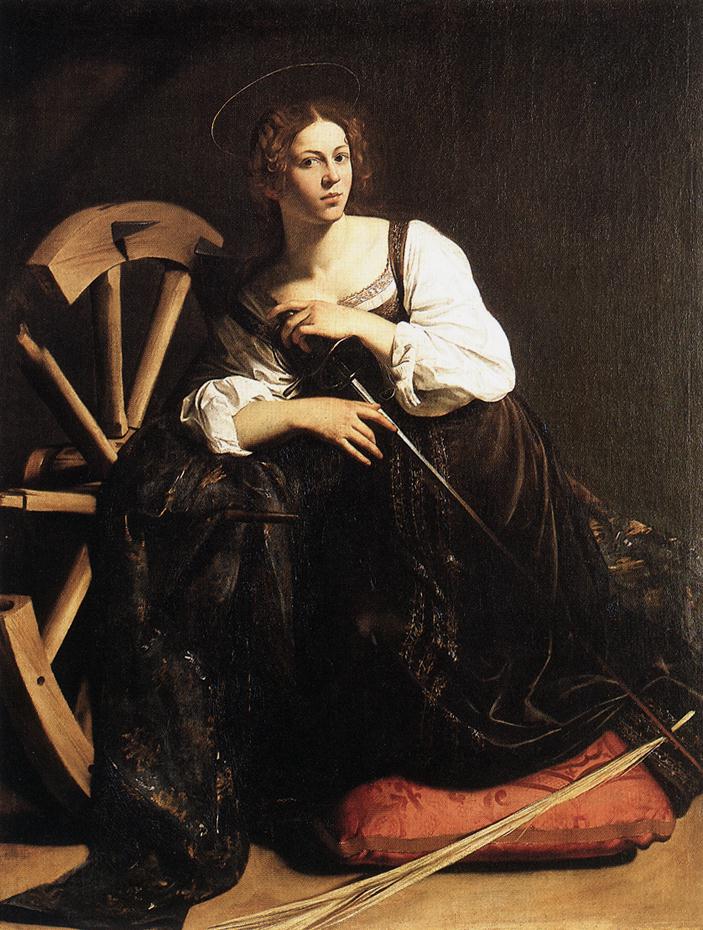
Saint Catherine of Alexandria

Born of a noble family, Catherine was committed to her faith in Christ and made the claim she was his bride; she therefore refused the marriage proposal of the emperor. Defending her decision before 50 philosophers by making a superior argument, she was tortured by being splayed on a wheel and then beheaded.

St Catherine of Alexandria2.jpg

The kingdom of heaven is like a merchant seeking good pearls, who, when he had found one of great price, gave all that he had and bought it.

With the Church we pray,

O God, Who did give the law to Moses from the top of Mount Sinai and did  miraculously convey there by Thy holy Angles the body of blessed Catherine, Thy Virgin and Martyr; we beseech Thee, grant  that by virtue  of her merits and intercession, we may attain to that mount which is Christ.

 Poetry can be a great way of understanding life. Here is a poem by Saint Ephrem,

 In Praise of Virginity

Blessed are you, virgin, with whom
the comely name of virginity grows old.
In your branches chastity built a nest;
may your womb be a nest for her dwelling place.
May the power of mercy preserve your temple.

Blessed are you, heavenly sparrow
whose nest was on the cross of light.
You did not want to build a nest on earth
lest the serpent enter and destroy your offspring.

Blessed are your wings that were able to fly.
May you come with the holy eagles
that took flight and soared from the earth below
to the bridal couch of delights.

Blessed are you, O shoot that Truth cultivated;
He engrafted your medicine into the Tree of Life.
Your fruit exults and rejoices at all times
to drink the drink of the Book of Life.
Blessed are your branches.

Blessed are you, O bride, espoused to the Living One,
you who do not long for a mortal man.
Foolish is the bride who is proud
of the ephemeral crown that will be gone tomorrow.

Blessed is your heart, captivated by love
of a beauty portrayed in your mind.
You have exchanged the transitory bridal couch
for the bridal couch whose blessings are unceasing.

Blessed are you, free woman, who sold yourself
to the Lord who became a servant for your sake!

Saint Andrew Dung-Lac & companions


Thumbnail image for St Andrew Dung-lac & comp.JPG
O God, the source and origin of all fatherhood, you kept the blessed martyrs Andrew and his companions faithful to the cross of your Son even to the shedding of their blood. Through their intercession enable us to spread your love among our brothers and sisters, that we may be called and may truly be your children.


An excerpt of a letter written 1843 by Paul Le-Bao-Tinh, shortly before his martyrdom:


I, Paul, chained for the name of Christ, wish to tell you the tribulations in which I am immersed every day, so that you, inflamed with love for God, may also lift up your praise to God, ‘for his mercy endures forever’. This prison is truly the image of the eternal Hell: to the cruelest tortures of all types, such as fetters, iron chains and bonds, are added hate, vindictiveness, calumny, indecent words, interrogations, bad acts, unjust oaths, curses and finally difficulties and sorrow. But God, who once freed the three boys from the path of the flames, is always with me and has freed me from these tribulations and converted them into sweetness, ‘for his mercy endures forever…


Assist me with your prayers so that I may struggle according to the law, and indeed ‘fight the good fight’ and that I may be worthy to fight until the end, finishing my course happily; if we do not see each other again in this life, in the future age, nonetheless, this will be our joy, when standing before the throne of the spotless Lamb, with one voice we sing his praises, exulting in the joy of eternal victory. Amen.

Communion & Liberation, in brief

Here is the description of the Fraternity of Communion and Liberation which appears in the Directory of International Associations of the Faithful, published by the Pontifical Council for the Laity (Libreria Editrice Vaticana [adapted], 2006).


Official name: Fraternity of Communion and Liberation; also known as: Communion and Liberation (CL)


Established: 1954


History: At the beginning of the 1950s, realizing the need to rebuild the Christian presence in the student world, Father Luigi Giussani, a professor at the Theological Faculty at Venegono, dedicated himself to teaching religion in schools.


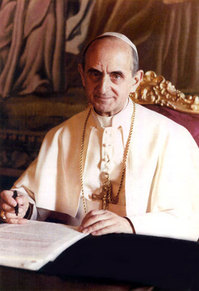
The experience of a small group of students from the Berchet classical high school in Milan, which gathered around him, led to the establishment of Gioventù Studentesca (Student Youth). With the strong encouragement of the archbishop of Milan, Giovanni Battista Montini, the future Pope Paul VI, Gioventù Studentesca spread to other Italian cities, and after 1968 it also began to involve undergraduates and adults.


This led to the establishment of Communion and Liberation which, in 1980, was to be canonically recognized by the Benedictine Ordinary (Bishop) Abbot of Montecassino, Martino Matronola. The first fraternity groups were set up in the latter half of the 1970s by CL graduates who, using a method based on communion, wished to strengthen their membership in the Church as adults, along with the responsibilities that this entails.


It was through their spread to various countries that the Fraternity of Communion and Liberation came about. On Feb. 11, 1982, (Our Lady of Lourdes) the Pontifical Council for the Laity decreed recognition of the Fraternity of Communion and Liberation as an international association of the faithful of pontifical right.


Identity: The essence of the CL charism is

the proclamation that God became Man; in the affirmation that this man — Jesus of Nazareth, who died and rose again — is a present event,

whose visible sign is communion, that is to say, the unity of a people led by a living person, the Bishop of Rome

in the awareness that it is only in God made Man, and hence within the life of the Church, that man is more true and humanity is truly more human.


In the educational proposal made by CL, the free acceptance by the individual of the Christian message is determined by the discovery that the needs of the human heart are met by the annunciation of a message that fulfills them.


It is the reasonableness of the faith which leads men and women who have been transformed by their encounter with Christ to commit themselves with Christian experience to affect the whole of society. This commitment strengthens their awareness of their own identity, enabling them to see their life as a vocation, and is supported by the experience of communion which makes the memory of Christ’s coming a daily reality.


The educational process,

nurtured by proclamation and catechesis

by attendance at retreats and spiritual exercises

and by the celebration of the sacraments,

gives pride of place to the dimensions of


1.   cultural work, as a means of deepening and expressing their faith and as a condition for having a responsible presence in society

2.   charity work, as education in service to be freely given to others and social commitment

3.   and the mission, as education in the sense of the catholicity of the Church and as a vocational choice.


Bearing witness to Christ

  • in schools and universities
  • in factories and offices
  • in the local neighborhood and in the city
  • takes place above all through work, which is the specific way in which adults relate to reality.


Organization: The life of the fraternity is lived through the free formation of groups of men and women of ail conditions and states of life, whose friendship and communion are based upon their common commitment to move forward together toward holiness, which they acknowledge to be the genuine purpose of human existence.


The association is guided by the president and by the Central Diakonia, of which all the international leaders are members.

[There are also] the officials in all the various areas in which it is present, and representatives of the other entities that have emerged from the CL charism:

·         the Memores Domini Lay Association (The life of its members (lay men and women who normally live in houses made up of either men or women, following a rule of group living and personal ascesis) is governed by the call to contemplation, understood as the constant memory of Christ, and of mission, especially in the workplace. The life is committed to the conception of virginity is based on St. Paul’s call to “possess as though not possessing.” It is not in order to give up something that one makes a sacrifice, but rather to possess reality completely analogous to the possession of Christ);

·         the priestly Fraternity of the Missionaries of St. Charles Borromeo;

·         the Congregation of the Sisters of Charity of the Assumption;

·         Fraternity of Saint Joseph (dedicated their lives definitively to Christ and the Christian life, while remaining in their current life situations; members of this fraternity are free of marriage bonds, because widowed or unmarried, according to the Gospel tradition: in obedience, poverty, virginity, which are dimensions of faith, hope, and charity).


ln the dioceses, the diocesan leader is assisted by a

Diakonia and by a spiritual assistant appointed by the local bishop acting on a proposal by the fraternity president.


Since 1997, the Communion and Liberation International Center has been operating in Rome, as the liaison center linking all the parts of the movement worldwide.


Membership: The fraternity has 47,994 members in 64 countries. More than 60,000 people share the CL experience.


Works: Individuals and groups belonging to the fraternity have taken the responsibility to establish cultural, charitable and entrepreneurial works linked together in the Company of Works which has offices in Italy and abroad.


These works of CL include

·         shelter homes for the mentally ill, drug addicts, the disabled, AIDS patients and the terminally ill

·         companies to provide employment for the disabled

·         nongovernmental organizations (AVSI in Italy and CESAl in Spain) to provide assistance and foster the development of poor countries

·         foundations such as the Food Bank, which provides daily food to more than 1 million poor people in Italy,

·         and the Pharmaceutical Bank

·         solidarity centers to assist the unemployed in seeking a job

·         welfare facilities in children’s prisons in Africa and America

·         and aid for needy families and finding homes for people in difficulty.


The initiatives that have emerged in the field of culture have become a special place for ensuring that the pooling of different experiences is an opportunity for every individual to communicate their own “proprium” regarding the Christian event:

·         cultural centers

·         schools (often established by parents’ cooperatives)

·         publishing houses, publishing and newspaper initiatives

·         foundations and academic institutions

·         and international conferences, such as the Meeting for Friendship among Peoples.(Rimini)


The Sacred Heart Foundation in Milan is directly dependent upon the Fraternity, as a nonprofit entity which manages schools, and works for the promotion and protection of free education, consistent with the Christian tradition and the teaching of the Church.


Publications: Traces Litterae Communionis, a monthly magazine in Italian, French, English, Polish, Portuguese/Brazilian, Russian, German and Spanish; Piccole Tracee, a magazine for children published every two months


Web site: www.clonline.net

Blessed Miguel Pro


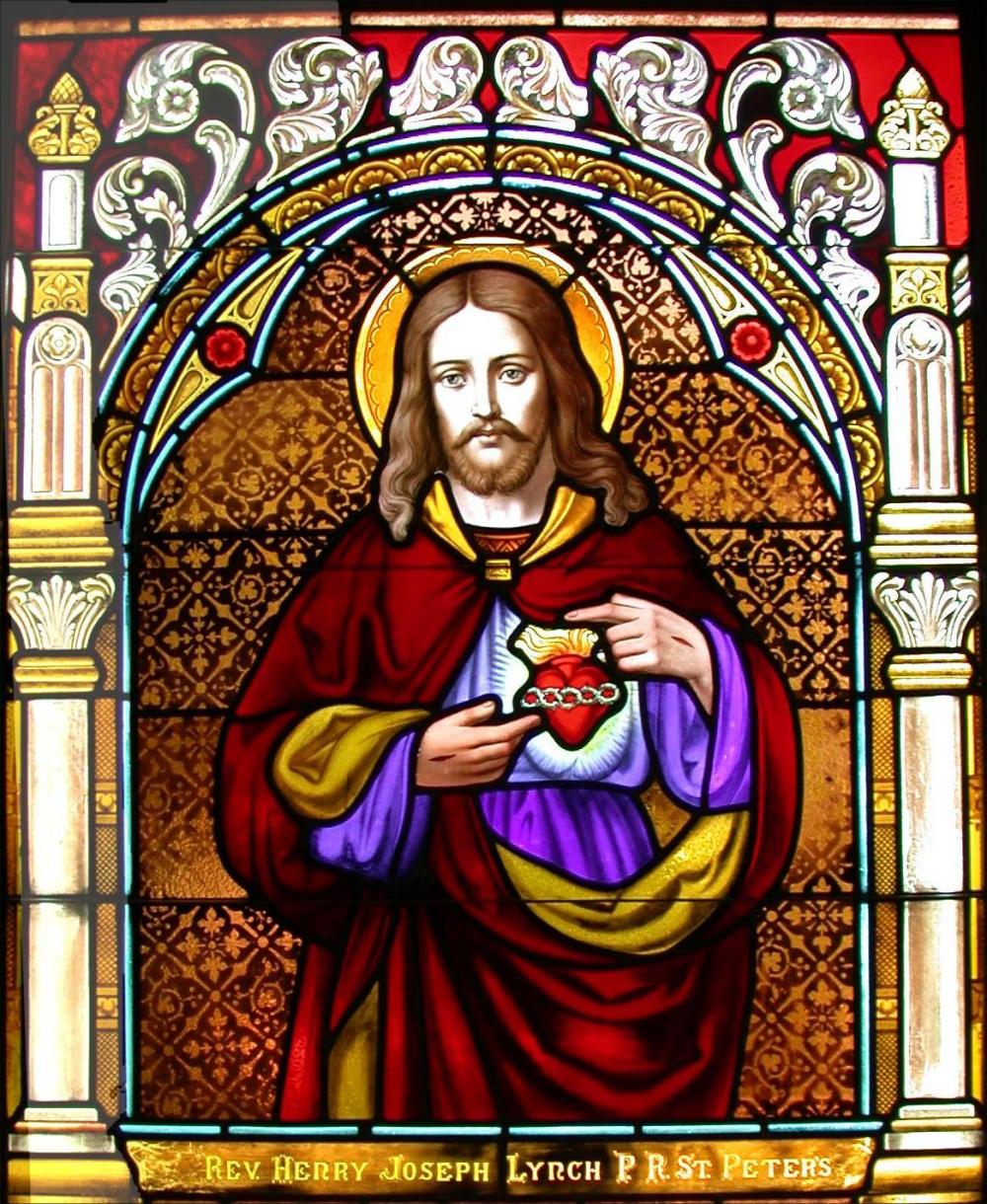
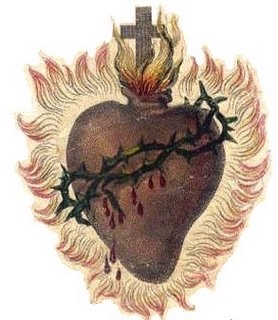
Bl Miguel Augustin Pro.jpgToday is the liturgical memorial of Blessed Miguel Pro, a fitting connection with today’s  Solemnity of Christ the King, and the devotion to the Sacred Heart. The memorable line of Pro’s is his last: Long live Christ the King. With that he was killed. Blessed Miguel Pro teaches us to serve Christ the King all that we do and remain close to the mercy of God. He wrote:


I believe, O Lord, but strengthen my faith… Heart of Jesus, I love Thee; but increase my love. Heart of Jesus, I trust in Thee; but give greater vigor to my confidence. Heart of Jesus, I give my heart to Thee; but so enclose it in Thee that it may never be separated from Thee. Heart of Jesus, I am all Thine; but take care of my promise so that I may be able to put it in practice even unto the complete sacrifice of my life.


Chaplet of Blessed Miguel Pro, SJ


Blessed Miguel, before your death, you told your friend to ask you for favors when you were in Heaven. I beg you to intercede for me and in union with Our Lady and all the angels and saints, to ask Our Lord to grant my petition, provided that it be God’s Will. {mention the request}

We honor and adore the triune God. The Gloria.
We ask the Holy Spirit for guidance. Come Holy Ghost.
We pray as Jesus taught us to pray. The Our Father.
We venerate with love the Virgin Mary. The Hail Mary.
All you angels, bless you the Lord forever.
Saint Joseph, Saint {name of your patron}, and all the saints, pray for us.

Blessed Miguel, high spirited youth, pray for us. Viva Christo Rey.
Blessed Miguel, loving son and brother, pray for us. Viva Christo Rey.
Blessed Miguel, patient novice, pray for us. Viva Christo Rey.
Blessed Miguel, exile from your homeland, pray for us. Viva Christo Rey.
Blessed Miguel, prayerful religious, pray for us. Viva Christo Rey.
Blessed Miguel, sick and suffering, pray for us. Viva Christo Rey.
Blessed Miguel, defender of workers, pray for us. Viva Christo Rey.
Blessed Miguel, courageous priest in hiding, pray for us. Viva Christo Rey.
Blessed Miguel, prisoner in jail, pray for us. Viva Christo Rey.
Blessed Miguel, forgiver of persecutors, pray for us. Viva Christo Rey.
Blessed Miguel, holy martyr, pray for us. Viva Christo Rey.

Imprimatur: Joseph A. Fiorenza, Bishop of Galveston – Houston, August 13, 1995