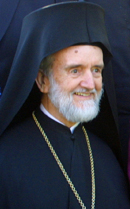
Blessed Columba Marmion


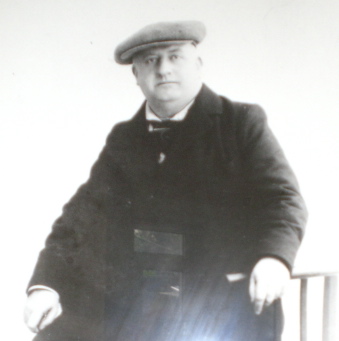
Marmion2.jpg

God, our Father, you called your servant, Columba, to the
monastic life. You bestowed on him the grace to understand the mysteries of
your Son and to make him known as the ideal for all who have been baptized.
Grant that we may learn from his example to live in Christ by opening our
hearts in joy to the Spirit of your Son, our Lord, who lives and reigns with
you and the Holy Spirit, One God, for ever and ever. Amen.

The Church observes
the feast of Blessed Columba Marmion today. He was an Irishman who became a monk in Belgium,
a diocesan priest who fell in love with the Benedictine way life, its emphasis on seeking God and who served as abbot. Dom Columba died on January
30, 1923. Marmion’s liturgical memorial, however, is observed not on his anniversary
of death but on the anniversary of receiving the abbatial blessing, October 3,
1909. At that time the first Sunday of October was the Solemnity of the Most Holy Rosary
of the Blessed Virgin Mary; in this era the feast of Our Lady of the Rosary is
observed on October 7th.

Two pieces to reflect up on…

The
whole of the Christian life consists in carrying Christ to birth within us and
in having Him live there’. This, of course is nothing more than a paraphrase of St. Paul’s
injunction in Gal. 4:19: ‘until Christ is formed in you’. For Marmion this is not just our
final goal, it is our daily, essential task:  to form Christ within us, through the Graces of the
sacraments and our daily encounter with God in prayer. (Mark Tierney O.S.B,
“The Life and Times of Columba Marmion”)

And

… Revelation teaches us that there is
an ineffable paternity in God. God is a Father: that is the fundamental dogma
which all the others suppose, a magnificent dogma which leaves the reason
confounded, but ravishes faith with delight and transports holy souls. God is a
Father. Eternally, long before the created light rose upon the world, God
begets a Son to whom He communicates His nature
, His perfections, His beatitude
His life, to beget is to communicate [By the gift of a similar nature ] being
and life. You are My Son this day have I begotten You [Ps 2:7; Heb 1:5; 5:5],
from the womb before the day – star, I begot you [Ps 110:3]. In God, then, is
life, life communicated by the Father … Creatures can only lisp when they
speak of such mysteries… the Father, and the Son, with one same and indivisible
Divine Nature, and both, although distinct from one another [on account of
their personal properties, ‘of being Father’ and ‘of being Son’] are united in
a powerful, substantial embrace of love, whence proceeds that Third Person, Whom
Revelation calls by a mysterious name: the Holy Ghost
.

Such is as far as faith
can know it, the secret of the inmost life of God; the fullness and the
fruitfulness of this life are the source of the incommensurable bliss that the
ineffable Society of the three Divine Persons possesses.

And now God – not in
order to add to His plenitude, but by it to enrich other beings – exceeds, as
it were, His Paternity. God decrees to call creatures to share this Divine
life
, so transcendent that God alone has the right to live it, this eternal
life communicated by the Father to the Only Son, and by them, to the Holy
Spirit … To these mere creatures God will give the condition and sweet name
of children
. By nature, God has only one Son; by love, He wills to have an innumerable
multitude: that is the grace of supernatural Adoption. (Dom Columba Marmion,
OSB, Spiritual Writings.  Ed. P.
Lethiellex. Maredesous Abbey, 1998.)

A very brief note on the canonization
process of Dom Columba can be read here

The Difference God Makes: A Catholic Vision of Faith, Communion and Culture


Difference God Makes.jpg

Join us for a dialogue with Francis Cardinal George, O.M.I. on the publication of

The Difference God Makes: A Catholic Vision of Faith,
Communion, and Culture


Moderated by Monsignor Lorenzo Albacete,

Theologian,
Author, Columnist


Wednesday, October 21, 2009 at 7:00PM

The Metropolitan Club, 1 East 60th Street (corner of 5th
Avenue), NYC

·RSVP AND PROPER ATTIRE REQUIRED. No T-shirts, sneakers, or jeans. For men, jackets and ties required. Clerical
dress or religious habits permitted. 

·To make a reservation, send an e-mail to RSVP@crossroadsnyc.com with
full name and address.

Presented by Crossroads Cultural Center, The American Bible
Society
and The Lumen Christi Institute

Francis E. George.jpg

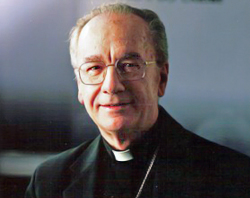
His Eminence, Francis Cardinal George, 72, the Cardinal-Archbishop of Chicago since 1997, is widely
recognized as a leading intellectual figure in the American Catholic
hierarchy. His new book, The Difference God Makes: A Catholic
Vision of Faith, Communion, and Culture
, brings together some of his most
influential writings on the Catholic vision — not just of the Church herself,
but also of all the peoples of the world. 

Weaving together intellectual insight and personal wisdom,
this investigation offers a luminous Catholic vision of communion, illustrating
the Church’s relation to numerous religions as well as the secular
world.  Drawing from both the author’s observations of Catholicism in
cultures around the globe and countless theologians’ perspectives–including
Popes John Paul II and Benedict XVI, Thomas Aquinas, and Francis of Assisi–this
analysis demonstrates how to recognize the self-giving, liberating God who
provides freedom from the competitive, oppressive gods of secular
modernity.  This overview also recalls an assortment of fascinating
stories, from a poignant moment with a non-Christian in Zambia to the humbling
dedication of volunteers who came to observe Pope John Paul II’s visit to
Mexico City.  

Confronting controversial issues head-on, this volume will
inspire Christians everywhere while also offering non-Christians a renewed
understanding of what a lived Christianity means for political and personal
life today.

Guardian Angels

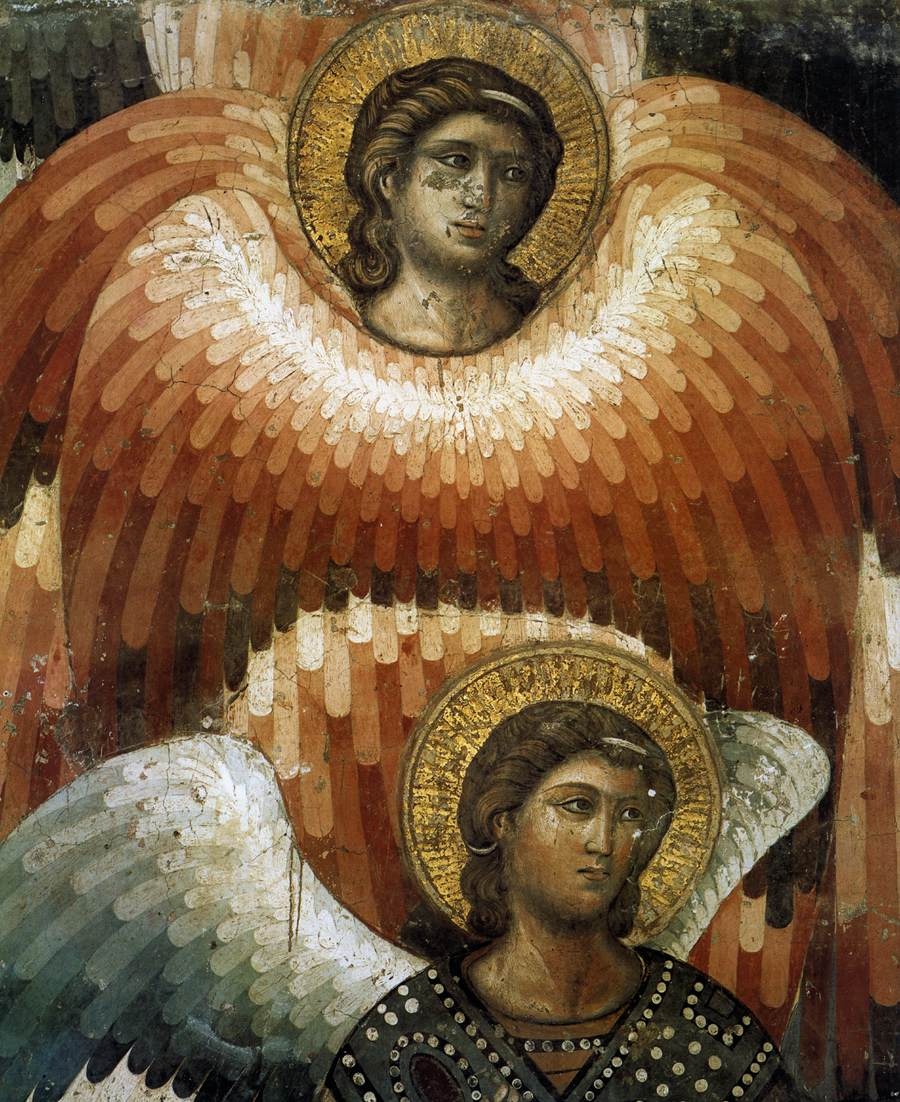
Angels, Last Judgement.jpgGod has given His Angels charge over thee, to keep thee in all thy ways.

O God, Who in Thine ineffable providence has deigned to send Thy holy Angels to watch over us, grant to Thy suppliants always to find safety in their protection and in eternity to share their happiness.

Angels are not mere nice spirits who do good things for us or make feel nice, or even warm our hearts when afraid. They certainly have the inspiration to that when needed. As I mentioned to my 3rd graders on Wednesday at CCD, the Guardian Angels are God’s messengers sent to us guard us, teach us and to protect us. The primary duty of angels after worshipping God, as you know, is to deliver messages. Hence, they these holy spirits are called angels. A few years ago it was popular to wear angel pins and certainly the printing companies made a fortune off angel pictures, cards and posters.

What do we know about angels? We know they don’t have bodies, they are created by God and they worship Him at the His throne, they’re sent to give us something (a message) or to protect us from evil. The Church has always held the presence of angels as a reality since they are present, that is, seen and experienced in the Old Testament and in the New Testament. The sacred Liturgy attests to the Catholic belief in angels especially when you consider the liturgical art, music, especially at Christmas, and poetic texts used in worship. And since 1608 the Church has included the feast of the Guardian Angels in the Roman Missal. The Catechism has a section on angels; review the paragraphs.

A perduring memory of my grandmothers is that of them teaching me the prayer “Angel of God, my guardian dear.” Before bed each night when I slept over their respective homes, we would kneel by the bedside and say goodnight to God through His angels. Every day, right after Mass has finished, I pray the Saint Michael the Archangel prayer and the Angel of God prayer. Why? Because I believe God has given me these gifts and promises and I want to take advantage of the graces God offers through the angels. Do you pray to the angels?

Brush up on your knowledge of angels in a booklet published by the Catholic Information Service called, All About Angels. You can also listen to booklet as an audio file.

Say a prayer for the monks of the American Cassinese Congregation on this their patronal feast. As the founder of many monasteries, and since 1856 when official documentation from the Holy See came through, Archabbot Boniface Wimmer placed his monasteries under the care of the Holy Guardian Angels. His correspondence shows the confidence he had in the Guardian Angels. How more should we!

Saint Thérèse of Lisieux

St Therese Lisieux.jpgGod our Father, you have promised your kingdom to
those who are willing to become like little children. Help us to follow the way
of 
Saint Thérèse with confidence so that by her prayers we may come to know
your eternal glory.


I would recommend reading or listening to the booklet on Saint
Thérèse
‘s Little Way. It will bring you closer in understanding the same and
shed light on her fresh approach to knowing the Lord.

Catholics and Orthodox unite? Solidarity possible?

Good question. Not a question that you hear with any degree of seriousness in the Church among the “middle management” and met with wonder among the laity. In the recent past tensions have been fired up in various circles. The question of unity among the Catholics and Orthodox has been the lightening rod between the two churches for a long time. One can’t forget the tensions over the establishment of Catholic dioceses in Russia or the refusal of the previous Russian Patriarch to allow John Paul II to visit Russia and the walking out of high level theological discussions of the Orthodox, etc. Now none of this is meant to point figures at any one church official or way of proceeding as much as it is to remember recent history and to note where we have come in a short span of time.

In a recent visit of the new head of ecumenical relations of the Russian Orthodox Church, Archbishop Hilarian, to Pope Benedict, this question of closer union has been raised.
Watch the H2O News video clip.

Purgatory: Understanding the Catholic doctrine

Just this morning one of the assisting priests where I am living and I had a brief discussion about purgatory and the need to raise our awareness of praying for “those who have gone before marked by the sign of faith.” I don’t get to think much about purgatory but it’s been a funny thing: I’ve been thinking about the Catholic practice of praying for the souls in purgatory and need to keep in mind and heart the place the dead continue to have in our lives and in Church. I suspect that most of us observe All Souls Day once a year but is that enough? We probably don’t think of those who have died, our family, friends and even those unknown to us personally, as needing prayers for purification. Perhaps we think of our dead as already being with God face-to-face and therefore in no need of prayer. Affectively this line of thinking is understandable. But really, do we think that our deceased friends and family were that perfect in life that aren’t in need of prayer and sacrifice?

Also today I was surfing the usual Catholic news sites and I was astonished to see this video news item on Rome Reports talking about purgatory. Something is in the air! Since Divine Providence works in mysterious ways, I leave it to you to pray and think about the holy and not yet holy souls.
There is much unsound doctrine on the Church’s faith in purgatory. I bid you to do some personal work on knowing what the Church believes AND what it doesn’t believe. See this entry on purgatory.
This video clip on a museum on purgatory in Rome is very interesting.

Reverence that consumes our total being

An ancient phrase indicates what a true relationship with God is: Deus es consumens: he purifies from sin and makes us white as wool. He consumes our darkness with his light, with his love, with his entire self. gives luster to soul, stripes away sin and brights the souls giving the same grace which was given to the apostles.

So it can be said, “My God and my all” as Saint Francis did. Everything is drawn into the person  of God. Everything changes in our life when we abandon ourselves to the Lord: absolutely everything changes when we give total reverence for the Divine.
When we come to Christ in adoration of the Blessed Sacrament, or walk up to the altar to receive the Holy Eucharist, we know in the root of our being that he totally different from me and my experience. In these gestures of love we say with John the Baptist: I must decrease while he must increase.

To everything that gives life and love the Church says Yes!

You know, the church is the one who dreams, the church
is the one who constantly has the vision, the church is the one that’s
constantly saying ‘Yes!’ to everything that life and love and sexuality and
marriage and belief and freedom and human dignity–everything that that stands
for, the church is giving one big resounding ‘Yes!’ The church founded the
universities, the church was the patron of the arts, the scientists were all
committed Catholics. And that’s what we have to recapture: the kind of exhilarating,
freeing aspect. I mean, it wasn’t Ronald Reagan who brought down the Berlin
Wall. It was Karol Wojtyla. I didn’t make that up: Mikhail Gorbachev said
that…I guess one of the things that frustrates me pastorally is that there’s
this caricature of the church–of being this oppressive, patriarchal, medieval,
out-of-touch naysayer–where the opposite is true.


Archbishop Timothy Dolan, New
York Magazine

Saint Jerome

jerome and lion1.jpg

O God, for the expounding of the Holy Scriptures did raise up in Thy Church the great and holy Doctor Jerome; we beseech Thee, grant that by his intercession and merits we may, by Thy help, be enabled to practice what he taught us both by word and by work.

Don’t miss Pope Benedict XVI on Saint Jerome, part I and part II.