Saint Katharine Drexel

St Katharine Drexel2.jpg

Ever-loving God, You called Blessed Katharine Drexel to teach the message of the Gospel and to bring the life of the Eucharist to the African American and Native American peoples. By her prayers and example, enable us to work for justice among the poor and the oppressed, and keep us undivided in love in the eucharistic community of Your Church.
A homage to Saint Katharine can be viewed here.

Read last year’s entry for Saint Katharine.

Saint Aelred of Rievaulx

Aelred Cap.png2010 marks the ninth centenary of the birth of Saint
Aelred of Rievaulx
, an extraordinary English monk of the twelfth-century. At Ampleforth Abbey, a noted English Benedictine abbey, today marks the saint’s birthday; and since I like Aelred and have a friend at Ampleforth, I am mentioning the saint again this year to mark his anniversary. (As an aside, his year of birth is variously noted as 1109 or 1110.) In Saint Aelred’s time and location priestly was not universal, even if some scholars try to
posit such a thought. Aelred’s father and grandfather were both proprietary
priests of Hexham in Northumberland. Aelred joined the newly founded abbey of
Rievaulx, and because of his many gifts and influential friends (St Bernard of
Clairvaulx and King David of Scotland and England whose mother was St Margaret, starters), he became the
abbey’s third abbot in 1147 after serving as abbot of Revesby Abbey. He was abbot for twenty years. Rievaulx became the mother
house of other Cistercian monastic houses which fostered the Benedictine reform
in England and Scotland. As abbot, Aelred was responsible for vast holdings of
property and an abbey with 600 lay brothers and choir monks. In the Cistercian system
of governance, abbots are required to be the Father-Immediate (an official
visitor) to other communities in order to maintain the monastic way of life as established in the Charter of Charity (their constitution). The amazing
part of Aelred’s life became even more amazing when you consider that he was an
author many works, most notably Christian Friendship (also called On Spiritual Friendship, which some say is a Christianized version of Cicero’s De Amicita) and The Mirror of Charity
written at the command of St Bernard and in-print today. Father David Knowles, OSB, called Aelred the “St Bernard of the North.” Rievaulx Abbey no
longer exists except in magnificent ruins located not far from Ampleforth
Abbey.


Saint Aelred died on January 12, 1167. His feast day is January 12.

Lent in the Western Syriac Tradition: Blessed are your guests, beautiful city of Cana

Archimandrite Manuel Nin, rector of the Pontifical Greek College, Rome, Italy, published the following article in L’Osservatore Romano English Edition on February 24, 2010. The Church is more than a western experience and Nin’s article brings a richness here for reflection and appreciation.


Lent in the Western Syriac tradition is preceded by a tradition that begins with the Fast of the Ninevites, which has as its reference and model the people of Niniveh who converted after hearing the Prophet Jonah’s preaching.


In these days of fasting the deceased -priests, foreigners and faithful– are commemorated and this means that the Church and Western Syriac liturgical tradition are closely bound to pilgrimages to the holy places and the tombs of martyrs.


The Lenten Liturgy begins with what is called the “Monday of oil” and one of the hymns of St Ephrem gives us the key to its interpretation: “stained bodies are anointed with sanctifying oil with a view to expiation. They are purified but not destroyed. They descend marked by sin and arise as a child.”


This was originally a rite of anointing for catechumens that was later extended to all the faithful: the Liturgy also links it to the anointing at Bethany: “How gentle is the voice of the sinful woman when she says to the perfumer: “Give me the oil and tell me the price; give me the best quality oil and with it I shall mingle the sorrow of my tears, the better to anoint the first-born of the Most High; I trust in the Lord that through this oil he will forgive me my sins. The Lord see her faith and forgives her.”


The six Sundays of Lent take the name of the Gospel passage that is read: the miracle of Cana, the healing of the leper, the healing of the paralytic; the healing of the Centurian’s servant, the raising of the son of the widow Nain; the healing of the blind Bartimaeus. The Syriac Liturgy is intended to shed light light on the thaumaturgical and judicial aspects of Christ.
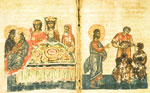
 

Rabbula Cana Feast.jpgThe miracle of Cana of Galilee begins the series of miracles contemplated in Lent to indicate mercy, forgiveness, salvation and life, which are given to us by Christ, the physician of humankind.


At Vespers of the First Sunday of Lent this aspect is developed at length: “Good Physician who heals all through repentance, Lord, sovereignly good and the First Physician, source of life and fount of healing, who heals our souls through our physical illness. You who have been called our true Samaritan and who, to deliver us from the wounds of our sins, have poured upon them mysterious oil and wine. You, Doctor of hearts and Healer of suffering, have marked us with the sign of the Cross, sealed with the seal of the holy oil, nourished with your Body and your Blood; embellish our souls with the splendor of your holiness; protect us from every fall and every blemish and bring us to the blessed inheritance reserved for those who have done acts of penance.”


Furthermore, the Syriac tradition sees in the miracle of Cana the spousal union of Christ with his Church, and with the whole of humanity; at Cana the true Spouse  is Christ himself who invites suffering and sinful humanity to be united with him in order to bring it to the true nuptial chamber which is the Garden of Eden.
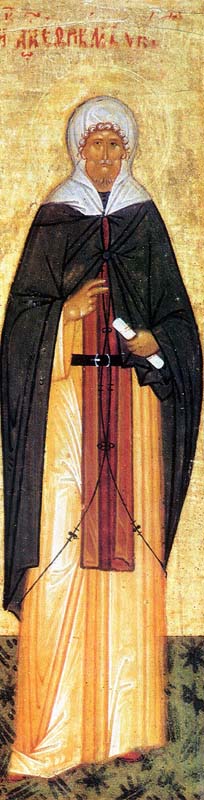
 

St Ephrem.jpgSt Ephrem sings: “Blessed are your guests, beautiful city of Cana! They enjoy your blessing and the jars filled with your word proclaim that in you are found the heavenly gifts that gladden the heavenly banquet.”


The new wine that unites the fellow guests at the banquet is a symbol of the precious Blood that unites us with Christ himself: “You who, as the promised Spouse redeem the Church with your Blood, you who gladden the wedding guests of Cana, may you make your Church rejoice with your Body.” The Syriac Liturgy still sees the jars as a model of the soul that becomes the place of a wonderful transformation in which Christ himself renews all that is old.


On all the Sundays in Lent prior to the celebration of the Lord’s Passion, death and Resurrection, the Western Syriac tradition wishes to celebrate the miracles with which the Savior desired to manifest his divine mission among human beings. The Morning Office of all the Sundays in Lent contains this prayer:


“Merciful Lord, who came down to earth, in your compassion for human nature, you who purified the leper, opened the eyes of the blind and raised the dead, obtain that our souls may be purified and bodies sanctified; that the eyes of our hearts may be opened to understand your teachings so that, with repentant sinners, we may raise our praise.”


The miracles recounted and celebrated on these Sundays lead us to contemplate the wonders of divine grace in human souls; thus many of the liturgical texts of Lent always end with the same conclusive refrain:


“We, too, Lord pray to you: touch our spirit and purify it from every stain, from every impurity of sin, and have mercy on us.”
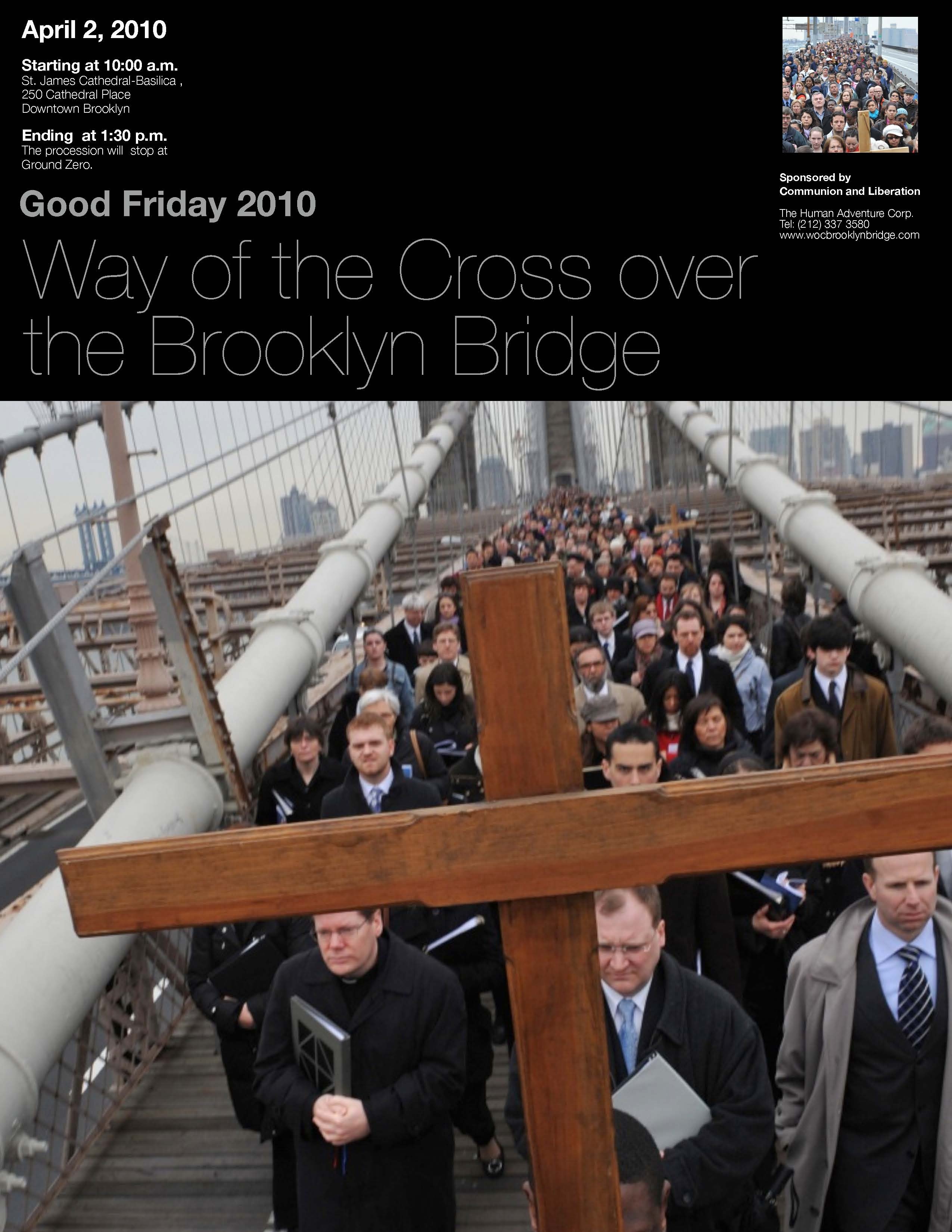
Luigi Giussani, led by Christ –recalls Archbishop Prendergast for Communion & Liberation-Canada

Around the world in past 2 weeks Communion and Liberation’s Schools of Community have been praying for the good of Communion and Liberation while remembering the fifth anniversary of death of Monsignor Luigi Giussani. In the Archdiocese of Ottawa last Monday (February 22) Archbishop Terrence Prendergast, SJ celebrated Mass for CL-Ottawa and here is a portion of his homily. One of the touching points in His Grace’s homily is the phrase, “to follow Christ.” The same phrase I used for my coat of arms; see above.

Five years ago today, Don Luigi Giussani, the founder of a movement that came to be known as Communion and Liberation was called home to God by the Lord Jesus Christ. Cardinal Ratzinger, our present pope was sent by Pope John Paul II as his legate to the funeral ceremony in Milan. On that occasion, he testified to the way in which Don Giussani had allowed himself to be led by Christ in a loving relationship from his earliest years, just as Peter had from the moment of his first encounter with Jesus: “This love affair with Christ, this love story which is the whole of his life, was however far from every superficial enthusiasm, from every vague romanticism. Really seeing Christ, he knew that to encounter Christ means to follow Christ. This encounter is a road, a journey, a journey that passes also-as we heard in the psalm-through the ‘valley of darkness.’ In the Gospel, we heard of the last darkness of Christ’s suffering, of the apparent absence of God, when the world’s Sun was eclipsed. He knew that to follow is to pass through a ‘valley of darkness,’ to take the way of the cross, and to live all
the same in true joy.”

St. Francis Xavier expressed this in a lovely poem, “O Deus, Ego Amo Te,” translated touchingly by his brother Jesuit, the poet Gerard Manley Hopkins:

O GOD, I love thee, I love thee-
Not out of hope of heaven for me
Nor fearing not to love and be
In the everlasting burning.

Thou, thou, my Jesus, after me
Didst reach thine arms out dying,
For my sake sufferedst nails, and lance,
Mocked and marred countenance,

Sorrows passing number,
Sweat and care and cumber,
Yea and death, and this for me,
And thou couldst see me sinning:

Then I, why should not I love thee,
Jesu, so much in love with me?
Not for heaven’s sake;
not to be out of hell by loving thee;

Not for any gains I see;
But just the way that thou didst me
I do love and I will love thee:
What must I love thee, Lord, for then?

For being my king and God. Amen.

Blessed Agnes of Prague

Bl Agnes of Prague detail.jpgLet us rejoice and shout for joy, because the Lord of all things has favored this holy and glorious virgin with his love.

Heavenly Father, You drew blessed Agnes away from the pleasures of royalty, and through the lowly way of the cross led her on the path of perfection. Grant that in imitation of her we may depreciate transitory things and always strive after those of heaven.
Blessed Agnes is known for her poverty and humility. She was an obedient daughter of the Franciscan charism. 
A portion of Blessed Agnes’ life and deeds can be read here.

Friars of the Renewal profess vows today

May the Lord grant you His peace!

Great news echoes in the heavenly courts: 16 Franciscan Friars of the Renewal novices professed temporary vows (poverty, chastity and obedience) today at Saint Antoninus Church (Newark, NJ). Newly elected Community Servant (Fr. Provincial) Father Mariusz Koch received the vows. A reception followed at the novitiate of the Most Blessed Sacrament Friary also in Newark, NJ. Bishop Emmanuel Cruz, auxiliary bishop of the Archdiocese of Newark was present. Here are some pics of the community.

CFR novices 2010.jpg

The Friars also invested 10 new men as novices on Saturday. Names are always fun, especially when you think, “where did they get that name from?” Read the new names:
Br Frantisek Marie Chloupek, Br Vittorio Maria Pesce, Br Jude Thaddeus Boyden, Br. Tobias Marie Redfield, Br Simeon Mary Lewis, Fr. Maximillian Mary McGoldrick, Br Seamus Mary Laracy, Br Mark-Mary Maximilian Ames, Br Angelus Immaculata Montgomery, Fr Felipe Immaculee Casadia.
May Saints Francis and Clare bless the new friars abundantly!

Teen suicide: how do we cope?

The tragic death of Michael Blosil, 18, son of Marie Osmond, the other day brings light to the sad reality of teen suicide. Noted by friends and family of the Osmonds, Michael had been battling the demons of depression.

The seriousness of the problem is seen in the statistics by the National Conference of State Legislatures:
19.3 percent of high school students have seriously considered killing themselves.
14.5 percent of high school students made actual plans for committing suicide.
900,000 youth planed their suicides during a major depression episode.
The Center for Disease Control said that suicide is the third leading cause of teen deaths between the ages of 15 and 24 behind accidents and homicide. And it is the fourth leading cause of children age 10-14.

For those interested in the subject, the Catholic Information Service published a booklet on suicide, Coping with a Suicide: Catholic Teaching and Pastoral Practice. You can also listen to the booklet as a download.
This booklet provides a helpful look into defining suicide and it helps the reader to identify the signs while giving some helpful resources.
 
May the saints lead Michael into paradise.

What is penance?

Penance,
essentially, always requires a change of life: from sin to virtue, luke
warmness to fervor, fervor to sanctity. This interior change cannot be effected
without divine help
, but the Lord is not stingy in this regard, and even as he
is calling a man to penitence, he is offering the grace necessary for this
conversion.

For the Christian, to heed the call to do penance and to open his
heart to the grace of conversion, means living his baptism, the sacrament
through which men are plunged into the paschal mystery of Christ
; they die with
him, are buried with him, and rise with him. It is for this reason that during
Lent the Liturgy often dwells on baptismal themes.

Death and resurrection in
Christ, which are operative from baptism, are not a static fact which happened
once for all, but a vital dynamic fact which should involve the Christian in
the Lord’s death and resurrection every day.

Divine Intimacy

Father Gabriel of
St. Mary Magdalen, OCD