A poem for the feast of St Patrick by Neil Fitzpatrick
Come out!
Come out!
Wherever you are!
Out from the grievous prison of self,
Back to the gorgeous presence of God
From which we were driven so long ago.
A poem for the feast of St Patrick by Neil Fitzpatrick
Come out!
Come out!
Wherever you are!
Out from the grievous prison of self,
Back to the gorgeous presence of God
From which we were driven so long ago.
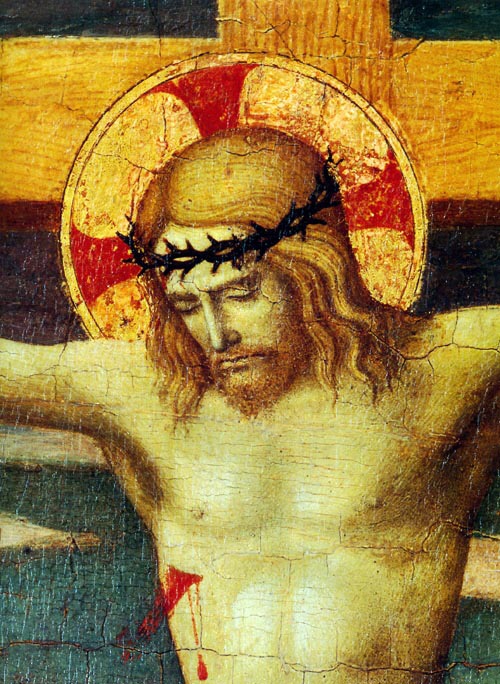 There are some things about Catholic faith which is understood keenly by the sacramental churches of East and West that need continue reflection upon. Lots of other Christian communities have neither a reference point nor a ritual for the Eucharistic Presence. The theology of the Mystical Body of Christ is one of those pieces of dogma that meets the criteria for the need to understand more deeply and to feel where it impacts our lives on a daily basis. To “feel” is not aiming toward a sentimentality; the sentimental is vacuous; to feel means really means for me and I am sure for the Church something concrete and personal because it pertains to the heart, the mind and one’s behavior. How we encounter the Mystical Body of Christ and how the Mystical Body of Christ encounters us is the matrix. The mystical body of Christ is not tribal because it encompasses everyone. As an example, I pray for generic intentions and intentions that have a history, a name … a real person. Praying for world peace is important. But I think it is critically important to actually name in a concrete way who and what we are praying for. Yet, if we are honest Christians we’d know that the Mystical Body of Christ is not abstract and that there is real content for our lives: we have a loved ones, friends, enemies, work experiences, desires, etc. Moreover, we ought to realize that our life in the Mystical Body of Christ has implications how we live and work with one another, how we pray in community, how we care for the needy, the lonely, the sick and those prone to depression and the like. We live life in a personal way and not in sense of social disengagement.
It is challenging for all of us to sit silently with the Scripture in Lectio Divina to give serious time to praying and thinking about reality rather than abstract data.
First the Scripture
For just as the body is one and has many members, and all the members of the body, though many, are one body, so it is with Christ. For in the one Spirit we were all baptized into one body—Jews or Greeks, slaves or free—and we were all made to drink of one Spirit.
Indeed, the body does not consist of one member but of many. If the foot would say, “Because I am not a hand, I do not belong to the body,” that would not make it any less a part of the body. And if the ear would say, “Because I am not an eye, I do not belong to the body,” that would not make it any less a part of the body. If the whole body were an eye, where would the hearing be? If the whole body were hearing, where would the sense of smell be? But as it is, God arranged the members in the body, each one of them, as he chose. If all were a single member, where would the body be? As it is, there are many members, yet one body. (1 Corinthians 12:12-20)
Second the Reflecti0n
We are familiar with the concept of the Mystical Body of Christ, imaged as an organic unity, a single living organism. Each member makes a particular contribution drawing the whole into tighter communion. This living body can be seen to even extend to those who are not official members of our church, maybe not even Christians. There can be a sense of the sacred, the feeling that God is somehow resident in the interactions of these shared relations, shared lives, contributing to the unity of the whole. It is the actions of the members toward one another that constitutes the unity. The Persons of the Trinity love one another to the extent of “indwelling” one another. The members of the Mystical Body are to love one another and share the various gifts of our lives. (NS)
 Nearly every morning
I make a cup of coffee
in my battered old moka pot.
While the coffee sputters and fizzes
toward completion
I carefully place a dusty crumb of incense
on the burner, next to the pot.
I watch as a thin curl of smoke rises,
as the fragrant molecules of resin ignite:
myyrh, frankincense, rose, spiknard, jasmine, and the mysterious opercula of the wing-shell mollusk.
Uncounted mornings, evenings, and high holy days have calibrated and fixed
a specific set of connections between embodiment and sacred
through the everyday science of breathing,
so that simply sitting here by the stove
and waiting for coffee
becomes church.
Iliana Filby
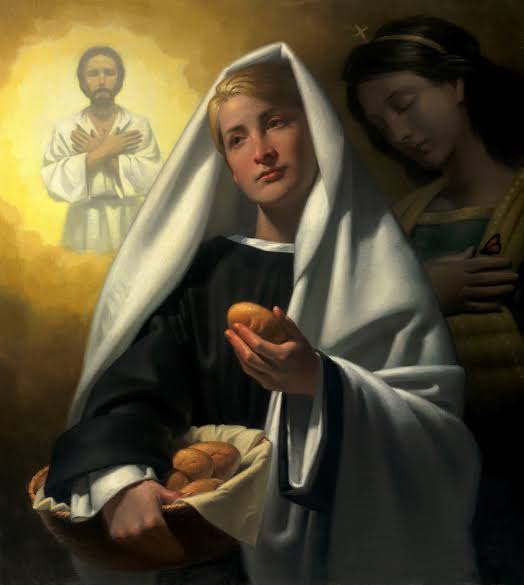 Today is the liturgical commemoration of Saint Frances of Rome, patron saint of the Oblates who live the Rule of Saint Benedict and who strive to serve. She died in 1440.
Along with Frances, we have King Saint Henry, as co-patron saints of the Benedictine oblates. Frances is also revered as the patron saint of motorists and motorcyclists because her path was always lit by her holy guardian angel. Some monasteries have their cars blessed today in memory of Saint Frances of Rome.
In Frances’ time in Italy is similar to ours today in that the monasteries are in decline: men and women are not seeking God through the monastic profession and the communal life. Her innovation was to gather women to serve the poor informed and formed by Benedictine spirituality. The Olivetan monks in Rome were helpful.
At first the women continued to live in their homes, but eventually found a house where they could gather and live in community without having to profess monastic vows. The oblate group that Frances for was seen as a hybrid, transforming the medieval practice of children’s oblate in monasteries, combining features of monastic life with secular life. At the same time similar groups surfaced and thrived in various places in Europe that became known as tertiaries. In some ways you can see the form of life that Frances had in the ecclesial movements of today, namely, Communion and Liberation and the Manquehue Apostolic Movement.
Frances therefore, created a new way of Benedictine life that was the union of the laity with Benedictine spirituality, grafting into the lives of the secular the call for this vocation in Benedictine life. A spiritual secularity is a gift of God to society and the Church. Unfortunately, what Frances did for the laity of the time didn’t gain widespread traction —at least not yet.
Who is interested in this form of life?
In everything may God be glorified.
 We have a new Benedictine bishop in the USA! Thanks be to God!
The Right Reverend Abbot Elias R. Lorenzo, O.S.B., 60, has been appointed an auxiliary bishop of the Archdiocese of Newark, NJ, today by Pope Francis. He will be a close collaborator of Joseph William Cardinal Tobin, CSsR, the Cardinal-archbishop of Newark.
Bishop-elect Lorenzo is a Benedictine monk of St. Mary’s Abbey (Morristown, NJ) and until now the Abbot President of the American Cassinese Congregation.
Elias Lorenzo is well educated, with years of experience in service and leadership in the Church and among Benedictines. Since 2016 as Abbot President worked with the abbots, monks and laity of 25 monasteries in the USA, Canada, Puerto Rico, and Mexico, Brasil, Colombia, and Taiwan which sponsors 10 universities and 12 high schools.
Among the US Bishops, Lorenzo will be the sole Benedictine monk serving as bishop, the others are retired.
May Our Lady and St. Benedict intercede for Bishop-elect Lorenzo and the Archdiocese of Newark.
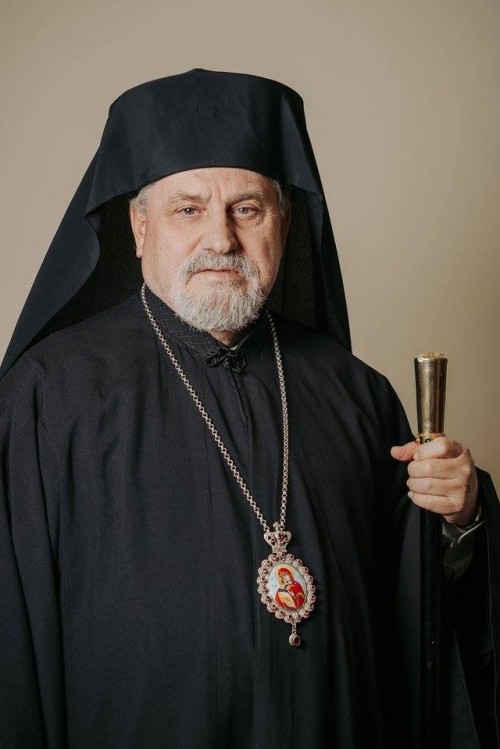 VATICAN – Holy Father Francis has appointed Bishop George Demetrio Gallaro as the new Secretary of the Congregation for the Eastern Churches. Published on Tuesday February 25, 2020, at noon Italian time in the Sala Stampa, the former Bishop of the Eparchy of Piana degli Albanesi di Sicilia was appointed to the rank of titular Archbishop as well.
George Demetrio Gallaro was born on January 16, 1948 in Sizilien Pozzallo, Italy. After his seminarian studies at the seminary of Noto, he moved to the United States and was ordained a priest in 1972 in Los Angeles. He worked as a parish priest in various parishes of the Eastern Rite in the United States, and in 1987 he was incardinated in the Melkite Greek Catholic Eparchy of Newton.
Archbishop Gallaro taught Canon Law at the Melkite Seminary in Massachusetts and he also served as a professor of Canon Law at the Byzantine Catholic Seminary of SS. Cyril and Methodius in Pittsburgh, PA. On March 31, 2015 he was named by Pope Francis as a bishop of the Italo-Albanian Eparchy of Piana degli Albanesi. He was consecrated a bishop on June 28 by the bishop of Lungro Donato Oliverio as principal consecrator, and the bishops Dimitrios Salachas and Nicholas James Samra as co-consecrators.
Axios!
 Our venerable mother, Scholastica, the twin sister of the holy Benedict.
Scholastica guided a community of nuns near Monte Cassino, where her brother, Benedict, organized his community of monks. When she died, sometime around the year 543, the nuns and monks carried her body to Monte Cassino, and Benedict laid her in the tomb which had been prepared for himself. Benedict’s remains were placed in the same tomb, so that, as the saying went, “death would not part the bodies of this brother and sister, who had been of one mind in the Lord.” Her icon rests on the inside of the south arm of the icon screen. (NS)
Prayers for the nuns, and those named for our venerable mother.
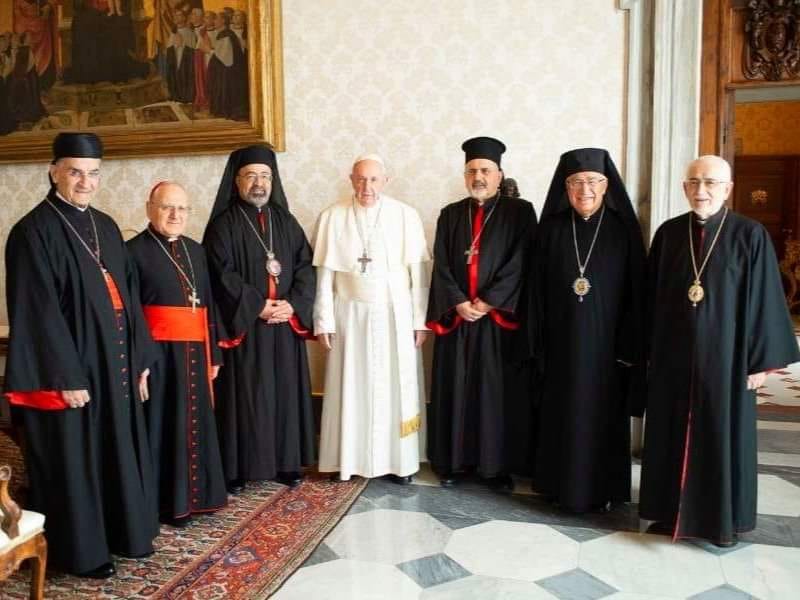 The Pope of Rome received on February 7th, the six Patriarchs of the Eastern Catholic churches: the Maronite, the Chaldean, the Copt, the Syriac, the Melkite and the Armenian. The conversation situated around circumstances of these particular churches in the Middle East.
A CNA article on the event.
 Weekends, especially Saturday morning, is a good day to recuperate from the work week: physically, intellectually and spiritually. Of course we ought not to run ourselves down so much so as forget the Lord, His Gospel and the tradition of the Church; we all have to learn a proper balance to keep us on the “right path” without distractions. One of the sources of wisdom is the venerable Holy Rule of St. Benedict (it is not only for monks and nuns but also for the laity).
The vocation of a Benedictine is to seek God. We seek God in the ordinary circumstances of life. Turning the idea around some say God searches, too.
What does it mean when we say that God searches the innermost depths of the heart? Nothing is hidden from God. Before any of us ever settles into reflective silence, God knows each of us through and through. In this sense, God doesn’t search out anything for God is already fully aware of the complexity of our inner lives, our conflicting motives and our spontaneous emotions. But what God sees fully we are often blind to — in denial over, actually — with the result that we can act in ways that confuse us and make no sense. It is only when we face our inner reality honestly and humbly with the light of grace that we can see clearly enough to move forward. This is the work of inner prayer which is simultaneously God’s searching the innermost depths of our hearts. (NS)
Let them prefer nothing whatever to Christ,
and may he bring us all together to everlasting life.
Rule of Benedict 72:11-12