Pope encourages confidence that full communion with the Oriental Orthodox is possible

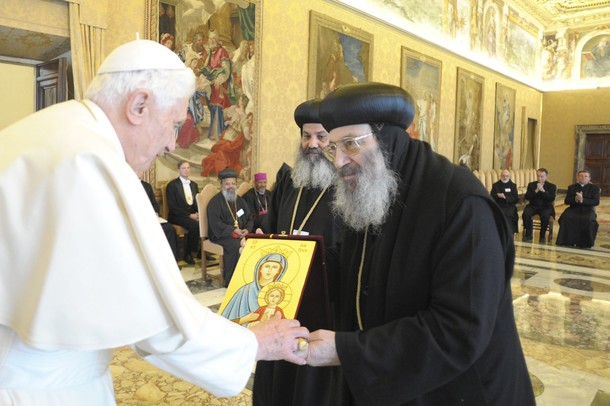
Pope with Oriental Orthodox bishops Jan 28 2011.jpgLast week members of the  International Commission for Theological Dialogue between the Catholic Church and the Oriental Orthodox Churches, Pope Benedict gave a very brief letter encouraging courage and determination to work with the Holy Spirit in the work of full, visible communion between the churches. He said, “We can only be grateful that after almost fifteen
hundred years of separation we still find agreement about the sacramental
nature of the Church, about apostolic succession in priestly service and about
the impelling need to bear witness to the Gospel of our Lord and Saviour Jesus
Christ in the world.” Watch a video clip of the presentation of the icon to His Holiness.

Continue reading Pope encourages confidence that full communion with the Oriental Orthodox is possible

Communion & Liberation welcomes the beatification of John Paul

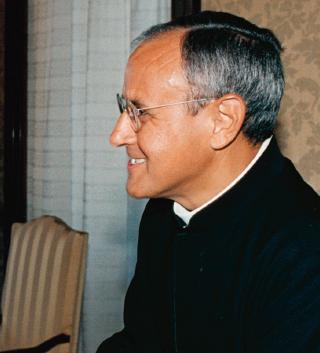
Don Julián Carrón.jpgFather Julián Carrón, President of the ecclesial
movement Communion and Liberation indicated the Movement’s plans to participate
in the beatification of Pope John Paul II on May 1. Father Carrón’s remarks showed gratitude for the Pontiff’s
legacy.


According to Father Carrón the Movement plans to “make the pilgrimage to Rome to join the Pope and
the Church in thanking God who has given us such an authentic witness of
Christ.” Father Carrón says that “We want to gather closely around
Benedict XVI, who in his farsightedness has decided to indicate Blessed John
Paul II to the whole world as an example of what Christ can make of a man who
allows himself to be grasped by him.”

Speaking for the heart and soul of
Communion and Liberation Father Carrón said, “If someone has an enormous debt
of gratitude towards John Paul II, we are the ones.”

I invite you to read the full text of Father Julián Carrón’s letter to the Fraternity of Communion and Liberation: Fr Carron on the beatification of Pope John Paul II.pdf

The way of sanctity lies open to you

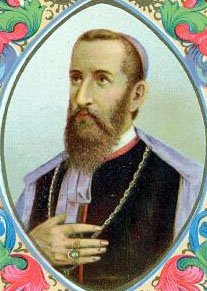
St Justin de Jacobis.jpgToday the Pontifical Ethiopian College enjoyed time
with Pope Benedict XVI on the occasion to mark the 150th anniversary of the
death of Saint Justin de Jacobis (1800-1860), patron of the College. The
Ethiopian College prepares men for priestly service in their home country. Part
of the Pope’s address was devoted to holiness. On holiness the Pope said:


“Sanctity lies at the very heart
of the ecclesial mystery; it is the vocation to which we are all called. Saints
are not some exterior ornamentation of the Church; rather, they are like the
flowers of a tree which testify to the endless vitality of the lymph flowing
through it
. It is good to see the Church like this, in ascension towards the
fullness of the ‘Vir perfectus’; in continual, demanding, progressive
maturation; dynamically driven towards complete fulfilment in Christ.”

Here is a minute’s worth of a video clip on the event. These are the same points the Pope has made to the rest of the Church since he ascended to the papacy and it is the very theme that Father Julián Carrón has called those of us who follow Communion and Liberation to heed.

Why forgive?

Adnan Agca.jpg

Time magazine asks an excellent question, don’t you think? I do. The only answer I am muster to give is: because it is the right thing to do AND our Savior forgave his killers. Therefore, we ought to do the same.
BUT, if you are ashamed to forgive and to receive forgiveness, you must be convinced that Jesus Christ is blowing smoke or not real. The 4th century Persian bishop, Aphrahat said as much in his treatise On Penitents where he taught that a Christian in the state of sin should seek sacramental forgiveness as the Church taught. Aphrahat decapitates the sin of presumption and pride when he says,
… the man wounded by Satan should not be ashamed to confess his, and leave it behind, and beg for the medicine of penance. For gangrene comes if a man is ashamed to show his wound, and then the whole is harmed. Whoever is not ashamed has his wound healed, and goes back to battle again; but if gangrene comes, he cannot be healed, and he cannot take up his arms again.

So, why forgive? Because if one doesn’t forgive the sins of another, how will you face your own humanity and the Savior face-to-face?

Aphrahat, On Penitents 2-3 (Demonstrations 7), adapted translation by Frank H. Hallock, Journal of the Society of Oriental Research 16 (1932), pp. 43-56.
Enhanced by Zemanta

Saint Thomas Aquinas

The learned will shine like the brilliance of the firmament, and those who train many in the ways of justice will sparkle like the stars for all eternity.


O God, you made Saint Thomas known for his zeal for holiness and his dedication to sacred doctrine. Help us to grow in wisdom by his teaching and in holiness by imitating his faith.

Fulton Sheen’s cause on the way–again!

Archbishop Fulton J Sheen.jpegThe Bishop of Peoria, Daniel R. Jenky, CSC, has jump-started the canonization process for Fulton J. Sheen. Jenky took a pause in the case when Archbishop Timothy Dolan indicated that he wanted to keep Sheen’s body in the crypt at the Cathedral of Saint Patrick and to see the process to completion. Not a good thing, for sure. The halting of the case happened in November, as you recall.

A Fulton J. Sheen website is found here and the canonization cause website is here.

51 days till Spring

snow displacement Jan 27 2011.JPG

So, Spring can’t come soon enough. I have a new appreciation for Daniel 3:69a-70:
Frost and chill, bless the Lord; praise and exalt him above all forever.
Ice and snow, bless the Lord; praise and exalt him above all forever.

NOT right now; perhaps in July! My poor back.
I think is better in the Bahamas!

The Word of God is everything: hearing what the WORD has to say

I am reading Verbum Domini with great eagerness. I am talking my reading seriously and trying to ponder what the Pope has given us as a path to Christ and to live as an authentic Christian today. Let’s recall the extraordinary address of Pope Benedict XVI on October 6, 2008 where he said: 

lectionary.jpg

“the Word of God is the foundation of everything, it is the true reality. And to be realistic, we must rely upon this reality. We must change our idea that matter, solid things, things we can touch, are the more solid, the more certain reality. At the end of the Sermon on the Mount the Lord speaks to us about the two possible foundations for building the house of one’s life: sand and rock. The one who builds on sand builds only on visible and tangible things, on success, on career, on money. Apparently these are the true realities. But all this one day will pass away. We can see this now with the fall of large banks: this money disappears, it is nothing. And thus all things, which seem to be the true realities we can count on, are only realities of a secondary order. The one who builds his life on these realities, on matter, on success, on appearances, builds upon sand. Only the Word of God is the foundation of all reality, it is as stable as the heavens and more than the heavens, it is reality. Therefore, we must change our concept of realism. The realist is the one who recognizes the Word of God, in this apparently weak reality, as the foundation of all things. Realist is the one who builds his life on this foundation, which is permanent.”

Scott W. Hahn, Covenant and Communion (2009), p. 22.


In another place we read: 

You cannot put revelation in your pocket like a book you carry around with you. It is a living reality that requires a living person as the locus of its presence.

That is, the believer becomes real insofar as he becomes the Word by hearing such that he does it. That seems to be the only reality that perdures. Revelation is an act in which God shows Himself. Faith is a corresponding act of hearing and doing the Word heard. Outside of that, everything else perishes into nothingness.

J. Ratzinger, God Word: Scripture – Tradtion – Office, Ignatius (2008): 52.

New York Encounter 2011: a review

Last weekend the New York Encounter was “a success” for the second year in a row. Lots of people, friends and guests came together for a public meeting to hear presentations, to engage in discussion, to share friendly meals and to be caught up in beautiful music. Several significant speakers addressed the crowds. People like Cardinal Seán O’Malley, OFM Cap., Father Julián Carrón, Msgr. Lorenzo Albacete, John Garvey, Carla Hendra, Charles, Townes, Clara Gaymard and others. 

The Encounter is a faith and cultural festival in the heart of the New York City sponsored by Communion and Liberation and Crossroads Cultural Center and several other organizations.

Let me bring together several key events by providing essays in review:
Sharon Mollerus writes about the address given by the new President of the Catholic University of America John Garvey who spoke on freedom in the university context and what it means to be at a Catholic institution and the work of freedom. Nothing gets the “goat” of university professors, especially the pampered and self-appointed intellectuals, more than questions of freedom in university life. Mollerus’ essay “CUA President John Garvey Defends Freedom in the University.”
Dino D’Agata writes “Claudel’s ‘The Tidings Brought to Mary.'” Paul Claudel is estimated to the most significant poet of the 20th century and THE most quoted poet by Pope Benedict XVI. Dino D’Agata is a consecrated lay-member of Memores Domini teaching high school in Washignton, DC.
Fred Kaffenberger also reviews Claudel’s play in an essay, “A French House in New York City” where he reflects on what this play may say to a post-modern American audience.
Fred Kaffenberger also reviews the new English translation of the iconic Italian poet Giacomo Leopardi’s work, Canti by Jonathan Galassi in an essay, “Galassi’s Translation of Leopardi: Reviews.”
The New York Encounter is about being with others to see how I can face life differently. If we want change in life, to have a different way of living in society we to engage our own human flourishing with points of compassion, facing the situations presented to us in life with hope, courage, compassion, What do I believe? Who do I rely on for companionship, intellectual wonder and cultural fun?
Crossroads Cultural Center has a growing file for the New York Encounter that you may find useful.
 
Follow the New Encounter on Facebook where you can find photos and other useful info.

Formerly ex-communicated saints

Much is made of canonization of Saint Mary MacKillop with her sordid past of being an ex-communicated Catholic.
Whether by ex-communicated we mean official ecclesiastical punishment or a punishment imposed by a religious superior. One’s being cut off from the Christian community sacramentally is strikingly painful but sometimes a needed medicine for the cure of some spiritual sickness typically demonstrated in an act of disobedience to the Church’s authority based on intellectual separation from some dogma or doctrine of the Church. You’ll see this with matters pertaining to abortion and certain healthcare matters. One simple example is that the medicine of excommunication is automatically imposed by the act itself for threatening the life of the pope. For more information see Book VI of the 1983 Code of Canon Law, canons 1364-99 outline
Some good examples of saints who were once excommunicated and then restored to communication in the Church are:
Saint Cyprian
Saint Hippolytus of Rome
Saint Joan of Arc
Saint Gerard Majella – by St Alphonsus Liguori
Saint Mary of the Cross MacKillop – by the bishop in Australia
Saint Theodore Guerin by her bishop