Walking that new path of liberation by the gravitational force of God’s love, Pope Benedict tells

Pope Benedict is nothing if not a master of the spiritual life and superb pastor of souls. His Palm Sunday homily delivered earlier today is extraordinarily beautiful for its content and style , but most importantly it gives us a path to Jesus. He’s not giving a legacy; he’s giving us truth.

Pope with palm 2011.jpg

It is a moving
experience each year on Palm Sunday as we go up the mountain with Jesus,
towards the Temple, accompanying him on his ascent. On this day, throughout the
world and across the centuries, young people and people of every age acclaim
him, crying out: “Hosanna to the Son of David! Blessed is he who comes in the
name of the Lord!”

But what are we really doing when we join this procession as
part of the throng which went up with Jesus to Jerusalem and hailed him as King
of Israel? Is this anything more than a ritual, a quaint custom? Does it have
anything to do with the reality of our life and our world? To answer this, we
must first be clear about what Jesus himself wished to do and actually did.
After Peter’s confession of faith in Caesarea Philippi, in the northernmost
part of the Holy Land, Jesus set out as a pilgrim towards Jerusalem for the
feast of Passover. He was journeying towards the Temple in the Holy City,
towards that place which for Israel ensured in a particular way God’s closeness
to his people. He was making his way towards the common feast of Passover, the
memorial of Israel’s liberation from Egypt and the sign of its hope of
definitive liberation. He knew that what awaited him was a new Passover and
that he himself would take the place of the sacrificial lambs by offering
himself on the cross. He knew that in the mysterious gifts of bread and wine he
would give himself for ever to his own, and that he would open to them the door
to a new path of liberation, to fellowship with the living God. He was making
his way to the heights of the Cross, to the moment of self-giving love. The
ultimate goal of his pilgrimage was the heights of God himself; to those
heights he wanted to lift every human being.

Continue reading Walking that new path of liberation by the gravitational force of God’s love, Pope Benedict tells

Saint Robert of Molesme

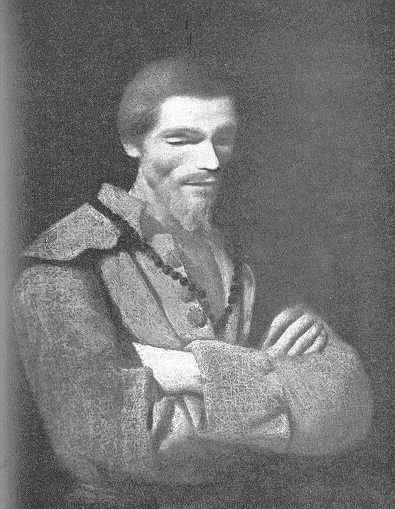
St Robert of Molesme welcomes Bernard.jpgApril 17, 2011 marks the 900th anniversary of the
death of St. Robert of Molesme, which, this year, is Palm Sunday. This anniversary of death of Saint Robert coincides with the historic beginning of the Cistercians with Robert’s arrival with his group of monks first arrived at
Cîteaux on Palm Sunday (March 21, 1098). 
Along with Saints Alberic and Stephen, Saint Robert is one of the founders of Cîteaux.


The text of the Life of Saint Robert
is available here
You’ll find the rather lengthy article referred to at: Life of St.
Robert of Molesme.
 
A shorter version of Saint Robert’s life can be
found on Wikipedia.

Pope Benedict clarifies Christian view of who killed Jesus

The Jerusalem Post published a story today picking up on Pope Benedict’s clarifies what Christians believe about the Jews viz. the death Jesus. Sergio Minerbi’s article “Pope Benedict Revises the Gospels” looks at Benedict’s volume 2 of Jesus of Nazareth. This issue has been a painful one among Christians and Jews through the millennia. In his typical manner of precise writing –because of sharp thinking– Benedict challenges the reality of ideology that’s been a force for violence than reconciliation. This article ought to get you to re-read Nostra Aetate and to read volume 2 of Jesus of Nazareth.

Saint Benedict-Joseph Labre

Benedict-Joseph Labre ACavallucci.jpgBlessed are the poor in spirit for theirs is the Kingdom of Heaven; Blessed are the pure in heart for they shall see God. (MT 5:3,8)

Saint Benedict-Joseph Labre is one of the most endearing saints of the Church; some call him a misfit among the saints for his sensitivities, honesty and gentleness. There is so much about him that draws the heart: he was persistent in his pursuit of a religious vocation but never found a home among the Cistercian or the Carthusian monks, he was a perpetual pilgrim, a made of exactness in religious devotion, and a man known as the “saint of the Forty Hours” (the forty hours is a devotion of adoration of the Blessed Sacrament). The Scriptures were his constant companion and guide for life. He’s a great example of following the Pauline spirituality. Ultimately, his vocation was lived as a Third Order Franciscan.

Benedict-Joseph was born on March 26, 1748 in Amettes, France, the eldest child of 15. At 35, he died of malnutrition on this date in 1783 during Holy Week on the steps of the Church of Santa Maria dei Monti with the consolation of the sacraments. How interesting that his liturgical memorial falls on the very edge of the Lord’s triumphant journey into Jerusalem. Labre was canonized by Pope Leo in 1881.
Saint Benedict-Joseph is the patron of the homeless, those making pilgrimages, for those who make adoration of the Eucharistic Lord in the Blessed Sacrament a regular spiritual gesture, and for those who suffer from mental illness, depression, anxiety.

Read a brief biography of Saint Benedict-Joseph here.
The Guild of Saint Benedict-Joseph Labre has an old website and they’re promising a new one this spring.

Carl Anderson: we are called to transform society — looks to JFK, sets path

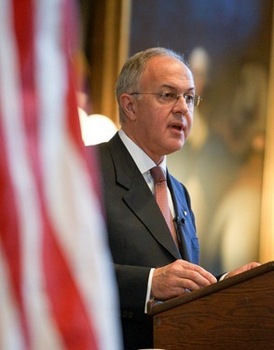
Thumbnail image for Anderson with US flag.jpgCarl A. Anderson, the Supreme Knight of the Knights of Columbus, gave a lecture in Boston’s famed Faneuil Hall on President John F. Kennedy’s faith known in the inaugural address. The President was a KofC member. Anderson uses history, philosophy and theology to demonstrate that our human rights come from God, thus they are sacred rights. The location of the talk was brilliant given the tensions between Church and secularism. Anderson’s talk follows:

Your Eminence, Cardinal O’Malley; Your Excellencies, Archbishop Wenski, Bishop Lori and Bishop Kennedy; Reverend Fathers; Seminarians; Members of the Board of Directors and State Officers of the Knights of Columbus; Members of the Boston Leadership Forum; Brother Knights; Ladies and Gentlemen – fellow Citizens…

Here at Faneuil Hall, in this historic setting, the injustices of the colonial system were first addressed. It was here that the Sugar Act was protested more than a decade before the Declaration of Independence. Here that the Tea Tax was protested. And here the Boston Massacre was recounted. Here too was born the idea that there should be “no taxation without representation.”

Continue reading Carl Anderson: we are called to transform society — looks to JFK, sets path

The marvelous glory and power of the cross, St Leo says

All week many of us who work in a parish have kept the events of Holy Week in front of us. Mostly because of the work that needs to be done in preparing the sacred Liturgy. Sadly, not enough time for prayer. Reminder: Palm Sunday of the Lord’s Passion is this weekend, it is not only the liturgical memorial of the Lord’s move to Jerusalem, it is also our hour of judgment. Jesus is not one among many saviors. Jesus is THE Messiah, the Son of Man, the Son of God who opens the door to God the Father and redeems us. No one, absolutely no one, can avoid the Lord’s hour of supreme love and self-giving in dying on the cross. It is, for us Christians, the tree of life.

Too many people these days have difficulty in accepting a positive view of Christ dying on the cross. Far from their hearts are Pope Leo’s words: “How marvelous the power of the cross; how great beyond all telling the glory of the passion.” Here’s Pope Saint Leo the Great’s
Sermon on the Passion:

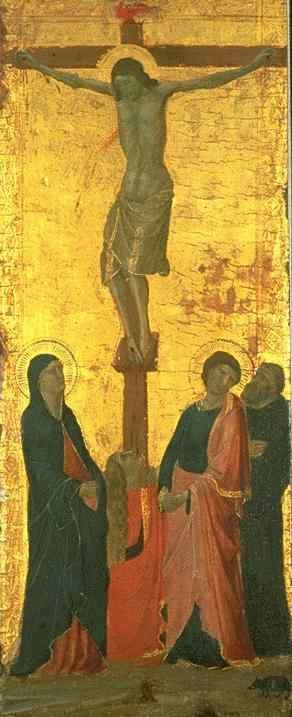
Crucifixion JCasentino.jpg

Our understanding, which is enlightened by the Spirit of
truth, should receive with purity and freedom of heart the glory of the cross
as it shines in heaven and on earth. It should see with inner vision the
meaning of the Lord’s words when he spoke of the imminence of his passion: The
hour has come
for the Son of Man to be glorified.

Afterward he said: Now my
soul is troubled, and what am I to say? Father, save me from this hour. But it
was for this that I came to this hour. Father, glorify your Son. When the voice
of the Father
came from heaven, saying, I have glorified him, and will glorify
him again
, Jesus said in reply to those around him: It was not for me that this
voice spoke, but for you. Now is the judgment of the world, now will the prince
of this world be cast out
. And I, if I am lifted up from the earth, will draw
all things to myself.

How marvelous the power of the cross; how great beyond
all telling the glory of the passion: here is the judgment-seat of the Lord,
the condemnation of the world, the supremacy of Christ crucified.

Lord, you
drew all things to yourself so that the devotion of all peoples everywhere
might celebrate, in a sacrament made perfect and visible, what was carried out
in the one temple of Judea under obscure foreshadowings.

Now there is a more
distinguished order of Levites, a greater dignity for the rank of elders, a
more sacred anointing for the priesthood, because your
cross is the source of all blessings, the cause of all graces. Through the
cross the faithful receive strength from weakness, glory from dishonour, life
from death.

The different sacrifices of animals are no more: the one offering of
your body and blood is the fulfillment of all the different sacrificial
offerings, for you are the true Lamb of God: you take away the sins of the
world
. In yourself you bring to perfection all mysteries, so that, as there is
one sacrifice in place of all other sacrificial offerings, there is also one
kingdom gathered from all peoples.

Continue reading The marvelous glory and power of the cross, St Leo says

Saint Martin I, pope

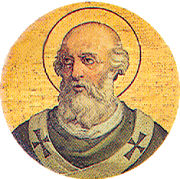
St Martin I, pope.jpgMerciful God, our Father, neither hardship, pain,nor the threat of death could weaken the faith of Saint Martin. Through our faith, give us courage to endure whatever sufferings the world may inflict upon us.

The Mass collect is appropriate today when prejudice and suffering is prevalent due to one’s adherence to the Church’s teaching.
Pope Saint Martin I was the 7th century pontiff who held firm to the orthodox teaching that Christ had a divine and a human natures and wills. Speaking of Christ’s nature is not commonly heard at the dinner table, never mind from the pulpit these days but at one point, there was significant dissent among the people of God. Every-now-and again you encounter monothelitism (a slightly different form of monophysitism which rejected the human nature of Christ) in university and parochial settings. Beware!

Continue reading Saint Martin I, pope