The Jerusalem Post published a story today picking up on Pope Benedict’s clarifies what Christians believe about the Jews viz. the death Jesus. Sergio Minerbi’s article “Pope Benedict Revises the Gospels” looks at Benedict’s volume 2 of Jesus of Nazareth. This issue has been a painful one among Christians and Jews through the millennia. In his typical manner of precise writing –because of sharp thinking– Benedict challenges the reality of ideology that’s been a force for violence than reconciliation. This article ought to get you to re-read Nostra Aetate and to read volume 2 of Jesus of Nazareth.
Author: Paul Zalonski
Happy 84th Birthday Pope Benedict!
Prayers and good wishes to Pope Benedict on his 84th birthday.

Saint Benedict-Joseph Labre
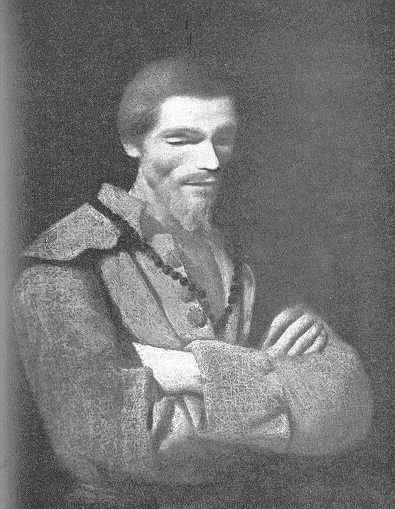 Blessed are the poor in spirit for theirs is the Kingdom of Heaven; Blessed are the pure in heart for they shall see God. (MT 5:3,8)
Saint Benedict-Joseph Labre is one of the most endearing saints of the Church; some call him a misfit among the saints for his sensitivities, honesty and gentleness. There is so much about him that draws the heart: he was persistent in his pursuit of a religious vocation but never found a home among the Cistercian or the Carthusian monks, he was a perpetual pilgrim, a made of exactness in religious devotion, and a man known as the “saint of the Forty Hours” (the forty hours is a devotion of adoration of the Blessed Sacrament). The Scriptures were his constant companion and guide for life. He’s a great example of following the Pauline spirituality. Ultimately, his vocation was lived as a Third Order Franciscan.
Benedict-Joseph was born on March 26, 1748 in Amettes, France, the eldest child of 15. At 35, he died of malnutrition on this date in 1783 during Holy Week on the steps of the Church of Santa Maria dei Monti with the consolation of the sacraments. How interesting that his liturgical memorial falls on the very edge of the Lord’s triumphant journey into Jerusalem. Labre was canonized by Pope Leo in 1881.
Saint Benedict-Joseph is the patron of the homeless, those making pilgrimages, for those who make adoration of the Eucharistic Lord in the Blessed Sacrament a regular spiritual gesture, and for those who suffer from mental illness, depression, anxiety.
Read a brief biography of Saint Benedict-Joseph here.
The Guild of Saint Benedict-Joseph Labre has an old website and they’re promising a new one this spring.
Carl Anderson: we are called to transform society — looks to JFK, sets path
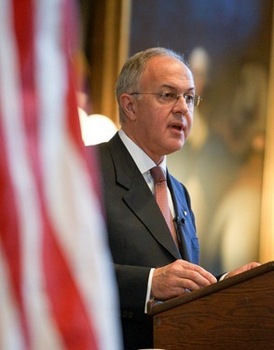 Carl A. Anderson, the Supreme Knight of the Knights of Columbus, gave a lecture in Boston’s famed Faneuil Hall on President John F. Kennedy’s faith known in the inaugural address. The President was a KofC member. Anderson uses history, philosophy and theology to demonstrate that our human rights come from God, thus they are sacred rights. The location of the talk was brilliant given the tensions between Church and secularism. Anderson’s talk follows:
Your Eminence, Cardinal O’Malley; Your Excellencies, Archbishop Wenski, Bishop Lori and Bishop Kennedy; Reverend Fathers; Seminarians; Members of the Board of Directors and State Officers of the Knights of Columbus; Members of the Boston Leadership Forum; Brother Knights; Ladies and Gentlemen – fellow Citizens…
Here at Faneuil Hall, in this historic setting, the injustices of the colonial system were first addressed. It was here that the Sugar Act was protested more than a decade before the Declaration of Independence. Here that the Tea Tax was protested. And here the Boston Massacre was recounted. Here too was born the idea that there should be “no taxation without representation.”
Continue reading Carl Anderson: we are called to transform society — looks to JFK, sets path
The marvelous glory and power of the cross, St Leo says
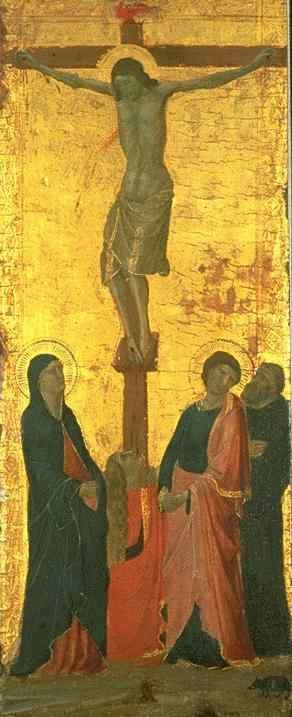
All week many of us who work in a parish have kept the events of Holy Week in front of us. Mostly because of the work that needs to be done in preparing the sacred Liturgy. Sadly, not enough time for prayer. Reminder: Palm Sunday of the Lord’s Passion is this weekend, it is not only the liturgical memorial of the Lord’s move to Jerusalem, it is also our hour of judgment. Jesus is not one among many saviors. Jesus is THE Messiah, the Son of Man, the Son of God who opens the door to God the Father and redeems us. No one, absolutely no one, can avoid the Lord’s hour of supreme love and self-giving in dying on the cross. It is, for us Christians, the tree of life.
Too many people these days have difficulty in accepting a positive view of Christ dying on the cross. Far from their hearts are Pope Leo’s words: “How marvelous the power of the cross; how great beyond all telling the glory of the passion.” Here’s Pope Saint Leo the Great’s
Sermon on the Passion:
Our understanding, which is enlightened by the Spirit of
truth, should receive with purity and freedom of heart the glory of the cross
as it shines in heaven and on earth. It should see with inner vision the
meaning of the Lord’s words when he spoke of the imminence of his passion: The
hour has come for the Son of Man to be glorified.
Afterward he said: Now my
soul is troubled, and what am I to say? Father, save me from this hour. But it
was for this that I came to this hour. Father, glorify your Son. When the voice
of the Father came from heaven, saying, I have glorified him, and will glorify
him again, Jesus said in reply to those around him: It was not for me that this
voice spoke, but for you. Now is the judgment of the world, now will the prince
of this world be cast out. And I, if I am lifted up from the earth, will draw
all things to myself.
How marvelous the power of the cross; how great beyond
all telling the glory of the passion: here is the judgment-seat of the Lord,
the condemnation of the world, the supremacy of Christ crucified.
Lord, you
drew all things to yourself so that the devotion of all peoples everywhere
might celebrate, in a sacrament made perfect and visible, what was carried out
in the one temple of Judea under obscure foreshadowings.
Now there is a more
distinguished order of Levites, a greater dignity for the rank of elders, a
more sacred anointing for the priesthood, because your
cross is the source of all blessings, the cause of all graces. Through the
cross the faithful receive strength from weakness, glory from dishonour, life
from death.
The different sacrifices of animals are no more: the one offering of
your body and blood is the fulfillment of all the different sacrificial
offerings, for you are the true Lamb of God: you take away the sins of the
world. In yourself you bring to perfection all mysteries, so that, as there is
one sacrifice in place of all other sacrificial offerings, there is also one
kingdom gathered from all peoples.
Continue reading The marvelous glory and power of the cross, St Leo says
Waiting and Waving at the Vatican


Where is he? Hey, I am over here!
Saint Martin I, pope
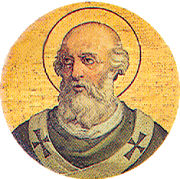 Merciful God, our Father, neither hardship, pain,nor the threat of death could weaken the faith of Saint Martin. Through our faith, give us courage to endure whatever sufferings the world may inflict upon us.
The Mass collect is appropriate today when prejudice and suffering is prevalent due to one’s adherence to the Church’s teaching.
Pope Saint Martin I was the 7th century pontiff who held firm to the orthodox teaching that Christ had a divine and a human natures and wills. Speaking of Christ’s nature is not commonly heard at the dinner table, never mind from the pulpit these days but at one point, there was significant dissent among the people of God. Every-now-and again you encounter monothelitism (a slightly different form of monophysitism which rejected the human nature of Christ) in university and parochial settings. Beware!
Saint Stanislaus, bishop & martyr
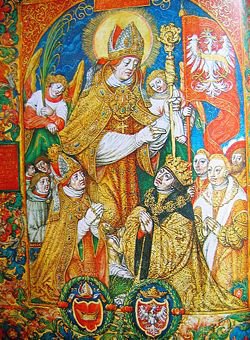 As a child my sister, cousin and I were enrolled in St Stanislaus School (New Haven, CT) under the guidance of the Vincentians and the Sisters of the Holy Family of Nazareth. The great bishop and martyr has been in my consciousness for some time and it was a privilege to make deeper connections with the saint when I was in Krakow a number of years ago. We Poles regard the sainted bishop and martyr Stanislaus as Poland’s Saints Thomas Becket and Thomas More who took a stand against societal and governmental injustice. Today, we’d use the term “speak truth to power” to capture what Stanislaus did in his native Poland.
The Collect for today’s Mass reads, “Father, to honor you, Saint Stanislaus faced martyrdom with courage. Keep us strong and loyal in our faith until death.”
Stanislaus was born July 26, 1030, educated in Poland’s capital city Gniezno and at Paris. His skills were recognized by the bishop of Krakow as he was appointed the archdeacon and preacher. In 1072, Stanislaus was elected bishop of Krakow. J. Michael Thompson’s hymn captures the life of Stanislaus:
Rossella Teregnoli: the new woman in the papal household
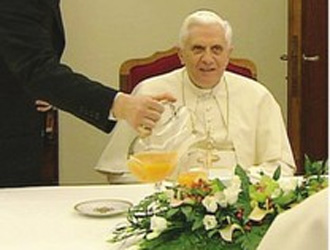 The pope’s household –the Pope’s family– gets a fourth assistant with Rossella Teragnoli. She joins three other Memores Domini women, Loredana, Carmela and Cristina.
Rossella Tereganoli comes from Soresina in the Italian Province of Cremona. She will take up the duties formerly done by the late Manuela Camagni who died in November as the result of a car accident.
Memores Domini is the consecrated lay group of men and women who live a life of virginity, obedience and poverty living in community and active in the world. Memores Domini is not a religious order but a new way of total dedication to God. The Memores are part of Communion and Liberation.
But the Pope doesn’t only work with the Memores Domini but he also is assisted by Birgit, a consecrated lay woman who belongs to the Schoenstatt movement.
More detail on the papal household is found here. If you are interested, the Pope answers Peter Seewald’s question about his life in the Apostolic Palace in his recent interview, Light of the World.
A new possibility of human existence: learning from Lazarus
 The raising of Lazarus from the dead not only restores Lazarus to life, a life with his family and friends, but he begins a new life on earth because of his relationship with Jesus. The gaze of his friend Jesuson Lazarus is one of profound emotion and penetrating teaching. There’s no question that something unique happened to Lazarus because on the Lord’s journey to Jerusalem to face his own passover from life to Life. This is a final act of Jesus before he walks the via Dolorosa. But what does Lazarus’s new new life and Jesus’ own resurrection say to us today?
Lazarus’ human life is not permanent even after divine intervention for he will definitively die at the proper time. But the gift of new life –in a normal sense– gives us the awareness that life is anything but ordinary for those who know the Lord. It identifies our own aspiration for eternal life with Him. We are changed by meeting the Lord “which breaks through and overcomes every barrier! Christ breaks down the wall of death, and in Him there resides the fullness of God, which is life, eternal life. Therefore death had no power over Him; the resurrection of Lazarus is a sign of his full dominion over mortal death, which is like sleep before God.”
Continue reading A new possibility of human existence: learning from Lazarus