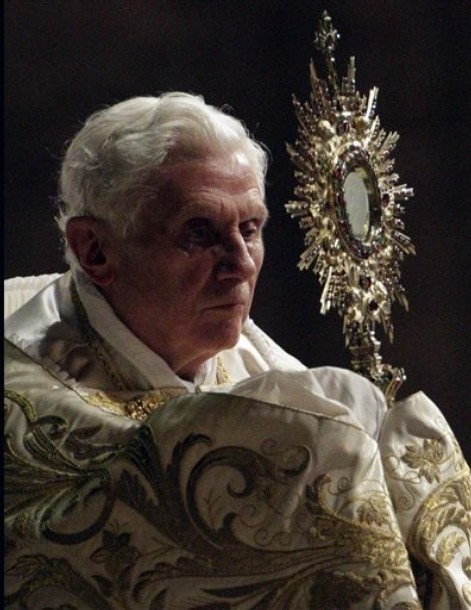
Long predicted by the ever-present vaticanisti, Angelo Cardinal Scola, until now the Patriarch (archbishop) of Venice, is nominated to be the archbishop of Milan. Cardinal Scola replaces Cardinal Dionigi Tettamanzi, 77, who has served Milan since 2002 and who celebrates 54 years of priesthood today, in fact.
Author: Paul Zalonski
Corpus Christi is God’s expression of love that doesn’t consume
It is only
because God himself is the eternal dialogue of love that he can speak and be
spoken to. Only because he himself is relationship can we relate to him; only
because he is love can he love and be loved in return. Only because he is
threefold can he be the grain of wheat which dies and the bread of eternal
life.
Ultimately, then, Corpus Christi is an expression of faith in God, in
love, in the fact that God is love. All that is said and done on Corpus Christi
is in fact a single variation on the theme of love, what it is and what it
does. In one of his Corpus Christi hymns Thomas Aquinas puts it beautifully:
love does not consume: it gives and, in giving, receives. And in giving it is
not used up but renews itself.
Since Corpus Christi is a confession of faith in
love, it is totally appropriate that the day should focus on the mystery of
transubstantiation. Love is transubstantiation, transformation. Corpus Christi
tells us: Yes, there is such a thing as love, and therefore there is
transformation, therefore there is hope. And hope gives us the strength to love
and face the world.
Perhaps it was good to have experienced doubts about the
meaning of celebrating Corpus Christi, for it has led us to the rediscovery of
a feast which, today, we need more than ever.
Pope Benedict XVI Benedictus
New Fraternity of St Charles priests and deacons
Tremendous joy exists when a man is ordained for the service of Christ and the Church.
The Church can’t live without the Eucharist, Pope Benedict reminds
Today in Italy and other countries Corpus Domini is
celebrated, the feast of the Eucharist, the Sacrament of the Body and Blood of
the Lord, which he instituted with the Last Supper and which is the Church’s
most precious treasure. The Eucharist is like the beating heart that gives life
to the whole mystical body of the Church: a social organism entirely founded on
the spiritual but concrete link with Christ. As the Apostle Paul states: “Because
there is one bread, we, although many, are one body: all of us in fact
participate in the one bread” (1 Corinthians 10:17).
Church simply would not exist. It is the Eucharist in fact that makes a human
community a mystery of communion, able to bring God to the world and the world
to God. The Holy Spirit, which transforms the bread and wine into the Body and
Blood of Christ, also transforms into members of the Body of Christ those who
receive it with faith, so that the Church is truly the sacrament of the unity
of men with God and of men with each other.
individualistic — like that in which Western societies are immersed and which
is spreading throughout the world — the Eucharist constitutes a kind of “antidote,”
which operates in the minds and hearts of believers and continually sows in them
the logic of communion, of service, of sharing, in a word, the logic of the
Gospel. The first Christians, in Jerusalem, were an evident sign of this new
way of life because they lived in fraternity and held all of their goods in
common so that no one should be indigent (cf. Acts 2:42-47). Where did all of
this come from? From the Eucharist, that is, the risen Christ, really present
with his disciples and working with the power of the Holy Spirit. And in the
succeeding generations, through the centuries, the Church, despite human limits
and errors, continued to be a force for communion in the world. We think
especially of the most difficult periods, the periods of trial: What did it
mean, for example, for countries that were under the heal of totalitarian regimes
to have the possibility to gather for Sunday Mass! As the ancient martyrs of
Abitene proclaimed: “Sine Dominico non possumus” – without the “Dominicum,” that is, the Sunday Eucharist, we cannot live. But the
void produced by false freedom can be dangerous, and so communion with the Body
of Christ is a medicine of the intellect and will to rediscover taste for the
truth and the common good.
my predecessor, Blessed John Paul II defined as a “Eucharistic woman”
(Ecclesia de Eucharistia, 53-58). In her school our life too becomes fully “Eucharistic,”
open to God and to others, able to transform evil into good by the power of
love, which fosters unity, communion, fraternity.
Saint Josemaría Escrivá de Balaguer
“True shepherds, after my own heart,
Adult Stem Cells: Science and the Future of Man and Culture: a deeper dialogue between science and faith
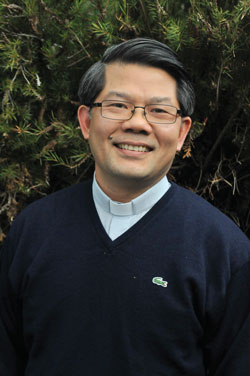
Vincent Long Van Nguyên responds to a call to venture into a new depth
The Church in Melbourne, Australia saw the Holy Spirit
consecrate a former boat person turned Conventual Franciscan priest turn
auxiliary bishop on Thursday. The witness of his life is testimony of the hand of God leading.
three in the English speaking world. The USA has Bishop Dominic Mai Luong of
Orange County, California and Bishop Vincent Nguyên Manh Hieu of
Toronto.
Melbourne holding the title of Bishop of Thala. But his personal narrative is
beautiful.
knowing no English, having no personal connections with anyone, knowing nothing
of Australian culture. One can only say that 31 years ago Long was given the
gift of a new life in moving -with tremendous difficulty–from oppression to
freedom.
Continue reading Vincent Long Van Nguyên responds to a call to venture into a new depth
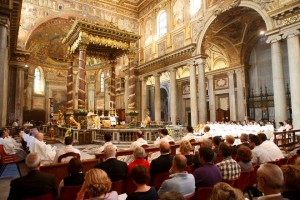
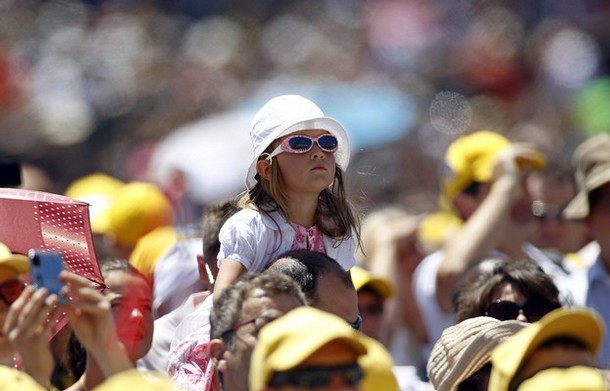
Corpus Christi in Rome 2011
The feast of Corpus Domini is inseparable from the Holy
Thursday Mass of in Caena Domini, in which the institution of the Eucharist is
also celebrated. While on the evening of Holy Thursday we relive the mystery of
Christ who offers himself to us in the bread broken and wine poured out, today,
in celebration of Corpus Domini, this same mystery is proposed to the adoration
and meditation of God’s people, and the Blessed Sacrament is carried in
procession through the streets of towns and villages, to show that the risen
Christ walks among us and guides us towards the Kingdom of heaven. Today we
openly manifest what Jesus has given us in the intimacy of the Last Supper,
because the love of Christ is not confined to the few, but is intended for all.
This year during the Mass of Our Lord’s Last Supper on Holy Thursday, I pointed
out that the Eucharist is the transformation of the gifts of this land – the
bread and wine – intended to transform our lives and usher in the
transformation of the world. Tonight I would like to return to this point of
view.
Everything starts, you might say, from the heart of Christ, who at the
Last Supper on the eve of his passion, thanked and praised God and, in doing
so, with the power of his love transformed the meaning of death which he was
about to encounter. The fact that the Sacrament of the altar has taken on the
name “Eucharist” – “thanksgiving” – expresses this: that
the change in the substance of the bread and wine into the Body and Blood of
Christ is the fruit of the gift that Christ made of himself, a gift of a love
stronger than death, love of God which made him rise from the dead. That is why
the Eucharist is the food of eternal life, the Bread of life. From the heart of
Christ, from his “Eucharistic Prayer” on the eve of his passion,
flows the dynamism that transforms reality in its cosmic, human and historical
dimensions. All proceeds from God, from the omnipotence of his love One and
Triune, incarnate in Jesus. In this Love the heart of Christ emerges, so He
knows how to thank and praise God even in the face of betrayal and violence, and
thus changes things, people and the world.
Nativity of Saint John the Baptist
Dorothy Day and the Catholic Worker Movement: an American witness to the Culture of Life
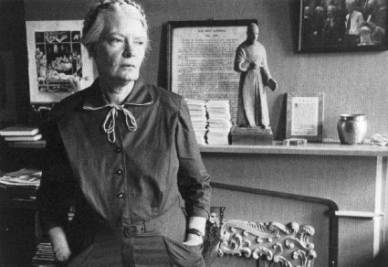
Last night at the Church of Saint Catherine of Siena (NYC) a remarkable event took place. About 120 people from all over the Metropolitan New York area attended an event co-sponsored by the Siena Forum for Faith and Culture and Crossroads Cultural Center whereby we wanted to know more about a pivotal figure of the 20th century who was truly human and in love with Christ through the poor, the Servant of God Dorothy Day. Ms. Mary Lathrop, a longtime friend and spiritual daughter of Day’s, with Monsignor Lorenzo Albacete, spoke about the person of Dorothy Day, the Catholic Worker Movement and Catholic Social teaching. Albacete as you know is the well known priest, physicist and theologian who works with the lay movement Communion and Liberation in the USA. Lathrop is a remarkable woman of faith and conviction who gave us a deeper appreciation for the real person that Day was and not the ideaology that is often passed off for the same.
A video of the event is located here.
The following article by Monsignor Lorenzo Albacete was published today on Il Sussidiario (English edition):
This week I was asked to participate in a discussion about Dorothy Day, founder of the “Catholic Worker Movement.” The story of her life captures like none other the history of the Catholic Church in the United States during the last century, and a judgment on her life pretty much indicates how American Catholics look at the challenges and opportunities of the 21st century.
Dorothy Day was born in Brooklyn, NY, on November 8, 1897 and died on November 29, 1980. I must confess that I knew very little about her during the 60’s and 70’s, except that she was a very controversial Catholic pacifist, feminist, and maybe socialist who made many Church authorities very nervous (and still does here and there). I knew about her opposition to the atomic bombing of Hiroshima, but it was not until recently that I read her stunning editorial excerpted below so you can get a feel for her soul’s style:
Mr. Truman was jubilant. President Truman. True man; what a strange name, come to think of it. We refer to Jesus Christ as true God and true Man. Truman is a true man of his time in that he was jubilant…the newspapers said. Jubilate Deo. We have killed 318,000 Japanese…