Venezuela’s President, Hugh Chavez, 56, is suffering from cancer. This has been a diagnosis he’s lived with for more than a month. And while this is not shocking news because many people live with cancer and face their mortality in a new way with such each day. However, I found a Fox News article a bit odd; odd because they found this event newsworthy, something out of the ordinary. I might even say Fox is a bit presumptuous for mentioning it. My reading of the story was that the un-named writer question the intentions of an outspoken president who would approach the sacraments of the Church for the sacrament of Anointing of the Sick, that is, to ask God for a cure and a healing. Deo volente. The President’s lived experience with the bishops of his country have reportedly been fragile, but so what. A baptized Catholic has a right to receive the sacraments and to seek forgiveness begging not from the Church but from the Holy Spirit the graces of conversion and healing of body, soul, and spirit regardless of politics. Should we be surprised or consoled that someone would recognize his place before God? Christ came for the sick, not the healthy. The Church is a hospital for the ill, not the well.
Author: Paul Zalonski
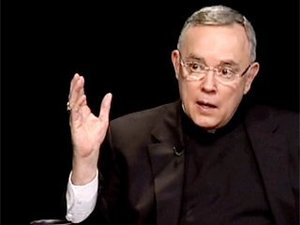
Charles Joseph Chaput 9th Archbishop of Philadelphia, Pope nominates
It is expected that Pope Benedict XVI will nominate Archbishop Charles Joseph Chaput, OFM Cap., 66, of Denver, a Native American Indian (Prairie Band Potawatomi Tribe), as the 13th Bishop and 9th Archbishop of Philadelphia. He replaces His Eminence, Justin Francis Cardinal Rigali, 76, who has served the Archdiocese since 2003. The Cardinal has been a priest for 50 years, a bishop for 26 years and a cardinal for nearly 8 years.
Charles Joseph Chaput was born in Concordia, Kansas. He entered
the Saint Augustine Province of the Capuchin Franciscans in 1965, professing vows at 21 in 1967.
Chaput earned a Bachelor of Arts in Philosophy from Saint Fidelis College Seminary in Herman, Pennsylvania, in 1967, and completed Studies in Psychology at Catholic University in Washington DC, in 1969. A year later he earned a Master of Arts in Religious Education from Capuchin College in Washington DC and was ordained to the priesthood on August 29, 1970. By 1971, Father Charles Chaput earned a Master of Arts in Theology from the University of San Francisco.
For several years Father Chaput served the Capuchin mission as a teacher, spiritual director, pastor, and in the administration of his Capuchin province. In 1988, Pope John Paul II nominated Father Charles Chaput as the Bishop of Rapid City, SD. The same Pope appointed him Archbishop of Denver on February 18, 1997.
The new Philadelphia archbishop has been a priest for 41 years and a bishop for 23 years. Archbishop Chaput is one of two Capuchin archbishops and he’ll be the second American Capuchin, on the east coast, –the other being Boston’s Archbishop, Seán Patrick Cardinal O’Malley, OFM Cap.– and the first Native American to be a cardinal; Philadelphia is not expected to forego its cardinalatial status as St Louis and Detroit have done. It is unlikely, however, that Chaput would be given the cardinal’s title for 4 years.
According to the 2010 stats, there are 1.46 million Catholics in the Archdiocese of Philadelphia.
According to the 2006 stats, there are 400 thousand Catholics in the Archdiocese of Denver.
Get to know Archbishop Chaput’s thinking by reading his addresses found here.
May the Blessed Virgin Mary, Saint Francis and Saint Clare, Saint John Neumann, pray for Archbishop Chaput and the faithful of Philadelphia.
St Ann Melkite Church of Waterford, CT hosting a Middle Eastern festival
Our Lady of Mount Carmel
savior–Yet you remain a virgin.
dew,
a longer Sequence for the feast of the Annunciation of the B.V.M.)
Christ begging for the heart of man
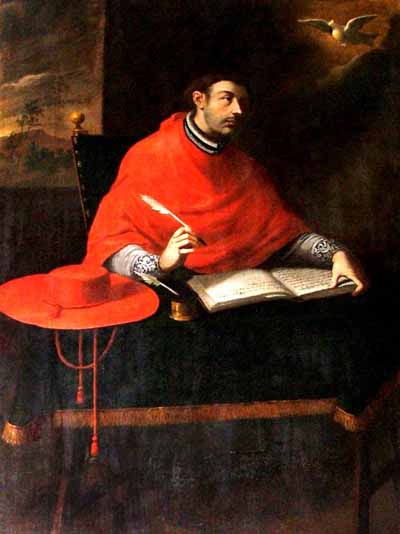
Saint Bonaventure
Grant, we pray, almighty God, that, just as we celebrate the heavenly birthday of the Bishop Saint Bonaventure, we may benefit from his great learning and constantly imitate the ardor of his charity.
Pope Benedict gave these 3 addresses on March 3, March 10, and March 17. Read these Wednesday audience addresses if you are serious about Saint Bonaventure!
My friend Father Charles at A Minor Friar has a brief thought on this great Franciscan friar, doctor, bishop of the Church.
Truly an ecumenical approach born from the good news of Christianity
The head of the Communion and Liberation Movement, Father Julián Carrón wrote an editorial for tomorrow’s (July 14, 2011) edition of the L’Osservatore Romano about the forthcoming Day of Prayer in Assisi on October 27, recognizing the theme of peace and justice.
The Day for
Reflection, Dialogue and Prayer for Peace and Justice in the World, convoked in
Assisi next October 27 by Benedict XVI is an audacious gesture, just as Blessed
John Paul II’s initiative was, 25 years ago.
“In the name of what can (Pope
Wojtyla) call exponents of all religions together to pray in Assisi?” asked Don
Luigi Giussani twenty-five years ago. He answered, “If one understands the
nature of man, the heart of man, it is his religious sense, it is in the
religious sense that all men find equality and identity. The most profound
meaning in the human heart is religious sentiment, destiny on the one hand and
the usefulness of the present on the other. If we want to use the right terms,
a sense of religion is the only sense which is truly catholic, which means
suitable for everyone and belonging to everyone.”
Continue reading Truly an ecumenical approach born from the good news of Christianity
Fisichella’s Metropolitan mission to secularized cities
Rino Fisichella, the archbishop who head’s the Pope’s evangelization office has rolled out his newest, that is, the first, endeavor since the founding of the office in the July 12 L’Osservatore Romano. They’re calling it the “Metropolitan
mission” The goal is simple:
To avoid the
risk of the new evangelization becoming just another formula adapted for every
season, it is important that it be filled with content which informs the
pastoral action of the different Christian communities. In this sense, everyday
pastoral work, which has always animated the life of the Church, must renew its
ways of presenting itself and implementing its activities.
Benedict XVI,
speaking to the first plenary assembly of the Pontifical Council for Promoting the New Evangelization, said that it was of decisive importance to go beyond
the fragmentation of society and offer concrete answers to the great challenges
of today. To fill this need, a “metropolitan mission” has been put into action.
The goal is simple: to give a sign of unity among the diverse dioceses present
in the largest European cities that have been particularly affected by
secularization.
Continue reading Fisichella’s Metropolitan mission to secularized cities
Saint Henry: Benedictine Oblate and patron of sovereign leaders
The Church recalls the witness of an emperor and a Benedictine Oblate, Saint Henry (972-1024), Duke of Bavaria. Henry was crowned king in Rome by Pope Benedict VIII in 1014. It is said that Henry was assisted by the saints throughout his life but especially at Mass when he was anointed king. He was an insightful leader, lay man who had concern for the discipline of the Church and who had love for the Benedictine monastic life. He was a supporter of Cluny’s reforms. It was through Saint Henry that the King of Hungary and later saint, Stephen, met Christ and was baptized.
The promise made by Christ: error won’t prevail
Continue reading The promise made by Christ: error won’t prevail