
Author: Paul Zalonski
Prayers for Bishop David M. O’Connell, CM
Prayers are requested for the Most Reverend David M. O’Connell, CM, Bishop of Trenton, 56, who is suffering the effects of an blood infection and clot in his foot made more complex due to diabetes.
The Vincentian Fathers and Brothers, the religious family to whom Bishop O’Connell belongs, sent a request for prayers the other day. We happily oblige.
Sofia Cavalletti needs our prayerfilled support
My sheep listen to my voice; I know them, and they follow me. I give them eternal life, and they shall never perish.
~John 10:27, 28
Life is a passage from the less to the more.
~Sofia Cavalletti, The Religious Potential of the Child, page 43
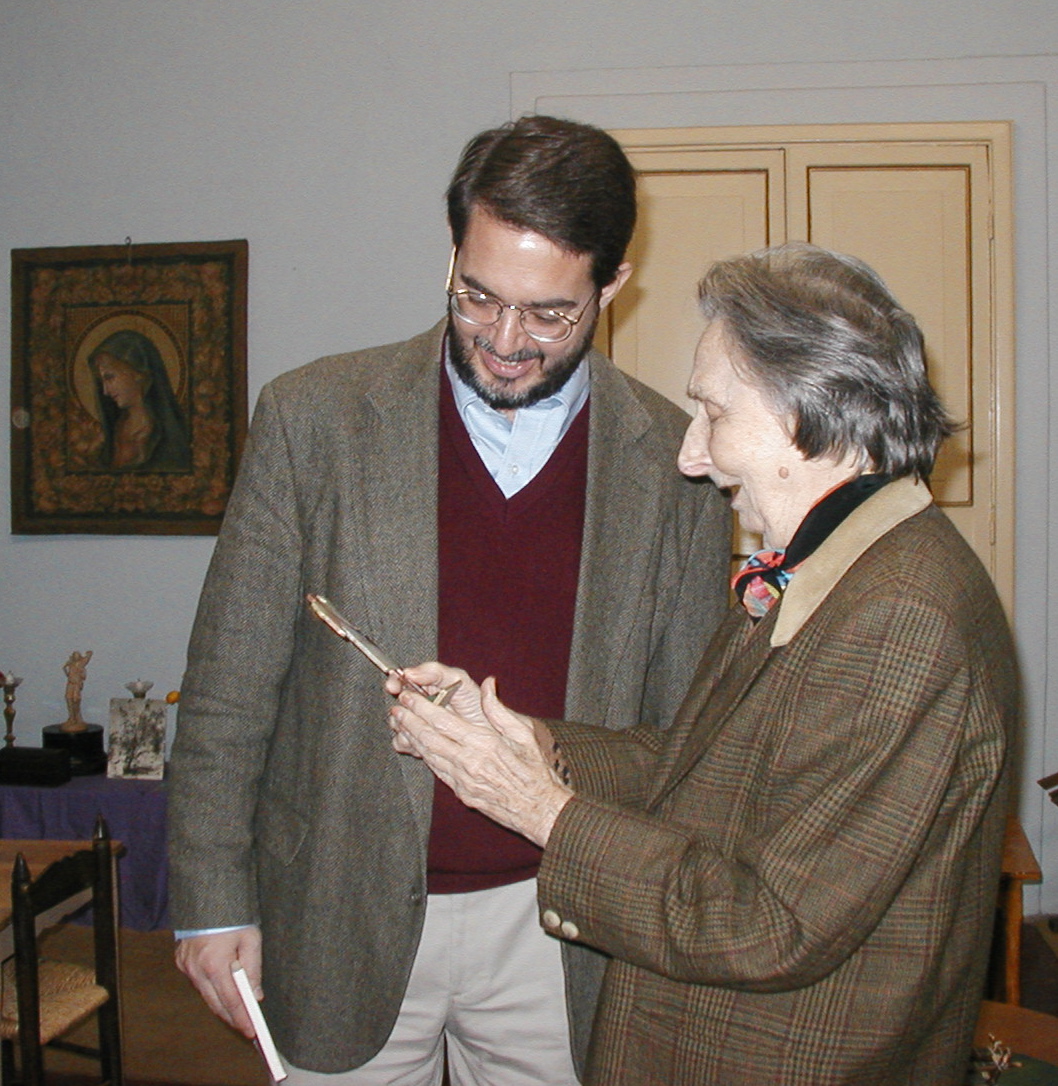
We have heard from [friends with the Catechesis of the Good Shepherd] in Rome that she had spent yesterday with Sofia who is now too weak even to speak. We would like to ask that everyone who has loved Sofia would pray for her now that she may continue to experience, in her body and her spirit, the peace and joy she has so often found in the atrium with the children. We praise God for the treasure she is for us and has illuminated for us in the child. We stand together in vigil and prayer, silently and at peace. Together may we pray the prayer Sofia herself has prayed with us this last year:
Lord, now you let your servant go in peace;
Your word has been fulfilled.
My eyes have seen the salvation
You have prepared in the sight of every people,
A light to reveal you to the nations and the glory of your people, Israel.
Cistercian nun leaves monastery to visit Pope Benedict, first time in 84 years
 A Cistercian nun at 103 years, is leaving the monastery for the first time in 84 years to meet Pope Benedict while he’s in Spain for World Youth Day.
Sister Teresa entered the Monasterio de Buenafuente del Sistal on the very day of Benedict’s birth, 16 April 1927. Aside from a distraction of the Spanish Civil War (1936-39) that caused the nuns to flee fighting, Sister Teresa has lived her vocation as a cloister nun in that place.
A journalist for El Mundo, Jesús García, authored a book about 10 nuns, of whom Sister Teresa was included, titled, ¿Qué hace una chica como tú en una sitio como éste? (2011; What is a Girl Like You Doing In A Place Like This?)
Sister’s monastery was founded in the 13th century, and for 20 years was the religious superior.
Attention in Prayer
This morning on my train ride into the City, I was reading a monograph by Archabbot Lambert Reilly, OSB, the emeritus archabbot of St Meinrad Archabbey, “Prayer: A Conversation with God.” I recommend it. Why? Because I need to be reminded that prayer is not a monologue but a dialogue; it is the heart speaking to the Heart. I also have to remember it is not about me exclusively but about Him who is greater than I.
The Archabbot is conversational in his presentation; one would be tempted to think that there’s a lot of words but no content because he’s narrating his experience. On the contrary, this essay-turned-talk is full of good advice on prayer; it was prepared for Benedictine Oblates but is applicable to many others. Get the piece if you can.

Archabbot Lambert speaks of three types of attention in prayer:
1. “the attention by which we are lost in God.” A short-lived experience of God; a gift from Himself; no strings attached; +Lambert quotes Saint Teresa of Avila: “Don’t seek the consolations of God; seek the God of consolations.”
Saint Stephen of Hungary

On this feast of Saint Stephen of Hungary let us pray for civil leaders, especially for Hungary, for missionaries and for those who work with stone.
Saint Stephen of Hungary, pray for us.
Clelia Merloni’s canonization cause advances, miracle investigated
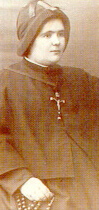
The Apostles of the Sacred Heart of Jesus, the congregation of sisters founded by the Servant of God Mother Clelia Merloni (1861-1930), are thankful that the diocesan phase of a miracle attributed to Mother Clelia was closed on 11 April 2011. The documentation is now at the Congregation for the Causes of Saints at the Holy See. These efforts move Merloni one step closer to beatification.
The Diocese of Rome which is handling the study for Mother Clelia’s cause finished its work on 1 April 1998; on 7 August 1999, approval from the Congregation for Saints the diocesan work. The postulator is Father Luca M. DeRosa, OFM.
This year marks Mother Clelia’s 150th anniversary of birth; she was a native of Forli, Italy. Her mother died when Clelia was 4 years old and her grandmother raised her. She died on November 21, 1930.
Continue reading Clelia Merloni’s canonization cause advances, miracle investigated
Assumption of Mary, Mother of God
 In the Ascension, the Lord, with His Resurrection, has
become the Master of the World. Therefore, there is One among us who will save
everything that we are, who is so powerful as to save our life, as to preserve
it entire in order to give it back to us whole by forgiving our sins. The
demonstration of this is the mystery of the Assumption, when He took Our Lady’s
humanity and did not leave her in the clutches of death even for an instant.
With
the mystery of the Assumption, the Lord says, “You see, I will not let you lose
anything of what I have given you, of what you have used, of what you have
tasted, even of what you have misused, if you are humble with me. Blessed are
the poor in spirit, that is to say: if you acknowledge that everything is
grace, that everything is mercy, because your criteria are nothing, my
criterion will be everything.” Our Lady is already at this ultimate, profound
level of Being from which all beings draw substance, life, and destiny. This is
why she was bodily lifted into heaven, where the Mystery of God dwells: so that
she would be for us, daily, the Mother of the event.
the mystery of the Assumption, the Lord says, “You see, I will not let you lose
anything of what I have given you, of what you have used, of what you have
tasted, even of what you have misused, if you are humble with me. Blessed are
the poor in spirit, that is to say: if you acknowledge that everything is
grace, that everything is mercy, because your criteria are nothing, my
criterion will be everything.” Our Lady is already at this ultimate, profound
level of Being from which all beings draw substance, life, and destiny. This is
why she was bodily lifted into heaven, where the Mystery of God dwells: so that
she would be for us, daily, the Mother of the event.
The glorification of Our
Lady’s body indicates the ideal of Christian morality, the valuing of every
moment, every instant. Therefore it is the prizing of life, of our existence,
the life of the world’s body, it is the exaltation of matter lived by the soul,
lived by the consciousness which is relationship with God. It is the prizing of
our earthly life, not because it is a lucky one due to particular
circumstances, but because through even the smallest things is borne our
relationship with the Infinite, with the mystery of God
Lady’s body indicates the ideal of Christian morality, the valuing of every
moment, every instant. Therefore it is the prizing of life, of our existence,
the life of the world’s body, it is the exaltation of matter lived by the soul,
lived by the consciousness which is relationship with God. It is the prizing of
our earthly life, not because it is a lucky one due to particular
circumstances, but because through even the smallest things is borne our
relationship with the Infinite, with the mystery of God
(Luigi Giussani, The
Holy Rosary)
Holy Rosary)
In the Virgin Mary’s Assumption we have a path to our destiny in the God
Today’s feast celebrates the ultimate fulfillment of Mary’s
journey as God’s faithful and humble servant. As we reflect on this joyful
feast, we hopefully realize that she is inviting us and teaching us to sing the
Magnificat [the text for today’s Gospel] along with her as we continue along
our own journeys, however near or far the fulfillment of our journey remains.
We too are invited to proclaim in joy and humble service the compassion and
justice of our God. Today’s feast assures us that like Mary, in serving the
reign of God, we too will one day share in her destiny. (Father Damian, Abbot of Saint Joseph’s Abbey, Spencer)
The Office of Readings leads us to shout for joy:
Dearest brethren, this is a time
when all flesh should shout for joy, because the Mother of the Word made flesh
is assumed into heaven; nor should human mortality desist from singing songs of
praise on this glorious festival, when the nature of man is elevated in the
Virgin to solitary eminence, high above all the orders of immortal spirits. (Saint Bernard, Second Nocturn)
Saint Maximillian Kolbe
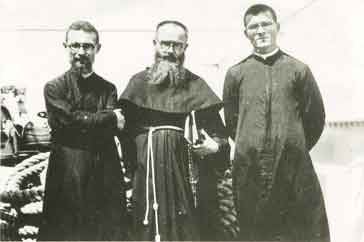 “Without sacrifice, there is no love. May his intercession further purge us of our idolatries and the sentimentalities that so mar our worship, our loves, our fatuous claims to modernity and maturity.”
(Saint Maximilian Kolbe writing to a fellow priest)