The other day the Pope’s Secretary of State Cardinal Tarcisio
Bertone SDB celebrated Mass for the Vatican’s jurists where he noted “with the
beginning of a new judicial year … we are again invited to reflect upon the
relationship between divine and human justice, so that our consciences may be
illuminated and our actions may, as far as possible, correspond to the divine
will and its plan of love for each individual and for the community of man.” Moreover,
Bertone picked up a current theme of Benedict’s these days, that is, that of
justice, in which he called attention to the specific vocation of the Church to
be “a sign and instrument of God’s love [charity], and of His justice which is always an
expression of His merciful love.”
Author: Paul Zalonski
Week of Prayer for Christian Unity 2012
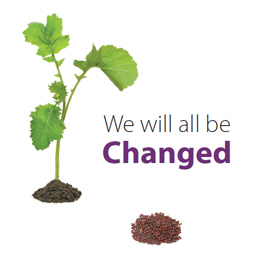 The theme of the ’12 Week of Prayer for Christian Unity (18-25 Jan) is taken from Paul’s first letter to the Corinthians “We will all be changed by the victory of our Lord Jesus Christ” (15:51-58).
The Church prays for Unity among Christians
Make known in us, O Lord, the abundance of your mercy
and, in the power of your Spirit, remove the divisions between Christians, that
your Church may appear more clearly as a sign raised high among the nations and
the world, enlightened by your Spirit, may believe in the Christ whom you have
sent.
On the 25th, Pope Benedict will pray Vespers on the feast of the Conversion of St Paul at the Papal Basilica of Saint Paul outside the Walls with ecumenical partners. He’s been committed to this work of ecumenism and has worked to give the work a better and authentic focus. He’s called the “Pope of Christian Unity.” Let’s be united in prayer for the the intention of full, visible unity among Christians.
Cardinal Francis Eugene George, OMI, turns 75, submits resignation
 Today is Cardinal Francis Eugene George’s 75th birthday. Congrats and continued blessings!!!
His Eminence is this nation’s highest profiled cardinal and bishop who is a superb public thinker as well as a pastor of souls. Since 1997 he’s been the archbishop of Chicago and since 1998 he’s been a member of the College of Cardinals. Both positions were given to him by Blessed Pope John Paul II.
The 1983 Code of Canon Law says of a bishop who reaches his 75th birthday:
A diocesan bishop who has completed the seventy-fifth year of age is requested to present from office to the Supreme Pontiff, who will make provision after he has examined all the circumstances (401).
The Chicago Tribune ran this article today.
Pray for Cardinal George and for the Archdiocese of Chicago.

Jesus Christ is our light
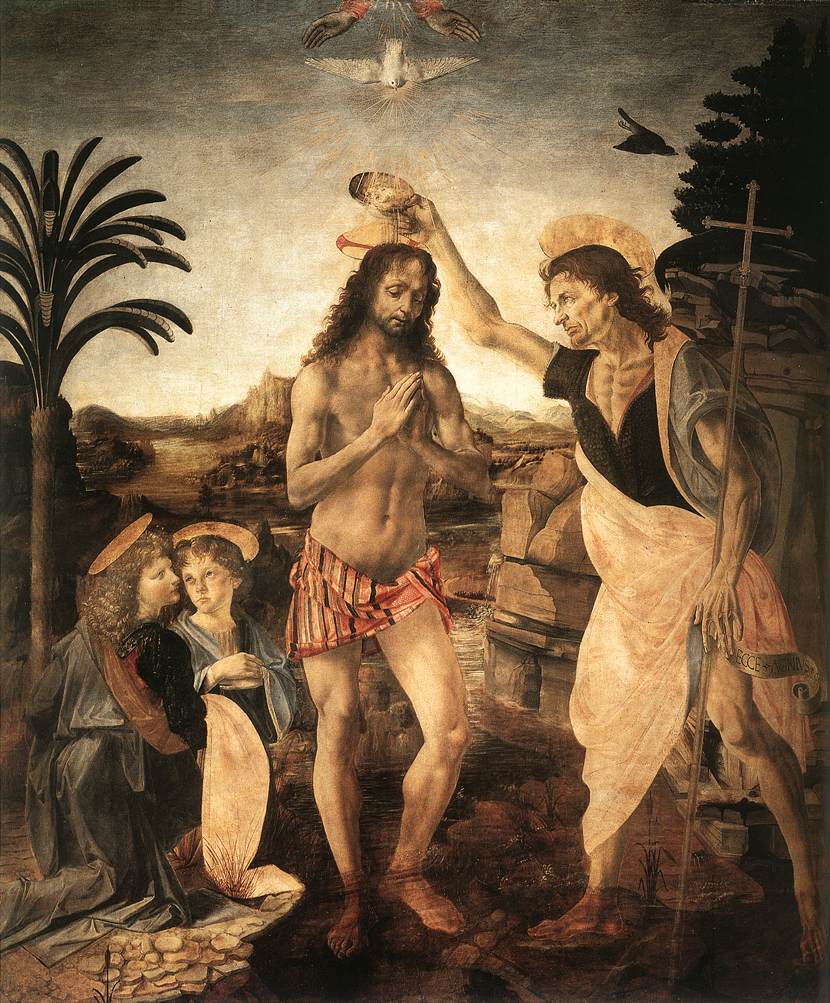 The days following the feasts of the Epiphany (Theophany) and the Baptism of the Lord, the Church focuses her attention on a relationship with the Lord as the Way, the Light and the Truth. The biblical narratives at Mass this week have us praying with the scenes of Christ the healer. With His baptism, Jesus’ ministry inaugurated and his light now shines more brightly for us to see the path to salvation.
Jesuit Father Steven Bonian tells us that “In … Syriac Spirituality we find St. Ephrem speaking
in mystical poetry of the light of Christ residing in every Christian: the same
light that Moses saw on the mountain at the burning bush; that gleamed through
Mary at his incarnation, and the river Jordan at his baptism. Ephrem envisions
that we too will shine forth with Christ’s light at our resurrection – for all
eternity!
in mystical poetry of the light of Christ residing in every Christian: the same
light that Moses saw on the mountain at the burning bush; that gleamed through
Mary at his incarnation, and the river Jordan at his baptism. Ephrem envisions
that we too will shine forth with Christ’s light at our resurrection – for all
eternity!
It is very important for us to come to know Jesus Christ, our Lord,
in his true light: as he really lives in the light of the Trinity. It is the
ultimate grace from God the Father to have Jesus revealed to us in his true
Light. This grace can only be given to those who are willing to seek it: ‘ask
and it will be given to you,’ the Lord says.”
in his true light: as he really lives in the light of the Trinity. It is the
ultimate grace from God the Father to have Jesus revealed to us in his true
Light. This grace can only be given to those who are willing to seek it: ‘ask
and it will be given to you,’ the Lord says.”
Tebowing…Catholics did it first…

This picture of Tim Tebow paired with a priest praying before the Tabernacle is making the rounds. I have to say, even though I am fascinated by the controversy surrounding Mr. Tebow’s Christian display of trust in Christ, that the Catholics have it over him.
Let us pray for the courage to daily give good witness to Christ.
Hungary changes constitution, status of some religious orders changes in the law
At the new year the Hungarians passed a new constitution with some real changes that will affect the Church and other ecclesial communities, including non-Christian groups. The New York Times ran the article that outlines the changes giving the impression that even the Hungarians are unable to name all the changes. What caught my eye thanks to Brother Richard of OSB.org, when he first posted a note on his FB page that some venerable religious orders like the Benedictines and the Carmelites and a group like the Opus Dei are now downgraded in terms of the law. But why? What does the Hungarian government gain by doing such and what are the long-term implications for the Benedictines and Carmelites? Why weren’t the states of the Dominicans and Jesuits changed? Some of what happened is noted here:
“With the
new year, as the new constitution goes into effect, all petitions to the
[Constitutional] Court lapse and it becomes much harder for anyone to challenge
this law — or any other.
“But it is worth lingering on the newly
re-enacted law on the status of churches because it is one of the places where
we can clearly see the effects of the new constitutional order on the
protection of constitutional rights. What does the law on churches do? It
creates 14 state-recognized religions, and decertifies the rest. On January 1,
over 300 denominations lose their official status in Hungary — including their
tax exemptions and their abilities to run state-funded schools. While most of
the denominations are tiny, many are not. Among the religions that will no longer
be able to operate with state approval are all versions of Islam, Buddhism,
Hinduism and Baha’i, as well as many smaller Catholic orders including the
Benedictines, Marists, Carmelites, and Opus Dei, and a number of major
Protestant denominations including Episcopalians, Jehovah’s Witnesses, Seventh
Day Adventists, Mormons, Methodists, and all but one of the evangelical
churches. One each of the orthodox, conservative, and liberal Jewish synagogues
are recognized; but all other Jewish congregations are not” (The
Unconstitutional Constitution).
A Benedictine from Hungary writes
that “religious orders are still part of the Catholic Church in my country
and being as such they will maintain their legal status — all other
problematic constitutional points nothwithstanding.” (see OSB.org)
Changes in creating new cardinals 2012
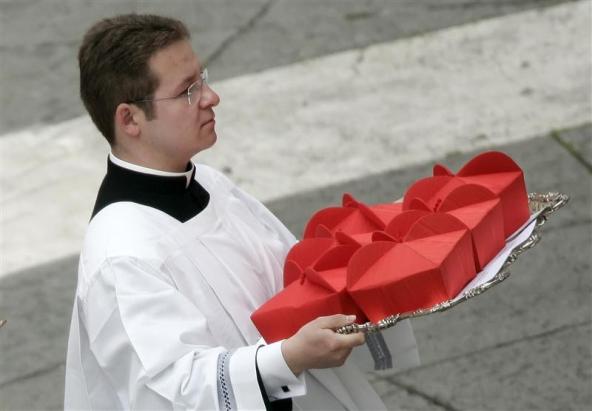 Some segments of the Catholic world are very excited about the Pope’s 12th Day of Christmas gift to 22 bishops and priests: being created a cardinal of the Holy Roman Church. The US gets two new cardinals with Archbishops O’Brien and Dolan receiving the papal nod.
 Baptism of the Lord, no ordinary feast
 Today the Church in the US celebrates the Feast of the
Baptism of the Lord, in 2012, the day after the Solemnity of the Epiphany. In other places, like Rome, the Church observed the Baptism of the Lord yesterday as the Epiphany was celebrated on the traditional 12th day of Christmas,
January 6. Today’s feast reminds us that being a Christian is the joy of being “children of God.” During his noontime Angelus Address Pope Benedict said that “God is the origin of the existence of every creature and the Father in a unique way of every human being: He has a unique, personal relationship with him or her.”
At Mass in Rome earlier in the morning the Pope had baptized 16 newborn infants, children of Vatican employees in the Sistine Chapel.
The Church prays
Almighty ever-living God, who, when Christ had been baptized in the River Jordan and as the Holy Spirit descended upon him, solemnly declare him your beloved Son, grant that your children by adoption, reborn of water and the Holy Spirit, may always be well pleasing to you.
This magnificent prayer tells us that what Jesus was by nature, we become by grace through the sacraments.
The temptation of Christmas

Have we finished the Christmas season in good order? Have we exceeded our expectation to live the season of Christmas differently from what secular culture has given us? Or, have we given up and just given ourselves over to the mediocrity of the the world around us with regard to Christian Faith? What follows is a very interesting commentary on our Christian observance of the Birth of Jesus, the Nativity of God-Man by Father Julián Carrón. While the today brings to a close the Church’s yearly observance of Christmastide, we have work to do before we put to rest the nagging questions: what difference does this Child make in my life? AND Do we really believe that God is in our midst?
In order to describe our humanity and to see ourselves properly at this moment in the world’s history, it is hard for us to find more appropriate words than those contained in this passage by the Prophet Zephaniah. “Sing aloud, O daughter of Zion; shout, O Israel!”. Why? What reason is there to rejoice, with all that is happening in the world? Because “the Lord has taken away the judgments against you”.
The first repercussion that these words produced in me was surprise at how the Lord looks at us: with a gaze that succeeds in seeing things that we shall not be able to recognize unless we participate in his same gaze at reality. “The Lord has taken away the judgments against you”: in other words, your evil does not have the last word over your life; the usual way you look at yourself is not the right one; the look with which you constantly reproach yourself is not true. The one true look is the Lord’s look. And it is precisely by this look that you will be able to understand that he is with you: if he has taken away the judgment against you, what can you fear? “You shall fear evil no more”. An inexorable positiveness prevails over life. For this reason, the biblical passage continues, “do not fear, O Zion, do not let your hands grow weak” Why? Because “The Lord your God is in your midst, a warrior who gives victory”. There is no other source of joy than this: “he will rejoice over you with gladness. He will renew you with his love, he will exult over you with loud singing” (3:14-17).
Epiphany

We celebrate a holy day adorned with three mysteries: this day the star led the Magi to the manger; this day wine was made from water at the wedding; this day Christ willed to be baptized in the Jordan by John in order to save us, alleluia. (Antiphon for the Magnificat, Second Vespers)
The Church prays
O God, who on this day revealed your Only Begotten Son to the nations by the guidance of a star, grant in your mercy that we who know you already by faith, may be brought to behold the beauty of your sublime glory.
The Magi give us an example to follow: to walk diligently, to walk by faith guided by the indications of God –that is, the star– in order to arrive at what God wants to give. Himself. As Pope Benedict said on Friday, the Magi are the best example of “humanity’s pilgrimage to Jesus.” The giving of the gifts of gold, frankincense and myrrh is merely the beginning of our gift to the Lord. Our gift is none other than ourselves, as freely as it is possible to give…
Our first point on the pilgrimage is what is sung in the “The First Nowell,” Then entered in there Wise Men three, Full reverently on bended knee….
By walking this pilgrimage to Jesus, the Magi arrive at Truth itself. Do we have the courage to do the same or do we succumb to human opinion?