Pope urges concern for others, reciprocity and personal holiness for lenten lessons

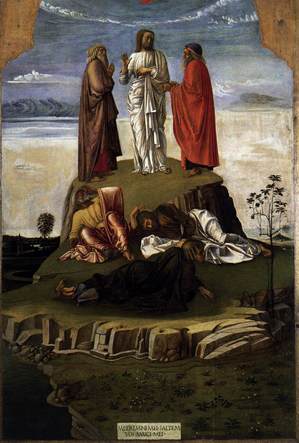
Transfiguration GBellini.jpg

The Pope’s lenten message for the Church is rooted in the Letter to the Hebrews by which he develops three aspects of Christian life: concern for others, reciprocity and one’s holiness. As he says at the start, Hebrews tells us to have confidence in, trust in, Jesus who is our high priest. The presentation of the message is made by Cardinal Robert Sarah.

Lent begins February 22 with the imposition of ashes beginning a 40 day season of fasting, prayer and almsgiving. In some segments of the Church, spiritual preparations have begun with observing the preparatory Sundays –the pre-Lent– whereby Christians begin engaging more and more in acts of penance. The Church recommends a gradual acceptance of penance rather than a full scale plunge. One of my favorite narratives in the Gospel is the Transfiguration of Christ. Here Giovanni Bellini does a terrific job in developing my Catholic imagination in helping me to focus on Christ rather than myself. With the assistance of Pope Benedict’s lenten message we can help grace become more and more part of our own humanity whereby we are transfigured from doing sinful things to doing things of true Charity.


“Let us be concerned for each other, to stir a response in love and good works”

(Hebrews 10:24)

Dear Brothers and Sisters,

The Lenten season offers us once again an opportunity to reflect upon the very heart of Christian life: charity. This is a favourable time to renew our journey of faith, both as individuals and as a community, with the help of the word of God and the sacraments. This journey is one marked by prayer and sharing, silence and fasting, in anticipation of the joy of Easter.

This year I would like to propose a few thoughts in the light of a brief biblical passage drawn from the Letter to the Hebrews: “Let us be concerned for each other, to stir a response in love and good works”. These words are part of a passage in which the sacred author exhorts us to trust in Jesus Christ as the High Priest who has won us forgiveness and opened up a pathway to God. Embracing Christ bears fruit in a life structured by the three theological virtues: it means approaching the Lord “sincere in heart and filled with faith” (v. 22), keeping firm “in the hope we profess” (v. 23) and ever mindful of living a life of “love and good works” (v. 24) together with our brothers and sisters. The author states that to sustain this life shaped by the Gospel it is important to participate in the liturgy and community prayer, mindful of the eschatological goal of full communion in God (v. 25). Here I would like to reflect on verse 24, which offers a succinct, valuable and ever timely teaching on the three aspects of Christian life: concern for others, reciprocity and personal holiness.

Continue reading Pope urges concern for others, reciprocity and personal holiness for lenten lessons

Orthodox bishops rally faithful to protest the Obama administration


Bishops of the Orthodox Churches –those of the various jurisdictions in the USA– have called upon the Orthodox faithful to protest the Obama Administration’s ruling which affects matters of conscience. Since this is NOT a Catholic issue –one needs to say it’s a matter for all people, regardless of profession of faith. Exercising one’s right to speak out against injustice, here it’s a matter of injustice done by the government, Christians need to unite their hearts, minds, and voices and work for substantial change.

One doesn’t hear of the Orthodox Church on Pro-Life matters too often but you do see a greater presence of the Orthodox Church at events like the Pro-Life March in Washington, DC. In recent years their bishops, priests, seminarians (from St Vladimir’s) and laity have begun to show up to the March. They gather at the Orthodox Cathedral and walk with the others.

Here, we all need the Orthodox witness. Thanks goes to Greek Orthodox Metropolitan Savas (Pittsburgh) for his good work on the project.

Assembly of bishops.jpgThe Assembly of Canonical Orthodox Bishops of North
and Central America, which is comprised of the 65 canonical Orthodox bishops in
the United States, Canada and Mexico, join their voices with the United States
Conference of Catholic Bishops and all those who adamantly protest the recent
decision by the United States Department of Health and Human Services
,
and call upon all the Orthodox Christian faithful to contact their elected
representatives today to voice their concern in the face of this threat to the
sanctity of the Church’s conscience.

Continue reading Orthodox bishops rally faithful to protest the Obama administration

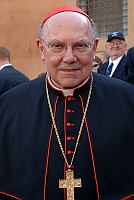
The Sexual Abuse of Minors: A Multi-faceted Response to the Challenge, Cardinal William Levada’s address


Wm levada.jpg

Today, in Rome,
there is a Gregorian University sponsored Symposium entitled “Towards Healing
and Renewal.” It is a four day gathering of professionals and clergy-types who
have responsibility for working with victims and family members of sexual
abuse. While not personally in attendance, Pope Benedict XVI was present
through his personal message sent to participants and with the presence of
several cardinals and bishops, Including William Cardinal Levada, 76, Prefect of
the Congregation for the Doctrine of the Faith. Cardinal Levada’s address,
“The
Sexual Abuse of Minors: A Multi-faceted Response to the Challenge,”
follows.

The Pope’s message iterates in this context, as he has done in the
past, his hope and life’s work that “healing for abuse victims must be of
paramount concern in the Christian community,” with “a profound renewal of the
Church at every level.” Further, he “supports and encourages every effort to
respond with evangelical charity to the challenge of providing children and
vulnerable adults with an ecclesial environment conducive to their human and
spiritual growth” and he urges the participants in the Symposium “to continue
drawing on a wide range of expertise in order to promote throughout the Church
a vigorous culture of effective safeguarding and victim support.”

The Sexual
Abuse of Minors: A Multi-faceted Response to the Challenge Toward Healing and
Renewal” is the title given to this Symposium for Catholic Bishops and
Religious Superiors on the Sexual Abuse of Minors. For leaders in the Church
for whom this Symposium has been planned, the question is both delicate and
urgent. Just two years ago, in his reflections on the “Year for Priests” at the
annual Christmas greetings to the Roman Curia, Pope Benedict XVI spoke in
direct and lengthy terms about priests who “twist the sacrament [of Holy
Orders] into its antithesis, and under the mantle of the sacred profoundly
wound human persons in their childhood, damaging them for a whole lifetime.”
I
chose this phrase to begin my remarks this evening because I think it important
not to lose sight of the gravity of these crimes as we deal with the multiple
aspects the Church’s response.

Continue reading The Sexual Abuse of Minors: A Multi-faceted Response to the Challenge, Cardinal William Levada’s address

Where’s Saint Paul buried?

Work is being done to gain greater clarity of where the apostle and martyr Saint Paul is buried. Jesuit Father Scott Brodeur, a New England Province Jesuit and professor at the Gregorian University, Rome, speaks to the project.

This new information ought to be of concern to every Christian.

Rome Reports carries the story.

Christ is something that is happening to me now –our engagement with Giussani’s At the Origins of the Christian Claim


Fraternity CL Logo.JPGThose who follow the lay ecclesial movement, Communion
and Liberation
, and attend the weekly School of Community, know that we’ve come
to end of our work on Father Luigi Giussani book, the The Religious Sense. For the
coming year we will be working on Giussani’s At the Origin of the Christian
Claim
. On January 25, 2012, at the Teatro degli Arcimboldi, Milan, Father Julián
Carrón’s made a presentation of Father Luigi Giussani’s book. 


That presentation
is noted here: 
Christ is something that is happening to me now.pdf


Quoting Don Giussani, 

Et incarnatus est-Father Giussani says-“is singing at its purest,
when all man’s straining melts in the original clarity, the absolute purity of
the gaze that sees and recognizes. Et incarnatus est is contemplation and
entreaty at the same time, a stream of peace and joy welling up from the
heart’s wonder at being placed before the arrival of what it has been waiting
for, the miracle of the fulfillment of its quest. […]

As we approach the 30th anniversary of papal approval of the Fraternity of Communion and Liberation on February 11th, let’s call on the intercession of Our Lady of Lourdes and Saint Benedict, co-patrons of the Movement to guide our way to the Word Made Flesh.

Saint Paul Miki and companions


St Paul Miki.jpg

O God, strength of all the Saints, who through the Cross were pleased to call the Martyrs Saint Paul Miki and companions to life, grant, we pray, that by their intercession we may hold with courage even until death to the faith that we profess.

The question of who was Saint Paul Miki is dealt with on Rome Reports today. The video gives a brief intro the life of the martyr and his companions.

From the cross, Paul said: “The sentence of judgment says these men came to Japan from
the Philippines, but I did not come from any other country. I am a true
Japanese. The only reason for my being killed is that I have taught the
doctrine of Christ. I certainly did teach the doctrine of Christ. I thank God
it is for this reason I die. I believe that I am telling only the truth before
I die. I know you believe me and I want to say to you all once again: Ask
Christ to help you to become happy. I obey Christ. After Christ’s example I
forgive my persecutors. I do not hate them. I ask God to have pity on all, and
I hope my blood will fall on my fellow men as a fruitful rain.”

The 2011 post on Saint Paul Miki and his companions

The 2010 post on Nagasaki martyrs Paul Mike, et al.

Blessing of Throats on the feast of Saint Blaise

St Blaise3.jpg

Hear, O Lord, the supplications your people make under the patronage of the Martyr Saint Blaise, and grant that they may rejoice in peace in this present life and find help for life eternal.

(the Collect at Mass)

From the Roman Martyrology we read:

At Sebaste in Armenia [in the 4th century], in the time of the governor Agricolaus, the passion of Saint Blaise, bishop and martyr, who, after working many miracles, was scourged for a long time, suspended from a tree where his flesh was lacerated with iron combs. He was then imprisoned in a dark dungeon, thrown into a lake from which he came out safe, and finally, by order of the judge, he and two boys were beheaded. Before him, seven women who were gathering the drops of his blood during his torture, were recognized as Christians, and after undergoing severe torments, were put to death by the sword.

The Order of Blessing of candles for the blessing of throats is noted here.
You may ask why get your throat blessed. I’d ask, if you were truly Catholic, why would you NOT have your throat blessed on this feast day. As the Church prays today, we praise God for the gift of staying close to him in times of persecution –that we don’t weaken in faith in Christ Jesus our Savior. Through the intercession of Blaise, a 4th century witness to Christ who was known to be a physician, bishop and martyr may we come closer to the Lord and in doing so, tell others about Him. The blessing of throats as such is not that important. What is important the recognition that all things come from God the Father through Jesus under the power of the Holy Spirit. The blessing of throats is a dynamic example of begging of God to bestow grace upon us. Here is the sacramentality. Here is the mission-focus of our faith: Grace comes into our context. Who doesn’t need grace? Who would be so full of pride and laziness not to approach the Throne of Grace asking for help and love?

Being a Catholic Priest–and Married, salient reflections….

A dear friend of mine, Father Richard Cipolla published an article today in the Wall Street Journal on what it means for a faithful Christian to belong to Christ faithfully, moving from an Episcopal Church to full communion with the Catholic Church and being a married Catholic priest. The life of sacrifice and joy is clear in Cipolla’s story. For me, it is a testament of grace to know Father Richard and his wife, Cathy, and to have met his children. Wouldn’t be good if all the clergy could say that with conviction and love. Last week Father Richard celebrated his anniversary of ordination to the Catholic priesthood on January 28 in the Diocese of Bridgeport. Let us pray for him and Holy Mother Church.

The WSJ article follows:

Being a Catholic Priest–and Married

The pope has created a new diocese for bringing Episcopalians into the church.

By Richard Cipolla

Richard Cipolla.jpg

Last month, Pope Benedict announced the formation of an American “ordinariate,” or special diocese for Episcopal congregations that want to move to Roman Catholicism (driven largely by Episcopalianism’s liberal drift). These congregations, the pope ruled, could keep some of their Anglican liturgy. More significantly, a small but sizable number of married Episcopal priests will now become married Catholic priests.

As a married Catholic priest ordained in 1984 under a special provision set forth by Pope John Paul II (for individual priests, judged on an individual basis), I have closely followed Pope Benedict’s announcement. I rejoice in this catholic and generous gesture by the pope and am overjoyed that these priests and their families will be welcomed into the Catholic Church. But that is not to say it won’t bring its own share of challenges.

My experience as a married Catholic priest for 28 years brings to mind several thoughts, both practical and spiritual. First, the church must support new priests’ families financially. During my first years as a married Catholic priest, there were times when we could not pay the heating bill. When I was ordained, it was made quite clear to me that I should not look to the church as my main source of income but rather to a full-time job outside of the church. My parish duties have thus always been secondary.

Continue reading Being a Catholic Priest–and Married, salient reflections….

Brimming over with the Father’s love

One of the blogs I read with some frequency is the blog, Domine, da mihi hanc aqua!, written by a Dominican Friar of the Province of Saint Martin de Porres, Father Philip Neri Powell. I recommend it, after reading the Communio blog. His blog post for today provides a good examination for. Tonight, people came to the parish to watch the second video of Father Robert Barron’s “Catholicism” project. In many ways what the friar says below and what Father Baron did in the video cohere. Read Father Philip wrote (in part) and watch “Catholicism.”


The Catechism teaches us that “the Word became flesh for us in order to [1] save us by reconciling us with God. . .[2] so that thus we might know God’s love. . .[3] to be our model of holiness. . .[4] to make us ‘partakers of the divine nature'”(457-60). Let’s break this down even further. Since we are alienated from God by our sin and God wills that we be reconciled with Him, our sins must be expunged, washed away. With the birth, death, and resurrection of the Christ, our sins are forgiven. For God’s forgiveness to take hold in our lives, we must receive His forgiveness as a gift–an unmerited grace, freely given. When we receive His forgiveness as a gift, we come to know the Father’s love; that is, His love is made manifest, given another body and soul–our own. With a body and soul brimming with the Father’s love, we begin a life of holiness, a life set apart from the world while living in the world. A life of holiness looks, sounds, and feels like the life that Jesus himself led: a life of mercy, sacrifice, love, perseverance, and courage. Living such a life–steeping ourselves in God’s enduring love–trains us to participate more fully in His divine nature, making us both human and divine, and perfectly so in His presence.

Continue reading Brimming over with the Father’s love