God so desires her (our) salvation

In these days following the feast of Saint Catherine of Siena, I thought I would post this rather beautiful extract from one of the saint’s Dialogues. It shows the depth of love that Catherine knew she had with her Savior, her lover.


Jesus exchanges his  heart with Catherine's.jpg

“O eternal, infinite Good! O mad lover! And you have need of your creature? It seems so to me, for you act as if you could not live without her, in spite of the fact that you are Life itself, and everything has life from you and nothing can have life without you. Why then are you so mad? Because you have fallen in love with what you have made! You are pleased and delighted over her within yourself, as if you were drunk with desire for her salvation. She runs away from you and you go looking for her. She strays and you draw closer to her. You clothed yourself in our humanity, and nearer than that you could not have come.”

Catherine of Siena, The Dialogue, tr. Suzanne Noffke (New York: Paulist Press 1980) 325.

Pope Benedict XVI’s prayer intentions for May 2012

cranky child and Pope May 2 2012.jpg

We join with the Pope, Benedict XVI, in prayer before the Divine Majesty for the following intentions:

The general intention

That initiatives which defend and uphold the role of the family may be promoted within society.


The missionary intention


That Mary, Queen of the World and Star of Evangelization, may accompany all missionaries in proclaiming her Son Jesus.

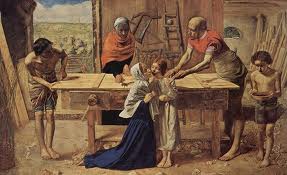
Saint Joseph the Work: the model of holiness through working

St Jospeh working.jpeg

Work is often treated as a four letter word; something to be avoided. Understanding what the value of work is today is rather complex due to the ideology we’ve been subjected to since at least the 19th century as a result of industrialism, Communism and Socialism. 


One of the many beautiful things John Paul II wrote about is the human person and how the person is meant to thrive, not just exist. His ideas about what and who the person is understood in what he taught about subjectivity, meaning that there is “the ground on which the dynamic relation, or rather inter-relation, between the person and the action is actualized. The failure to recognize man´s subjectivity would deprive us of the level on which can be grasped all the aspects of this interrelation.”

Continue reading Saint Joseph the Work: the model of holiness through working

1 Year Anniversary of Beatification of Pope John Paul II

John Paul detail.jpegToday marks the first anniversary of the historic beatification of the iconic pope, John Paul II.

For many around the world, and for a long time, it is very true to say that the newly Blessed John Paul “has accompanied me through these years.” Indeed he has.
The Church prays this prayer at Mass on the feast day of Blessed John Paul II, October 22:
O God, who are rich in mercy and who willed that the Blessed John Paul II should preside as Pope over your universal Church, grant, we pray, that instructed by his teaching, we may open our hearts to the saving grace of Christ, the sole Redeemer of mankind.

Rome Reports has a recap.
Blessed Pope John Paul II, pray for us.

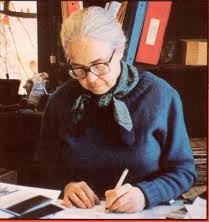
Adé Béthune

Adé Bethune.jpeg

Among the many things we can recall today, one of them for me is Adé Béthune who died on this date in 2002. As I mentioned in a Communio blog post a few years ago, Adé was an Oblate of Saint Benedict of Portsmouth Abbey (Portsmouth, RI) and a liturgical artist, thinker and musician.
I find it sobering to pray for those who gone marked with the sign of faith, not only because it is a noble and holy Catholic tradition, but the practice affords me the opportunity to truly remember the person. Adé Béthune allows me this possibility today because of her Benedictine and liturgical connections but most of all she was a grand person.

A past post on Adé can be read here and her obit is posted here.

May the Blessed Virgin Mary and All Benedictine Saints and Blesseds watch over Adé Béthune.

Father Julián Carrón to receive honorary doctorate from CUA

Julian Carron of CL.jpg

Father Julián Carrón will be receiving an honorary degree from the Catholic University of America on Saturday, May 12, 2012.  It is the 123rd commencement for CUA. This is a wonderful sign of esteem both for Fr. Carrón and for lay ecclesial movement Communion and Liberation here in the US. It ought to be noted that a number of US bishops would have had to have voted to grant him such an honor. 


For those who would like and are within close enough range, there will be an open assembly with Father Carrón on the School of Community text, At the Origin of the Christian Claim, and on the “Page One” of the recent issue Traces, “Self-Awareness: the Reawakening Point.”  It will take place that same day, Saturday, May 12th, 2012 at 3:00pm in a place to be announced in Washington, DC. 


His Eminence, Timothy Michael Cardinal Dolan, PhD will receive the President’s Medal and address the graduates.


Also among those receiving honorary degrees from CUA are Giuseppe Mazzotta, Yale University’s Sterling Professor of Humanities for Italian literature, the philanthropist Carmen Ana Casal de Unanue and her husband and former head of Goya Foods Joseph A. Unanue.

Enhanced by Zemanta

Saint Catherine of Siena

St Catherine.jpgToday is the transferred feast of the great Dominican saint, Catherine of Siena.

Since her feast day is April 29th, and this year the 29th was Good Shepherd Sunday, and the Sunday celebration is rarely trumped by a saint, the feast moved to the next available day.
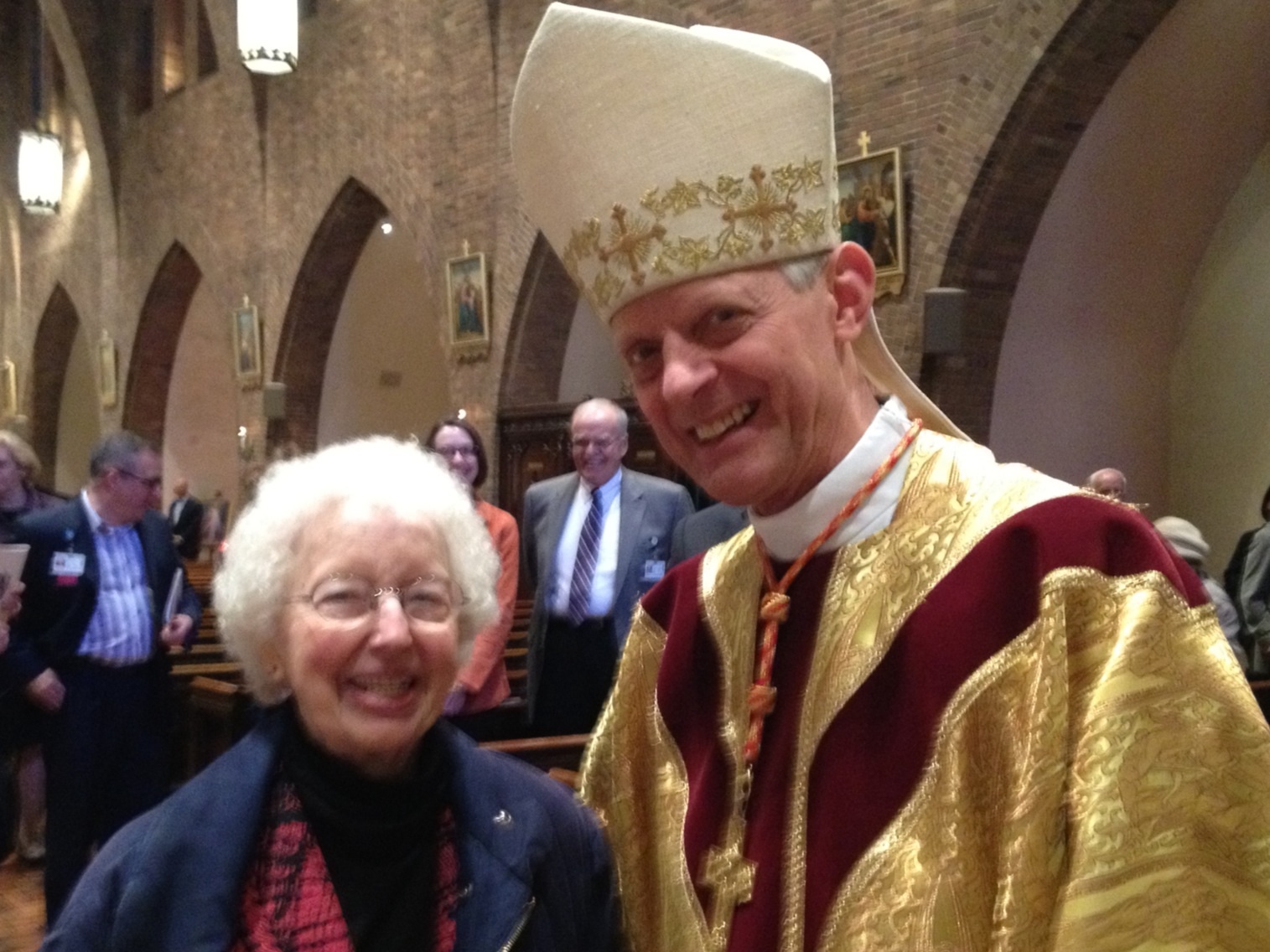
Being that I work at a Dominican church, we celebrated Catherine’s gift to the Church with great solemnity. Cardinal Donald Wuerl and Sister Elaine Goodell, PBVM were honored with the “Saint Catherine of Siena Award” and Brother Ignatius Perkins, OP was inaugurated with the new chair of Catholic Ethics at the Dominican House of Studies. Brother Ignatius is currently a professor of Nursing at Aquinas College, Nashville.
Here for the celebration were the Dominican Friars, a secular priest, a Jesuit priest, with several congregation of sisters including the Franciscan Sisters of the Eucharist, the Hawthorne Dominicans, the Dominicans of Nashville, the Sparkhill Dominicans, the Apostles of the Sacred Heart of Jesus, and the Sisters of Life.
“Set the world ablaze”

For you and for many… the Pope reflects

In the days following the Easter celebrations Pope Benedict XVI took time to reflect on through the form of a letter, the liturgical use of the phrase “For you and for many” that is used at Mass. With the third edition of the Roman Missal this phrase has been restored and it is has caused some people to wonder why the change after so many years; the priest had been saying “for all.” The Pope’s teaching is clear to why our liturgical praxis needs to be coherent with sacred Scripture, coherent with the Lord’s own teaching.

Vatican Radio ran a piece on this issue here.

Saint Louis-Marie Grignion de Montfort

Montfort detail.tifThe Church gives us an inspired, perhaps even truly brilliant preacher, as a model of grace. Saint Louis-Marie de Montfort was ordained a priest in 1700; proficient in the thinking of the Church Fathers on the Virgin Mary, Montfort’s mission was to preach on Blessed Virgin Mary, the Mother of God, in a period of time of great theological error in France. He’s famous for preaching on the Rosary and he created a series of meditations that led to a Consecration to the Blessed Mother. His preaching of Mary was really a work of preaching on the Paschal Mystery. The collect for the Mass tells us that Louis-Marie ‘walked the way of salvation and the love of Christ” by “meditating on the mysteries [God’s] love” which led to “the building up of [God’s] Church.”

Montfort was a Third Order Dominican and held a papally given title Missionary Apostolic. He was also a founder of three congregations, one of men and two of women. For some time now there’s been movement to have Louis-Marie to named a Doctor of the Church.
We are more aware of Montfort through John Paul’s adoption of one of Montfort’s phrases, Totus Tuus (totally yours).