Secularism manipulates God

We have to avoid a secularism that excludes faith, that excludes God from public life, and transforms it into a purely subjective factor, and therefore also arbitrary. If God has no public value, if He is not a need for all of us, then He becomes an idea that can be manipulated.


Joseph Cardinal Ratzinger

Interview in Communion and Liberation Traces

October 2004

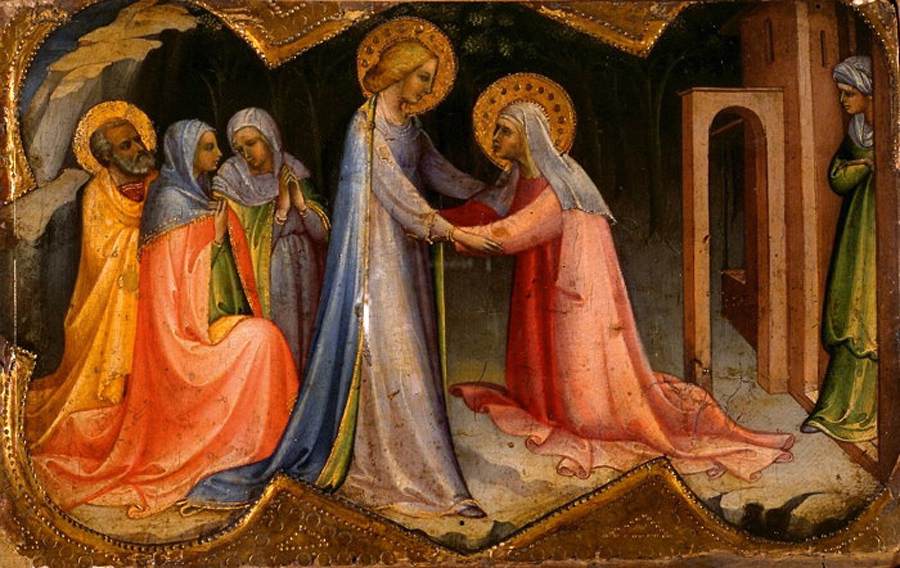
The Visitation of Mary to Elizabeth

Visitation LMonaco.jpg

The Word of God is not a literary expression, but is the indication of an event, it is always a fact: the Word of God is Christ. His word starts from the promise of an event. The figure of the Virgin is completely filled with memory, the word of her people, stretching completely toward the meaning of these events (the Angel’s announcement, Elizabeth’s greeting). This is why Elizabeth used the highest form of address: ‘Blessed is she who believed in the fulfillment of the Word of the Lord.’


Monsignor Luigi Giussani

Give your “Amen” to God’s glory

In our continuing reflection on prayer in the letters of Saint Paul, we now consider the Apostle’s striking affirmation that Jesus Christ is God’s “Yes” to mankind and the fulfillment of all his promises, and that through Jesus we say our “Amen”, to the glory of God (cf. 2 Cor 1:19-20). For Paul, prayer is above all God’s gift, grounded in his faithful love which was fully revealed in the sending of his Son and the gift of the Holy Spirit. The Spirit, poured forth into our hearts, leads us to the Father, constantly making present God’s “Yes” to us in Christ and in turn enabling us to say our “”Yes” – Amen! – to God. Our use of the word “Amen”, rooted in the ancient liturgical prayer of Israel and then taken up by the early Church, expresses our firm faith in God’s word and our hope in his promises. Through this daily “Yes” which concludes our personal and communal prayer, we echo Jesus’ obedience to the Father’s will and, through the gift of the Spirit, are enabled to live a new and transformed life in union with the Lord.


Pope Benedict XVI

30 May 2012

Be living sacraments of Christ’s presence in the world leading all to eternal life

I am slowly reading a book written by Dom Michael Casey, a Cistercian monk from the Abbey of Tarrawara (Australia), The Road to Eternal Life, a series of reflections on the Prologue of the Rue of St Benedict. With all the talk of being a good witness and yesterday’s emphasis on our destiny in Christ, I thought Dom Michael’s reflection on boasting in the Lord makes some sense for us today. I recommend the book.

“And again he says, ‘Let the one who boasts, boast in the Lord’.” (2 Cor 10:17 quoted in the Rule of St Benedict, Prologue v. 32)

The one in the New Testament who speaks most about boastfulness is Saint Paul. He sees boasting as an expression of an autonomy that weakens a person’s total reliance on God-that is, it weakens faith. Those who think that religion is simply a matter of conforming to the precepts of the law, or perhaps so twisting the precepts of the law so that they are comfortable, have not yet learned the art of putting their trust in God, relying on God’s mercy. They are locked into the schemes of self-perfection that they themselves have crafted. The end of such self-assurance can be only disaster. As Saint Ignatius of Antioch wrote to Polycarp, “The one who boasts has already come to nothing”.

Continue reading Be living sacraments of Christ’s presence in the world leading all to eternal life

Memorial Day 2012

Eternal rest grant unto them, O Lord, and fill their souls with splendor.
Memorial Day 2012.jpeg
O God, who willed that your Only Begotten Son, having conquered death, should pass over into the realm of heaven, grant, we pray, to your departed servants, those who served our nation in military service, that, with the mortality of this life overcome, they may gaze eternally on you, their Creator and Redeemer.
A blessed Memorial Day to all.

Holy Spirit Day


Pentecost by IDorffmeister.jpgHeavenly King,

Advocate, Spirit of Truth,

Who are everywhere
present
and fill all things,
Treasury of Blessings,
Bestower of Life:
Come and
dwell within us,
cleanse us of all that defiles us,
and, O Good One, save our
souls!

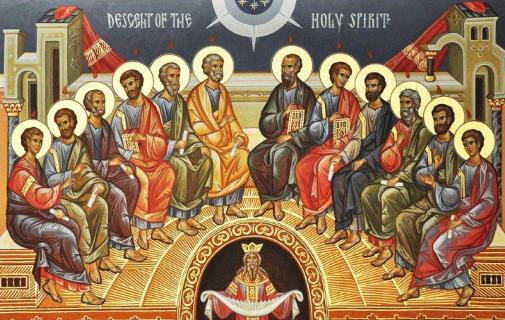
The days following Pentecost used to have an Octave like other feasts (e.g., Christmas, Easter, Epiphany, Assumption, etc.) but few remain in the present liturgical form, sadly. My hope is that in due time the Church will restore some of the octaves. In the Byzantine Church the day after Pentecost is known as Holy Spirit Day. The above text comes from one of the hymns of the sacred Liturgy.

My hope is that the priests of the Latin Church celebrated a Votive Mass of the Holy Spirit to accommodate the lack we presently experience in the Roman liturgy.