Vocation To Life

My friend Benedictine Father Meinrad Miller told me about this essay, “The Vocation To Life” published in a recent issue of  Homiletic and Pastoral Review by Father Charles Klamut. I was “blown away by it” and offer it to you here. It is truly an excellent essay; it captures the heart of what it means to be a Christian –a follower of Christ and His Church– and to be a true man or woman with a humanity. Recently, I’ve had this discussion with a dear friend about vocation and he can’t seem to get it across his mind (and heart) that there are things we need as a human being before being a monk or a priest. Father Charles gets it; Scola gets it as does Albacete and Benedict XVI and before him Paul VI and John Paul II. Are we listening carefully to the Master. On this feast of Saint Benedict, I offer this essay for us to reflect on.

Like the apostles, I first said “yes” to Christ because of the total answer he provided for my human need, and only within this context did a specific vocation to serve as a priest gradually begin to reveal itself.

A few years ago, during a retreat for priests, Msgr. Lorenzo Albacete shared with us a story of his friend, Cardinal Angelo Scola.  When asked by a journalist about the shortage of vocations to the priesthood in Italy, Scola replied that the problem stemmed from a deeper crisis: the problem, he said, was that life itself is no longer seen as a vocation.

Albacete reflected on this insight for the next few days, calling it very important, explaining to us what he thought Scola was getting at.  The call to life is something given, something prior to our thoughts and schemes.  It’s even prior to the particular vocations like marriage and the priesthood.  We did not choose it; it’s just there. Within the human heart is a cry for life, real life, eternal life: life properly so-called.  The New Testament, using a more nuanced Greek vocabulary than our modern-day English, used multiple words for “life:” bios to refer to material, physical life; zoe to refer to a more comprehensive, metaphysical, all-encompassing life, such as the kind promised by Jesus. The heart cries for infinite life, not just bios, but zoe.  The heart cries for a freedom and happiness which, alas, we cannot give ourselves.  In short, the heart cries for God.

This call to life which our heart always hears, even if we don’t (affected as we are by reductionist cultural forces), is awakened and answered by the exceptional presence of Christ.  Jesus Christ is the infinite made visible and historical, the answer to the heart’s cry for life: “I came that they might have life, and have it more abundantly” (John 10:10).

Albacete spoke of the experience of the first apostles as recorded in the Scriptures.  For them, Christ provoked a total human awakening, provided a total human answer, not just a spiritual one.  From Christ’s first question to John and Andrew, “What do you seek?” he was engaging them on the level of life itself.  Their response to his question was: “Where are you staying?”  This suggests their longing for a lasting place to be with him, to share life with him.  Only with time would the call of Christ reveal itself in its ecclesiastical specifics, as a logical extension of the vocation to life.

A number of priests at the retreat were puzzled that so much time was spent on the general theme of the call to life, and they were wondering when the specifics of the priesthood, such as the Eucharist, would be addressed.  Albacete insisted that the vocation to life, and subsequently, to Christianity, provided the solid foundation on which the vocation to the priesthood is built.  Without the former, the latter will be unstable and will eventually crumble, as we have all sadly seen so many times in recent years.

The retreat had a major impact on me and on many of the others present.  It challenged me to think more deeply about my entire life, not just my priesthood.  I was challenged to recall why I was moved to be a Christian in the first place, let alone a priest.  Looking at experiences along my way, I remembered how Christ really has, time and again, answered the cry of my heart.  In unexpected and exceptional ways, Christ has made it possible for me to live a free and human life, and has rescued me from confusion and despair, from the prison of my ego.  In this context, the specifics of the priesthood make sense. Like the apostles, I first said “yes” to Christ because of the total answer he provided for my human need, and only within this context did a specific vocation to serve as a priest gradually begin to reveal itself.

With the vocation to life as a defining principle, I began with excitement to notice a similar emphasis in Church teaching.  Consider the line from the Second Vatican Council, often quoted by Pope John Paul II:  “Christ, the new Adam, by the revelation of the mystery of the Father and his love, fully reveals man to himself and makes his supreme calling clear.

Man is no longer a mystery, a stranger to himself.  Humanity now knows who he/she is and who God is, thanks to Christ.  Humanity now sees that life has meaning, that each of us has a “supreme calling.”

Pope Benedict XVI has advanced this theme in his own way, speaking repeatedly of the need for the Church to advance “a true humanism, which acknowledges that man is made in the image of God and wants to help him live in a way consonant with that dignity” (God is Love, 30). True humanism comes from Christ, because only Christ reveals man to himself, clarifying his supreme calling to life.  The Pope, like his predecessor, seems unwilling to consign salvation to heaven.  Rather, he seems eager to see the Kingdom arrive here and now, through the response of men and women to Christ’s call to life, bearing fruit in a true humanism of dignity and redemption.

Christians are the true humanists.  Perhaps it’s time to be bolder in asserting this.  Turning to the Pope’s most recent encyclical, Charity in Truth, the vocation to life is discussed with great insight in the context of the development of peoples.  In an extended section discussing Pope Paul VI’s social teaching from forty years earlier, Pope Benedict reaffirms that progress and development cannot be reduced to the material plane, as, unfortunately, so often happens.  Development involves not just having more, but being more, including the “whole man.”

Pope Paul VI, says Pope Benedict, insisted on the link between the proclamation of Christ and the advancement of the individual in society (the humanism theme again).  Christ knows that man does not live on bread alone. Christ feeds man’s whole being with the Word of God, redeeming him, “developing” him, and thus enabling him, in turn, to contribute to the true development of others.  Pope Paul VI insisted that progress is, first and foremost, a vocation, a call initiated and made possible by God, saying that “in the design of God, every man is called upon to develop and fulfill himself, for every life is itself a vocation.

Continuing his discussion of Pope Paul VI and development, Pope Benedict says:

To regard development as a vocation is to recognize, on the one hand, that it derives from a transcendent call, and on the other hand that it is incapable, on its own, of supplying its ultimate meaning.  Not without reason, the word “vocation” is also found in another passage of the Encyclical (by Pope Paul VI), where we read: “There is no true humanism but that which is open to the Absolute, and is conscious of a vocation which gives human life its true meaning” (Charity in Truth, 16).

It’s interesting that the word “vocation” is repeatedly mentioned (dozens of times), yet it’s not linked here to specific vocations to marriage or priesthood, as is typical in Catholic discussions.  Instead, the word is used in an all-encompassing way: “being more,” “true humanism,” being called by God “to develop and fulfill himself.”  This is a surprisingly historical and human approach, and seems a far cry from the “pie in the sky when you die,” otherworldly type of salvation for which Marx so bitterly criticized Christianity.  The repeated references to “meaning” suggest the Pope’s deep awareness of the existential crisis that so many people face in recent times. This crisis saps the human spirit and thwarts development perhaps even more than material imbalances.  The Pope wishes to see every human being respond to the vocation to development and thus flourish; he wishes to see the development of the “whole man” and “every man.”  Who else in the world truly wants this?

When you experience something freeing and beautiful, love impels you to share it.  The approach I have mentioned thus far, from all I have seen, heard, and read, is something truly original and exceptional.  It has caused a paradigm shift in my own thinking, and an awareness of what it means to be a human, a Christian, and a priest.  This shift is of seismic proportions, providing clarity to my mission and a new zest for life.  It has made me feel more challenged and eager than ever, giving me a new way of looking at the future of the Church, to which I have pledged my life.

My human needs always precede my priesthood.  When I am struggling as a priest, it is a sign that I am struggling as a man.  The way Christ relates to me, looks at me, and saves me touches, on some deep, mysterious level, the recesses of my human heart. Deeper than my ecclesiastical vocation, he always reaches me at this human level, which, in turn, touches on my priesthood.  He reaches out to me primarily through his Church, most specifically through my friends.  As a friend recently said, “Treat friendship like the eighth sacramentthere you will understand the Church as the universal sacrament of salvation.”

The idea of life itself as a vocation puts the responsibility on each one of us to take this call seriously, and follow it, living out its implications in all their ensuing adventure.  It charges Christianity with a new energy and new focus.  It takes the emphasis off circumstances, putting it back onto my own reason and freedom, challenging me to seek out and follow what most moves me. It takes Christian life out of the confines of the sanctuary or church building and makes every detail of life significant and charged with meaning.   It provides a context within which more specific vocations take on perspective and focus.

In my experience as a priest, people are more confused and more desperate than ever to find meaning in life.  Unfortunately, many see their Christian faith as something to get them to heaven (hopefully) when they die, so long as they are “good.” They do not see how faith makes their real life–here and now–better and happier, new and beautiful.  Some, especially the young, may speak earnestly about finding their “vocation.” But this is usually muddled and often means no more than finding a “soul mate” to make them happy, as the popular myth proposes, collapsing the vocation to life into the vocation to marriage, priesthood, etc. Those concerned with “development” often zealously work for social justice, but fail to see how the care of people’s material needs connects to the needs of their heart. They end up offering, in spite of their good intentions, far too little.  Often priests seem to allow their self-awareness to be reduced to religious specialization. These are fragmented people seeking fragmented goals.

In the midst of this turmoil and confusion, Cardinal Scola, Msgr. Albacete, and the recent popes insist that life is a “vocation.” This cuts to the core and returns us to the beginning, the first things that matter: the cry of the human heart for God.  Fr. Luigi Giussani once said, “The true protagonist of history is the beggar, Christ, who begs for man’s heart; and man’s heart, which begs for Christ.”  If ever there was a need for a new bunch of protagonists in the Church and in the world, it is now.

Today, Christian faith is often reduced to sentimentality or sectarianism, or a subjectively comforting ideology.  The idea of faith as knowledge of real, existing (if mysterious) things seems more and more foreign.  The connection of faith to reality and life seems farther than ever.  The irrelevance of faith to life seems more obvious than ever.  The casualties are people, and by extension, church, culture, and society.

“Life itself is no longer seen as a vocation,” said Cardinal Scola to the journalist.  “This is the real problem.”

What if the Church is right? What if there really is a vocation to life, a call from God to have life, and have it more abundantly, each and every day?  What if this vocation is really a call to an integral development, beginning with self and extending to “every man”? What if it is a call for the fulfillment of the “whole man”; a call not just to have more, but to be more? What if it is a call to a “true humanism”?  How might this change the way we live as Christians? It would seem, at the very least, to require a serious, ongoing response, engaging all our intelligence and freedom.  Imagine what the Church, and the world, might look like if a sizeable number, or even a handful, of people were behaving this way.

Well, it may mean that the cry of my heart for life is not absurd; that it is not to be suppressed, censored, or reduced to despair and resignation; nor should it be too painful to bear.  It may mean, instead, that the cry of my heart is beautiful, lovingly made and given by God–and answered.  It may point out that the meaning of my life is to answer the call that life itself makes.  It may mean that the infinite really has revealed itself in the person of Jesus, who really died and rose.  It may mean that a whole new horizon of possibility has opened.

Suddenly, being a Christian just became a lot more exciting.

The author

Fr. Charles Klamut was ordained in 1999 for the Diocese of Peoria, Illinois. He has served in parish and high school ministry. He is currently working in campus ministry at St John’s Catholic Newman Center at the University of Illinois.
Saint Benedict

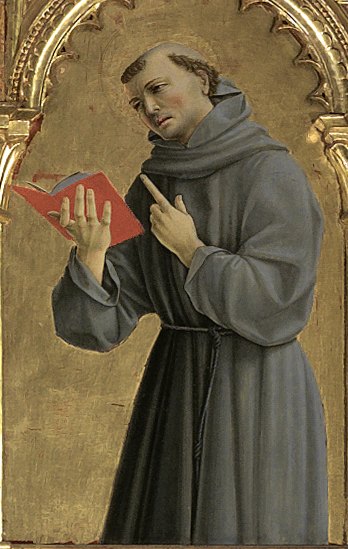
St Benedict healing.jpgThere was a man of venerable life, Benedict, blessed by grace and by name, who, leaving home and patrimony and desiring to please God alone, sought out the habit of holy living. (entr. ant.)

O God, who made the Abbot Saint Benedict an outstanding master in the school of divine service, grant we pray, that putting nothing before love of you, we may hasten with a loving heart in the way of your commands.
May Saint Benedict rich bless and continue to call to deeper conversion all believers, and in particular those monks, nuns, sisters and laity who follow the Holy Rule as a way life.
If you are interested in knowing more about Benedictine culture, theology and living, check out Liturgical Press’ recent catalog on Benedictine Resources.

Shanghai’s new auxiliary bishop faces government crackdown

Watching the current affairs of the Catholic Church in China always leaves me a bit perplexed. For me, there is no easy way to understand such a complex situation. The day bishops were ordained by the government sponsored Church without the approval of the Holy Father. This is not a mere stepping on someone’s toes. It is the breaking of communion between the head and the body, between the Pope and a bishop. Catholics follow Saint Peter to Christ. Catholics faithful to the Faith thereby faithful to the Pope suffer for such obedience. In fact, Bishop Ma said the gathered people that he would not work with the government Church, his ministry was restricted. He went missing for a time following his ordination. See the Vatican Insider story here.


Our Lady Help of Christians, pray for us.


What follows is the Vatican summary of what’s going on:


Bishop Ma Daqin.jpg

Following is the communique released this morning on the episcopal ordination of the Reverend Joseph Yue Fusheng in Harbin and the Reverend Thaddeus Ma Daqin as Auxiliary Bishop of the Diocese of Shanghai.

“With regard to the episcopal ordination of the Reverend Joseph Yue Fusheng, which took place in Harbin (Province of Heilongjiang) on Friday 6 July 2012, the following is stated:


1) The Reverend Joseph Yue Fusheng, ordained without pontifical mandate and hence illicitly, has automatically incurred the sanctions laid down by canon 1382 of the Code of Canon Law. Consequently, the Holy See does not recognize him as Bishop of the Apostolic Administration of Harbin, and he lacks the authority to govern the priests and the Catholic community in the Province of Heilongjiang.


Continue reading Shanghai’s new auxiliary bishop faces government crackdown

The encounter with Christ means following a road through the dark valley

This love affair with Christ, this love story which is the whole of Monsignor Giussani’s life was however far from every superficial enthusiasm, from every vague romanticism. Really seeing Christ, he knew that to encounter Christ means to follow Christ. This encounter is a road, a journey, a journey that passes also–as we heard in the psalm–through the “valley of darkness.”


Pope Benedict XVI

Ancient mosaic found

an ancient Jewish synagoge.jpgThe finding of an ancient artifact in an area where it would not be likely and from an era when it would seem to be improbable is a wonderful thing. The Huqoq mosaic of Samson fighting the Philistines from the 5th and 6th centuries is indeed remarkable. One of the reasons finding this mosaic is important to the field of biblical archeology is that it unearths, as it were, the preconceptions of what religious life whether it was Byzantine Christianity or Judiasm and reorients previously held theories. Revision of one’s thinking can be a good thing when you face the reality in front of you. Yahoo News is carrying the story from July 2, 2012.

Life is changed, not ended

The funeral rites of the Catholic Church say it all: 

In him the hope of blessed resurrection has dawned, that those saddened by the certainty of dying might be consoled by the promise of immortality to come. Indeed for your faithful, Lord, life is changed not ended, and, when this earthly dwelling turns to dust, an eternal dwelling is made ready for them in heaven. (Preface I For the Dead)
Earlier today I went to the Mass of Christian Burial of a childhood friend who lost her fight against breast cancer at the age of 40. Maureen Leary Minnick grew up near me, she and her family have been friends of my family for years; her parents are daily communicants at the local Catholic parish and her brother and I were in the Boy Scouts and in high school together. I am saddened by Maureen’s death. Much was revealed about Maureen that I didn’t know but now cherish. Time has a way of being a great separator. Maureen faced her life and death in the same way: with courage, love, joy, resolution to make life better. In short, her life was not a fairy tale but one that had certainty of faith and joy. She leaves a great husband and two small boys (who have their mother’s good looks). Maureen died on July 1.
The paradox of the Christian life is such that in order to live fully we have to give it away. In Maureen’s case, she had to offer her life to the Lord earlier that most. 
This week, too, a friend at the parish had succumbed also to breast cancer after a long and bitter fight with that disease. Monika Forndran fought long and hard and with dignity; she clearly knew that her Calvary was like that of the Lord’s, and that His triumph over sin and death was also hers by adoption that happened in the resurrection. Monika’s death happened on June 30.
May the Blessed Virgin Mary, mother of us all, Saint Agatha, patron saint of those who (and die) of diseases of the breast, guide Maureen and Monika to Paradise. May we recall the grace that in death life is changed not ended as rest on the heart of the Lord.

Protagonists: of truth not only in words, but also in deeds — Chaput urges

FFF.jpg

Fourteen days of prayer, fasting and study have now concluded with the Sacrifice of the Mass offered by His Excellency, Charles J. Chaput, OFM Cap., Archbishop of Philadelphia, at the Basilica of the National Shrine of the Immaculate Conception (Washington, DC). Below is the Archbishop’s homily.

The homily given by His Eminence, Donald Wuerl, Archbishop of Washington, can be read here.

My dear faithful people of God and people of Good will,

Philadelphia is the place where both the Declaration of Independence and the United States Constitution were written. For more than two centuries, these documents have inspired people around the globe. So as we begin our reflection on today’s readings, I have the privilege of greeting everyone here today — and every person watching or listening from a distance — in the name of the Church of my home, the Church of Philadelphia, the cradle of our country’s liberty and the city of our nation’s founding, so greetings to all of you from the people of Philadelphia. May God bless and guide all of us as we settle our hearts and minds on the Word of God.

Paul Claudel, the French poet and diplomat of the last century, once described the Christian as “a man who knows what he is doing and where he is going in a world [that] no longer [knows] the difference between good and evil, between yes and no. He is like a god standing out in a crowd of invalids . . . He alone has liberty in a world of slaves.”

Like most of the great writers of his time, Claudel was a mix of gold and clay, flaws and genius. He had a deep and brilliant Catholic faith, and when he wrote that a man “who no longer believes in God, no longer believes in anything,” he was simply reporting what he saw all around him. He spoke from a lifetime that witnessed two world wars and the rise of atheist ideologies that murdered tens of millions of innocent people using the vocabulary of science. He knew exactly where forgetting God can lead.

We Americans live in a different country, on a different continent, in a different century. And yet, in speaking of liberty, Claudel leads us to the reason we come together in worship this afternoon.

Most of us know today’s passage from the Gospel of Matthew. What we should, or should not, render unto Caesar shapes much of our daily discourse as citizens. But I want to focus on the other and more important point Jesus makes in today’s Gospel: the things we should render unto God.

When the Pharisees and Herodians try to trap Jesus, he responds by asking for a coin. Examining it he says, “Whose image is this and whose inscription?” When his enemies say “Caesar’s,” he tells them to render it to Caesar. In other words, that which bears the image of Caesar belongs to Caesar.

The key word in Christ’s answer is “image,” or in the Greek, eikon. Our modern meaning of “image” is weaker than the original Greek meaning. We tend to think of an image as something symbolic, like a painting or sketch. The Greek understanding includes that sense but goes much further. In the New Testament, the “image” of something shares in the nature of the thing itself.

This has consequences for our own lives because we’re made in the image and likeness of God. In the Greek translation of the Old Testament, the same word, eikon, is used in Genesis when describing creation. “Let us make man in our image, after our likeness” says God (Gen 1:26). The implication is clear. To be made in the image of God is more than a pious slogan. It’s a statement of fact. Every one of us shares — in a limited but real way — in the nature of God himself. When we follow Jesus Christ, we grow in conformity to that image.

Once we understand this, the impact of Christ’s response to his enemies becomes clear. Jesus isn’t being clever. He’s not offering a political commentary. He’s making a claim on every human being. He’s saying, “render unto Caesar those things that bear Caesar’s image, but more importantly, render unto God that which bears God’s image” — in other words, you and me. All of us.

And that raises some unsettling questions: What do you and I, and all of us, really render to God in our personal lives? If we claim to be disciples, then what does that actually mean in the way we speak and the way we act?

Thinking about the relationship of Caesar and God, religious faith and secular authority, is important. It helps us sort through our different duties as Christians and citizens. But on a deeper level, Caesar is a creature — a creature of this world — and Christ’s message is uncompromising: We should give Caesar nothing of ourselves. Obviously we’re in the world. That means we have obligations of charity and justice to the people with whom we share it. For Christians, patriotism is a virtue. Love of country is an honorable thing. As Chesterton once said, if we build a wall between ourselves and the world, it makes little difference whether we describe ourselves as locked in or locked out.

But God has made us for more than the world. Our real home isn’t here. The point of today’s Gospel passage is not how we might calculate a fair division of goods between Caesar and God. In reality, it all belongs to God and nothing – at least nothing permanent and important – belongs to Caesar. Why? Because just as the coin bears the stamp of Caesar’s image, we bear the stamp of God’s image in baptism. We belong to God, and only to God.

In today’s second reading, St. Paul tells us, “Indeed religion” — the RSV version says “godliness” – “with contentment is great gain. For we brought nothing into the world, just as we shall not be able to take anything out of it.” My dear friends, true freedom knows no attachments other than Jesus Christ. It has no love of riches or the appetites they try to satisfy. True freedom can walk away from anything — wealth, honor, fame, pleasure. Even power. It fears neither the state, nor death itself.

Who is the most free person at anything? It’s the person who masters her art. A pianist is most free who — having mastered her instrument according to the rules that govern it and the rules of music, and having disciplined and honed her skills — can now play anything she wants.

The same holds true for our lives. We’re free only to the extent that we unburden ourselves of our own willfulness and practice the art of living according to God’s plan. When we do this, when we choose to live according to God’s intentions for us, then — and only then — will we be truly free.

This is the freedom of the sons and daughters of God. It’s the freedom of Miguel Pro, of Mother Teresa, Maximillian Kolbe, Dietrich Bonhoeffer, and all the other holy women and men who have gone before us to do the right thing, the heroic thing, in the face of suffering, adversity and death.

This is the kind of freedom that can transform the world. And it should animate all of our talk about liberty – religious or otherwise.

I say this for two reasons. Here’s the first reason. Real freedom isn’t something Caesar can give or take away. He can interfere with it; but when he does, he steals from his own legitimacy.

Here’s the second reason. The purpose of religious liberty is to create the context for true freedom. Religious liberty is a foundational right. It’s necessary for the good of society. But it can never be sufficient for human happiness. It’s not an end in itself. In the end, we defend religious liberty in order to live the deeper freedom that is discipleship in Jesus Christ. What good is religious freedom, consecrated in the law, if we don’t then use that freedom to seek God with our whole mind, our whole strength, our whole soul and all that we are?

Today, July 4, we celebrate the birth of a novus ordo seclorum – a “new order of the ages,” the American Era. God has blessed our nation with resources, power, beauty and the rule of law. We have so much to be grateful for. But these are gifts. They can be misused. They can be lost. In coming years, we’ll face more and more serious challenges to religious liberty in our country. This is why the Fortnight for Freedom has been so very important.

And yet, the political and legal effort to defend religious liberty – as vital as it is – belongs to a much greater struggle to master and convert our own hearts, and to live for God completely, without alibis or self-delusion. The only question that finally matters is this one: Will we live wholeheartedly for Jesus Christ? If so, then we can be a source of freedom for the world. If not, nothing else will do.

God’s word in today’s first reading is a caution we ignore at our own expense. “Son of man,” God says to Ezekiel and to all of us, “I have appointed you as a sentinel. If I say to the wicked, ‘you will surely die’ – and you do not warn them or speak out to dissuade them . . . I will hold you responsible for their blood.”

Here’s what that means for each of us: We live in a time that calls for sentinels and public witness. Every Christian in every era faces the same task. But you and I are responsible for this moment. Today. Now. We need to “speak out,” not only for religious liberty and the ideals of the nation we love, but for the sacredness of life and the dignity of the human person – in other words, for the truth of what it means to be made in the image and likeness of God.

We need to be witnesses of that truth not only in words, but also in deeds. In the end, we’re missionaries of Jesus Christ, or we’re nothing at all. And we can’t share with others what we don’t live faithfully and joyfully ourselves.

When we leave this Mass today, we need to render unto Caesar those things that bear his image. But we need to render ourselves unto God — generously, zealously, holding nothing back. To the extent we let God transform us into his own image, we will – by the example of our lives – fulfill our duty as citizens of the United States, but much more importantly, as disciples of Jesus Christ.

May God brings to completion the good things he begins in us today.

Happy Independence Day!

independenceday.jpg

With the Church we pray, 


God of justice, Father of truth, who guide creation in wisdom and goodness to fulfillment in Christ your Son, open our hearts to the truth of his Gospel, that your peace may rule in our hearts and your justice guide our lives.


And for the intention of religious liberty which we’ve been praying for the last 14 days, 


Prayer for the Protection of Religious Liberty


O God our Creator, through the power and working of your Holy Spirit, you call us to live out our faith in the midst of the world, bringing the light and the saving truth of the Gospel to every corner of society. We ask you to bless us in our vigilance for the gift of religious liberty. Give us the strength of mind and heart to readily defend our freedoms when they are threatened; give us courage in making our voices heard on behalf of the rights of your Church and the freedom of conscience of all people of faith. Grant, we pray, O heavenly Father, a clear and united voice to all your sons and daughters gathered in your Church in this decisive hour in the history of our nation, so that, with every trial withstood and every danger overcome — for the sake of our children, our grandchildren, and all who come after us — this great land will always be “one nation, under God, indivisible, with liberty and justice for all.” We ask this through Christ our Lord. Amen.

Congrats on your ordination

Stuart Meyer Deacon Ordination.jpgA friend in England, Stuart Meyer, was ordained to the Order of Deacon for service in the Archdiocese of Southwark (in the UK) this past Saturday Archbishop Peter David Smith. Southwark is an archdiocese just outside  of London where, according to statistics in 2010 the population is 86% Catholic.

Deacon Stuart was an ordained member of the Church of England for many years until he entered into full communion with the Church of Rome. He desired to serve the Lord and the Church as a Catholic priest and did the studies required. The new deacon does not belong to the Anglican Ordinariate, but to the Archdiocese of Southwark.

We offer our congratulations to Deacon Stuart Meyer and pray that the Blessed Virgin Mary, Saints Lawrence and Stephen continue to guide. Pray for Deacon Stuart as he prepares for priestly ordination and for vocations to the Catholic Church in England.