Remembering the Future…John Zizioulas’ new book


A new book is available from the eminent theologian and bishop, John Zizioulas, Remembering the Future: An Eschatological Ontology (T&T Clark International, Continuum, 2013). I very much enjoy the thinking and the challenge of Zizioulas.

From the publisher…

Remembering the Future An Eschatological Ontology Zizioulas.jpgThe predominating concept in theological ontology is
that of a protological ontology which defines being itself as being defined by
the past. The future of things in this perspective is defined by its origins
and the “given” or the “factum”. In this major new book
John Zizioulas shows that eschatology can have important implications for
ontology, i.e. for being itself. The world was created with a purpose and the
end which would be greater than the beginning. This is the view of the Fathers,
such as Irenaeus and Maximus, who made the end the “cause of all
being”. The implications of such an idea are revolutionary, both
historically and experientially. It represents a reversal of the ancient
philosophical idea of causality as well as of our common sense rationality,
according to which the cause precedes chronologically as well as logically. It
is the opposite of protological ontology, which makes the past decisive for the
future. Eschatological ontology, therefore, is about the liberation of being
from necessity, it is about the formation of being. Man and the world are no
longer imprisoned in their past, in sin, decay and death. The past is
ontologically affirmed only in so far as it contributes to the end, to the
coming of the kingdom. The eschaton will ‘judge’ history with this criterion
alone. The last judgment as part of the eschaton represents an ontological, not
a moral event. Zizioulas shows how this eschatological ontology permeates
Christian doctrine, particularly that of creation and ecclesiology. He also
points out some of its ethical implications.


About

John Zizioulas, Metro.jpg

John D. Zizioulas, 81,
Metropolitan of Pergamon, was Professor of Systematic Theology at the
University of Glasgow and Visiting Professor at King’s College, London. His
thinking is widely respected across confessional lines. The key points of his
thinking, I believe, are freedom (human and divine), ontology and otherness (personhood),
communion theology, one and the many, and the contours of Christian unity.
Zizioulas is the author at least 8 books and numerous articles. He is the
Orthodox voice in ecumenical discussions especially between Rome and
Constantinople. Since 1986 John Zizioulas has been a bishop.
Enhanced by Zemanta

Queenship of Mary


Mary crowned Van Eyck.jpg

We, too,
approach thee to-day, O Queen; and again, I say, O Queen, O Virgin Mother of
God, staying our souls with our trust in thee, as with a strong anchor. Lifting
up mind, soul and body, and all ourselves to thee, rejoicing in psalms and
hymns and spiritual canticles, we reach through thee One who is beyond our
reach on account of His Majesty. (Saint John of Damascus)


… devotion to Our Lady is an important element
in our spiritual lives. In our prayer, let us not neglect to turn trustfully to
her. Mary will not neglect to intercede for us next to her Son. In looking to
her, let us imitate her faith, her complete availability to God’s plan of love,
her generous welcoming of Jesus. Let us learn to live by Mary. Mary is the
Queen of heaven who is close to God, but she is also the Mother who is close to
each one of us, who loves us and who listens to our voice. 

Pope Benedict XVI

Queenship of Mary, 2012

Raymond Hunthausen, last US bishop to attend Vatican II

RGH.jpgToday, Raymond Gerhardt Hunthausen, the emeritus archbishop of Seattle (1975-1991), celebrates his 91st birthday. He studied chemistry and later served as an assistant professor of Chemistry at Carroll College before becoming that school’s president in 1957. In 1962, Blessed John XXIII appointed him as bishop of Helena and from there he attended all four sessions of the Second Vatican Council. at 40 years old, he was the youngest bishop at the beginning of the Council. In 1975, the Servant of God Paul VI appointed Bishop Hunthausen to the See of Seattle. Hence, he’s been a priest for 66 years and a bishop for 50.

Archbishop Hunthausen is the last surviving US bishop to have attended all of the sessions of the Second Vatican Council.

Saint Bernard Tolomei

Bernardo Tolomei (1272-1348).jpgAn obscure Benedictine saint is liturgically honored by the Church today. Saint Bernard Tolomei, (1272-1348) the founder of the Benedictine Congregation of the Blessed Virgin of Monte Oliveto  (near Siena) in 1319. He was beatified in 1644 but not canonized until 2009, though he was revered as a saint for a long time before Pope Benedict canonized him.

The Olivetan monks have an intense devotion to the Virgin Mary due to the founder’s attribution to the healing of his blindness by the intercession of the Virgin; their life has been one of penance and silence. Hence, Saint Bernard is called the “hero of penance and martyr of charity.” And this is our desire today.
Saint Bernard Tolomei’s brief biography can be read here and a set of photos can be viewed here.

Saint Pius X


St Pius X.jpgO God, who to safeguard the Catholic faith and to
restore all things in Christ, filled Pope Saint Pius the Tenth with heavenly
wisdom and apostolic fortitude, graciously grant that, following his teaching
and example, we may gain an eternal prize.


Saint Pius was known as an ardent defender
of the purity of Christian doctrine. He’s one of those popes that really got
what it means follow the 5th century Saint Prosper of Aquitaine’s emphasis on the Liturgy as the heart of our faith, that is, to be “liturgical.” Pius knew the full value of the sacred Liturgy
as it forms our worship, believe system and life as Christians. He’s credited for
the renewal of our worship, the promotion of plainchant and beauty public
prayer. Most people will recall that Pius established the practice of early,
frequent and daily communion. 

Pope Pius X was born in 1835, known as an intelligent, industrious and pious priest and bishop, died August 20, 1914 and canonized on
May 29, 1954.

Capuchin Friars open 84th General Chapter


Capuchin General Chapter logo 2012.jpgBeginning yesterday and for the next five weeks the Capuchin friars are engaged in their 84th General Chapter in Rome. The General Minister, Friar Mauro Jöhri presides over the Capitulars from many nations. The Capuchins have set a wonderful multilingual website to cover the work of the Chapter, pictures included. Walk with the Capuchins in friendship and prayer for a good meeting guided by the Holy Spirit.

The Sacrifice of the Mass opening the Chapter was celebrated and preached by  Capuchin Bishop John Corriveau former General Minister. It was reported that Bishop Corriveau, 71, said,

strongly that when his words did not penetrate the heart of his people the Prophet Ezechiel acted with deeds and dramatic actions in his own life. No one understood this way of acting better than Francis of Assisi “Preach the gospel at all times and when necessary use words”. Quoting Blessed John Paul II, he said that the Church’s prophetic response to the individualism of our day is communion: “to make the Church the home and school of communion: this is the great challenge which is laid before us in the millennium that has just begun. If we wish to be faithful to God’s plan and respond to the deep expectations of the world“(NMI, 43). We have been created to live in communion, to be family. Bishop Corriveau also said, the call to Trinitarian communion, which for a Capuchin is a call to fraternity is much more than a slogan. It implies deep conversion of the heart, Only the heart which is fraternal and decidedly relation oriented can offer the secularised world a prophetic word. By way of conclusion he hoped that by keeping our gaze fixed on Christ we would be able to touch the hearts of the men and women of our day. May this Chapter discover once again the relational aspect of our Franciscan inheritance. In this way we will be able to assist the Church to give visible expression to a spirituality of communion. (Capuchin website for the Chapter)
 
May Our Lady of the Angels, Saints Francis and Clare and all Capuchin saints, pray for the Capuchins and their work for the Church and the Order.
Enhanced by Zemanta

Working with your FOMO

Many people are plagued with FOMO. Do you know what FOMO is? Think: Fear of missing out.

Why ain’t I doing this? Why ain’t I at that party, in that conversation, being recognized for this and that achievement. FOMO questions our making of the right choices? FOMO wants to advance my cause. The other as other counts for little. FOMO paralyzes our humanity because its focus on the sentimental, superficial, on the unfocussed. It reduces our human relationships to an object. FOMO is a post-modern way of speaking of deadly sin (mortal sin). FOMO leads to the death of one’s personhood.
FOMO is an insecurity not only in social circumstances but also, and more importantly, in the spiritual life. It is a reduction of our religious sense, a reduction of someone greater. FOMO is not living life in the present moment. FOMO is the sin of envy, pride, and self-centeredness. It is the un-awareness that you can’t do it all. Reversing the effects of FOMO is the recognition that you are not able to be everywhere at all times. Most people are not given the gift of bi-location. Saint Padre Pio had the gift, but he likely used it for the building the Kingdom of God and not his own agenda.
Do you have joy? Do I love? What fills me with anxiety? How does Christ answer the desires of my heart? Are you aware of the gifts that are in front of you? Can I discover my true self in the life I lead, in the work I do, in the person I am? Are you bitter towards others? Are you aware that you are loved by God and others for the person you are, and not the person you think you are, or should be? The focus on Christ overcomes FOMO because it’s less about the whim (what could have happened…) and more on the certainty that Christ exists, that He’s a concrete reality and that only God makes and sustains us. say it another way, attention to the religious sense in my life (and other others) acknowledges that God has a tenderness for me — and this tenderness is a sign of a relationship with Him.
Above I mentioned that FOMO is a reduction of one’s religious sense. What does that mean? Well, look at it this way: what are the desires of your human heart? How do these desires of the heart allow us to see the attractiveness of everything, even to consider the implications of  a desire’s inadequacy. The masters tell us it is not enough to be aware of the religious sense, the religious sense has to push us forward in our relationship with God (the Divine Mystery) so as not to lose my personhood, my “I”.

Post-Christian America: what does it look like, why?

Bouncing around in Catholic religious orders for some time is the notion that one can be a member of the Jesuits or the Sisters of Mercy and “go beyond Jesus and the Church.” I can remember hearing from a Jesuit whom I respected in the early 1990s that he was a “post-Christian Jesuit.” I wondered how a member of the Society of Jesus, a son of Saint Ignatius, could be post-Christian. The former Dominican Father Matthew Fox tried the same line of thinking. In fact, he’s neither a Catholic nor a Catholic priest and a professed member of the Order of Preachers as he’s gone to the Episcopal Church and now some kind of new ager. Christ is optional for him. Not long ago a religious sister who teaches at CTU said that the sisters in the USA can go beyond Jesus. So the recent crisis in faith in religious orders reflects a deeper divide in Christian faith in the rest of society.

I try to wrap my mind around what it means to be a post-Christian American. Father C. John McCloskey III, priest of the Opus Dei wrote a piece, “Post-Christian America,” which I am recommending. Father McCloskey is a Church historian and research fellow at the Faith and Reason Institute (Washington, DC). The point of the article is not demonstrate America’s abandonment of Christian faith but to say how it happened.

Saint Bernard, 900 years since entering Cîteaux


Nearly 900 years ago Bernard of Fontaine-lès-Dijon led
a group of young Burgundian noblemen, to the Abbey of Cîteaux in 1112 or 1113. The fledgling
new monastery got a burst of new life and from there set the world ablaze with
what became the Cistercian charism. 


Let us pray for the Cistercians in the
North America, paying particular attention to the intention of young men and women entering the
monastic life under the gaze of Saint Bernard. Beginning today until a year from now, the Cistercians are observing a Year of Saint Bernard. Let’s join them in knowing more about this pivotal saint and monk.


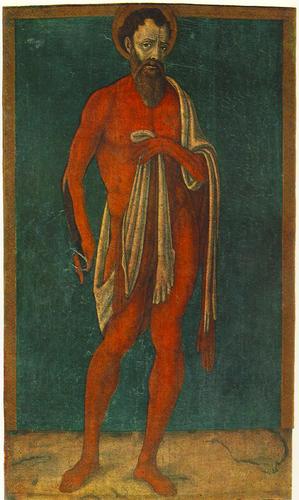
Vision of St Bernard Fra Bartolomeo detail.jpg

Most loving Father, in establishing
the New Monastery at Cîteaux our fathers followed the poor Christ into the
desert. Thus they lived the Gospel, by rediscovering the Rule of Saint Benedict
in its purity.

You gave Bernard of Fontaine the ability to make this new life
attractive and appealing to others, in the joy of the Holy Spirit.

Grant that
we today, after their example, may live our charism deeply in a spirit of
peace, unity, humility, and above all, in the charity which surpasses all other
gifts.

May men and women of our time be called to follow the Gospel in monastic
life, in the service of the Church’s mission, in a world often forgetful of
You.

May the monks and nuns of our Order  continue to live in the
enthusiastic and generative spirit of the founders. And in all of our needs may
we always turn to Our Lady whom Bernard called the Star of the Sea.

Holy
Father, from whom we have already received so much, grant us again your
blessing that our communities may grow in numbers, but above all in grace and
in wisdom, to your glory, who are blessed for ever and ever. Amen.

Prayer adapted from the original by Dom Olivier, abbot of Citeaux.

Benedictine abbots to meet in Rome


Badia Primaziale arms.jpgThe Office of the Abbot Primate announces…

Almost 300 monastics will gather in Rome, 17-25 September 2012, for the international Congress of Benedictine Abbots and Conventual Priors at the Primatial Abbey of St. Anselm on the Aventine Hill. Preceding the Congress, new monastic superiors will participate, 15-16 September 2012, in an orientation program. 25 representatives from Communio Internationalis Benedictinarum (CIB), an association of Benedictine sisters and nuns, will also attend the Congress. The Abbot Primate has invited ecumenical guests from the Orthodox and Reformed traditions.

The two keynote speakers are Prof. Michael Hochschild presenting his research on the viability of
Benedictine monasteries, and Fr. Michael Casey OCSO offering a paper on autonomy in Benedictine life. In addition, a wide range of workshops will address current topics in monastic life; such as, Benedictine identity, stress and burnout, associate membership programs, management of monasteries, individualism in the monastery, relationship with Benedictine women, new forms of Benedictine presence in society, ecumenism, the paschal mystery in the sacred liturgy, new directions for inter-monastic dialogue, new structures for AIM, the changing role of the Athenæum S. Anselmo,the sexual abuse crisis, the role of the abbot, communio in the confederation,and the formation of “traditionalist” candidates.

The assembled abbots and conventual priors will have the opportunity to visit in pilgrimage the monasteries of SubiacoMontecassino, Norcia, and Camaldoli, which is celebrating its 1000th anniversary this year. Nearly half of the 250 abbots and conventual priors will reside in the Collegio S. Anselmo, with the others, including CIB representatives and ecumenical guests, housed in area religious houses and hotels.

An important item on the agenda is the election of the abbot primate of the Benedictine Confederation. According to the Lex Propria of the BenedictineConfederation, the abbot primate is elected for an eight-year term, and renewable thereafter every four years. There is no term limit to the office of abbot primate. The current abbot primate, Dr. Notker Wolf OSB, a monk of St. Ottilien Archabbey in Bavaria, is completing 12 years of service, having beenre-elected in 2008.
Your prayers for the success of the Congress are greatly appreciated.