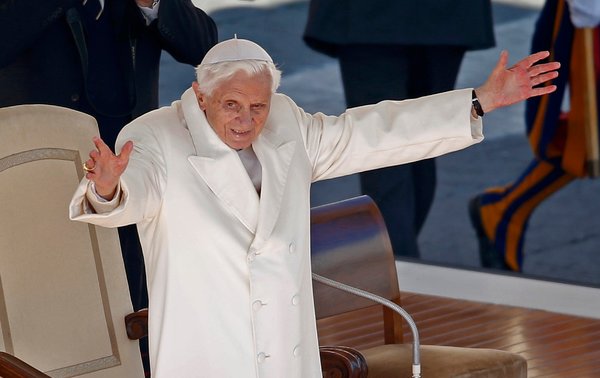
Details on Pope Benedict…

According to the Vatican Information Service, quoting the Holy See spokesman, Jesuit Father Frederico Lombardi, in a press conference, made some details public today regarding His Holiness. In sum, he said that Pope Benedict XVI:

papal Ring.jpg

  • will be referred to as “Pope Emeritus” or “Pontiff Emeritus”;
  • will keep the style “His Holiness, Benedict XVI”;
  • will keep wearing a simple white cassock without the papal mozzetta; and 
  • that the fisherman’s ring, and the lead seal, will be broken.

Benedict is scheduled to arrive in Castel Gandolfo on 28 February, at 5:15pm -Rome time. At 8pm, Rome time), when the See of Peter goes vacant, the Swiss Guard will quietly leave the papal summer residence; the Guard’s services of protection are limited to the person of the Pontiff; the security of the “Pope Emeritus” will be assured by the Vatican Gendarmerie.

As commentary, some opined that the papal ring could be given to the Vatican Museum but the decision was made to continue to break the break to show the end of this papal reign. Perhaps the broken ring will be given to the Museum if it is not crushed beyond recognition.

It seems to me that in Benedict’s case, he ought to be readmitted to the College of Cardinals, be known as His Eminence, Joseph Cardinal Ratzinger, Bishop-emeritus of Rome. Moreover, he ought to adopt the clothes of a cardinal and be given the titular church of Sant’Anselmo or Santa Maria in Trastevere. I’d like him to be given the Benedictine Church of Sant’Anselmo!

In 1936, the King of England, Edward VIII, abdicated, he was first known as HRH Prince Edward, and then, HRH the Duke of Windsor. 

Recently, Her Majesty Queen Beatrix of the Netherlands announced that she was abdicating throne on 30 April. Thereafter Beatrix will be known as Her Royal Highness, Princess Beatrix. You can only have on monarch at a time. 

Roma locuta, causa finita. 

The Patriarch of Constantinople’s letter to Benedict

Bart and Ben.JPG

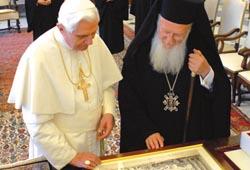
The Patriarch of Constantinople, Bartholomew I, wrote a letter on occasion of the abdication of Pope Benedict. It is a warm letter and testimony to his co-worker in the vineyard. In an era of lots of change in the leadership of many changes, it is interesting to what is said,


It is with regret that we have learned of the decision by His Holiness Pope Benedict to retire from his Throne, because with his wisdom and experience he could have provided much more to the Church and the world.


Pope Benedict leaves an indelible mark on the life and history of the Roman Catholic Church, sealed not only by his brief papacy, but also by his broad and longstanding contribution as a theologian and hierarch of his Church, as well as his universally acknowledged prestige.

Continue reading The Patriarch of Constantinople’s letter to Benedict

Pope: The Lord is calling me to “climb the mountain”

BenedictXVI Feb 25 13.jpg

This is Pope Benedict’s final Angelus address as the Supreme Pontiff of the one, holy, catholic and apostolic Church. Notice the imagery he uses: the climbing the mountain and “once you’ve met Christ, why come down to pain?” The Pope has a new vocation: to live in adoration of Christ.


On the second Sunday of Lent, the liturgy always presents us with the Gospel of the Transfiguration of the Lord. The evangelist Luke places particular emphasis on the fact that Jesus was transfigured as he prayed: his is a profound experience of relationship with the Father during a sort of spiritual retreat that Jesus lives on a high mountain in the company of Peter, James and John , the three disciples always present in moments of divine manifestation of the Master (Luke 5:10, 8.51, 9.28).


The Lord, who shortly before had foretold his death and resurrection (9:22), offers his disciples a foretaste of his glory. And even in the Transfiguration, as in baptism, we hear the voice of the Heavenly Father, “This is my Son, the Chosen One listen to him” (9:35). The presence of Moses and Elijah, representing the Law and the Prophets of the Old Covenant, it is highly significant: the whole history of the Alliance is focused on Him, the Christ, who accomplishes a new “exodus” (9:31) , not to the promised land as in the time of Moses, but to Heaven. Peter’s words: “Master, it is good that we are here” (9.33) represents the impossible attempt to stop this mystical experience. St. Augustine says: “[Peter] … on the mountain … had Christ as the food of the soul. Why should he come down to return to the labors and pains, while up there he was full of feelings of holy love for God that inspired in him a holy conduct? “(Sermon 78.3).


Continue reading Pope: The Lord is calling me to “climb the mountain”

Neofit elected new Bulgarian patriarch

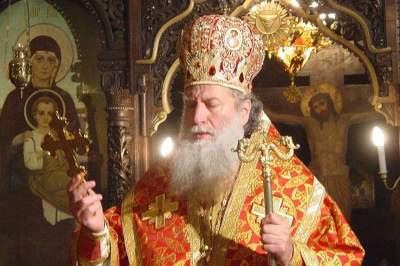
bulgarian patriarch.jpegThe Bulgarian Orthodox Church elected today Metropolitan Neofit, 67, as the new patriarch. He succeeds Patriarch Maxim who at 98, died on November 6, 2012. He had served the Church since 1971.

Of the 14 bishops of the Synod, three were shortlisted. Of the 138 members of the electoral college, 90 voted for Neofit.
80% of Bulgaria follows the Orthodox Church. Patriarch is the first patriarch since the collapse of the Soviet government.

Benedict Ashley, OP, RIP

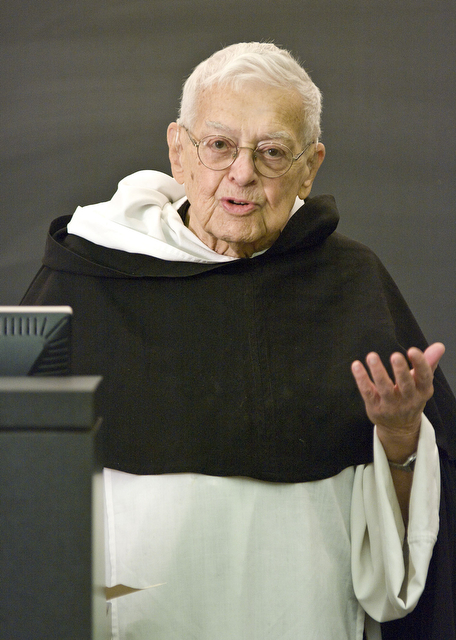
Ben Ashley OP.jpgWord received this evening that the venerable theologian and priest, Father Benedict Ashley, OP, 97, died today. Father Benedict was a teacher of mine when I was in St Louis.

Born and raised in Oklahoma, Father Benedict was a professed member of the Order of Preachers–Saint Albert the Great Province– for 71 years and a priest. He was educated at the University of Chicago, the University of Notre Dame, Aquinas Institute of Theology (River Forest, IL) and the Angelicum.

Father Benedict was the author (or, co-author) of at least 19 books and numerous articles. Among Ashely’s academic interests were healthcare and social ethics and intellectual history. Faith and reason (science) coalesced in the life and work of this Dominican friar. He was a terrific priest and teacher, a man of the Church and person of great humanity.
Ashley was a member of the River Forest School of Thomism and he helped to form the Albertus Magnus Lyceum which was an effort to respond to Pope Leo XIIIs call to re-establish the thought of the 13th century Saint Thomas Aquinas into the life of the Church. This thought is called Thomism. He was a professor of moral theology at the Aquinas Institute of Theology (St Louis, MO).
Ashley’s Barefoot Journeying ~ An Autobiography of a Begging Friar is available at New Priory Press.

A biographical essay may be read here.
Dominican Father Richard Peddicord edited a collection of essays in honor of Father Ashley, In Medio Ecclesiae (2007), on the occasion of Ashley’s 90th birthday.
May Father Benedict’s memory be eternal.
Enhanced by Zemanta

Saint Polycarp

St Polycarp2.jpg

Saint Polycarp‘s rich writings point to one thing: a sharp focus on Jesus Christ as the only thing we ought to be concerned with today. Nothing else really matters….

Polycarp (AD 69-155) was a bishop of Smyrna and martyr of the Church. He was a disciple of the Beloved Disciple John who ordained him a bishop. Polycarp’s life and work are attested to by Irenaeus, Tertullian and Jerome. He is called an Apostolic Father along with Saint Clement of Rome and Saint Ignatius of Antioch.

Saint Polycarp’s witness is key in knowing the early Church’s life and how we work in building up the Kingdom today. The saint was instrumental in bring others to Christ.

This excerpt tells us of his call to greater conversion in the Lord.

“… if we do His will and walk in His commandments and love the things which He loved, abstaining from all unrighteousness, covetousness, love of money, evil speaking, false witness; not rendering evil for evil or railing for railing or blow for blow or cursing for cursing; but remembering the words which the Lord spake as He taught; Judge not that ye be not judged. Forgive, and it shall be forgiven to you. Have mercy that ye may receive mercy. With what measure ye mete, it shall be measured to you again; and again Blessed are the poor and they that are persecuted for righteousness’ sake, for theirs is the kingdom of God.”

The Epistle of Polycarp to the Philippians

Enhanced by Zemanta

Edward Gorey’s nativity

gorey Donald imagined things.jpgEdward Gorey would have been 88 today had he lived; Gorey died in 2000.

Born in Chicago and lived on Cape Cod having lived at times in NYC, Gorey’s imagination is wild and very humorous if you can recognize his line of thinking. As with artists he’s got a complex view of life and personal history.

Edward Gorey is a Harvard educated, self-taught artist of the Gashleycrumb Tines and The Doubtful Guest among other works.
Gorey is one who makes me laugh and think. And from the first time meeting his work by way of a Jesuit friend of mine, Gorey has provided me a chance to think outside the box with his mysterious, macabre and merry sense of humor. Thanks to my friend Camille for reminding of the birthday.
Enhanced by Zemanta

Chair of Saint Peter

With the Church we pray


Grant, we pray, almighty God, that no tempests may disturb us, for you have set us fast on the rock of the Apostle Peter’s confession of faith.

Chair of Saint Peter.jpg

Has anyone promised you anything? As Catholics, we can say with certainty that we have been promised something. In fact, we are promised not only something, but Someone. We can identify that we have been promised the truth, happiness (in this life) and eternal life (happiness in the next life); we’ve also been promised a rich relationship with God, with Jesus, and the Holy Spirit. Today’s feast of the Chair of Saint Peter is the Church’s way of reminding God and each other that we have been promised all these things: truth, happiness, and life eternal with God.

For a very, very long time, actually since the 4th century, the Church of Rome has had a special commemoration of the pastoral, spiritual authority of Saint Peter as the rock upon which the Lord built His Church. Historians estimate that Saint Peter was executed between the years 64 and 68. In fact, the Church in Antioch, founded by Saint Peter, has also had this feast on their liturgical calendar. The witnesses found in the Apostolic Fathers, the Roman See has always held a special place in the obedience of orthodox Christian believers because of the bishop of Rome “presides in love” and in service over all the Churches of God.

Today’s feast ought to remind each one of us that we don’t celebrate furniture but it calls us to see in Peter Jesus. Each feast of a saint, including the Blessed Mother, always points to Jesus. To do otherwise would be idolatry. The Chair of Saint Peter is fundamentally about work, the mission of bishop as overseer, teacher and pastor conferred by Jesus on Peter, and continued through the ages to Pope Benedict XVI (and soon on his successor). See the Gospel of Matthew 16:13-20. What we celebrate today is the communion of faith, the truth of the faith given to us by the Lord through the apostles to the bishop of Rome and to all bishops. You may even say the feast we celebrate today is the ministry of the Church’s Magisterium located in the Roman Pontiff in that he cannot teach error. That does not mean the pope is a saint; that the pope does not sin; on contrary, we believe the pope is a sinner and in need of redemption like each one of us: he has clay feet like you and me. But having clay feet doesn’t mean that teach that we believe in “Christ, the Son of the Living God.” His job is to help us see the face of Christ in this world, and to lead us to Him so that may enjoy eternity with Him.

In 2006, Benedict XVI gave the following address on this feast which is required reading,

Continue reading Chair of Saint Peter

Luigi Giussani’s 8th anniversary of death

LG CL.jpegToday is the 8th anniversary of the death of Father Luigi Giussani. A perfect day, the feast of the Chair of Saint Peter. Perfect because of Giussani’s and our total affection for and following of the magisterium of the Vicar of Christ. Giussani taught us to follow Jesus, and his ministers.

We pray with the Church,
Grant, we pray, O Lord, that the soul of Luigi Giussani, your servant and Priest, whom you honored with sacred office while he lived in this world, may exult for ever in the glorious home of heaven.

In the last year Archdiocese of Milan and Communion and Liberation has launched an ecclesial study of the possibility of beatifying Luigi Giussani. He is now referred to as the Servant of God Father Luigi Giussani.

Joseph Ratzinger in Communio: Anthropology and Culture –published

Ratzinger in Communio vol 2.jpg

Book sales will no doubt sky rocket with Benedict’s resignation next week. But this superficial reason won’t hold those really interested in one of THE most pivotal thinkers of the Church in the 20th and 21st centuries when Volume 2, Joseph Ratzinger in Communio: Anthropology and Culture (Michigan/Cambridge, Wm. B. Eerdmans Publishing Co., 2013) is in the mailbox.

Joseph Ratzinger in Communio: Anthropology and Culture is edited by David L. Schindler and Nicholas J. Healy. The 14 texts herein address anthropological themes written by Joseph Ratzinger between 1972 and 2005. That Eerdmans is the publisher is a terrific help since their list is widely acclaimed and ecumenical.

The editors tell us in the introduction of the second volume is to available in one place all of Ratzinger’s articles that appeared in the American edition of Communio, beginning with first edition in 1974. The writings have been grouped into three major categories: Church, anthropology, and theological renewal. Hence, you’ll find in this volume essays on humanity between reproduction and creation; Jesus Christ today; the meaning of Sunday; hope, technological security understood as a problem of social ethics; and God in John Paul II’s “Crossing the Threshold of Hope.”

In 2010, David L. Schindler et al. published what is now known as volume 1 under the title of Joseph Ratzinger in Communio: The Unity of the Church.

If you don’t know about the Communio journal, it is an international quarterly journal of theology and culture, founded in 1972 Hans Urs von Balthasar, Henri de Lubac, Jean-Luc Marion and Joseph Ratzinger, among others. There are 21  Communio study circles that meet to discuss the published articles or some other agreed upon text. As an historical note, Communio was a journal promoted by Father Luigi Giussani for the ongoing theological education of members following the ecclesial movement, Communion and Liberation.