Saint Pius X

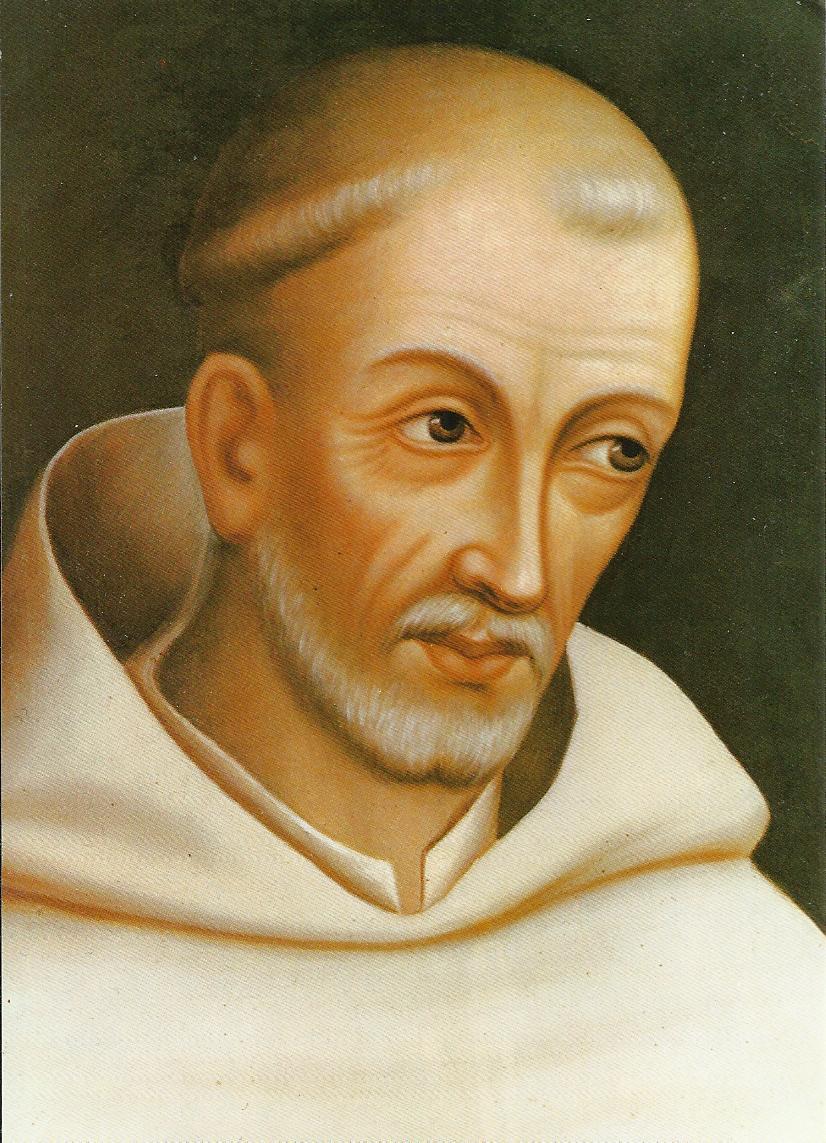
Pius XToday, we celebrate the liturgical memorial Saint Pius X and the centenary of his death. He was the 257th pope. The Eucharist, in part because of Pius, is far more central to our lives as Catholics than before him. His intuition and boldness of teaching open new doors to radical gift of the Holy Eucharist. Rome Reports has a brief presentation on Pius.

From the Discourse of Pope Pius XII at the Canonization of Pius X

Sanctity, which was the guide and inspiration of the undertakings of Pius X, shines forth even more clearly in the daily acts of his personal life. Before applying it to others, he put into practice in himself his program of returning all things to unity in Christ. As a humble parish priest, as bishop, as the Supreme Pontiff, he believed that the sanctity to which God called destined him was that of a priest. What sanctity is more pleasing to God in a priest of the New Law than that which belongs to a representative of the Eternal High Priest, Jesus Christ, Who left to His Church in the holy Mass the perennial memorial, the perpetual renovation of the Sacrifice of the Cross, until He shall come for the last judgment; and Who with this Sacrament of the Blessed Eucharist has given Himself as the food of our souls: “He that eateth this bread shall live forever.”

A priest above all in the Eucharistic ministry: this is the most faithful portrait of St. Pius X. To serve the mystery of the Blessed Eucharist as a priest, and to fulfill the command of Our Savior “Do this in memory of me” (Luke 22:19), was his way. From the day of his sacred ordination until his death as Pope, he knew no other possible way to reach such an heroic love of God, and to make a such generous return to that Redeemer of the world, Who by means of the Eucharist “poured out the riches of His divine Love for men” (Council of Trent, Session 13, chapter 2). One of the most significant proofs of his priestly sensibility was his ardent concern for the renewal of the dignity of worship, and his concern to overcome the prejudices of an erroneous practice, by resolutely promoting the frequent, and even daily, Communion of the faithful at the table of the Lord, without hesitation, leading children thereto, lifting them up, as it were, in his own arms, and offering them to the embrace of God hidden on the altars. From this, sprang up a new springtime of the Eucharistic life of the Bride of Christ.

In the profound vision which he had of the Church as a society, Pius X recognized in the Eucharist the power to nourish substantially its interior life, and to raise it high above all other human associations. Only the Eucharist, in which God gives Himself to man, can lay the foundations of a social life worthy of its members, cemented by love more than by authority, rich in its works and aimed at the perfection of individuals: a life, that is, “hidden with Christ in God.”

A providential example for today’s world, where earthly society is becoming more and more a mystery to itself, and anxiously searches for a way give itself a soul! Let it look, then, for its model at the Church, gathered around its altars. There in the sacrament of the Eucharist mankind truly discovers and recognizes its past, present, and future as a unity in Christ. Conscious of, and strong in his solidarity with Christ and his fellow men, each member of either Society, the earthly and the supernatural one, will be able to draw from the altar an interior life of personal dignity and personal worth, such as today is almost lost through insistence on technology and by excessive organization of the whole of existence, of work and even leisure. Only in the Church, the holy Pontiff seems to repeat, and though Her, in the Eucharist which is ‘‘life hidden with Christ in God,” is to be found the secret and source of the renewal of society’s life.

Hence follows the grave responsibility of those who, as ministers of the altar, have the duty of it is to open up to souls the saving treasure of the Eucharist. There are indeed many forms of activity which a priest can exercise for the salvation of the modern world; but only one of them is without a doubt the most worthy, the most efficacious, and the most lasting in its effects: to act as dispenser of the Holy Eucharist, after first nourishing himself thereof abundantly. His work would not be that of a priest, if, even through zeal for souls, he were to put his Eucharistic vocation in second place. Let priests conform their outlook to the inspired wisdom of Pius X, and orient every activity of their life and apostolate by the sun of the Eucharist.

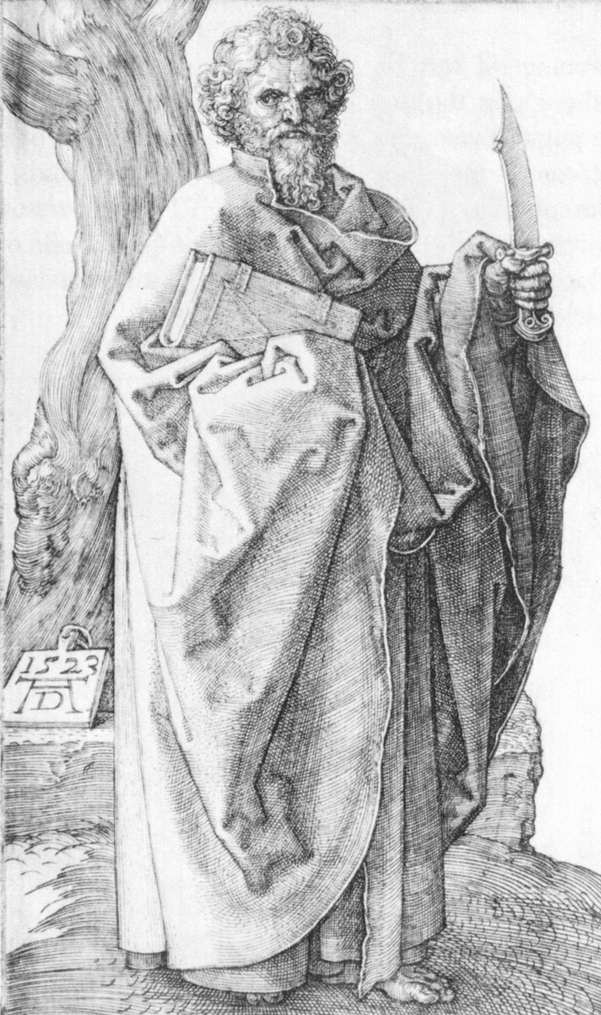
Saint Bernard of Clairvaux

Saint BernardThe great Saint Bernard of Clairvaux has his feast day today. The Cistercian abbot and priest, preacher and counselor has left a permanent mark on the Church. His teachings reveal the depth of his love for God, particularly the second person of the Trinity. Moreover, he spoke often of God’s gaze upon us, His mercy for creation. We know from experience that God alone can satisfy our human desire; nothing can replace our desire for God and if we try to replace God with something, it will always eave us frustrated and empty.

From the writings of Saint Bernard of Clairvaux we read: “I am myself a Cistercian; do I therefore condemn the Cluniacs? God forbid! On the contrary, I love them, praise them, extol them. . . .If you ask why . . . I did not choose Cluny from the first, I reply that, as the apostle says…: ‘All things are lawful for me, but all things are not profitable for me.’ It is not that Cluny is not holy and just. It is rather that I am an unspiritual man, sold as a slave to sin. I knew that my soul was so weak that a stronger remedy was necessary. Different diseases call for different remedies; the more serious the illness, the more drastic the remedy.”

Saint John Eudes

St John EudesSaint John Eudes is a saint’s name really unknown to many. But when you read what he did, you realize his importance for the life of the Church and for our personal devotion to the sacred Hearts of Jesus and Mary, the priesthood and preaching on the them of mercy.

“How culpable are we, if, instead of honoring the sacerdotal dignity, we degrade it; if instead of behaving worthily in the holy surroundings and becomingly handling holy things, we sully them with sacrileges; and if, instead of seeking only the glory of our master and the salvation of souls, we run after the glory of the world and our own particular interests.” (St. John Eudes)

Influenced by the teaching of the French school and the teaching of Saint Francis de Sales, as we see in his  Treatise on the Love of God, with distinct revelations of the Benedictines Saint Gertrude and Saint Mechtilde, John Eudes was completely dedicated to the Divine Heart because it is keenly an acceptance of the Incarnation. 

The French devotion to the SacredHeart of Jesus through Bérulle’s devotion to the Incarnate Word, Eudes saw the value of being a witness to the gentleness and warmth of Saint Francis de Sales. Eudes’ intuition was correct because an emphasis on the humanity of Lord’s heart is a fact taught through the centuries but overlooked as unimportant by some. How did he manage this? Eudes was able to move the individual and private character of the devotion into a devotion for the whole Church by locating the Sacred Heart’s devotion into the sacred Liturgy. In the Liturgy of the Church you realize that Catholics dovetail the community in prayer (Holy Mass and the Divine Office) and the personal prayer of an adherent. Writing the prayer texts first for his own religious communities which were approved by several local bishops before spreading throughout the Church. Pope Leo XIII spoke of John Eudes’ heroic virtues in 1903, gave him the title of “Author of the Liturgical Worship of the Sacred Heart of Jesus and Holy Heart of Mary“.

John Eudes taught the mystical unity of the hearts of Jesus and Mary and wrote: “You must never separate what God has so perfectly united. So closely are Jesus and Mary bound up with each other that whoever beholds Jesus sees Mary; whoever loves Jesus, loves Mary; whoever has devotion to Jesus, has devotion to Mary.”

The most striking characteristic of the teaching of St. John Eudes on Devotion to the Sacred Heart-as indeed of his whole teaching on the spiritual life—is that Christ is always its centre.

Secrets of Hell revealed

This article published by Aleteia on hell’s secrets revealed by one of the Church’s chief exorcists, Father Gabriel Amorth, is interesting because it begins to put in order the Christian belief in God, and His opponent, Lucifer (Satan, or Devil) and creation of hell.

I recommend reading the article if nothing else your awareness is heightened and you begin to take seriously the place of sin, evil and hell in this life. The Lord Himself has revealed the extent of evil; the saints have spoken of evil and we ought to pay and pray for the gifts of the Holy Spirit, especially Wisdom, courage and fortitude. Many people think of hell and the devil as quaint stories to scare people into submission to Church authority. I assure you, hell is real and people have elected to take up residence there thus rejecting God.

Advice given in the article: “To be a man of faith and prayer and always to ask the intercession of Mary Most Holy. And then always to be humble…”

Assumption of the Blessed Virgin Mary

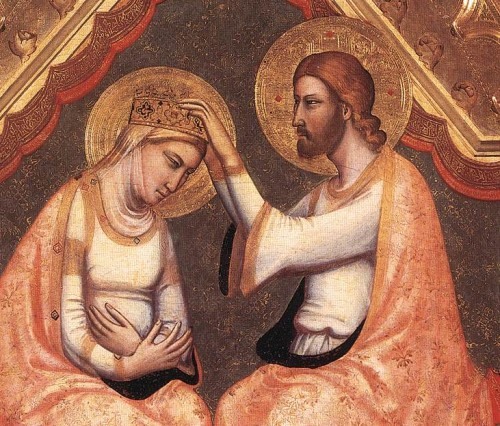
Assumuption Bartolomeo della GattaThe summer feast of Solemnity of the Assumption of Mary is known also as Marymass. The feast is about the fulfillment of the promise God made to us: to live fully and wholly with Him in heaven, to be united with Him body and soul. Neither sin nor death would grasp her being.

So, we believe that Mary, the Mother of the Incarnate Word, Jesus, did not suffer the indignity of the decomposition of the human body. In defining the dogma of the Assumption in 1950, Pope Pius XII left as an open question as to whether or not Mary died. The Greek Church calls this feast the Falling Asleep –the Dormition of Mary– pointing to the notion that Mary died and yet at that very moment she was called by her Son to the fullness of Life Eternal without delay and decay. Here is reflection by Saint John Damascene:

“It was fitting that she who had preserved her virginity inviolate in childbirth should also have her body kept free from all corruption after death. It was fitting that she who had carried the Creator as a child on her breast should dwell in the tabernacles of God. It was fitting that the bride espoused by the Father should make her home in the bridal chambers of heaven. It was fitting that she, who had gazed on her crucified Son and been pierced in the heart by the sword of sorrow which she had escaped in giving him birth, should contemplate him seated with the Father. It was fitting that the Mother of God should share the possessions of her Son, and be venerated by every creature as the Mother and handmaid of God.”

May we enter into deeper communion with the Holy Trinity so that we, like the great Mother of God, live body and soul at the end of time. Our Lady of the Assumption, pray for us.

Saint Maximilian Maria Kolbe

Kolbe“No one in the world can change Truth. What we can do and and should do is to seek truth and to serve it when we have found it. The real conflict is the inner conflict. Beyond armies of occupation and the hetacombs of extermination camps, there are two irreconcilable enemies in the depth of every soul: good and evil, sin and love. And what use are the victories on the battlefield if we are ourselves are defeated in our innermost personal selves?”

A while ago I when I visited the death camps in Poland I had the opportunity to visit the prison cell of Kolbe. Walking into the cell where the saint lived his last days was intense. It was the first time I could connect the dots of how the confrontation of evil and good can happen, and how one can completely follow Christ in a concrete and meaningful way. The sacrifice of this Franciscan priest for the good of a married man and father is a striking example of how we can take up our cross today for the good of another person: be Christ-like.

Pray for peace in Iraq Sunday, August 17

girl in prayerThe chairman of the Committee of International Justice and Peace of the U.S. Conference of Catholic Bishops (USCCB), Bishop Richard E. Pates of Des Moines, Iowa, asked us to pray for peace in Iraq on Sunday, August 17.

The prayer noted below was written by the Chaldean Catholic Patriarch of Iraq, His Beatitude Louis Rafael Sako.

On arriving in Korea today, Pope Francis continued his call for peace in the Middle East, he prayed for a soul of a journalist killed in Gaza and for peace among Asian nations. Not long ago he said: “violence generates more violence; dialogue is the only path to peace.” Prayer is the key to good public order.

Join us in prayer.

Lord,
The plight of our country
is deep and the suffering of Christians
is severe and frightening.
Therefore, we ask you Lord
to spare our lives, and to grant us patience,
and courage to continue our witness of Christian values
with trust and hope.
Lord, peace is the foundation of life;
Grant us the peace and stability that will enable us
to live with each other without fear and anxiety,
and with dignity and joy.
Glory be to you forever

Francis goes to Korea

Francis in KoreaToday, His Holiness Pope Francis began his Apostolic Journey to the Republic of Korea for the 6th Asian Youth Day (13-18 August 2014). We keep the Pope in our prayers and friendship as he visits our sisters and brothers in Korea.

The preparations for the papal visit is called “simply impeccable” and an event to remember. Listen to a Vatican Radio report on the prep. I am sure our friends their are welcoming their father in Faith in grand style and with blessed affection for they know Christ and virtue of friendship.

The Program

The Catholic Church in Korea is one sustained and developed by the laity. The Church in a very real way is a country of martyrs, 124 of them will be beatified by the Pope on Saturday. Listen to a bishop’s review of his Church in a Vatican Radio interview.

Vatican Radio has looked into Catholic life of the  Church on this peninsula. Listen to the interview.

Let us ask in prayer that the Korean Martyrs to assist the Pope, the bishops and laity in the witness to Jesus Christ.

Don’t forget the Christians in Iraq: Pope to UN

The Holy Father sent the following message to His Excellency, Mr Ban Ki-moon, Secretary General United Nations Organization, regarding the tragic situation of Christians in Iraq at the hands of Muslim extremists. No doubt we are seeing the systematic rejection of the Gospel and the lives of Christians in the Middle East. The aim of the reign of terror is the establishment of the caliphate. And yet, Muslim scholars deny the move. A Dominican friar working Iraq said this:

It is a humanitarian disaster. I have witnessed a hard time and a bitter history of my country and especially my beloved Church. The monster of our time (ISIS) maims all without mercy. When I see Christians persecuted in my country, humiliated and driven from their homes, it really hurt my heart. In addition, before the genocide of Christians in Iraq, there is a total silence from the international community. The fate of Christians rests between humiliation and departure, what misery! At this time of disruption, sometimes, I receive words or an email to give me a little courage, that’s nice. But now, I would like at this time to offer a practical approach from someone who is in a chaotic situation and who really needs support. 

Pope Francis’ letter to Mr Ban Ki-moon:

It is with a heavy and anguished heart that I have been following the dramatic events of these past few days in Northern Iraq where Christians and other religious minorities have been forced to flee from their homes and witness the destruction of their places of worship and religious patrimony. Moved by their plight, I have asked His Eminence Cardinal Fernando Filoni, Prefect of the Congregation for the Evangelization of Peoples, who served as the Representative of my predecessors, Pope St John Paul II and Pope Benedict XVI, to the people in Iraq, to manifest my spiritual closeness and to express my concern, and that of the entire Catholic Church, for the intolerable suffering of those who only wish to live in peace, harmony and freedom in the land of their forefathers.

In the same spirit, I write to you, Mr Secretary-General, and place before you the tears, the suffering and the heartfelt cries of despair of Christians and other religious minorities of the beloved land of Iraq. In renewing my urgent appeal to the international community to take action to end the humanitarian tragedy now underway, I encourage all the competent organs of the United Nations, in particular those responsible for security, peace, humanitarian law and assistance to refugees, to continue their efforts in accordance with the Preamble and relevant Articles of the United Nations Charter.

The violent attacks that are sweeping across Northern Iraq cannot but awaken the consciences of all men and women of goodwill to concrete acts of solidarity by protecting those affected or threatened by violence and assuring the necessary and urgent assistance for the many displaced people as well as their safe return to their cities and their homes. The tragic experiences of the Twentieth Century, and the most basic understanding of human dignity, compels the international community, particularly through the norms and mechanisms of international law, to do all that it can to stop and to prevent further systematic violence against ethnic and religious minorities.

Confident that my appeal, which I unite with those of the Oriental Patriarchs and other religious leaders, will meet with a positive reply, I take this opportunity to renew to your Excellency the assurances of my highest consideration.

Saint Clare of Assisi

“Never forget that the way which leads to heaven is narrow; that the gate leading to life is narrow and low; that there are but few who find it and enter by it; and if there be some who go in and tread the narrow path for some time, there are but very few who persevere therein.”

St. Clare of Assisi

The few who find the narrow gate are those who desire to be in friendship with Jesus. Salvation comes no other way.