Alvaro Del Portillo declared “Blessed” in Madrid

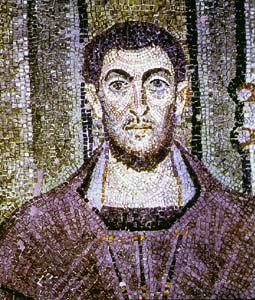
Bl Alvaro del PortilloShortly after the elected of Francis to the Throne of Peter, he approved of the miracle that would lead to his beatification. His first miracle, if you are interested, concerned a case in 2003 where a Chilean baby boy’s heart started beating despite doctors’ failed 30-minute efforts to resuscitate him. The boy’s parents prayed to Del Portillo for his intercession from God to save their child. From all reports the child lives a normal life, going to school and playing soccer.

In the car last evening I was listening to various news services and NPR had a story –none of the other international services did– of the beatification of Del Portillo. But the real story seemed not the beatification of a man known for holiness but his connection to Opus Dei famously derided in Dan Brown’s The DaVinci Code. I fail to see what one thing really has to do with another.

Saint Josemaría Escrivá’s original vision for Opus Dei has nothing to do with the political monikers of being liberal or conservative. Many will frame the group in these terms out ignorance. Opus Dei –a Latin concept meaning “The Work of God”– is about encouraging Catholics to know their ordinary, everyday work and life as a path to holiness. In other words, we are all called in whatever our work is, to the universal call to holiness; a strong emphasis of the Second Vatican Council and many saints. Religion is NOT just for 47 minutes on a Sunday morning where you put your money in the parking meter.

So, what ought to be admired about Opus Dei is the group’s emphasis and witness on the dignity of the laity. This same emphasis is also seen in two other ecclesial movements in the Church: Communion and Liberation and Focolare. But, The Work of God since its founding in 1928 has a significant challenge to the ultra-clerical attitudes of our Church while raising up the beauty of being a lay Christian and building up the Mystical Body of the Church.

Blessed Alvaro Del Portillo’s style was humble and faithful to the charism he was given by God to fulfill in history. His reputable for holiness is well-regarded and and substantiated. Del Portillo worked with Saint Josemaría Escrivá, the founder of Opus Dei for more than 40 years, and later his successor as the group’s leader until 1994.

Opus Dei is a lay organization in the Church with more than 90K members; only 2,073 are priests.

Blessed Alvaro, pray for us.

True repentance not presumption

Saint Clement of Alexandria helps me to focus on what the Church has given for the 26th Sunday Through the Year: “The doors are open for all who sincerely and wholeheartedly return to God. Indeed, the Father is most willing to welcome back a truly repentant son or daughter. The result of true repentance, however, is that you do not fall into the same faults again, but utterly uproot from your souls the sins for which you consider yourself worthy of death. When these have been destroyed God will again dwell within you, since Scripture says that for the Father and his angels in heaven the festal joy and gladness at the return of one repentant sinner is great beyond compare. That is why the Lord cried out: ‘What I want is mercy, not sacrifice.’ ”

How close can I adhere to what Saint Clement is teaching? The other day I was speaking of the sin of presumption at a faith formation class –a concept that had vague recall from some of the participants. As the saint reminds, God is eager to welcome home a sinner with lots of mercy; that God will dwell within our soul with great vigor. The expectation is that the sinner reject sin. But what will happen if the love of sin is privileged more than the love of God?

Dom Lino’s book on Romano Bottegal there is a sentence which said: “To be called to Christianity, to the priesthood, to monastic life, is to be called to leave the figure (the image) – the teacher, the law – to enter into the reality (grace), the first and final intention of God – union with God and with the brothers, in a love that is personal, universal and humble.”

Where is the good news today? The good news today is that we have the possibility of beginning again – repentance/conversion – because this is what God wants for us: to have life and have life to the full! Christianity is the religion of the perpetual second chance.

Maria Voce meets Francis and Focolare

Maria Voce with Pope Francis Sept 26 2014The head of the Roman Church, Pope Francis, met the head –and recently re-elected leader of the Focolare Movement Maria Voce– today at the Vatican. Dozens of people have been gathering these last weeks in Italy for a congress. The Holy Father met and address the Focolare members where he said, among other things,  “faithful to the charism from which it was born and by which it is nurtured, the Focolare Movement now finds itself faced with the same task that awaits the Church as a whole: offering, with responsibility and creativity, its special contribution to this new season of evangelization.”

Saints Cosmas and Damian

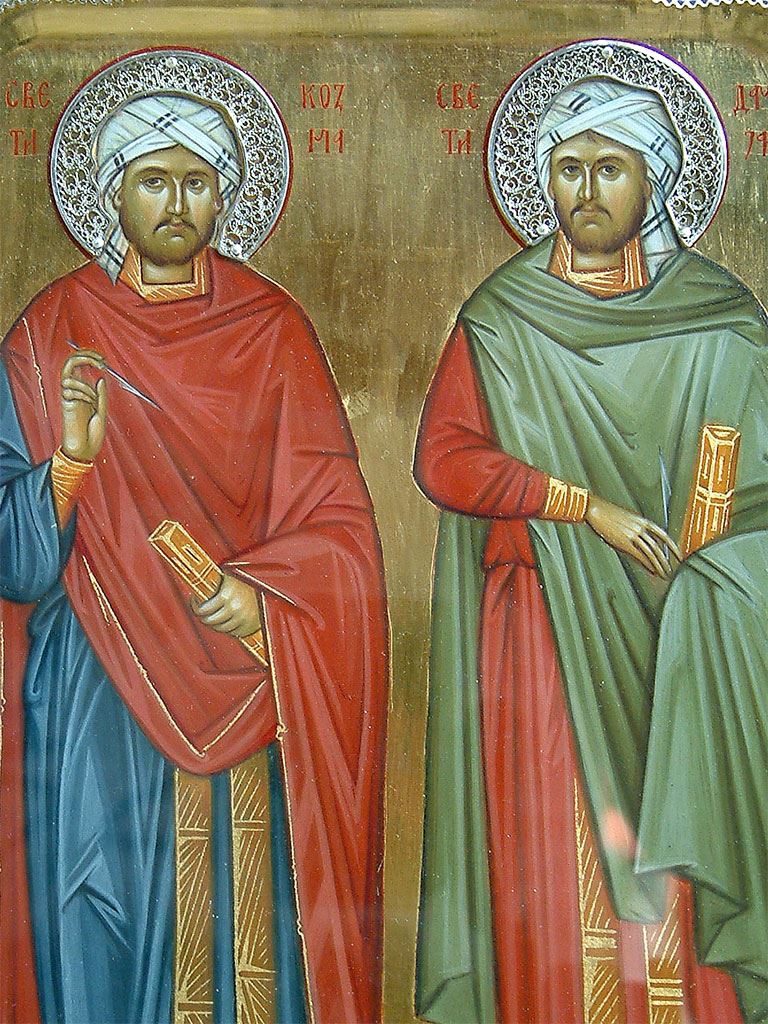
Cosmas and DamianWith the Church we pray:

May you be magnified, O Lord, by the revered memory of your saints Cosmas and Damian,for with providence beyond words, you have conferred on them everlasting glory and on us, your unfailing help.

Mother Church commemorates twin brothers, Saints Cosmas and Damian born in Arabia.  Eminent for their practice of medicine and reputation for giving free medical care; hence being known as the “moneyless ones.” The practice of charity and service to their neighbor exemplified that it is possible to live the gospel, especially Matthew 25. They attracted many converts to the faith. The holy brothers were arrested and beheaded during the Diocletian persecution in 303.

Saints Cosmas and Damian are patron saints of physicians and pharmacists. By the 6th century, their names were placed in the canon of the Mass (Eucharistic Prayer I).

Church history keeps their memory alive by the fact that we observe a feast day for them and that the faithful  erected church on the site of their burial place — later enlarged by the emperor Justinian; likewise a famous basilica was erected in their honor in Constantinople. Recall that Saint Francis of Assisi rebuilt the dilapidated San Damiano chapel outside Assisi.

New members of the International Theological Commission include 5 women

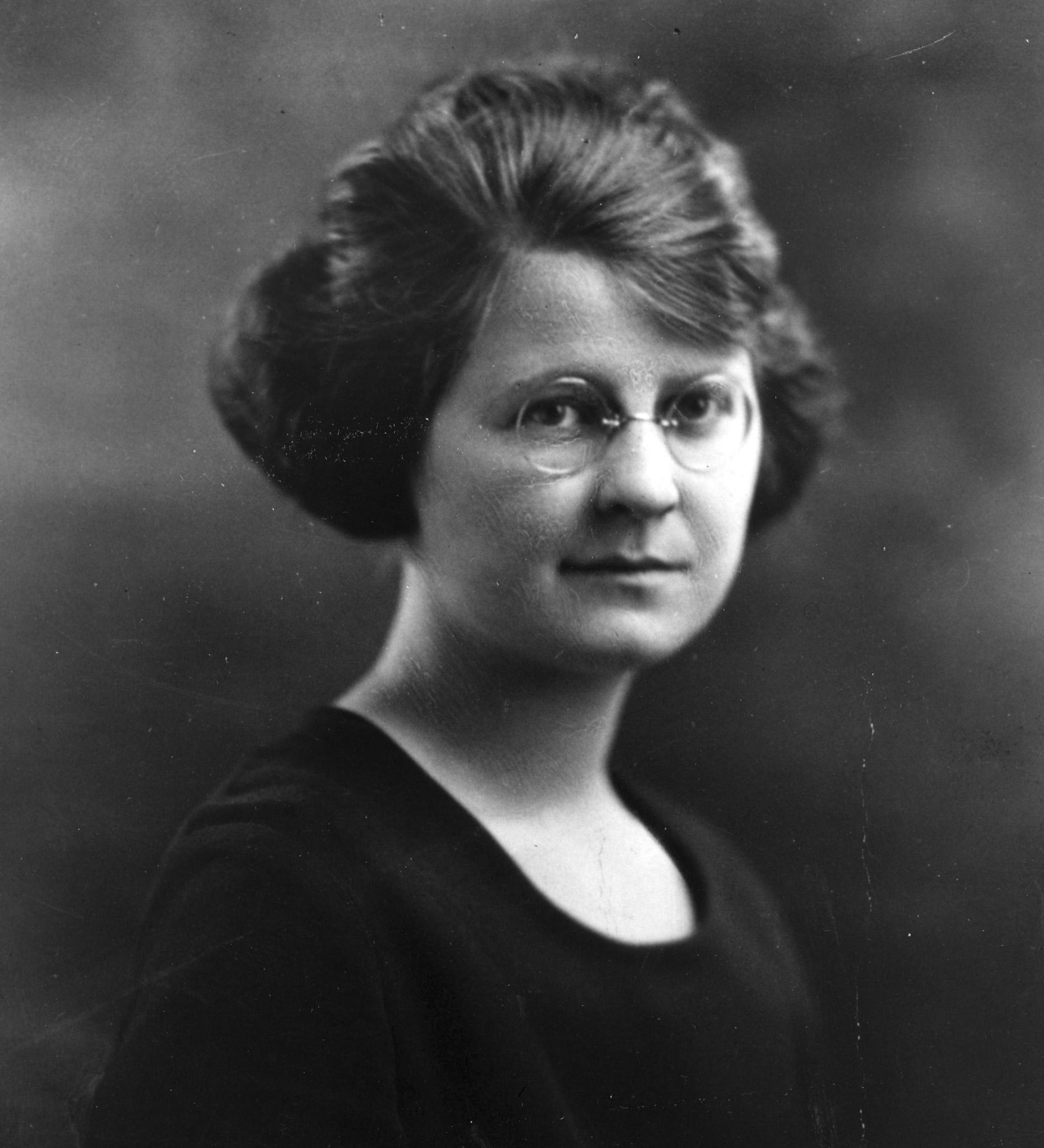
Tracey RowlandToday the Pope named new members of the International Theological Commission which includes 5 women. The announcement stated: “Women now constitute 16 per cent of the Commission’s members, a sign of growing female involvement in theological research.”

Among the priests who make up the majority of the ITC are 5 women: Sister Prudence Allen RSM from the USA, Sister Alenka Arko, Dr Moira McQueen, Dr Marianne Schlosser and the well-known Australian theologian Dr Tracey Rowland. Until now, the ITC had two women members, Sister Sara Butler (USA) and Prof Barbara Hallensleben.

Today’s announcement of Tracey Rowland’s to this service to the Church brings with it great enthusiasm because of Rowland’s keen mind and terrific work in the field of theology; a recent book of Rowland’s deals with Ratzinger’s Faith: the Theology of Pope Benedict XVI. She is Dean of the John Paul II Institute for Marriage and Family in Melbourne.

Gerhard Ludwig Cardinal Müller, prefect of the Congregation for the Doctrine of the Faith is the ultimate head of the group but there is a general secretary of the ITC who is Father Serge-Thomas Bonino, O.P.

The International Theological Commission was formed by Pope Paul VI in 1969 with the task to help the Pope and the on-going work of the Holy See by exploring and examining major doctrinal questions.

Christ’s victory in the Cross

Crucifixion Georges RouaultIn the Syriac Christian tradition the Cross of Jesus is known as a bridge that connects us to new life and the promise, the glory of the kingdom. The Lord Himself is the gate that let’s us into our eternal home. The gate is also the saving wood of his cross. This is part of His I AM –the personal mission given to Him by God the Father. Those who live and pray in the Syriac theological tradition (the Syriac Church or the Maronite Church) know that after the feast of the Exaltation of the Holy Cross the Church’s Liturgy counts the Sundays in this manner: “3rd Sunday after the Holy Cross.” It is an acknowledgement of this pivotal feast of the Paschal Mystery. The Church keeps us focussed on the beauty and victory of the Cross of Jesus. What does divine revelation and the teaching of the Fathers reveal to us? The Victorious and Life-giving sacrifice of the Cross “is the sign of all that is good, coming from Christ the Lord: the gospel, the sacraments, new life, his shield of protection, as well as the sign of his final victory.”

The sainted deacon and hymn-writer Saint Ephrem (fourth century) speaks of “the Cross as the new Tree of Life, mystically describes the branches of the Tree of the Cross as the arms of a mother who picks-up her children to nourish them with the fruits – the sacraments – from the bosom of her branches. Christ himself, through his saving cross has become for us this Tree of Life; the Luminous Sign of our victory over death through the life-giving graces of the Father’s nurturing Spirit.”

Questioning God?

The Gospel for the 25th Sunday through the Church Year has us meditating on Matthew 20:1-16. You know the Gospel narrative where the last worker gets the same wage as those who toiled all day; some are angry at the landowner –the analogy is that we are really angry at God’s generosity.  The logic of God is not the logic of man. Too often we say that we want to be like God, to act like Jesus, be as merciful as our Heavenly Father. I don’t doubt this is a true desire of our heart but haven’t really seen sustained examples of putting words into action. I do believe, however, many strive and honestly wrestle with the idea we need and desire God’s uncompromising and generosity and look for ways to employ Divine Revelation: this is the journey of faith: we in process of becoming what we are meant to be by the Blessed Trinity.

A patristic reflection from St. Gregory the Great: “The householder said to them, ‘I wish to give to this last one as I give even to you.’ And since the obtaining of his kingdom comes from his goodwill, he properly adds, ‘Or am I not allowed to do what I wish?’ It is always foolish to question the goodness of God. There might have been reason for loud complaint if he did not give what he owed but not if he gives what he does not owe.”

One of the monks at St Joseph’s Abbey (Spencer, MA) wrote the following of the Gospel:

It is that in the final scene of today’s Gospel when the foreman doles out the pay that we are witness to the extravagant compassion of the landowner, (a cipher for the extravagant mercy of our God.) All the workers, even the last ones who worked for only one measly hour, receive a denarius. Aware of their need and the desperation of their situation; the landowner knows that less than a denarius will be not enough for a man and his family for a day. And he wants them all to go home happy and satisfied. Now that’s not fair; it’s excessive. But if we were part of that last crowd who had worked for only an hour, we’d be overjoyed at the landowner’s outlandish generosity.

How often I murmur because things aren’t fair. And true enough it’s the constant plea of psalmist and prophet, “Why is it Lord that the way of the wicked prospers? Why is it that you let the sun and rain and all good things come to the just and the unjust?” It’s not fair. But the good news is God’s Kingdom is not about fairness or entitlement, only mercy; never about “confidence” in my own accomplishments or sacrifices.* It’s not ever about rewards but grace- not something earned but a gift freely given in love. My brothers and sisters, God is not fair. He is abundantly, incomprehensibly merciful, way beyond our imagining. He knows we don’t always do enough, don’t always pull our weight or labor long and hard enough, that sometimes I loaf and dawdle and wait too long and make bad decisions. He sees it all, and he is merciful. It doesn’t mean that everything’s always OK, not at all. No, I mess up, and God is merciful. I am unkind, impatient, stingy, and God is merciful and gives me another chance.

Imagine if God were only fair. Imagine if he gave me what I really deserve. I’d be in big trouble. Certainly God looks into our hearts and notices the good we do, but the kingdom is all about his mercy, never payback for a job well done. It is on the contrary completely, utterly, totally gift. Gratuitous, absolutely surprising, way beyond what I am “entitled to.” Simple gratitude is the only response. For what do we have that we have received? No, God is not fair, but all loving, all giving, all forgiving. We’re all latecomers and God is always switching things around. It’s called mercy. And Jesus invites us this morning not to succumb to jealousy, to literally “having a wicked eye” which will not allow us to see clearly as God sees.

Our Lady of La Salette

Knowing the Virgin Mother under the title of Our Lady of LaSalette may not be very familiar with many Catholics and yet the title that Mary carries is not only an interesting one, it is essential. Mary, please recall, always points to her Son as Lord and Savior. The Mother of God invites us all to greater freedom in Christ Jesus through our ongoing conversion.

The LaSalette Congregation of Fathers and Brothers has their provincial house in the Archdiocese of Hartford; they’ve also ministered through a Shrine dedicated the Mother of God in Attleboro, MA, for many years.

Our Lady of LaSaletteOn September 19, 1846, the Mother of God appeared to two young shepherds, Melanie Calvat and Maximin Giraud, on the heights of the mountain of La Salette in France. There She dictated to them a public message which She asked to make known to all Her people. And to each little shepherd privately She confided a secret, concerning which She gave special directives. Our text for the feast of Blessed Maximin Giraud, September 20th, gives in his own words a brief description of the apparition. And we summarize [tomorrow] the public message, with its warnings and predictions, all of which have already been fulfilled. Blessed Melanie Calvat was invested with the mission of founding a new religious Order, the Order of the Mother of God, which would associate under one single common rule more than one community, and would include the Apostles of the Latter Times announced by Saint Louis Mary de Montfort in his Prophetic Prayer.

Blessed Melanie was told by the Mother of God to make known her secret after the year 1858, and she published it herself in the face of great difficulties. It was important, and remains important, for the Church to be aware of its contents. We therefore will summarize today, briefly, the secret of La Salette for those who may not yet know it, or even of it.

The Blessed Virgin announced that it was primarily the defections of the Church which will bring down on the world the exemplary chastisement:

God is going to strike in an unprecedented manner. Woe to the inhabitants of the earth! God is going to exhaust His wrath, and no one will be able to resist so many concerted woes… Many will abandon the faith, and the number of priests and religious who will dissociate themselves from the true religion will be great… Many religious institutes will lose the faith entirely and will cause the loss of many souls. The Church will pass through a frightful crisis… The Holy Father will suffer greatly. I will be with him to the end to receive his sacrifice… For a time God will not remember France or Italy because the Gospel of Jesus Christ is no longer known… [But the] prayers, penance and tears of the just will ascend to heaven, and the entire people of God will beg for pardon and mercy and will ask My assistance and My intercession. Then Jesus Christ, by an act of His justice and His great mercy toward the just [will intervene and] then there will be peace, the reconciliation of God with men… Charity will flourish everywhere.. The Gospel will be preached everywhere, and men will make great progress in the faith, because there will be unity among the workers of Jesus Christ and men will live in the fear of God.

She foretells: Rome will lose the faith and will become the seat of Antichrist. To call Her children to combat for God in the days of darkness and sin, the Mother of God concludes:

I address an urgent appeal to the earth: I summon the true disciples of God who lives and reigns in heaven; I summon the true imitators of Christ made man, the one true Saviour of men; I summon My children, My true devotees, those who have given themselves to Me so that I might lead them to My divine Son, those whom I carry, so to speak, in My arms, those who have lived according to My spirit; finally, I summon the Apostles of the Latter Times, the faithful disciples of Jesus Christ who have lived in scorn of the world and of themselves, in poverty and in humility, in contempt and in silence, in prayer and in mortification, in chastity and in union with God, in suffering and unknown to the world. It is time for them to arise and come forth to enlighten the earth.

Go, and show yourselves as My cherished children; I am with you and in you, provided that your faith be the light that enlightens you in these days of woe. May your zeal cause you to be as famished for the glory and honor of Jesus Christ. Fight, children of light, you little number who see; for behold the time of times, the end of ends.

The Apparition of the Blessed Virgin on the Mountain of La Salette (Editions Magnificat: Mont-Tremblant (St. Jovite), Québec, Canada, 1973).

Vigil for Persecuted Christians at Quinnipiac

Hvizdak --the ZinnsHere is a photo essay for Persecuted Christians at Quinnipiac University that happened last evening (17 September 2014).

A friend sung Psalm 129 in Gregorian notation as the candles were lit; other liturgical pieces were sung in Greek, Arabic, and Aramaic chants. Likewise, the Gospel (“Blessed are the peacemakers…”) was sung and proclaimed in the various languages. Dominican Father Jordan Lenaghan, Catholic Chaplain, organized Christians in prayer from various Churches with the presence of the University Rabbi and other officials, for our brothers and sisters facing persecution in the Middle East. About 100 people attended. A large turn-out of students and concerned Christians attended.

New Oratorian Saint –Joseph Vaz

Joseph VazThis morning during a meeting with the Prefect of the Congregation for Saints Cardinal Amato, the Holy Father announced his intention to convene a consistory for the canonization of Blessed Joseph Vaz of the Oratory.

Blessed Joseph Vaz, CO, (Konkani: Bhoktivont Zuze Vaz, Sinhala: Bhagyawantha Jose Vaz Piyathuma) (21 April 1651, Benaulim – 16 January 1711, Kandy) was a Oratorian priest and missionary from Goa. The Oratorians are the spiritual heirs of Saint Philip Neri.

Joseph Vaz entered Ceylon (now Sri Lanka) during the Dutch occupation at a time when Calvinism was the official religion. Vaz travelled throughout the island bringing the Holy Eucharist and the sacraments to clandestine groups of Catholics. His missionary heart led him to find shelter in the Kingdom of Kandy where he was able to work freely because of political difficulties. By the time of his death, Vaz had managed to rebuild the Catholic Church on the island. As a result of his labors, Vaz is known as the Apostle of Ceylon.

On 21 January 1995, Father Joseph Vaz was beatified by Saint John Paul II in Colombo.