By no other name are we saved than that of the Lord’s.
Call on the Lord using His holy name in a respectful manner.
Pray the Litany of the Holy Name of Jesus today.
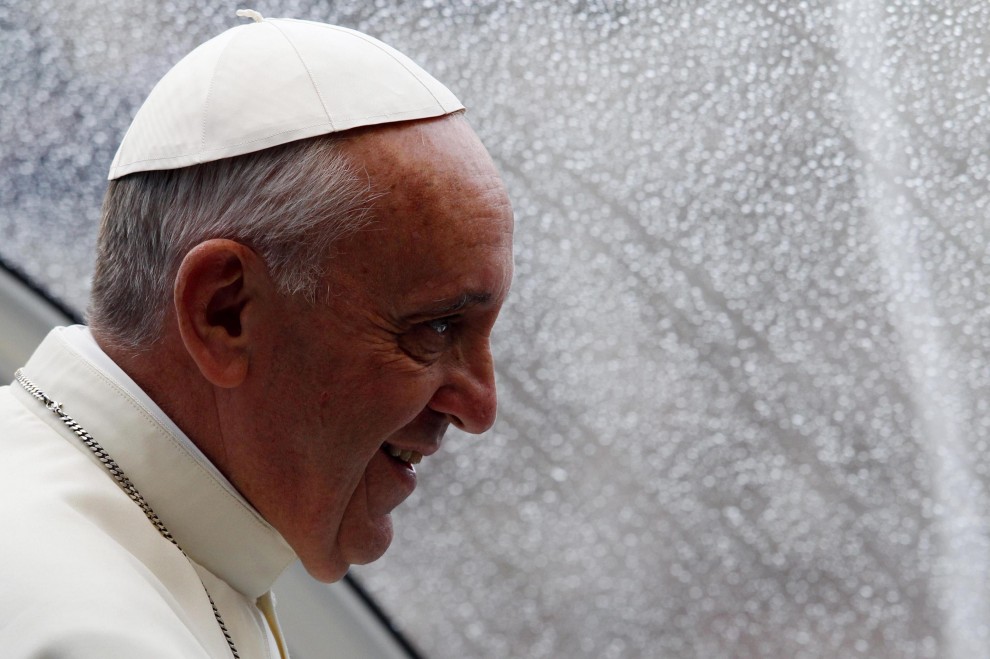
The Pope’s intention for January 2017 is for Christian Unity
That all Christians may be faithful to the Lord’s teaching by striving with prayer and fraternal charity to restore ecclesial communion and by collaborating to meet the challenges facing humanity.
Let us be united in praying to the Most Holy Trinity for the intention of Christian Unity.
+++++
Starting in 2017 the Pope will present only one prepared prayer intention per month, rather than the two presented before this year. He plans, however, to add a second prayer intention each month related to current events or urgent needs, like disaster relief.
What is the process in the preparation of the prepared prayer intentions? The faithful from around the world suggest papal prayer intentions to the international office of the Apostleship of Prayer in Rome. Through prayerful discernment the Apostleship selects a large number of them and submits them to the Vatican for further selection, with the Pope making the final selection. The Vatican then entrusts to the Apostleship of Prayer the official set of monthly prayer intentions, which the Apostleship then translates into the major world languages and publishes in print and digital formats.
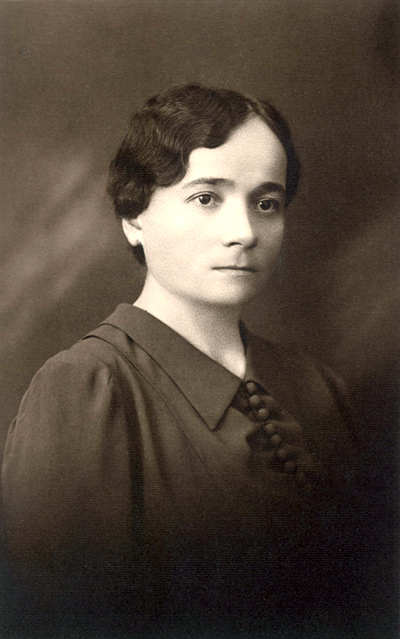
“Once again you are coming to the close of another year of life and of work for God. Here is one more reason for you to adore and praise his infinite goodness and mercy in having guarded, protected, and preserved you. This year has passed, and in the same way, our life will pass. We will appear before our Lord and God with the fruits and labors we accomplished for him. Our King and Master will not leave unrewarded any effort of ours or any sacrifice…”
Blessed Mary of Jesus the Good Shepherd (Frances Siedliska)
Founder of the Congregation of Sisters of the Holy Family of Nazareth
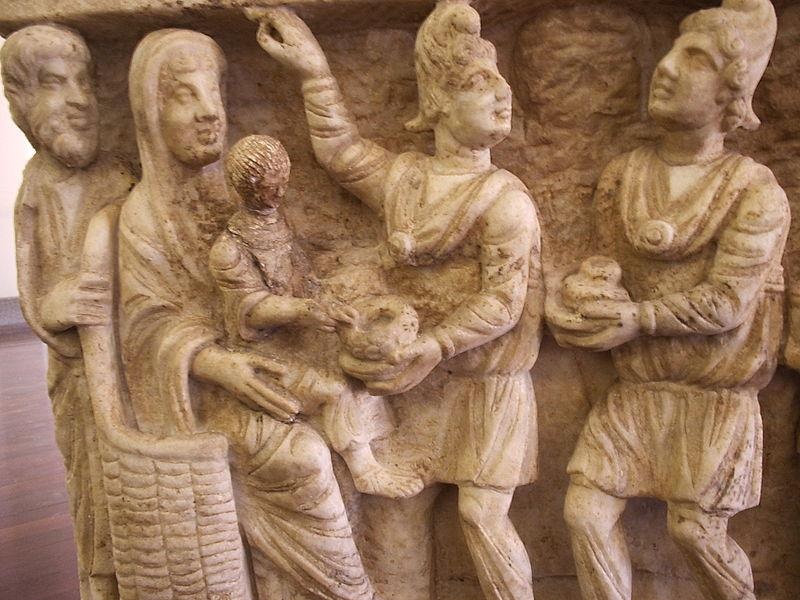
It is so fitting that today on the octave of Christmas, we honor in a special way the memory of God’s holy Mother, the Theotokos. The immense mystery of the Incarnation would have been impossible without her. Jesus’ father is God himself, but he needed a human mother to become man to be born among us.
Mary, the humble maiden from Nazareth, was assigned that role; she accepted it willing, in complete submission and cooperation with God’s plan. Therefore, from that moment on, all generations call her blessed.
She is our mother, our friend, our helper, our living example of true Gospel living, our refuge in time of danger, a solace in time of affliction. She is also a luminous guide when we find ourselves submerged under the shadows of darkness and despair. On our pilgrimage toward God’s kingdom, her maternal presence dispels our doubts, our loneliness. She provides the strength and encouragement needed for the remainder of the journey.
Br. Victor-Antoine D’Avila-Latourrette
A Monastery Journey To Christmas
Catholics at the end of the calendar year and at the beginning of the new one do so in an atmosphere of prayer. Our faith is one of Thanksgiving. Hence, those who enter into prayer with the intention of giving thanks to the Most Blessed Trinity for the blessings received and supplicating God the Holy Spirit for the grace to be His faithful disciple in the New Year, may gain a plenary indulgence for the public recitation or chanting in Church of the Te Deum on Dec. 31 and the Veni Creator on January 1. It must be in Church, as a liturgical function, like at the end of Mass, Adoration of the Blessed Sacrament or one the Divine Offices. The usual conditions for gaining the indulgence apply. The General Conditions are:
The traditional norm for going to confession, receiving Holy Communion, and praying for the intentions of the pope, in order to gain a plenary indulgence, was 8 days before or after doing the prescribed work (counting the day of the work). In the Great Jubilee Year 2000, the Apostolic Penitentiary relaxed this norm to “several days (about 20) before or after the indulgenced act” (Gift of the Indulgence, General remarks, 5).
Some may ask if the norm of 20 days remains today. The Apostolic Penitentiary responded that the norm of “about 20 days” remains in effect, since it was contained under the “General remarks on indulgences,” and not under those specific to the Jubilee Indulgence.
In sum, from Gift of the Indulgence, therefore, the usual conditions given in the Church’s tradition:
1. This is how an indulgence is defined in the Code of Canon Law (can. 992) and in the Catechism of the Catholic Church (n. 1471): “An indulgence is a remission before God of the temporal punishment due to sins whose guilt has already been forgiven, which the faithful Christian who is duly disposed gains under certain prescribed conditions through the action of the Church which, as the minister of redemption, dispenses and applies with authority the treasury of the satisfactions of Christ and the saints”.
2. In general, the gaining of indulgences requires certain prescribed conditions(below, nn. 3, 4), and the performance of certain prescribed works …..
[N.B. The grants of indulgence are contained in the Enchiridion Indulgentiarum (4th ed., 1999), in special grants of the Holy See, such as for the Year of the Holy Eucharist, and in special grants which bishops may establish for their dioceses.]
3. To gain indulgences, whether plenary or partial, it is necessary that the faithful be in the state of grace at least at the time the indulgenced work is completed.
[N.B. Thus, one must be a Catholic in communion with the Pope, i.e. not excommunicated or in schism.]
4. A plenary indulgence can be gained only once a day. In order to obtain it, the faithful must, in addition to being in the state of grace:
—have the interior disposition of complete detachment from sin, even venial sin;
—have sacramentally confessed their sins;
—receive the Holy Eucharist (it is certainly better to receive it while participating in Holy Mass, but for the indulgence only Holy Communion is required);
—pray for the intentions of the Supreme Pontiff.
5. It is appropriate, but not necessary, that the sacramental Confession and especially Holy Communion and the prayer for the Pope’s intentions take place on the same day that the indulgenced work is performed; but it is sufficient that these sacred rites and prayers be carried out within several days (about 20) before or after the indulgenced act. Prayer for the Pope’s intentions is left to the choice of the faithful, but an “Our Father” and a “Hail Mary” are suggested. One sacramental Confession suffices for several plenary indulgences, but a separate Holy Communion and a separate prayer for the Holy Father’s intentions are required for each plenary indulgence.
6. For the sake of those legitimately impeded, confessors can commute both the work prescribed and the conditions required (except, obviously, detachment from even venial sin).
7. Indulgences can always be applied either to oneself or to the souls of the deceased, but they cannot be applied to other persons living on earth.
Not sure how much any one of us attend to the doctrine and liturgical feast of the Holy Family Nazareth. My suspicion is that unless prompted to pray to the Holy Family, we don’t. I admit that I don’t invoke their patronage too often. But, I will start. There is something important herewith the Holy Family that we all ought to attend to. Consider this excerpt from the Second Reading in the Office of Readings for today’s Feast of the Holy Family:
“Put on, as God’s chosen ones, holy and beloved, heartfelt compassion, kindness, humility, gentleness, and patience,
bearing with one another and forgiving one another, if one has a grievance against another; as the Lord has forgiven you, so must you also do. And over all these put on love, that is, the bond of perfection.”
Holy Family of Nazareth, pray for my family, indeed for all Christian families.
Let the trumpet resound, Thomas the martyr,
so that the vine of Christ may be free.
Out of the chaff was sifted this corn
And else the church had been forlorn;
To God’s grange now wert thou borne, [i.e. carried]
O martyr Thomas, O martyr Thomas, O martyr Thomas.
In London was born this martyr, truly;
He held the primacy of Canterbury,
To whom we sing devoutly:
O martyr Thomas, O martyr Thomas, O martyr Thomas.
(image of the icon from St Louis Abbey)
I just read on Facebook that an old friend died peacefully preparing for bed on Christmas night at St. Catherine of Siena Priory (NYC). Jolting news in this time of joy.
Father John Patrick McGuire, OP, 73, was a talented man and a lovely person. His ministry allowed for him to do some wonderful things for Christ and others. Father John’s death is a sad event for me, someone I’ve known for 30+ years. I pray for him, in thanksgiving, petitioning the Lord to forgive his sins and to grant him eternal life; I pray for the Dominican brethren, and the countless friends he enjoyed.
Let us pray:
O God, Thou didst raise Thy servant, Father John Patrick to the sacred priesthood of Jesus Christ, according to the Order of Melchisedech, giving him the sublime power to offer the Eternal Sacrifice, to bring the Body and Blood of Thy Son Jesus Christ down upon the altar, and to absolve the sins of men in Thine own Holy Name. We beseech Thee to reward his faithfulness and to forget his faults, admitting him speedily into Thy Holy Presence, there to enjoy forever the recompense of his labors. This we ask through Jesus Christ Thy Son, our Lord. Amen.
Saint Dominic and all Dominican saints and blesseds, pray for Father John, and us.