All-powerful God, to serve You is to reign: by the prayers of Saint Casimir, help us to serve You in holiness and justice.
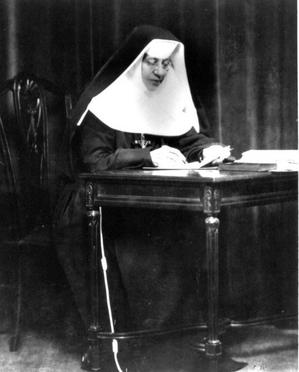
He was the son of King Casimir IV and Queen Elizabeth, monarchs of
All-powerful God, to serve You is to reign: by the prayers of Saint Casimir, help us to serve You in holiness and justice.
He was the son of King Casimir IV and Queen Elizabeth, monarchs of
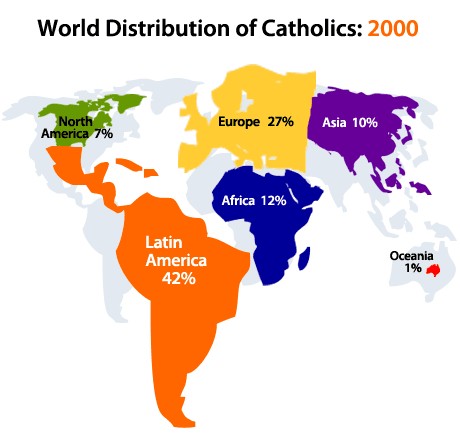
According to the recently published Annuario Pontificio, the papal yearbook we see the number of Catholics in the world has increased by 1.4%, with particularly in
The Press Office of the Holy See stated that the worldwide Catholic Church included 1.147 billion people in 2007, a 16 million increase since 2006, and compared with the map to the right, the current numbers are significant. The numbers of baptized grew significantly in
One notices moderate growth in the number of priests which according to those in the know, this trend began in 2000 after more than 20 years of steady losses. The year ending in 2007 saw the presbyterate rise from 405,000 to 408,000.
The statistical information is based on gather stats from 2007.
The BBC has an article on the increase of Catholic priests, read about it here.
The Anglican Church of Canada (ACoC) published their 2009 Lenten reflection that portrays Jesus as a racist who reformed himself after being challenged by the Canaanite woman (see St. Matthew’s Gospel). The ACoC was apparently hijacked by the politically correct establishment who teaches in this “reflection” Jesus is a sinner. Well, this is a basic heresy. Here’s the key point of the reflection:
“… a Canaanite woman from that region came out and started shouting, ‘Have mercy on me, Lord, Son of David; my daughter is tormented by a demon.’ He answered, ‘I was sent only to the lost sheep of the house of
This not a story for people who need to think that Jesus always had it together, because it looks like we’ve caught him being mean to a lady because of her ethnicity. At first, he ignores her cries. Then he refuses to help her and compares her people to dogs.
But she challenges his prejudice. And he listens to her challenge and grows in response to it. He ends up healing her daughter. What we may have here is an important moment of self-discovery in Jesus’ life, an enlargement of what it will mean to be who he was. Maybe we are seeing Jesus understand his universality for the first time.
Interesting. The authors of this reflection are the same people who would insist that Jesus’ way is true only for us but may be not for everyone. Perhaps the Anglicans of Canada ought to read Dominus Iesus. This reminds me of the Office of Black Catholics in the
An intensive Ecclesiastical Latin Course is now available in
Information is available at www.stbedeshall.org.
Today [March 1st] is the First Sunday of Lent, and the Gospel, with the sober and concise style of St. Mark, introduces us to the climate of this liturgical season: “The Spirit drove Jesus out into the desert, and he remained in the desert for 40 days, tempted by Satan” (Mark 1:12). In the
After having received baptism from John, Jesus enters that empty place, led by the Holy Spirit himself, which had descended upon him, consecrating him and revealing him as the Son of God. In the desert, the place of trial — as the experience of the people of Israel shows — there appears the dramatic reality of the “kenosis,” the emptying of Christ, who is stripped of the form of God (cf. Philippians 2:6-7). He, who did not sin and cannot sin, submits himself to trial and thus can have compassion for our infirmities (cf. Hebrews
In the brevity of the account, in the face of this obscure and darksome figure who dares to
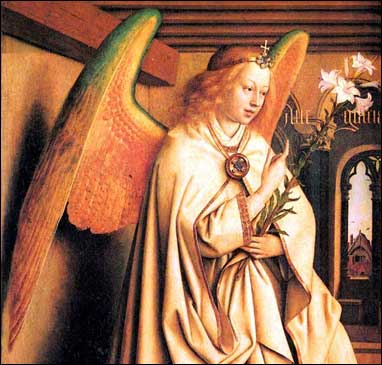
tempt the Lord, the angels, luminous and mysterious figures, fleetingly appear. The Gospel says that the angels “serve” Jesus (Mark
The angels serve Jesus, who is certainly superior to them, and this dignity of his is proclaimed in a clear though discreet way here in the Gospel. Indeed, even in the situation of extreme poverty and humility, when he is tempted by Satan, he remains the Son of God, the Messiah, the Lord.
Dear brothers and sisters, we would take away a significant part of the Gospel if we left aside these beings sent by God to announce his presence among us and be a sign of that presence. Let us call upon them often, that they sustain us in the task of following Jesus to the point of identifying ourselves with him. Let us ask them, especially today, to watch over me and my co-workers in the Roman Curia as we begin our retreat this week, as we do every year. Mary, Queen of Angels, pray for us!
Pope Benedict XVI
1 March 2009, First Sunday of Lent
St Peter’s Square
PS: You may want to read the booklet, “All About Angels” published by the Catholic Information Service.
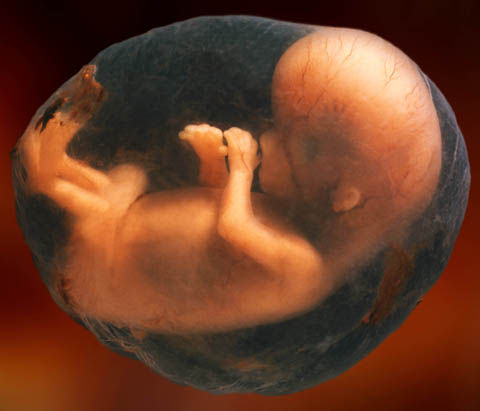
The President of the United States of America needs to realize not everyone supports Planned Parenthood’s goals. Please follow this suggestion if you are against abortion. Please send this message to everyone in your address book that thinks similarly. MAYBE our biased MEDIA would even mention it IF we DO IT. Mark March 31 on your calendar!
What: Get red envelopes or postcards and mail them on March 31st to the White House; You can buy them at Kinkos, or any party supply stores.
When: March 31, 2009
To Whom:
President Barack Obama
The White House
On the back, write the following message:
This envelope represents one child who died because of an abortion. It is empty because the life that was taken is now unable to be a part of our world.
We will mail the envelopes out
Forward this event to every one of your friends who you think would send one too. It would be good if we could send 50 million red envelopes, one for every child who died [in the
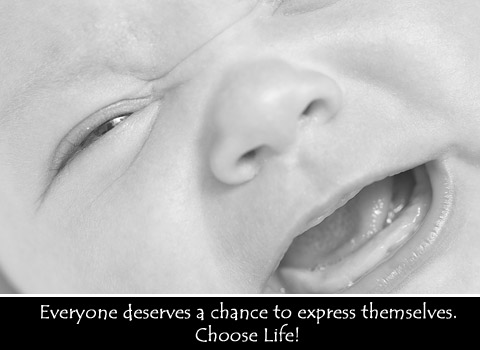
It may seem that those who believe abortion is wrong are in a minority. It may seem like we have no voice and it’s shameful to even bring it up. Let us show our President and the world that the voices of those of us who do not believe abortion is acceptable are not silent and must be heard. Together we can change the heart of The President and save the lives of millions of children.
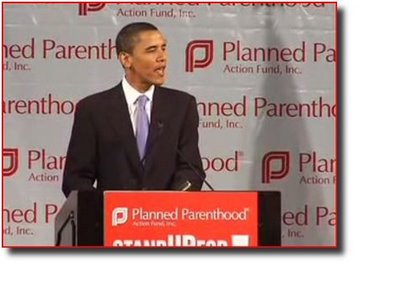
President Barack Obama spoke at a Planned Parenthood Action Fund event, uttering the now infamous line, “Well, the first thing I’d do as president is, is sign the Freedom of Choice Act. [Applause.] That’s the first thing that I’d do.”
An empty red envelope will send a message to President Barack Obama that there is moral outrage in this country over this issue [The Freedom of Choice Act, which will essentially “undo” every law currently in place to limit abortion in the U.S. (i.e., parental consent laws, parental notification, waiting periods, prohibition of transporting a minor girl across state lines to obtain an abortion, etc.)]. It will be quiet, but clear.
Please read more about The Freedom of Choice Act here:
http://www.lifenews.com/nat4359.html
http://www.jillstanek.com/archives/2008/07/one_year_annive.html
Mike Aquilina’s
2007 “
It’s not so much by the ash mark on your forehead or fish marks on the calendar. Tradition tells us that Lent has three distinguishing marks: prayer, fasting and almsgiving.
This three-part series will examine those practices. Prayer is surely the best place to begin, because it’s the one that unites them all. Fasting and almsgiving are themselves just forms of prayer.
There are two classic definitions of prayer. The one in most catechisms comes from St. John of Damascus (eighth century): “Prayer is the raising of the mind and heart to God.” The other comes from St. Clement of
In prayer we talk to God, and He talks to us. As in any relationship, this conversation takes many forms. Think of all the ways a husband and wife communicate: formal marriage vows, casual chat, winks across a crowded room, affectionate caresses, and phrases they never tire of repeating.
Our communication with God includes a similar range of expressions — set phrases, quiet conversation, gestures such as the Sign of the Cross, and the intimate embrace of the sacraments. Just as a man and woman grow in love by repeating “I love you,” so we Christians grow in love by repeating the Church’s prayers.
Prayer comes in many forms and styles. These are usually divided into “vocal” and “mental” prayer. The categories are helpful, but not watertight. All prayer, after all, should involve our mind; so, in a sense, all prayer is mental prayer. Modern writers sometimes speak of the two types as formal prayer and spontaneous prayer.
Again, such distinctions are useful; we should, however, step beyond them for a moment. When we look at all prayer as conversation, it can change the way we go about it. Thinking of prayer as conversation can help us also to overcome obstacles — such as distractions, dryness, inability to focus — because all these things also come up in human conversation.
Prayer is a conversation that never ends. In the Scriptures,
That seems to be asking a lot, but it’s really the best way to think about it. If we are to pray this way, we have to form the habit of prayer. And, like any good habit or skill, prayer requires a sustained effort, over time, with much repetition.
Many people bristle when they hear about discipline in prayer. They think prayer should always be spontaneous. And sometimes prayer does come spontaneously, as when we experience some great joy or great sorrow. But spontaneity is most often the fruit of discipline. It is usually the best-trained musicians who are able to improvise freely. To do anything well takes time, dedication and patient endurance through sometimes-tedious exercises.
The most effective way to discipline our prayer life is by following a program, a schedule of sorts — what the late Cardinal Joseph Bernardin called “a game plan for the Christian.” The best time to set up such a plan is during Lent.
A “plan of life” is a firm but flexible program that schedules our prayer amid the ordinary duties of work, family life and social activity. A daily plan should include some vocal prayers, such as the Rosary or other devotions; plus reading of the Bible and some spiritual book (the writings of the saints are best); attendance at Mass (at least on Sundays and holy days, but more often if possible); and quiet time for more focused conversation with God in mental prayer. The best place for this prayer is in church, before Jesus in the tabernacle.
“Prayer first means God is speaking to us and not the other way around,” says Father Kenneth Myers, a priest of the Diocese of Pittsburgh. “That requires silence — the art of listening carefully to the Lord. And the best place to do that is in the presence of the Blessed Sacrament. Prayer before the Blessed Sacrament requires real effort and commitment, but even when our hearts are dry and it seems fruitless to keep on praying, being before the Eucharistic Lord is like being in the sunlight — even by doing nothing we still absorb those powerful rays of light.”
Our plan should also include weekly or monthly practices, such as confession, fasting, almsgiving and so on.
It helps to set standard times, or to key each practice to other activities, so that we never forget. We can keep our spiritual book by the coffee pot and read while the java is brewing every morning. We can use the beginning of our lunch hour as a reminder to say the Angelus. We can pray the Rosary while waiting for the bus home in the evening. We can listen to ten minutes of the Bible on tape as we drive.
We should plant prayers throughout the day like vines. Put one here, one there — and pretty soon, like ivy on a wall, our prayer will cover our day.
This is how Jesus modeled prayer for us. His own prayer life was rich and varied. Sometimes He offered formal prayers (Mark
The first Christians followed their Lord in all these practices, and so do we.
Not that it’s always easy to do. But the formal quality of prayer helps us know what to do when we meet with obstacles. “Never, Never, never, never give up!” says my friend Steve Galvanek. A systems analyst, husband and dad, Steve says his plan sustains him even when he’s tired and preoccupied. “If in my feeble attempts to say a Rosary, I manage just one or two heartfelt Hail Marys, that’s far better than if I hadn’t tried at all”
Even the more unpleasant and difficult things in life can become reminders to pray. The key is to think of them as opportunities rather than obstacles. Another friend of mine, Sarah Scott, admits that it’s hard to find time to pray. She’s a mother of five, owner of a home-based business and volunteer at her children’s Catholic school. “It helps to offer everything up all the little things that you don’t like to do,” she says. “I hate folding laundry. But, instead of getting annoyed about it, I try to offer it up and think about what other people have to deal with. Efforts like this keep me talking with God throughout the day.”
Sounds like a plan.
The outline of Katharine Drexel’s life is:
Born in Philadelphia, PA on Nov. 26, 1858
First sister to profess vows as a Sister of the Blessed Sacrament on Feb. 12, 1891
Died on March 3, 1955
Beatified on Nov. 20, 1988
Canonized on Oct. 1, 2000
With the Church we pray,
Ever-loving God, You called Saint Katharine Drexel to teach the message of the Gospel and to bring the life of the Eucharist to the African American and Native American peoples. By her prayers and example, enable us to work for justice among the poor and the oppressed, and keep us undivided in love in the eucharistic community of Your Church.
Saint Katharine’s connection to Maryhelp – Belmont Abbey is that she used a portion of her personal wealth to help build a number of churches, including the abbey church, for the first abbot of Maryhelp, Abbot-bishop Leo Haid. She also visited the abbey. So, we can say that a saint walked on this soil! A sign in the Abbey Basilica narthex commemorates this fact. May Saint Katharine continue to intercede for us and help us to know the Lord.
Franciscan Friar? You? The NY Post as the story…read the article…the approach is trendy but it may be helpful. Listen to the NPR article…
Don’t know till you try….
What would Saint Francis say?
Visit the Holy Name Province of the Franciscans webpage or the vocation’s page.
Eugenio Maria Giuseppe Giovanni Pacelli
Born on
Ordained priest Easter
Ordained bishop on
Created Cardinal
Reigned as the 260th pontiff of the Holy Roman Church
God, Who, in Thine ineffable providence, didst will that Thy servant Pius XII should be numbered among the high priests, grant, we beseech Thee, that he, who on earth held the place of Thine only-begotten Son, may be joined forevermore to the fellowship of Thy holy pontiffs. Through the same Jesus Christ, Thy Son, Who liveth and reigneth with Thee in the unity of the Holy Ghost, God, world without end.