Muslims burned alive 6 Christians based on false accusations. What a crime!
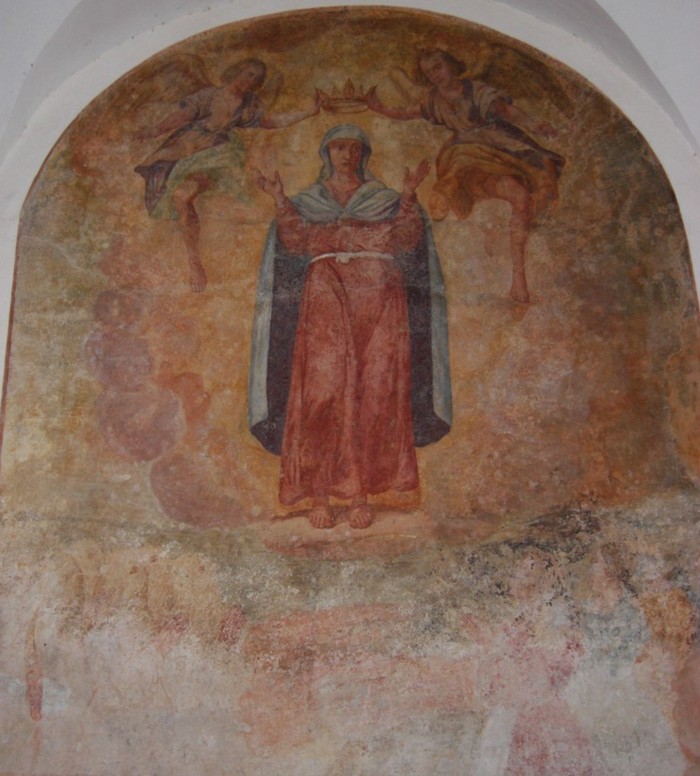
Our Lady of the Angels of the Portiuncula
Today is the feast of Our Lady of the Angels of the Portiuncula, the Virgin under whose mantle Saint Francis of Assisiwas wrapped; Mary’s maternal protection made it possible for blessed Francis to experience an intentse Presence of the Lord and to receive his vocation to rebuild the Church. The Portiuncula is also the place where Francis knew first hand the experience of being sustained by the Angels. Likewise his intimate devotion to the Blessed Mother, under whose protection did he place himself to do the Lord’s work did this place become holy for the members of the Franciscan family and for the Church universal. As a place of pilgrimage, the holy Portiuncula is a poignant reminder of how important the encounter with Christ was for Saint Francis and how much the encounter ought to be pivotal for us today. Without meeting Christ, little makes sense. Saint Bonaventure had this to say about this devotion:
The Portiuncula was an old church dedicated to the Virgin Mother of God which was abandoned. Francis had great devotion to the Queen of the world and when he saw that the church was deserted, he began to live there constantly in order to repair it. He heard that the Angels often visited it, so that it was called Saint Mary of the Angels, and he decided to stay there permanently out of reverence for the angels and love for the Mother of Christ. This is also the place where St Clare took her vows and where Saint Francis died.
Consider the words of an early biographer of Saint Francis of Assisi:
From there he moved to another place, which is called the “Portiuncula,” where there stood a church of the Blessed Virgin Mother of God built in ancient times. At that time it was deserted and no one was taking care of it. When the holy man of God saw it so ruined, he was moved by piety because he had a warm devotion to the Mother of all good and he began to stay there continually. The restoration of that church took place in the third year of his conversion. At this time he wore a sort of hermit’s habit with a leather belt. He carried a staff in his hand and wore shoes. One day the gospel was being read in that church about how the Lord sent out his disciples to preach. The holy man of God, who was attending there, in order to understand better the words of the gospel, humbly begged the priest after celebrating the solemnities of the Mass to explain the gospel to him. The priest explained it all to him thoroughly line by line. When he heard that Christ’s disciples should not possess gold or silver or money, or carry on their journey a wallet or a sack, nor bread nor a staff, not to have shoes nor two tunics, but that they should preach the kingdom of God and penance, the holy man, Francis immediately exulted in the spirit of God. “This is what I want,” he said, “this is what I seek, this is what I desire with all my heart.” The holy father, overflowing with joy, hastened to implement the words of salvation, and did not delay before he devoutly began to put into effect what he heard. (From The Life of Saint Francis by Thomas of Celano)
Read about and perhaps seek The Portiuncula Indulgence if you visit any Franciscan Church and observe the conditions for receiving the indulgence.
The Holy Father made reference to this in his Sunday Angelus address:
… today is the feast of the “Pardon of Assisi,” which St. Francis obtained from Pope Honorious III in the year 1216, after having a vision while he was praying in the little church of the Portiuncula. Jesus appeared to him in his glory, with the Virgin Mary on his right and surrounded by many Angels. They asked him to express a wish and Francis implored a “full and generous pardon” for all those who would visit that church who “repented and confessed their sins”. Having received papal approval, the Saint did not wait for any written document but hastened to Assisi and when he reached the Portiuncula announced the good news: “Friends, the Lord wants to have us all in Heaven!”. Since then, from noon on 1 August to midnight on the second, it has been possible to obtain, on the usual conditions, a Plenary Indulgence, also for the dead, on visiting a parish church or a Franciscan one.
A note about indulgences, which are often misunderstood. Indulgences are not forgiveness for sin but forgiveness for temporal punishment due to sin; that the residual effects of sin are forgiven.
Also, visit The Shrine website (read in 3 languages)
On this feast we pray
August Queen of Heaven, sovereign queen of Angels, you who at the beginning received from God the power and the mission to crush the head of Satan, we beseech you humbly, send your holy legions so that, on your orders and by your power, they will track down demons, fight them everywhere, curb their audacity and plunge them into the hell.
Who can be compared to God? Oh good and tender Mother, you will always be our love and our hope. Oh divine Mother, send the Holy Angels and Archangels to defend me and to keep the cruel enemy far from me. Holy Angels and Archangels defend us, protect us. Amen.
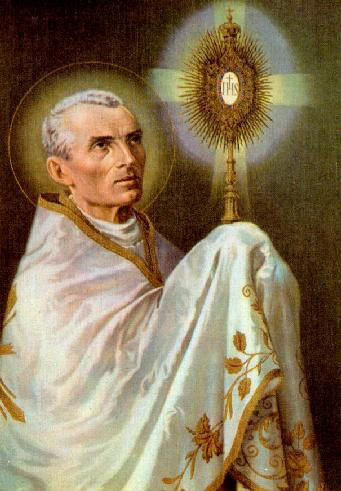
Saint Peter Julian Eymard
A list of resources on The Apostle of the Blessed Sacrament
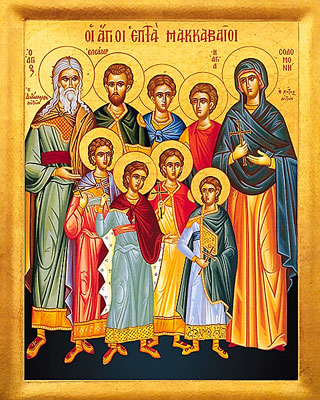
The Holy Maccabees
The very hairs of your head are all numbered. Therefore do not be afraid; you are of more value than many sparrows.
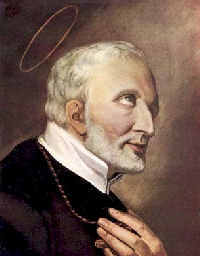
Saint Alphonsus Liguori
You are the salt of the earth; but if salt has lost
its taste, how shall its saltness be restored? It is no longer good for
anything except to be thrown out and trodden under foot by men.
Father, you constantly
build up your Church by the lives of your saints. Give us the grace to follow
Saint Alphonsus in his loving concern for the salvation of men, and so come to
share his reward in heaven.
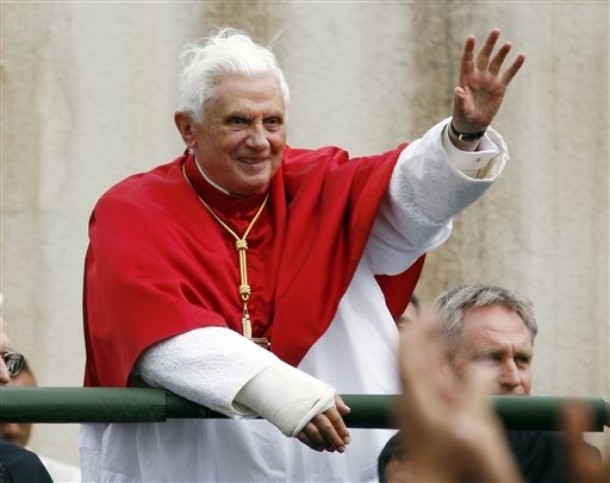
Pope Benedict XVI’s prayer intentions, August 2009
The Holy Father’s prayer intentions for the month of August:
public opinion may be more aware of the problems of millions of displaced
persons and refugees, and that concrete solutions may be found for their often
tragic situation.
discriminated against and persecuted in many countries because of the name of
Christ may have their human rights, equality and religious freedom recognized,
in order to be able to live and profess their own faith freely.
What do ducks do all day?
Saint Ignatius of Loyola
Whoever does not bear his own cross and come after me, cannot be my disciple.
With the Church we pray:
O God, Who for spreading the greater glory of Thy Name did, through blessed Ignatius, strengthen Thy Church militant with a new army; grant that by his aid and example we may so fight on earth as to deserve to be crowned with him in heaven.
The Litany of Saint Ignatius of Loyola
Saint Ignatius’ life in pictures
How Communion and Liberation moved me: Fr Meinrad Miller reflects
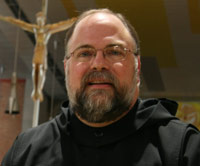
Earlier today I was speaking with my friend, Father Meinrad Miller, a Benedictine monk of Saint Benedict’s Abbey (Atchison, KS) and he told me he wrote this article for the local Catholic diocesan newspaper on his experience with the movement we both closely follow, Communion and Liberation. What Father Meinrad says in his article is applicable to all of us. It’s reprinted here for education of us all. Let me know what you think of it.
Seven years ago
this fall an event happened here at Benedictine College that would change my
life. My college roommate, B.J. Adamson, had told me over the years about a
Catholic movement he had discovered back in Denver: Communion and Liberation
(CL). B.J. would often tell me about the method of the movement’s dynamic
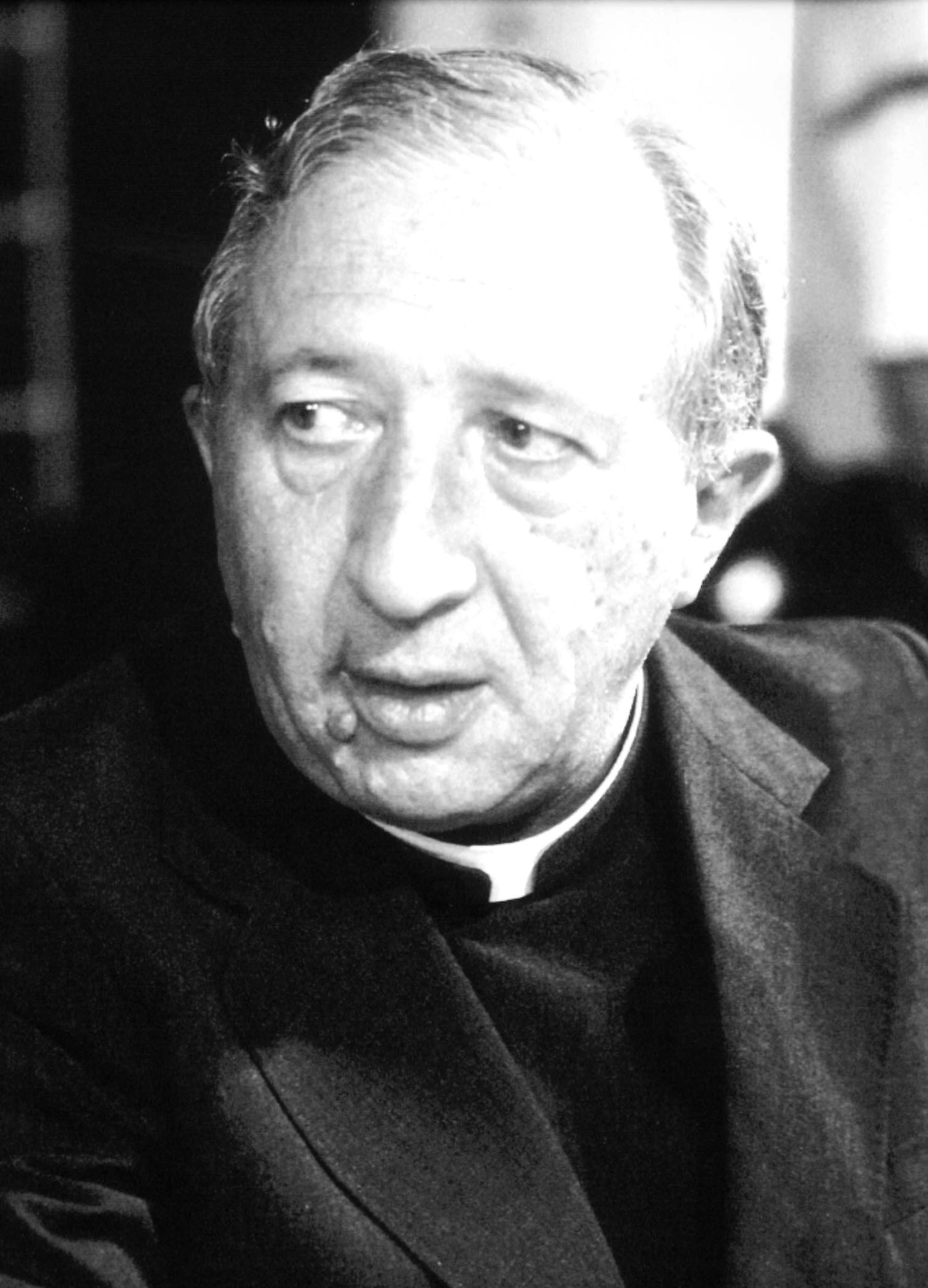
founder, Monsignor Luigi Giussani (October 15, 1922-February 22, 2005), and of
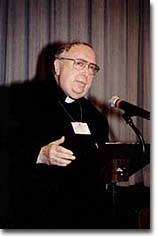
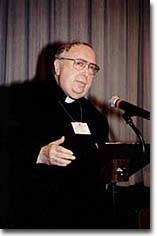
a friend of the movement here in the United States Monsignor Lorenzo Albacete.
Cardinal Stafford, then the Archbishop of Denver, had spoken highly of CL.
In
September 2002 we hosted a presentation here at Benedictine College on one of
Giussani’s key books, The Religious Sense. The presentation included talks by Monsignor
Lorenzo Albacete, a physicist,
theologian and good personal friend of Pope John Paul II; Major David
Jones, an army officer who had been attracted to the Catholic faith after
watching a show on EWTN with Raymond Arroyo in which Monsignor Albacete was
interviewed about Monsignor Giussani; Dr. Eduardo Echeverria, currently a
philosopher at Sacred Heart Seminary in Detroit; and Mike Eppler, the Youth
Minister for the Evansville, Indiana Diocese.
What appealed to me about this
first presentation was that everything said that evening deepened my own appreciation
of being a Benedictine monk. Giussani’s method affirms that the encounter with
Christ is possible to all people. Over the coming years we would have further
book presentations here at the college on the writings of Monsignor Giussani.
Each time I would grow in my fascination for the message of Christ as relevant
and part of life today. It was only later that I learned that St. Benedict was
the patron saint of the movement. At one time Monsignor Giussani had written to
some Benedictine monks near Milan, Italy. In part he said: Christ present! The
Christian announcement is that God became one of us and is present here, and
gathers us together into one body, and through this unity, His presence is made
perceivable. This is the heart of the Benedictine message of the earliest
times. Well, this also defines the entire message of our Movement.
Perhaps
Monsignor Giussani’s fascination with St. Benedict began as a young seminarian
for the Archdiocese of Milan. The Archbishop during Monsignor Giussani’s
seminary training was Blessed Ildephonse Schuster, O.S.B., the saintly
Benedictine. The same year that Blessed Ildephonse Schuster died, 1954, would
mark a major change in the life of Giussani as well.
While riding on a train
for vacation in 1954, Giussani noticed from the conversation of the youth on
the train that there was little interest in Christianity. Much of the
discussion focused on the ideologies of the day, including Marxism. Giussani
asked the new Archbishop’s permission to leave his work as a seminary professor
and begin to teach high school students.
The conversion on the train reminded
me of Blessed Mother Teresa’s own conversion. This past year I gave a seminar
to the Missionaries of Charity in Washington, D.C. As I was reading about
Blessed Mother Teresa I could not help but notice a similarity with Monsignor
Giussani. Mother Teresa was also on a train on September 10, 1946, going for
her yearly retreat in the mountains of India. It was on the train that she had
a mystical experience in which she would experience the great thirst God has
for souls. Not just for water but for men and women to experience the real thirst
of God’s love for them.
Eight years after Blessed Mother Teresa’s experience on
the train in 1946, Monsignor Giussani would have his experience on the train in
1954. Years later he would also reveal the depth of this conviction when, in
front of Pope John Paul II and hundreds of thousands of people gathered at St.
Peter’s square on Pentecost Sunday, 1998, he would say: Existence expresses
itself, as ultimate ideal, in begging. The real protagonist of history is the
beggar: Christ who begs for man’s heart, and man’s heart that begs for Christ.
Whether
one looks at our humanity in terms of Christ thirsting for us in the words of
Blessed Mother Teresa, or Christ begging for man’s heart, in the words of
Monsignor Giussani, the same dynamic is present. Christ desires us to encounter
Him as a present reality, not just a distant myth.
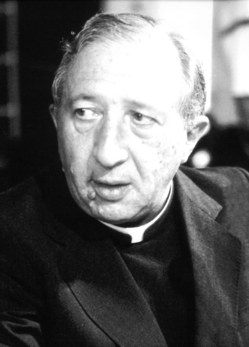
On September 10, 2004,
Cardinal Ratzinger, the future Pope Benedict XVI, would describe his own
meeting with Monsignor Giussani in the early 1970s, and Communion and
Liberation:
It was an interesting discovery for me; I had never heard of this
group (Communion and Liberation) until that moment, and I saw young people full
of fervor for the faith, quite far from a sclerotic and weary Catholicism, and
without the mentality of “protest”-which considers all that was there before
the Council as totally superseded-but a faith that was fresh, profound, open
and with the joy of being believers, of having found Jesus Christ and His
Church. There, I understood that there was a new start, there was really a
renewed faith that opens doors to the future.
This same experience is relived
today by groups in the region in Kansas City, Benedictine College, KU, and
Wichita that meet weekly to follow the method of Monsignor Luigi Giussani.
Father
Meinrad Miller, O.S.B. is the Subprior of Saint Benedict’s Abbey, and Chaplain of
Benedictine College in Atchison, KS
This article was recently published in The Catholic key, the Catholic newspaper of the Diocese of Kansas City-St Joseph, MO.
Thursday: a fitting day for adoration of the Blessed Sacrament
In some places it’s now catching-on that Thursday is a
fitting day for Eucharistic adoration with the intention of reparation, perhaps
replacing Fridays if one had to make a choice or either-or. I tend to think
that Thursday is a more apt for Eucharistic adoration on a stable basis in one’s
life and perhaps in parish life since as Catholics our center is Eucharistic and
the identification the Church makes with events that happened on Holy Thursdays
and Corpus Christi. Some theologians and spiritual writers today are advocating
this move for just this reason: Do this in memory of me. Whatever the case is,
adoration of the Blessed Sacrament is clearly a return to “the Cenacle, there
to relive in adoration and joy the gift and mystery of the Most Holy
Eucharist.”
Thinking about what Pope Benedict XVI has said regarding the
Lord’s Supper, “the Church commemorates the institution of the Eucharist, the
ministerial priesthood and the new commandment of charity, left by Jesus to his
disciples.” In another place he said that there is
a “…renewed invitation to render thanks to God for the supreme gift of the
Eucharist, to be received with devotion and to be adored with lively faith.
Because of this, the Church encourages, after the celebration of Holy Mass,
watching in the presence of the Most Holy Sacrament, recalling the sad hour that
Jesus passed in solitude and prayer in Gethsemane, before being arrested and
then being condemned to death.” We therefore adore Jesus in the Blessed Sacrament, either following Mass or at another time to live in the graces of what happened at Mass. Adoration of the Blessed Sacrament extends the graces of the Mass even after Mass has ended.
What better day than to work on this invitation to live in a
spirit of renewal with the Eucharist, the ministerial priesthood and the
theology of the Mass. The gift of sanctification (holiness) promised us by the
Lord is made real in the bond we have with the Eucharistic Lord. Our lives
depend on it because a strong Eucharistic spirituality centers our heart in the
heart of the Church.