Monastic Family of Bethlehem and of the Assumption of the Virgin, Livingston Manor, NY

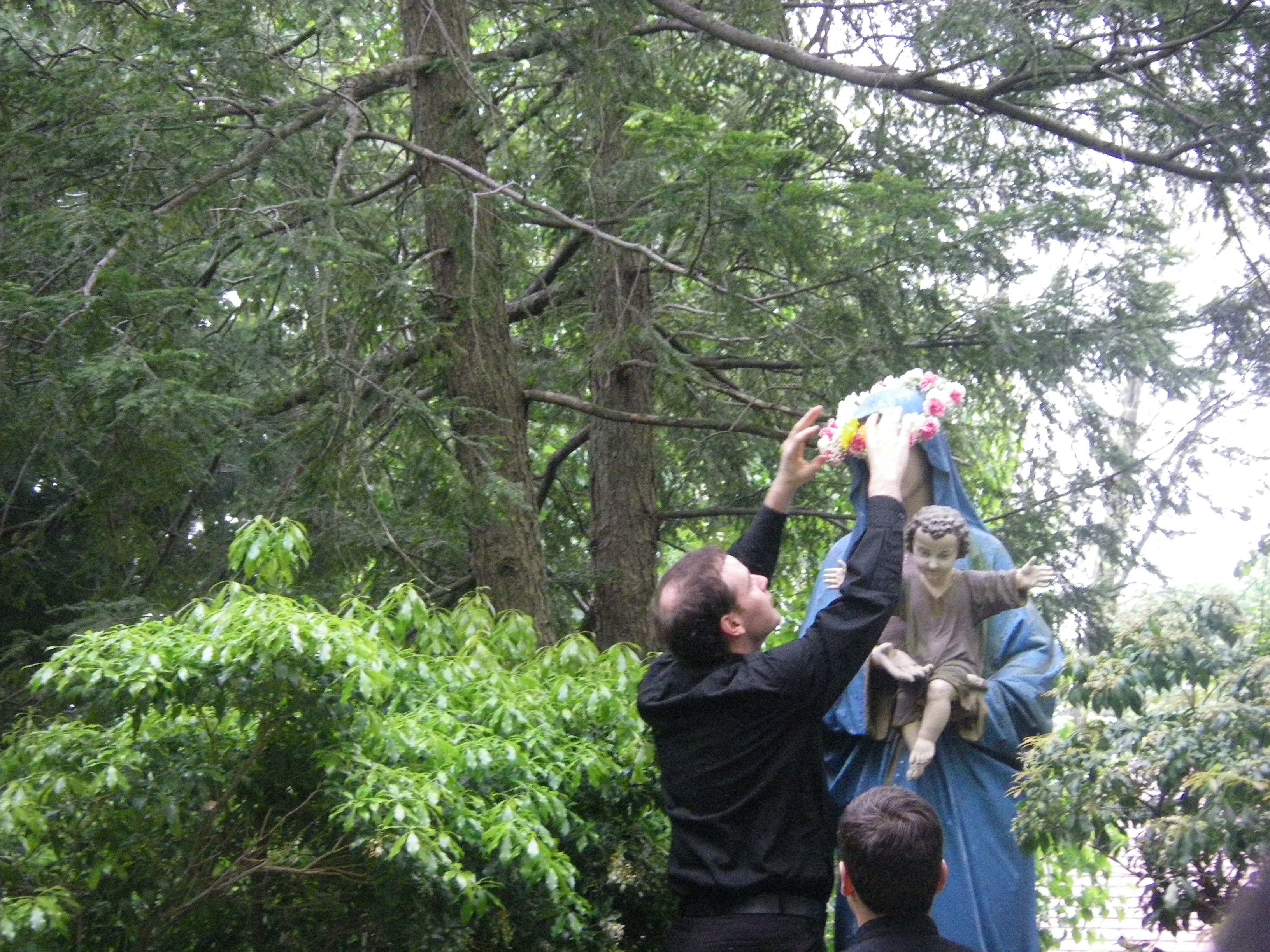
Livingston Manor BVM greeting.jpg

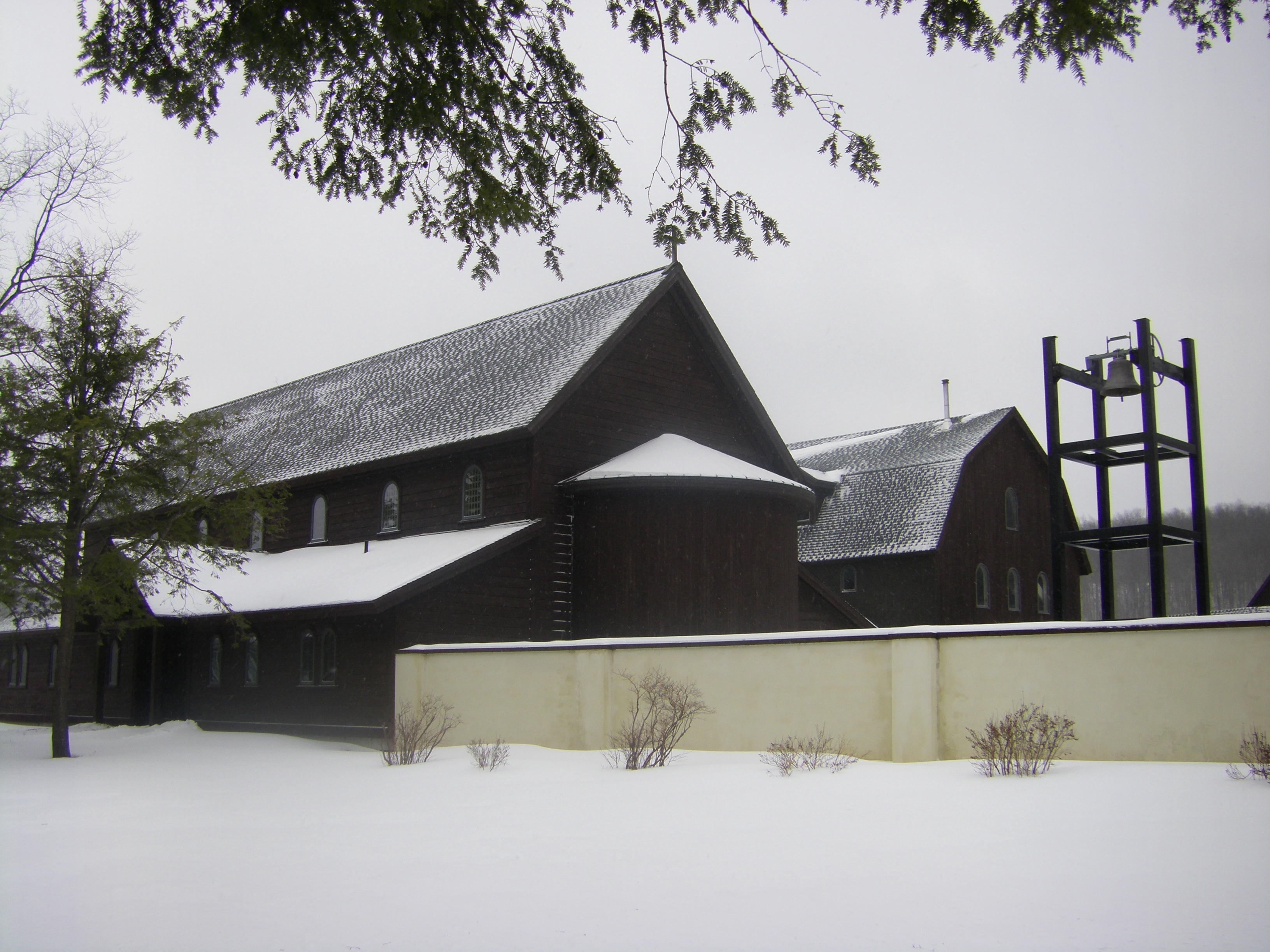
Back in February I received two extraordinary gifts from Brother John Paul, CFR: a weekend spent in a hermitage used by the Franciscan Friars of the Renewal and Brother John Paul’s introduction to a groups of cloistered nuns who live not far away, The Monastic Family of Bethlehem, Livingston Manor, NY. I had for several years appreciated the artwork of the nuns and this was a prime opportunity to meet Bethlehem, as it were, and to experience the sacred Liturgy and to drink in, for a very short time, the beautiful monastic atmosphere.


The nuns in Livingston Manor, New York, call themselves officially, “The Monastic Family of Bethlehem and of the Assumption of the Virgin” founded on November 1, 1950, at Saint Peter’s Square in Rome when Pope Pius XII proclaimed the dogma of the Assumption of the Blessed Virgin Mary. The inspiration of French pilgrims was described in this way:
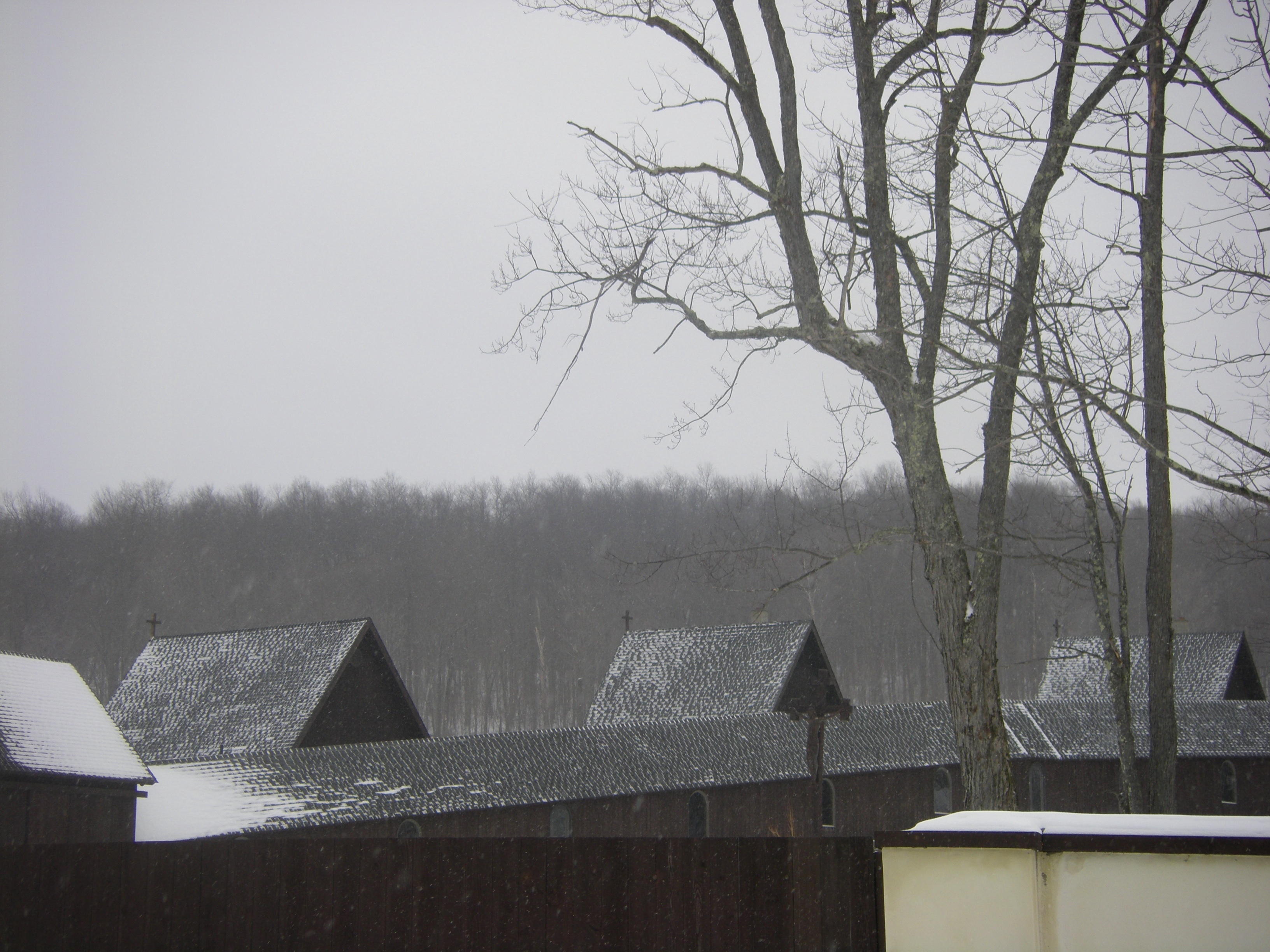
Livingston Manor nuns' hermitages2.jpg

That throughout the world there may exist religious communities devoted to silent adoration, striving to live in continual reference to what the Virgin Mary lives in heaven where she has been taken up with her soul and her body, into the glory of the Three Divine Persons, hidden for ever with Christ in God.


The monks and nuns of the Bethlehem communities, live the scriptural exhortation to seek the face of Christ by living in the school of Mary. From the Mary, the Mother of God, we learn not to set limits on our love of God and neighbor. This seeking of Christ’s face is discerned in the daily work of community living alone and together, in fraternal and liturgical love, and in the sacred Scriptures. In his letter approving the Monastic Family of Bethlehem, Eduardo Cardinal Martinez Somalo said: “The devote themselves to listening assiduously to the Word of God and to prayer of the heart in a life of solitude, silence liturgical and fraternal communion and humble manual work. In order to be faith to this vocation they receive the twofold monastic tradition of East and West. They are disciples of Saint Bruno, receiving his spiritual fatherhood and wisdom of life. With him they are trained in the school of “Divine Philosophy,” which is Jesus Himself, the eternal Wisdom of the Father. They keep a holy watch awaiting the return of their Lord. Their life, then, is entirely ordered to divine contemplation and the greatest possible love for the Divine Persons and for all human persons.” The point, therefore, is to be progressively likened unto Christ Himself.
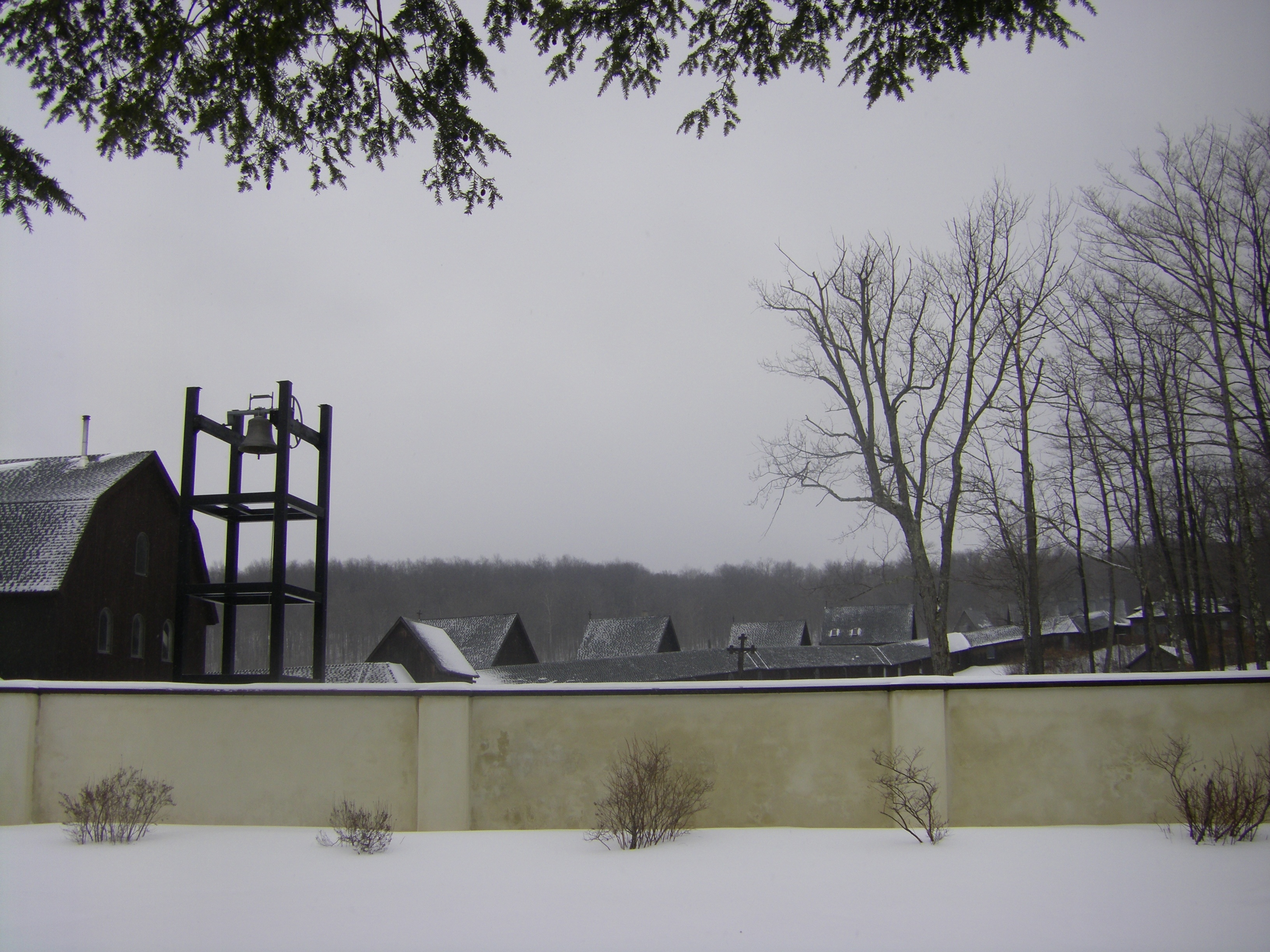
Livingston Manor enclosure.jpg

Seeking that pearl of great price the monks and nuns of this order seek to live with all their heart the evangelical life, though hidden from the world. Life in the Bethlehem Family is life in an eremitical monastery, meaning each nun (or monk depending on the monastery) lives in a hermitage and the hermitages are connected by a cloister leading the to church, the sign of fraternal and liturgical communion. This vocation, from my one experience of being present at the monastery in New York, is lived intently as it is drawn from what Saint Luke observed in his Gospel “and Jesus withdrew to the mountains and prayed” (5:16). The Monasteries of Bethlehem take Saint Bruno’s Rule and his wisdom of life but they are not Carthusians but are affiliated to them in a bond of charity.
Livingston Manor chapel3.jpg

The first community of sisters began in 1951 and the monks’ community was founded in 1976, in the Massif of Chartreuse. In 2007, the Bethlehem Family consisted in 650 members from 33 monasteries through out the world.


Work is essential in this life. You quickly learn that the monastic life -or any other style of life for that matter–is not meant for those who want to rest and relax while supervising the work of others. Each nun or monk is expected to contribute to the shared life. For example, when a new monastery is founded the nuns and monks first build their oratory where the Sacrifice of the Mass is celebrated and the Divine Office is sung. Daily bread is earned, not an entitlement that one sees in other orders. Similar to the average working class family in the world today, the monks and nuns work to sustain their life and glorify God. From something to be avoided or disdained, nuns and monks engage their entire being into the work assigned so that the love of God might be expressed, a sign of trust in the “God the creator of heaven and earth.” Here in New York, the Sisters of Bethlehem earn their living by working with their hands. Through their artwork, they seek to convey something of God’s beauty and truth. Their work itself is accomplished in prayer, praise to the Creator of all things and intercession for all those to whom these items are destined.

Livingston Manor nuns in prayer after Mass.jpg

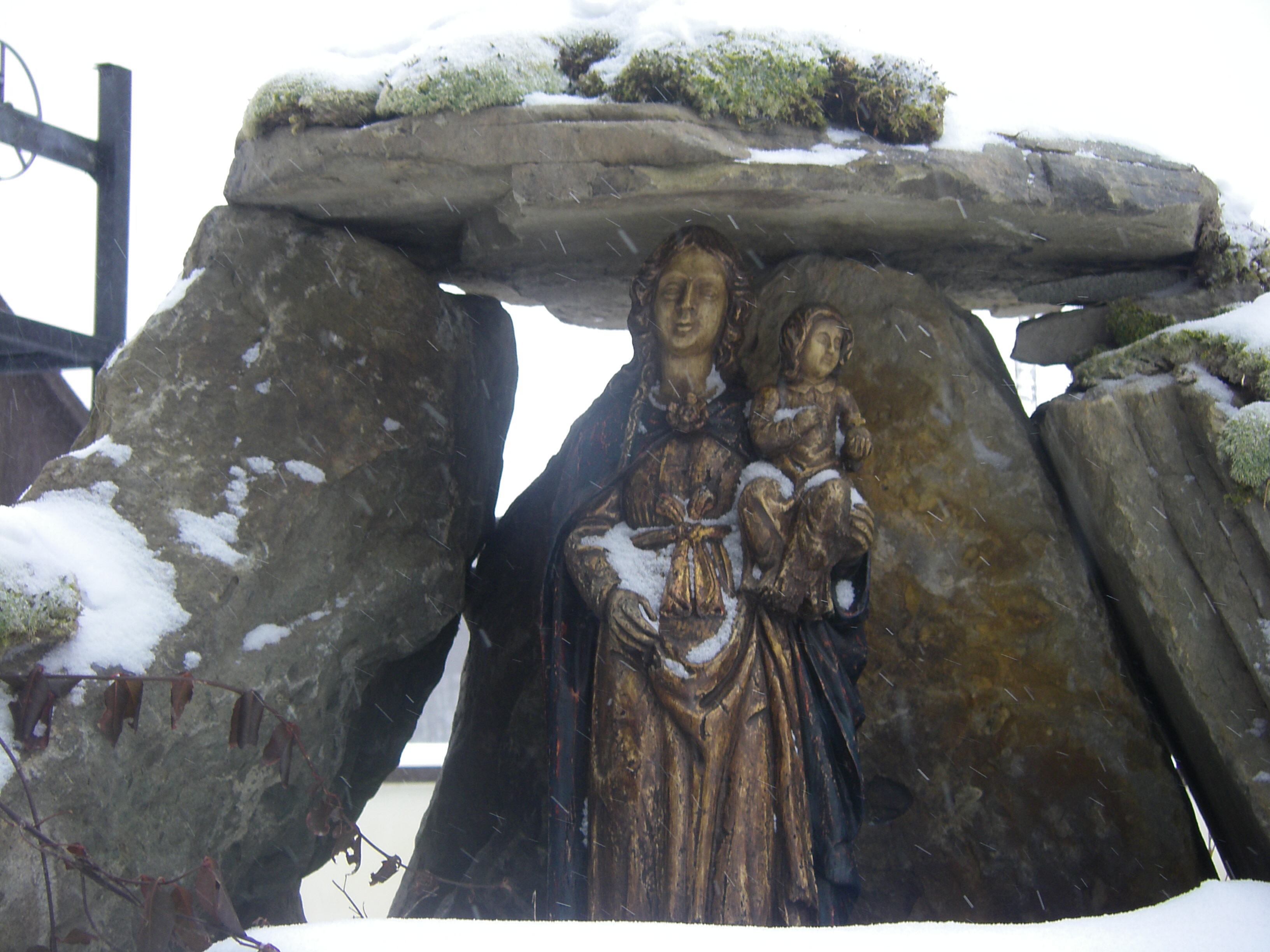
The Monastic Sisters arrived in Livingston Manor, New York, in May 1987. The monastery is about 2.5 to 3 hours north of New York City. In this monastery, they earn their living by making medallions, icons and chinaware. They also sell dolomite statues, crèches, crucifixes, and bas reliefs made in the monastery of Mougeres France.


My brothers keep a holy and persevering watch awaiting the return of their Master in order to open to Him at once when he knocks, said Saint Bruno.


As Saint Isaac of Nineve said, “When the Spirit makes his dwelling in someone, this person cannot stop praying, for the Spirit does not cease to pray within him.”

Livingston Manor Christ the King.jpg

In the solitude of the cell, the monk and nun of Bethlehem has this schedule each day:

1 hour of the liturgical hours

45 min of lectio divina (Bible reading)

1.5 hours of personal prayer

1.5 hours of biblical and theological study

c. 2 hours for 2 daily meals and free time

4-5 hours of work

8 hours of sleep


In the church

1.5 hours for Matins and Lauds

1 hour for Mass

30 min of Eucharistic thanksgiving

45 min for Vespers

Monday is a day of complete solitude and on Sunday there is a meal together with a gathering for a chapter meeting and spiritual conversation.

The nuns can be contacted at:
 
Monastery of Our Lady in Beatitude
393 Our Lady of Lourdes Road
Livingston Manor, NY 12758 USA
 
tel: 845-439-4300

or

Monastère Sainte Marie Reine des Cœurs
3095, chemin Marie Reine des Cœurs
Chertsey, Québec, J0K 3K0 Canada

or

Monastère Notre Dame de Mongères
F-34720 Caux France

Tel: 33-04-67-98-4486

The motherhouse:
Monastère de l’Assomption Notre-Dame
Currière-en-Chartreuse
F-38380 Saint Laurent du Pont France

Monks tel: 33-04-76-1497
Nuns tel: 33-04-76-4055

Blessed Gregory Frackowiak, Society of the Divine Word

Blessed Gregoty Frackowiak.jpg

Gregory Frackowiak was the youngest of our four martyrs was 31 when he was beheaded
on May 5, 1943, in the prison of Dresden. Brother Gregory consciously offered
his life as a substitute for others [does this sound the Law of the Gift spoken of my Jesus and recalled often by Pope John Paul II?]. His willingness to claim responsibility
for some thing he did not do saved several people (including his brother) from
certain imprisonment and death. This heroic gesture makes him similar to
another martyr of the same war — St. Maximilian Kolbe, who also gave his life
for someone else in the concentration camp at Auschwitz.

Gregory is his
religious name. He was born Boleslaw Frackowiak in Lowecice (a small village
not far from Poznan). One of twelve children, he grew up in a deeply religious
atmosphere. At the age of 18 he entered the Society of the Divine Word (SVD) novitiate in Gorna Grupa. From the beginning he exhibited great joy in being a
missionary Brother. He worked both as a receptionist and as a professional
binder in the printing press. Among the people of the area he was remembered as
someone with a special sensitivity towards the poor. He had numerous visitors,
because he was known for providing something to eat, a warm welcome, and a good
word for everyone. Some called him “the friend of the poor.”

His gentleness,
simplicity, and deep spirituality were also appreciated by the students of the
minor seminary, who enjoyed his presence and sought his advice. His work as a
bookbinder in the printing press was acknowledged as exemplary by both lay
employees and by the confreres. When Brother Gregory professed his final vows
on September 8, 1938, he was deeply convinced that he was offering his life to
God for the mission of Christ and of the Church. He had no idea how quickly and
how radically he would be expected to live out that commitment.

When World War
II began, Brother Gregory was part of the SVD community in Gorna Grupa. When
this house was made an internment camp for priests, the brothers were forced to
leave. For a while he lived with relatives in Poznan. There he served as the
sacristan at St. Martin’s Parish. He also taught catechism to children and even
baptized some of the newborn. One day the pastor was arrested by the Gestapo.
Since he could no longer safely hide the Blessed Sacrament, Brother Gregory
took upon himself the task of distributing it among the faithful. For an entire
day and night he and others in the parish knelt in adoration before the Blessed
Sacrament. Then with great reverence he distributed Holy Communion to those
present.

Eventually Brother Gregory was able to find work in a printing press
at Jarocin, a small town not far from his home. Like many others, he received
and passed on some anti-Nazi material. However, Fr. Paul Kiczka, SVD, advised
him to discontinue receiving and passing on these pamphlets, and so he stopped.
A year later these activities were discovered by the Gestapo.

Among those
arrested were men who had wives and children. Wouldn’t the others be saved if
he took on himself the whole responsibility for this anti-Nazi activity? “May I
accept the responsibility for them?” he asked his spiritual director. Fr.
Kiczka responded: “If you have the courage and strength. It would mean
sacrificing your life.” Gregory made his confession and received Holy
Communion. After his thanksgiving he shook his confrere’s hand and said, “Till
we meet again — but not on this earth.” He went home, where he was arrested the
following day. He “confessed” his crime, and immediately afterwards some of the
other suspects were freed. Gregory was transferred from the prison in Jarocin
to Poznan and then finally to Dresden, where he was beheaded.

A few hours
before his death Gregory wrote to his relatives. A few sentences from that
letter reveal his readiness for death: “I am writing to you for the last time
in this world. By the time you receive this letter I will no longer be among
the living. Today on Wednesday (5.5.1943) at 6:15 PM I will be executed. Please
pray for me. It is already one o’clock, and at two o’clock the priest will
bring me Jesus. Don’t cry, but pray for my soul. I leave it to you, whether you
want to communicate to my mother the manner of my death. I am completely at
peace. I greet all of you, and I will wait for you in God’s presence. Please
greet all the Missionary Brothers in Bruczkow. After the war bring my cassock
there. God bless you. Remain faithful Catholics. Forgive any faults of mine.
I’m sorry for my poor mother. May God protect you. Till we see each other in
heaven
.”

Blessed Gregory Frackowiak was beatified by Pope John Paul II on June
13, 1999, together with three companions from the Society of the Divine Word,
as part of a group of 107 Polish martyrs of the Second World War.

This
biography provided by the Society of the Divine Word, this religious congregation out if you think you have a vocation. We need more Blessed Gregorys….

National Prayer for Life

Prayer for Life
Eternal Father, Source of Life, strengthen us with your Holy Spirit to receive the abundance of life You have promised. Open our hearts to see and desire the beauty of Your plan for life and love. Make our love generous and self-giving so that we may be blessed with joy.
Grant us great trust in Your mercy. Forgive us for not receiving Your gift of life and heal us from the effects of the culture of death.
Instill in us and all people reverence for every human life. Inspire and protect our efforts on behalf of those most vulnerable, especially the unborn, the sick and the elderly.
We ask this in the Name of Jesus, who by His Cross makes all things new. Amen.
Our Lady of Guadalupe, pray for us.
[nationalprayerforlife.org]
Moved by profound concern for the destiny of every man and woman … a great prayer for life is urgently needed, a prayer which will rise up throughout the world. Through special initiatives and in daily prayer, may an impassioned plea rise to God, the Creator and lover of life, from every Christian community, from every group and association, from every family and from the heart of every believer. Jesus himself has shown us by his own example that prayer and fasting are the first and most effective weapons against the forces of evil (cf. Mt 4:1-11).
Pope John Paul II

National Prayer for Life Campaign launched


On Our Knees prayer for life.jpg

Yesterday, May 3rd,
marked the 10th Anniversary of the entrance into eternal life of John Cardinal
O’Connor.


Many of you were able to be present -and others were present through
EWTN–and shared prayer with us for the Cardinal’s eternal peace and God’s
mercy. In case you want see the video coverage, you may watch it here and
I suspect that EWTN will run the program again.


At the end of the Mass,
Archbishop Timothy Dolan launched and introduced a new effort of the Knights of
Columbus
and the Sisters of Life called the National Prayer for Life
Campaign
. 


Please join us in praying this
prayer every day and give it to others; all of us are hoping that it spreads
throughout our nation so that a Culture of Life may be fully restored!

Blessing of Crosses

On the old liturgical calendar today we find the feast of the Discovery of the True Cross by Saint Helena. A few years ago I had the privilege of spending a month at the Abbey of the Holy Cross in Jerusalem in Rome where the relics of the True Cross and Passion are preserved. How beautiful and holy it was to be a part of a worshipping community that had the presence of such items connected with the oblation of Our Lord and Savior! Every day I spent time in prayer in the chapel holding the these relics. So, that the revised liturgical calendar deleted this feast is a sad state of affairs. It is, after all, the cross of Christ that gives new life! As part of the rites for the day we find the Blessed of Crosses. 

Discovery & Proof of the True Cross PdellaFrancesca.jpg

P: Our help
is in the name of the Lord.

All: Who made heaven and earth.

P: The Lord be with
you.

All: And with your spirit. 

Let us pray.

Almighty everlasting God, merciful
Father and our unalloyed comfort, in virtue of the bitter suffering that your
only- begotten Son, our Lord Jesus Christ, endured for us sinners on the wood
of the cross, bless + these crosses which your faithful will set up in their
vineyards, gardens, fields, and other places. Shield the land where they are
placed from hail, tornado, storm, and every onslaught of the enemy, so that the
produce, ripened for the harvest, may be gathered to your honor by those who
put their trust in the holy cross of our Lord Jesus Christ, your Son, who lives
and reigns with you forever and ever.

All: Amen.

Saints Philip and James; Cardinal O’Connor remembered

Sts Philp and James.jpg

Philip, he who sees Me, sees also the Father, alleluia.
O God, who makes us glad by the yearly festival of Thine Apostles Philip and James, grant we beseech Thee, that we who rejoice in their merits may be taught by their example.

JJ O'Connor.jpgToday, we also remember the soul of John Joseph Cardinal O’Connor, PhD, archbishop of New York, 1984-2000. He died 10 years ago today.

O God, Who was pleased to raise Thy servant John Joseph O’Connor to the dignity of the episcopate; we beseech Thee, vouchsafe to admit him to the communion of Thy bishops forevermore.

Crowning of the Blessed Virgin

Fr Szivos blesses crown 2010.jpgThe practice of adorning the Blessed Mother’s statue
or icon developed as a pious custom of the people in their familiar
surroundings. By the sixteenth century the coronation images of the Blessed
Virgin Mary became widespread. While it is not as prevalent today, a ceremony of crowning of Mary continues to be a sincere yet profound spiritual and human gesture on the part of the faithful in front of Mary’s beauty.


Something gestures of the past continue today and evoke great sentiment for holiness observed in such a great woman like Mary, Mother of God. I fondly recall when I was a student at Saint Stanislaus Church & School (New Haven, CT) the sisters of the Congregation of the Holy Family of Nazareth
instilled in me and my fellow students a great love for the Blessed Virgin under the titles of the
Immaculate Conception and Our Lady of Czestohowa by singing a daily hymn to
Mary, frequently rosary praying, and the yearly May Crowning following the First Holy Communion Mass. Somewhere I have photos of Sister Rosetta training us in the third grade to execute the ritual correctly and piously. 

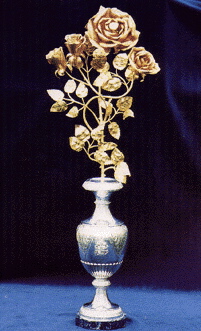
Golden Rose.jpg

Indeed, for a long time the popes –Pius XII, Paul VI, John Paul II and now
Benedict XVI– have endorsed this custom. What good Catholic can deny the extraordinary value of remaining close to Mary and showing a modicum of affection to her? As I bring my own mother flowers, so I bring my heavenly Mother flowers. This crowning of Blessed Mary is sign of our confidence in her spiritual motherhood. A fitting custom revived by the current Holy
Father (something done by his predecessors) is the giving of the Golden Rose to a Marian Shrine he visits, showing
his filial devotion.

The 1987 Marian Year provided an opportunity for the Church to strengthen a sincere devotion to Mary. What developed in the Marian year was a renewal of the venerable tradition of honoring images of Mary in homes, parish church,
religious houses and seminaries with the promulgation of the Order of Crowning
an Image of the Blessed Virgin Mary
. The Order describes the Marian honor of
crowning as follows:

Patric crowns BVM 2010.jpg

The queen symbol was attributed to Mary because she was a
perfect follower of Christ, who is the absolute “crown” of creation.
She is the Mother of the Son of God, who is the messianic King. Mary is the
Mother of Christ, the Word Incarnate… “He will be great and will be
called Son of the Most High; the Lord will give Him the throne of His father
David; and He will reign over the house of Jacob forever; and of His kingdom
there will be no end” (Lk 1:32-33). Elizabeth greeted the Blessed Virgin,
pregnant with Jesus, as “the mother of my Lord” (Lk 1:41-43). Mary is
the perfect follower of Christ. The maid of Nazareth consented to God’s plan;
she journeyed on the pilgrimage of faith; she listened to God’s Word and kept
it in her heart; she remained steadfastly in close union with her Son, all the
way to the foot of the Cross; she persevered in prayer with the Church. Thus,
in an eminent way she won the “crown of righteousness” (II Tim 4:8),
the “crown of life” (Jas 1:12; Rev 2:10), the “crown of
glory” (I Pet 5:4) that is promised to those who follow Christ. (Order of
Crowning an Image of the Blessed Virgin Mary
, NCCB, 1987)

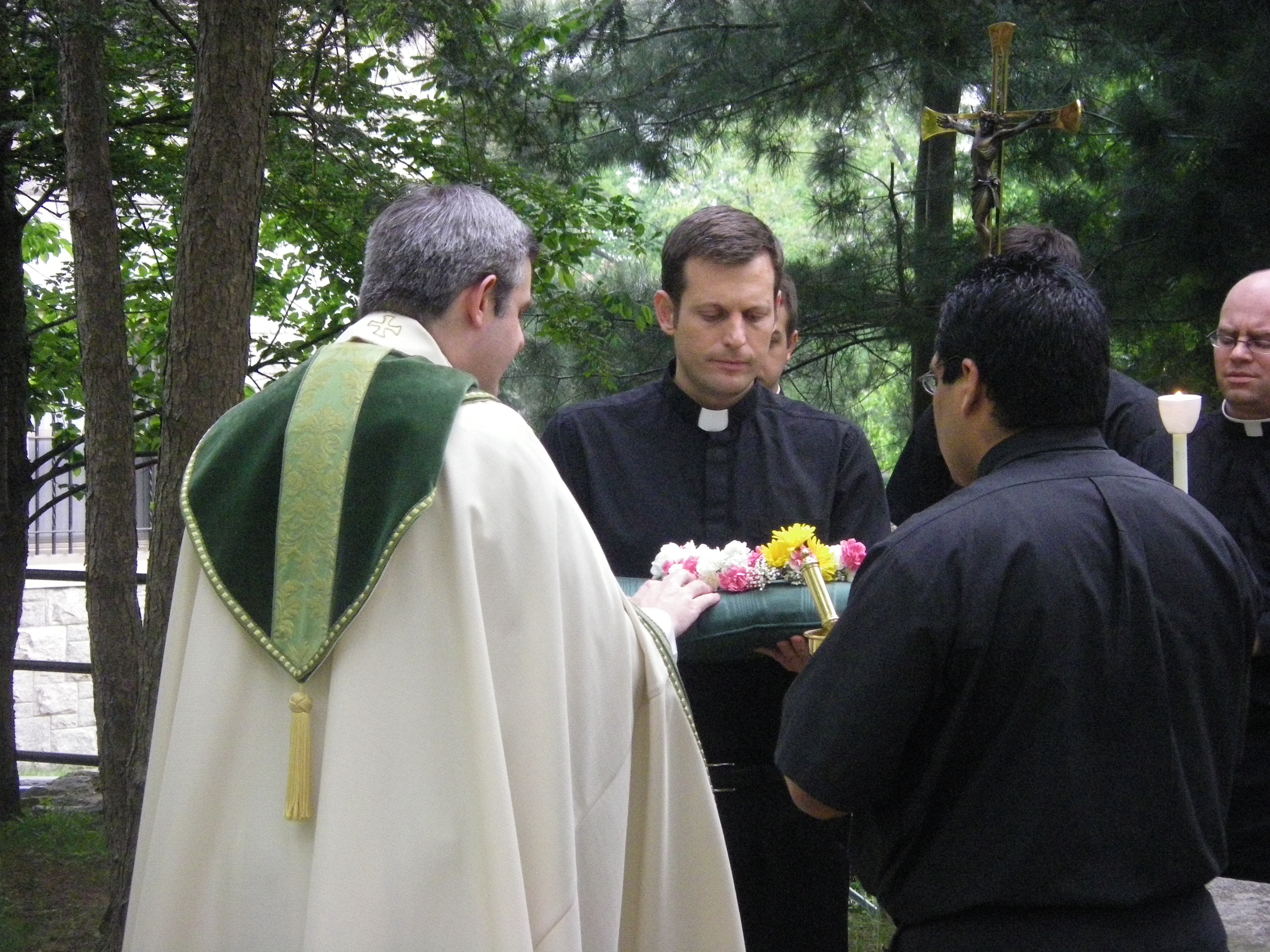
Following First Vespers for the Fifth Sunday of Easter last evening, the seminarians formed a procession to the grotto of Our Lady, Cause of Our Joy, to crown her with flowers. Saint Joseph Seminary is placed under the title of Mary, Cause of our joy and we invoke her solicitude frequently by this title. Father Charles Szivos, one of the seminary’s spiritual directors, led the seminarians in the rosary before he blessed the crown of flowers and the statue.

Archbishop Dolan & Br Ignatius Perkins honored at St Catherine of Siena Priory (NYC) healthcare Mass

See! A wise and faithful virgin standing there with a lamp alight, ready now to meet her Bridegroom, coming soon with pow’r and might. Cath’rine, filled with loving fervor served the Church both night and day: As she taught us, make us faithful to the suff’ring Christ our Way.

St Catherine statue.jpgThe other day I mentioned the 4th annual Mass and award for healthcare professionals who treat the sick and the dying with dignity at Saint Catherine of Siena Priory & Church (East 68th St, NYC) suggesting prayerful solidarity and physical presence, if possible. I had hoped to go myself, but too many things to do at the seminary in the final week of classes prevented me.

Archbishop Timothy M. Dolan and Brother Ignatius Perkins, OP, PhD, were honored at the event. The archbishop was the principal celebrant and homilist of the Mass and was joined by a variety of Dominicans, including Father Dominic Izzo, prior provincial of the Province of St Joseph, Father Brian Mulcahy, Izzo’s vicar provincial, and Father Jordan Kelly, curate, Director of Liturgy and hospital chaplain at St Catherine Church and Priory.

DIzzo & Br Ignatius St Catherine.jpg

Brother Ignatius was particularly honored by the Dominicans for his work in founding the  Dominican Friars Healthcare Ministry of New York; he is leaving his work as the Director of the DFHM to assume a position as the Dean of the Nursing School at Aquinas College, Nashville, TN. 

OP friars with TM Dolan St Catherine.jpg

Thanks to one of the Dominican friars, Father Carlos Quijano who took some photos and graciously sent them to me are now shared here.

May Saint Dominic, Saint Catherine and Blessed James Salamone richly bless both the archbishop and Brother Ignatius, especially as Brother transitions to a new ministry for the Order of Friars Preachers and the Church.
Watch an informative video clip, Taking Healthcare’s temp.
DIzzo & Tm Dolan St Catherine.jpg