Julián Carrón speaks st the Synod on the New Evangelization

JCarron Synod.jpg

Those who hold the rank of Ordinary members of the Synod Bishops are able to make a public contribution at the Synod. On Saturday, October 13, 2012, the President of the Fraternity of Communion and Liberation, Father Julián Carrón, made his presentation to the assembled Synod members, and the Pope. Pay close attention to exactly what Father Carrón said,

We can no longer “think of the faith as a self-evident presupposition for life in society”. In fact, “not only can this presupposition no longer be taken for granted, but it is often openly denied” (Porta Fidei, 2).

While reading the Instrumentum laboris (142), I was shocked by this observation: “a concern on the scarcity of initial proclamation taking place everyday”. All the efforts made until today are having trouble generating newness of life that will arouse curiosity on how the baptized live. How can the fracture between faith and life be overcome, a fracture that makes it harder for faith to be found in a reasonable way, and therefore, attractive? Without rediscovering and welcoming the precious gift that is faith, new evangelization risks being diminished to being a question for experts.

To incite this interest, we have an ally in the heart of man from any culture and condition. We know that the heart of man is made for the infinite. Awaiting its achievement remains in him. Because there is “no false infinite that can satisfy him”. “What, then, will anyone gain by winning the whole world and forfeiting his life?” (Mt 16:26).

A doctrine, a group of rules, an organization cannot answer this expectation, only an event. As Fr. Giussani said during the 1987 Synod, “What is lacking is not as much the verbal or cultural repetition of the proclamation. Today’s man perhaps awaits subconsciously the experience of the encounter with persons for whom the fact of Christ is such a present reality that it has changed their lives“. A place where everyone is invited to verify what the first verified on the banks of the river Jordan: “Come and see”, because “a faith that cannot be evidentiated and found in present experience, confirmed by it, that is not useful in answering its needs, will not be a faith capable of resisting in a world where everything, absolutely everything, says the opposite”.

Goodness vs Greatness

Young man Memling.jpgToday’s gospel is the familiar narrative of the Rich Young Man: “go and sell follow me.” It is clear in Saint Mark’s rendering of the story that the young man is good. He does good things, he does what any respectable person would want to do; the young man asks the right questions; he follows what the tradition lays before him. So, the man actually is admirable according to the measure of this world. But the measure with which a person of faith judges is very different because it is a given, and not achieved. There is one that the young man’s not able to grasp: the greatness offered to him by God. He lacks the capacity to accept that it is not about the human will in attaining lasting happiness. As we know, it’s only the Infinite that suffices in answering the needs of the human heart. As the psalm indicates, filled with Love, we sing for joy. The eschatological hope we live in is one mercy’s face is more beautiful than any of the temporal riches we can conceive of. Jesus offers the young man the possibility of greatness and not mere goodness; the Lord shows him the path to eternal life, not just the best way to get through the city; God hands him holiness and not the safety of existence.

Our Lord offered the young man, and therefore us, the way to unity and deeper communion with him here, and in eternity — but the ultimate destiny for each of us is heaven. The young man’s response is understandable but not acceptable. Greatness, holiness, is a superior divine gift than being good. What do you want? What do you seek? How do you live?

The Year of Faith and how we’re called to live it


I think one of the witnesses of Jesus Christ that we need to follow is Archbishop Charles J. Chaput, archbishop of Philadelphia. The archbishop writes a weekly column and it’s usually quite good and very worthy of reflection. Today’s installment is no less worthy at the start of the Year of Faith. Entitled, “The Year of Faith and how we’re called to it” is noted here, but three of the paragraphs are excerpted below. When you read the article play close attention to the quote of Henri de Lubac!

Real faith – the
kind our Holy Father calls us to — demands a keen awareness of our failures as
Christians and a spirit of repentance. It requires us to seek out who Jesus
Christ really is, and what he asks from each of us as disciples.  And that
always involves the cross.

Continue reading The Year of Faith and how we’re called to live it

Life as Vocation, Life with Christ is our new beginning

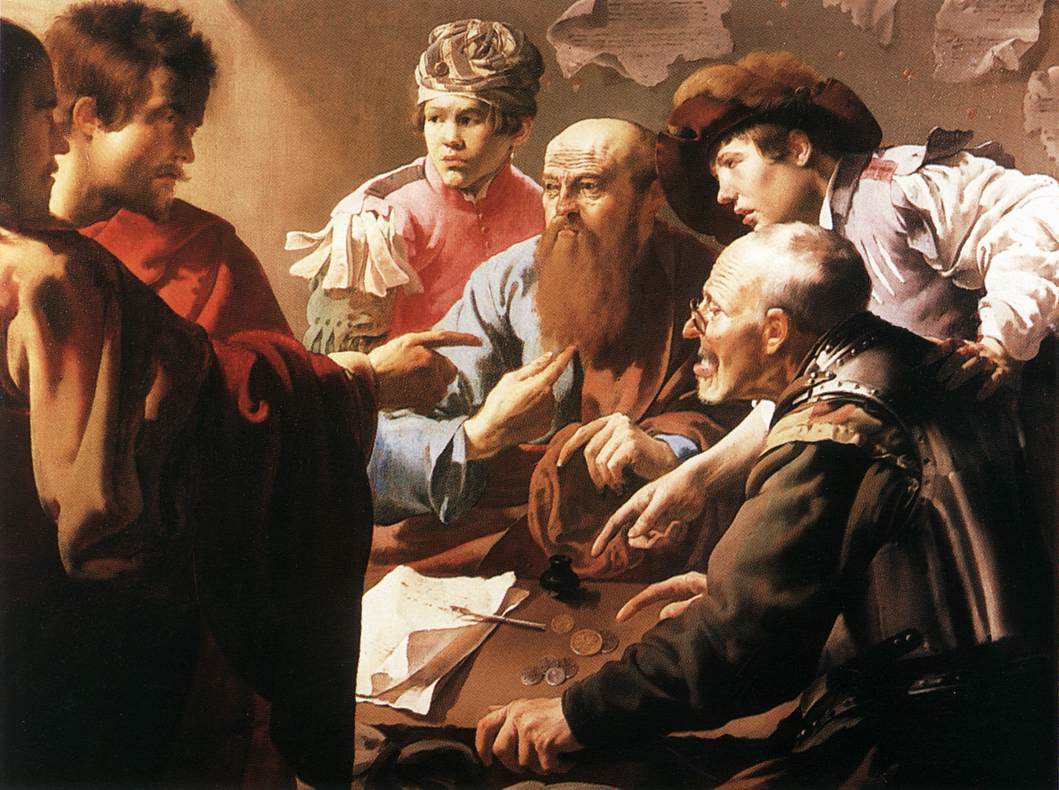
Call of St Matthew brugghen.jpgLast Sunday many of the communities of Communion and Liberation around the USA met for a “Beginning Day”. We met in NYC to hear the national leader of CL, Chris Bacich, make a presentation, to listen to Father Julián Carrón’s presentation and to pray the Mass. About 100 CL in NY attended. Notes on the Day later. But in the meantime, expect a journey, not a miracle; journey in faith is made in experience of what Jesus gives us to live.

Father Julián Carrón’s text is available here: Life as Vocation 2012 eng.pdf

Our work in the School of Community and in the life of the community only is made possible if we beg the Holy Spirit to guide our steps. Our prayer, then, is Veni, creator Spiritus, mentes tuorum vista, imple superna gratia, quæ tu creasti pectora.

The law has betrayed its own vocation, Cardinal George tells


You can always count on Francis Cardinal George, OMI,  to speak the truth. He is always very clear, always on target when looking at the American cultural situation. On September 30, 2012, he celebrate a votive Mass of the Holy Spirit and delivered a homily for the annual Red Mass, at which he  said, “There are times the law is a a cause of scandal.” The following paragraphs give a sense of what the Cardinal said. The rest of the homily may be read here.

What is left now
to our common life is whatever a legislative majority or the often-manipulated
whims of popular majority opinion will tolerate. That is no longer a classical
Constitutional legal order. The law has betrayed its own vocation.

Continue reading The law has betrayed its own vocation, Cardinal George tells

Archbishop of Hartford Henry Mansell blogs, tweets

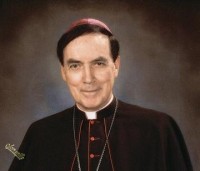
HJM.jpgToday, as you know the Church begins a Year of Faith. We also observe today the 50th anniversary of the Second Vatican Council. Not least in the list of initiatives is the inauguration of a blog written by Archbishop Henry J. Mansell, the archbishop of Hartford. 

You may read the blog here.
He also tweets here.

The Hartford archbishop joins a growing list of North American bishops who are intelligently using social communications to fling abroad the Good News, to spread the joy of being persons of faith on a journey to encounter the Lord. 
Social media does, in fact, build communion among persons of faith and non-faith. It bridges the gap among those who believe in Jesus and and those who don’t, or are searching. Blogging, tweeting and using Facebook are but means to an end. They only make sense if there the media they employ have something to say, attractive with beautiful images (traditional art and with contemporary images) and updated with regularity. Kudos to Archbishop Mansell. As point of comparison, in Connecticut Mansell is the only blogging bishop; Bridgeport doesn’t have a bishop at the moment and Norwich’s Bishop Cote and Stamford’s Ukrainain Eparch Bishop Paul don’t use social media at the moment. Hint.

Let’s also acknowledge that yesterday was the Archbishop’s 75th birthday. May God grant him many years.
Enhanced by Zemanta

Alvaro Corcuera, LC, steps aside as General Director of the Legion of Christ

Benedict receives Alvaro Corcuera.jpgIn a letter dated October 9, 2012 and released to the public today, (see below) to the priests and brothers of the Legion of Christ, the Regnum Christi Movement and the faithful who follow the Legion, Father Alvaro Corcuera, 55, has announced he is stepping aside as General Director. Health concerns are cited. All this in favor of handing governance to the Vicar of the congregation, Father Sylvester Heereman, 38, until the next General Chapter meets in late 2013 or early 2014.

No doubt the events in the Congregation and the Movement have been difficult for him. He deserves prayerful and fraternal support. Regardless of the Legion’s past, the malfeasance of the founder, Father Alvaro was obedient to the Church and bore the heat of the day. I am one who believes that a more radical surgical knife was needed to cure the disease in the Legion, and that will come in time. Much work has been done, thanks to Father Alvaro, and more will be done by the new administration and the forthcoming Chapter. As Cardinal de Paolis noted, being the major superior at this time was a burden and the term office may be too long for many today.
May Blessed John XXIII intercede with Jesus the Good Shepherd, pray for the Legion and the Church. Our duty is to pray, and work for meaningful change.

Father Corcuera’s Letter: Fr Corcuera resignation letter 2012.pdf
The Pontifical Delegate’s Letter: Cardinal Velasio De Paolis certification letter.pdf
Enhanced by Zemanta

Year of Faith: sharing Christ’s Good News is new life, a journey that transforms


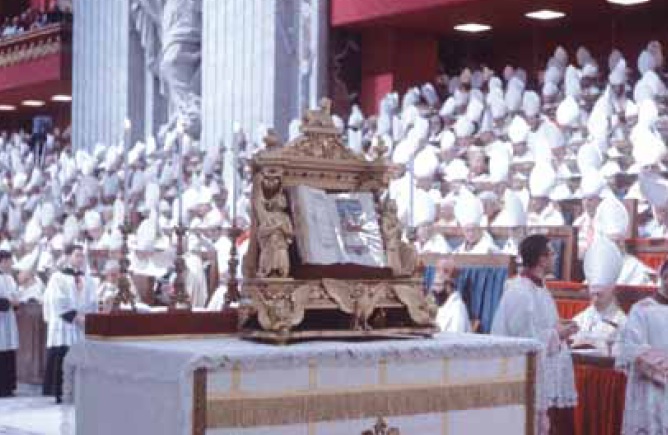
In the presence of  hundreds of bishops, the Eastern Catholic Patriarchs, ecumenical partners and laity, Pope Benedict prayed the Mass and preached on the meaning of both the Second Vatican Council and the Year of Faith through the lens of conversion. Benedict is clear: the Year of Faith is not celebrating the 50th anniversary of the Second Vatican Council. The Church needs not a special forum for this anniversary; it is all an invitation to conversion and to deepen one’s faith in the Christ. The homily Pope Benedict delivered today follows.

V2 bishops with gospel bk.jpg

Today,
fifty years from the opening of the Second Vatican Ecumenical Council, we begin
with great joy the Year of Faith. I am delighted to greet all of you,
particularly His Holiness Bartholomaois I, Patriarch of Constantinople, and His
Grace Rowan Williams, Archbishop of Canterbury. A special greeting goes to the
Patriarchs and Major Archbishops of the Eastern Catholic Churches, and to the
Presidents of the Bishops’ Conferences. In order to evoke the Council, which
some present had the grace to experience for themselves – and I greet them with
particular affection – this celebration has been enriched by several special
signs: the opening procession, intended to recall the memorable one of the
Council Fathers when they entered this Basilica; the enthronement of a copy of
the Book of the Gospels used at the Council; the consignment of the seven final
Messages of the Council, and of the Catechism of the Catholic Church, which I
will do before the final blessing. These signs help us not only to remember,
they also offer us the possibility of going beyond commemorating. They invite
us to enter more deeply into the spiritual movement which characterized Vatican
II, to make it ours and to develop it according to its true meaning. And its
true meaning was and remains faith in Christ, the apostolic faith, animated by
the inner desire to communicate Christ to individuals and all people, in the
Church’s pilgrimage along the pathways of history.

Continue reading Year of Faith: sharing Christ’s Good News is new life, a journey that transforms

God keeps us waiting because…


“Why does God, who is love, keep us waiting?
Because He is love, and seeks love. Love that does not know how to wait is not
love. To love is to give ourselves. No only for a fraction of a lifetime, nor
with a part of its strength: love is, and seeks, the total gift of self….
Delays in union [with God] are not time lost; far from it. God sees very far
ahead; He makes wonderful use of what we call evilof our wanderings, our
hesitations and detours
, although He does not love them or want them. It is at these
moments, above all, that we need confidence and perseverance. The prayer,
whether for ourselves or for others, that is not discouraged, which persists
and besieges Heaven, touches God’s heart; and that is why He tells us to
persevere.”


Dom Augustin Guillerand, O. Cart.
A French Carthusian monk (1877-1945) of the Charterhouse of La Valsainte, Switzerland