Pope Paul on the way to sainthood, others move ahead

English: President John F.Kennedy visits Pope ...

US President John F.Kennedy visits Pope Paul VI.

The Prefect of the Congregation for Saints, Angelo Cardinal Amato, SDB, in the course of an audience with His Holiness today, received permission to promulgate a decree certifying those whose causes have been studied and have reached a particular place in the ongoing work of judging who are candidates as saints. There is a human process in “saint-making” but true be told, ONLY God makes saints.

Notable on the list moving ahead is the Servant of God Pope Paul VI (Giovanni Battista Montini) who died on August 6, 1978. 
Montini of Milan was the 261st pontiff taking the name “Paul VI” and followed John XXIII (now a Blessed) and was before John Paul I (who’s cause for sainthood is also being studied). Paul is among with many others on the move.The list presented to Pope Benedict today is here.
Who was Pope Paul VI? Vatican Radio’s Veronica Scarisbrick helps to answer the question.
Pope Paul there are three new saints and many others who now move up the proverbial ladder. The pope is now referred to as the Venerable Servant of God Pope Paul VI.
Enhanced by Zemanta

The Knights make me feel safe


The emblem of the Knights of Columbus

The circumstances in Newtown, Connecticut, have raised the awareness of many with regard to human need: love, peace, fraternity, fidelity, acceptance, and safety. Sometimes we are unaware of our own human need, sometimes we are unaware of the person next to us, and sometimes we are unaware of the gifts given to us by God that are in front of us, like companionship. 


When I worked at Saint Rose of Lima Church several years ago I came into contact with several very impressive men and their families. These men were impressive because they weren’t so different from me, or others that I knew, yet their regular faith, friendship and actions made difference in concrete ways. The concrete is always an expression of someone else at work: for me it is Jesus Christ.

I am proud member of the Knights of Columbus and I cherish my membership with other Knights. Why? In a recent email from the Grand Knight about the work he’s calling brother Knights to do, and attending to what others need and feel for a greater good inspired me because of the one line in the letter (see below). See how important a presence can be? See how important THE Presence can be if we allow the Him to act in and through us?

Enhanced by Zemanta

Continue reading The Knights make me feel safe

Chaldean Patriarch and Cardinal Emmanuel III Delly, resigns

Cardeal Emmanuel III Delly.jpgThe 85 year old Chaldean Patriarch and Cardinal Emmanuel III Delly resigned today.

The Pope accepted his resignation and has called for a special synod of bishops of the Chaldean Church to meet on January 28, 2013 to be supervised by Cardinal Leonardo Sandri, the Prefect of the Congregation for Eastern Churches.
The Chaldean Church will be governed by Archbishop Jacques Ishaq, 74, a curial bishop. The Chaldean Church in Iraq numbers about 450K+ and 1.5 million worldwide.

Patriarch Emmanuel III was ordained 60 years ago today; has been a bishop since 1963. When he was elected he was a retired bishop. Benedict XVI nominated him a cardinal in 2007.
Delly attended several sessions of Vatican II.
The Orthodox equivalent to the Chaldean Church is The Assyrian Church of the East who has its headquarters in Chicago, governed by Patriarch Dinkha IV. In the USA, there are two Catholic eparchies for the Chaldeans, one in Michigan and one in southern California. Whether Orthodox or Catholic, these church in Iraq considers the Apostle Saint Thomas to be a founder of the Church. Since November 11, 1994, the Church of Rome and the Church of the East (the Orthodox group) signed the Common Christological Declaration meaning that the Churches held Chalcedonian faith in Christ’s humanity and divinity.
Enhanced by Zemanta

Fasting to prepare for Christmas


The Four Men in the Fiery Furnace. Три отрока ...

Latin Catholics are accustomed to fasting once a year
at Lent. Historically speaking, there was a time when the tradition of fasting
was proposed a few more times a year than merely Lent, e.g., the Assumption fast, the Saints’ fast and the Advent
fast.


Liturgically speaking the time before any great feast of the Lord (i.e., Christmas & Easter), the feast of Saints Peter and Paul, and
also of Mary (Assumption of the BVM) was preceded by a distinct time of preparation: prayer, fasting almsgiving.

In time, Catholics have relaxed some traditions and now they have become virtually obsolete. Think of the practice of Ember Days. Today, in fact, is the first of the three Advent Ember Days. You may have heard that the US bishops are encouraging the reinstitution
of abstinence on Fridays. Fasting and abstinence are different; do you know the
difference? What can we do to restore a reasonable practice of the Catholic faith that includes expanding our utilization of spiritual disciplines such as fasting? Can Catholics reinstitute the Ember Days in the praying of the Novus Ordo Liturgy?
Enhanced by Zemanta

Continue reading Fasting to prepare for Christmas

Cardinal Francis George details keeping Catholic faith part of American consensus


English: Coat of arms of Francis cardinal Geor...

Chicago’s archbishop, Francis Cardinal George, soon to be 76, spoke to 45 members of his Archdiocese Pastoral Council on November 17th about the need to clarify what we as Catholics believe and how we ought to live if we want to make a contribution to any of the national dialogues. For example, had the topic been center stage at the time of the meeting, the cardinal may asked a question like, given the tragedy in Newtown, CT, how would an informed and reasonable Catholic respond to matters: of mental health, to the Second Amendment, to God’s role in our life with such violence?

Enhanced by Zemanta

Continue reading Cardinal Francis George details keeping Catholic faith part of American consensus

From Nazareth to the street

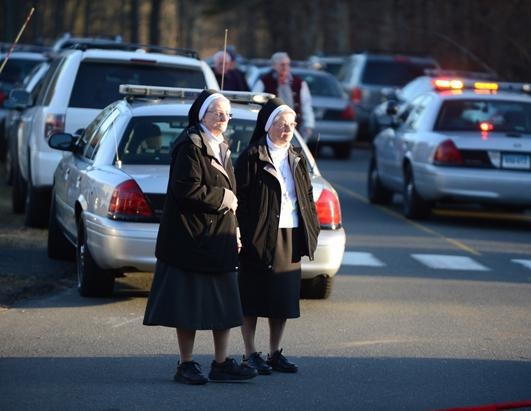
Srs Mary Ellen and Jude Thaddeus CSFN Newtown.jpgIn the days following the Newtown tragedy many people are applying the concept of hero to those who lived and died with dignity offering themselves for the good of others. The adults at the Sandy Hook School can certainly be labeled as a heros. We can also bestow the title of hero on those who responded: police and fire personnel, healthcare professionals and social workers, and members of the clergy and consecrated religious. 

Here on Communio I want to single out the good and exemplary witness of Monsignor Robert Weiss, Father Ignacio Oritgas, Father Luke Suarez, Sister Mary Ellen Genova, CSFN and Sister M. Thaddeus Rajka, CSFN. The deacons are to be mentioned here, too. Each of them, with affection for the self lived the law of the Gift given in spirit of the family.

Continue reading From Nazareth to the street

New Orthodox Patriarch of Antioch elected

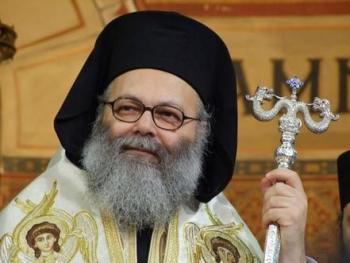
John Yaziji.jpgThe Greek Orthodox Church of Antioch elected a new patriarch, His Eminence, Metropolitan Archbishop of Europe, John Yazigi, 57. He will be known as John X.

The special synod of 18 bishops gathered for the election following the death of Patriarch Ignatius IV who died on December 5; the synod met at the Balamand Patriarchal Monastery of the Most Holy Theotokos.

Patriarch John was born in 1955 to a Syrian father and Lebanese mother in family of six children. His brother Paul is the Metropolitan of Allepo and his sister is a nun.

Patriarch John X is an Athonite monk ordained a deacon in 1979, a priest in 1983 and a bishop in 1995. In 2008, he was elected to pastoral service in Europe. His education includes degrees in civil engineering, theology, liturgy and music. His skill as an administrator can be seen in his work as Dean of the School of Theology at Balamand twice. John is known to be an exceptional pastor with competencies in the sacred Liturgy and Music; he’s a published author and popular speaker.
Blessings on Patriarch John!

The Greater Antiphons, the Church’s prophetic utterances…


Antiphons O.jpgThe tradition of the “O Antiphons” is now upon us. We will hear them beginning tonight at Vespers.


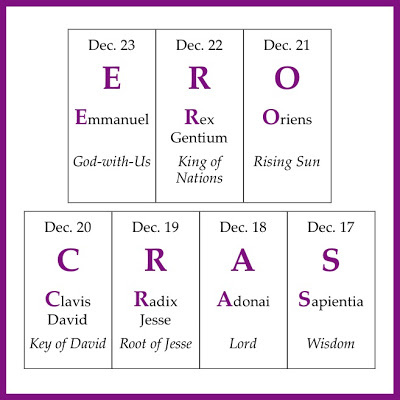
ERO CRAS is a convenient nemonic device, meaning, “tomorrow, I will come.”


During the 8 days before Christmas, the Church has collected, one for each
night, a biblical verse from the Advent Prophets Isaiah and Micah (that is, an “antiphon”)
that is known to be prophetic of the birth of Jesus; each notes a title of the
Messiah. Each offers us a key to understand the gift of the Messiah promised through the use of typology.

The Octave of Advent begins on December 17th and concludes on the 23rd.
Seven different antiphons are traditionally sung prior to and following the
Magnificat during Vespers as part of the Divine Office (the Liturgy of the
Hours). The eighth day of the octave is Christmas Eve, so Vespers for that
evening is the Christmas Vigil. Each antiphon begins with the word, “O” in the
incipit. Hence, “O Antiphons.” 
Most of us are familiar with the Advent hymn, “O Come, O Come,
Emmanuel,” the content of which the O Antiphons form the structure Vespers at
this time of the liturgical year.


The Church always distinguishes what she
says and since in our theology we derive our belief from the manner in which we
pray, the O Antiphons give ample food for what we belief the Messiah to be, who
he is. Secularism gives the world an emasculated Santa Claus but the Church
gives us a Messiah. He is known through his titles, that is, his activities. In
the final stretch before Christmas use this time to pray with the O Antiphons:
they provide a beautiful framework for reflection before the Nativity.

Past Communio blog entries here, here and here.

Advent Three, Gaudete

Los entering the grave Wm Blake.jpg

Our worship of God began today with the Church quoting Saint Paul who wrote, “Rejoice in the Lord always; again I say rejoice. Indeed, the Lord is near” (Phil. 4:4-5).

Hard to hear these words today following the tragic events of Friday the 14th where the citizens in Newtown, Connecticut, indeed, the nation, faced horrific acts of evil. As we “faithfully await the feast of the Lord’s Nativity” our affect, our prayer, our humanity has a new orientation, a new recognition: a cry of anguish and a cry of joy. That’s the Christian paradox. We are sad (troubled and grieved) to have young people gunned down. Lives cut short. The living who are searching for ways to go on with meaning and peace. The somber joy of the Third Sunday of Advent is an invitation, a recognition, a way being, to a life of joy found only in God no matter the circumstance.

Advent, like every day of our liturgical lives is call to be aware of God; to be reawakened to the movements of grace in the depths of our being.

The Liturgy concludes with the petition that the divine gifts received in the Eucharist “cleanse us of our faults and prepare us for the coming feasts.” That’s the challenge we all face together: to begin our conversion with the awareness that sin can have deleterious effects in each of us if not attended to. What can be said of Adam Lanza with his crime, personal sin and affective disorder can happen to each of us. There is that line that’s sometimes helpful to remember: There I go but for Christ’s grace. The measure of life is not our passion but the Mystery of Christ.

The anxiety of these days is mitigated by what the Lord does in our hearts: He loves us.

I noticed in the first Scripture reading for today’s Mass the phrase: the Lord is near. It ought to echo for you where you hear the Great O Antiphon, O Emmanuel, God with us. Is that our belief? Is there a true awareness that the Lord is near in the way we live our lives in the particular circumstances in which we find ourselves? Are there concrete ways that we recognize the nearness of the Lord in His gift of the Holy Eucharist, in the proclamation of the Word, in lectio divina, in the community of faith that worships and does works of charity?

The New Evangelization and St Benedict

Some Year of Faith initiatives

The monks, nuns and oblates of Saint Mary’s Monastery and Saint Scholastica Priory in Petersham, MA, had a day of reflection on October 20th that covered the New Evangelization and the Benedictine charism. Dr. Philip Zaleski, an Oblate of the monastery and Father Christophe Vuillaume, OSB, a monk at Saint Mary’s gave the two presentations.

Audio files

The Year of Faith and the New Evangelization

Saint Benedict and  the Life of Faith

Dr Zaleski is a professor at Smith College and a published author, and Dom Vuilaume is a priest and monk who as served at the request of the Subiaco Congregation in various locations,as of now he’s serving at Saint Mary’s.

The Monastery is celebrating 25 years of foundation this year. The monks belong to the Subiaco Congregation which is one of the largest groupings of monks and nuns in the world. Most often monasteries in the Subiaco Congregation do not engage in outside works and rely on the generosity of others. At Saint Mary’s. the Divine Office is prayed according to the traditional form of the Antiphonale Monasticum; Holy Mass is celebrated according to the Novus Ordo with the ordinary of the Mass prayed in Latin.

The nuns of Saint Scholastica Priory follow a traditional monastic life. They share the monastic church with the monks for some of the prayer times and Mass but have their own work. They were blessed recently to have two novices profess simple vows.