Communion given to divorced and remarried Catholics?

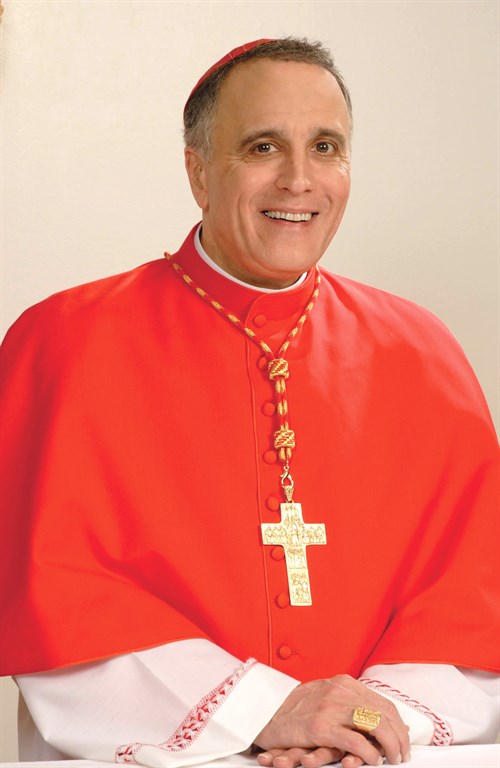
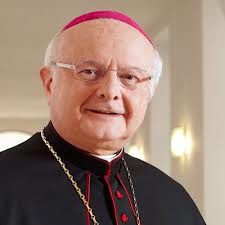
Robert ZollitschThe former archbishop Freiburg im Breisgau Archbishop Robert Zollitsch, 75, tried to legislate a change in pastoral practice to allow remarried Catholics who have not received the required annulment from a previous marriage bond to receive Holy Communion. His resignation was accepted by the Holy Father on 17 September 2013. Archbishop Zollitsch, as the emeritus archbishop, has no authority to make such an allowance due to his canonical status but also because the proposal he was hoping to enact contradicted the theology of the Church. 

The several at the Holy See were clearly unhappy at Zollitsch’s bold (wreckless?) attempt to change a practice without thinking through the theology. Not that the happiness of the authorities Church is the goal of anything. Heaven is the goal and we get there by correct teaching, sacraments and compassionate leadership. The chief shepherd of a diocese, even he is the former shepherd, cannot on his own authority, make a change in theology. The transcentals (the beautiful, the good, the true and the one) can’t be ignored; neither can clear teaching based on Scripture.

Does something need to be done? Very likely. We do have a problem that needs sensitive guidance. But there we have to see to it that a few things are done: First, start giving good human, spiritual and catechetical formation to couples engaged to be married. Second, seek to walk with all married couples. Third, help to bring reconciliation to couples whose marriages are no longer sacramental. But Zollitsch created a chaos.

Recently, Archbishop Müller wrote an article outlining the Church’s  teaching about marriage, divorce and the sacraments in L’Osservatore Romano.

Today, the Prefect of the Congregation for the Doctrine of the Faith wrote a letter to Archbishop Zollitsch, who now serves as the Apostolic Administrator of his former diocese. The following translation of Archbishop Müller is the work of Mark de Vries.

Archbishop Müller’s letter:
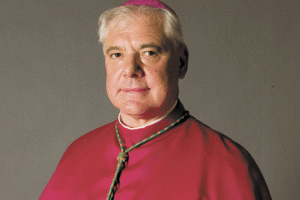
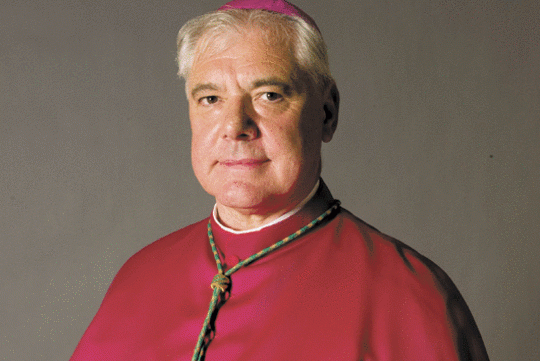
MüllerWith the Document Prot. N. 2922/13, of 8 October 2013, the Apostolic Nuncio has communicated the draft of the guidelines for the pastoral care of separated, divorced and civilly remarried people in the Archdiocese of Freiburg, as well as your newsletter to the members of the German Bishops’ Conference prior to the publication of this letter, to the Congregation for the Doctrine of the Faith. A careful reading of the draft text reveals that it does contain very correct and important pastoral teachings, but is unclear in its terminology and does not correspond with Church teaching in two points:

“Remarried divorced people themselves stand in the way of their access to the Eucharist”

1. Regarding the reception of the sacraments by divorced and remarried faithful the proposal from the bishops of the Oberrhein area is recommended anew as a pastoral direction: after a process of discussion with the parish priests, people concerned can either reach the conclusion to participate much in the life of the Church, but to deliberately refrain from receiving the Sacraments, while others can in their concrete situations achieve a “responsibly reached decision of conscience” and be able to receive the Sacraments of Baptism, Holy Communion, Confirmation, Reconciliation and Anointing of the Sick, and this decision is “to be respected” by the priest and the community.

Contrary to this assumption the Magisterium of the Church emphasises that the pastors must recognise the various situations well and must invite the affected faithful to participation in the life of the Church, but also “reaffirms her practice, which is based upon Sacred Scripture, of not admitting to Eucharistic Communion divorced persons who have  remarried” (cf. John Paul II, Apostolic Exhortation Familiaris Consortio, of 22 November 1981, N. 84; also compare the Letter of this Congregation of 14 September 1994 about the reception of Communion by remarried divorced faithful, which rejects the proposal from the Oberrhein bishops; and Benedict XVI, Apostolic Exhortation Sacramentum Caritatis of 22 February 2009, N. 29).

This position of the Magisterium is well-founded. Remarried divorcees stand in the way of their access to the Eucharist, insofar as their state of life is an objective contradiction to the relationship of love between Christ and the Church, which is made visible and present in the Eucharist (doctrinal reason). If these people were allowed to receive the Eucharist this would cause confusion among the faithful about the Church’s teaching about the indissolubility of marriage (pastoral reason).

2. In addition to this a prayer service is suggested for divorced faithful who enter into a new civil marriage. Although it is explicitly stated that this is not some “semi-marriage” and the ceremony should be simple. but it would still be a sort of “Rite” with an entrance, reading from the Word of God, blessing and giving of a candle, prayer and conclusion.

Such celebrations were expressly forbidden by John Paul II and Benedict XVI: “The respect due to the sacrament of Matrimony, to the couples  themselves and their families, and also to the community of the faithful,  forbids any pastor, for whatever reason or pretext even of a pastoral nature, to  perform ceremonies of any kind for divorced people who remarry. Such ceremonies  would give the impression of the celebration of a new sacramentally valid  marriage, and would thus lead people into error concerning the indissolubility  of a validly contracted marriage” (Familiaris Consortio, n. 84).

The affected faithful are to be offered support, but it must be avoided that “confusion arise among the faithful  concerning the value of marriage” (Sacramentum Caritatis, N. 29).

Due to the aforementioned discrepancies, the draft text is to be withdrawn and revised, so that no pastoral directions are sanctioned which are in opposition to Church teaching. Because the tekst has raised questions not only in Germany, but in many parts of the world as well, and has led to uncertainties in a delicate pastoral issue, I felt obliged to inform Pope Francis about it.

“Going paths which fully agree with the doctrine of the faith of the Church”

After consultation with the Holy Father, an article from my hand was published in L’Osservatore Romano on 23 October 2013, which sumarises the binding teaching of the Church on these questions. This contribution was also published in the weekly edition of the Vatican newspaper.

Since a number of bishops have turned to me and a working group of the German Bishops’ Conference is dealing with the topic, I would like to inform you that I will send a copy of this letter to all the diocesan bishops of Germany. Hoping that on this delicate issue we are going pastoral paths, which are in full agreement with the doctrine of the faith of the Church, I remain with heartfelt greeting and blessings in the Lord.
St Martin of Tours

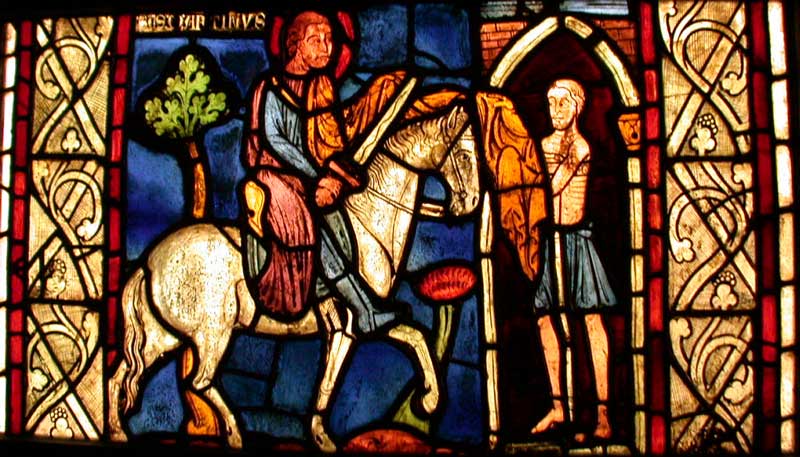
St Martin of ToursToday, on the Church’s liturgical calendar is the memorial of Saint Martin of Tours, the first non-martyr that we have, and on the secular calendar is Veterans’ Day.

As a Catholic community of faith holy Mother Church sincerely prays for those who gave their lives in service of this country. May God grant them health, life, peace, and all good things and preserving them for many years.

May we take this opportunity to also remember the “veterans” of our Church, those men and women who have tirelessly supported their faith, who sustained their families and friends, who labored hard to build our churches when they arrived from their homelands, and who, in some cases, gave their lives to for their faith.

Personally, I pray and am grateful for the service of my father Edward who served in the US Air Force.

May Saint Martin of Tours, Saint George and all the saints sustain through holy intercession all Veterans before God the Father.

Blessed Salvio Huix i Miralpeix

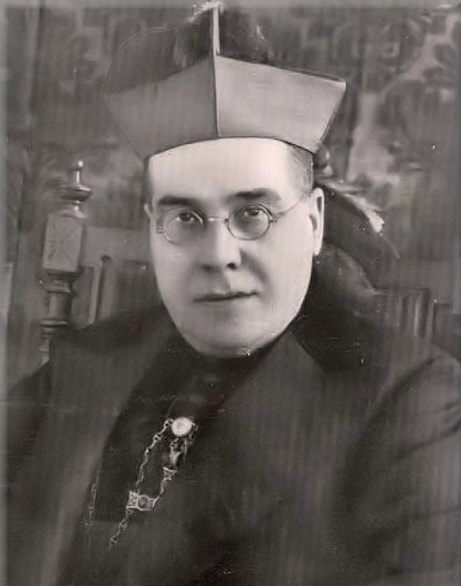
MiralpeixSalvio Huix i Miralpeix was born on December 22, 1877 in Santa Margarida de Vellors in the Diocese of Vic in Catalonia. He was ordained a secular priest in 1903, and four years later entered the Congregation of the Oratory of Vic, the spiritual sons of Saint Philip Neri. At the Vic Oratory he lived for twenty years the Oratorian life of prayer, teaching the Catholic faith and administering the sacraments. He was the Provost of the Vic Oratory when, in 1927, he was nominated bishop of Ibiza; in 1935 he was transferred to the Diocese of Lérida where he was known for his effective apostolic work.

On July 21, 1936, Republican forces broke into the Episcopal palace and Bishop Miralpeix, reluctantly and in order to safeguard his associates, took refuge with friends. Seeing the dangers to which his helpers were exposed, on the night of July 23, he left his hideout and presented himself to the police, revealing his true identity. He was imprisoned at once, together with other prisoners with whom he shared both sufferings and also the joy of secret prayers and Masses, right up to the last moving Holy Communion which proved to be their Viaticum.

At 4:30 am onAugust 5, the prisoners were all of them taken to the local cemetery and shot. The bishop asked that he might be the last to be killed, so as to give absolution and comfort to his companions in martyrdom. Before his arrest, he entrusted his pectoral cross to a friend, asking him to take it to the Holy Father in Rome, for whom he was offering his life and to assure him of his loyalty.

It is said that prior to his arrest he gave his pectoral cross with a friend, asking him to take it to Pope Pius XI, with the message that if it were asked of him, he freely offered his life for the Pope, and to assure him of his complete fidelity to Jesus Christ and the Catholic Church.

Following closely the Oratorian charism, Blessed Salvio Huix-Miralpeix brought the light, warmth and joy of God’s love, which he had found in Saint Philip, into the darkness of chaos and hate. A terrific witness indeed. The initial phases for cause for canonization for Huix-Miralpeix happened between 1947 and 1950 and on July 27, 2011 Pope Benedict signed the decree determining that he was  was a Martyr for the Faith.

The beatification of Bishop Miralpeix (1877-1936), the first Oratorian martyr, along with 521 others, took place in Tarragona, Spain, on Sunday, October 13, 2013. The Oratorian beatus Bishop Miralpeix is added to a growing list of Oratorians who lived the gospel with humanity, intensity and holiness. They show us that conversion is possible.

So far, 1523 souls have been raised to the altar and beatified, 11 have already been named saints.

The text is redacted from what was published by the Oxford Oratorians.

How well do you know Eastern Christianity?

Eastern Christianity confuses some very faithful Christians, Catholics and Orthodox people especially.

I recommend this brief essay by Jesuit Father Steven Hawkes-Teeples, “Eastern Christians and Their Churches” (Catholic Information Service, Knights of Columbus)

From the Catholic perspective, here are some videos to watch:

Eastern Catholic Church – An Introduction by Father Thomas Loya

Eastern Catholic Theology – Part I by Abbot Nicholas of Holy Resurrection Monastery

Eastern Catholic Theology – Part II by Abbot Nicholas of Holy Resurrection Monastery


Blessed John Duns Scotus

The memory of one of the great Franciscan theologians is venerated today, Blessed John Duns Scotus (1266 – 1308). His bones rest in Cologne but he hails from the Scotland. Known to the theological world as the Doctor Subtilis, one of his claims to fame was his advocacy of the dogma of Mary’s Immaculate Conception. Pope Pius IX used Scotus’ theology in helping to frame what we believed in terms of  the Immaculate Conception of Mary in 1854.

One of the Scholastics, John taught in the school of thought of the Augustinian-Franciscan tradition, who also had a rich appreciation for the works of Aquinas, Aristotle and the Muslim philosophers.

Church clearly thinks well of Scotus and his Franciscan heritage of dependance on the goodness and beauty of God, the value of learning and the reverence for mystery. As the Preface for the Mass offered in his name, the Church prays to God the Father that Scotus be “… acclaimed [as teaching] the universal primacy of your Son, the masterpiece and perfect manifestation of your eternal love enfleshed in Christ the New Adam, the King of all creation” that in his teaching we learn “… to praise Mary, conceived without sin, untarnished and resplendent in her immaculate beauty, your intended Model for creating us in dignity and goodness.”

We need Negative theology

Thinking about the way we come to understand the contours of our relationship to God we have the work of negative theology. We inhabit a world in which human beings have faith and reason and they pursue the beauty of Truth. The truth here is not an object but a person. Christians call truth by the name of Jesus of Nazareth, the Christ, the second Person of the Trinity. I like Father Dumitru Staniloae’s theological work since I encountered his writing a decade ago in theology school. Father is now deceased but he was an Orthodox priest and theologian of the Romanian Orthodox Church, who, in my opinion, has relevance for Catholics today.

Negative theology is still a mental operation, the final one, mixed, however, as prayer is, with a feeling of the powerlessness to comprehend God. It is related to the comprehension of God through nature, history, Holy Scripture, art, dogma and in general through everything which is between us and God either as an external reality or as a system of concepts and symbolic images. Every reality, concept or symbolic image mirrors God as well as awakens in us the proof or unexplainable feeling that God is totally different, in comparison with them; so they compel us to negate all the positive attributes which, because of them, we ascribe to God. In other words,  all things in between open for us a perspective to God; at the same time they confront us with an infinite abyss of divine reality which we can’t grasp with our minds, and which first of all doesn’t show us anything that created realities, concepts and symbolic images do. But our mind, faced with this abyss still doesn’t give up looking at things, concepts and symbolic images, but turns its gaze from this to that and finds that they don’t give it the means to describe the abyss. It tries, we might say, to measure it with every measure in the world, in other words with every attribute or image, or with every concept based on created things. Finally, the mind realizes that not one is suitable. So it eliminates them one by one. Negative theology is therefore a mental operation because it investigates the context of various attributes and concepts and compares them with the divine abyss, which it lives somehow with feeling, and finds they are insufficient.

In a certain sense, negative theology is still a rational operation; it is still an exact weighing of each concept, whose limits only now appear to the mind in all their clarity. But the comprehension of the definite content of a concept is made at the same time as we cast our gaze over the divine abyss which reason can’t encompass, but which the mind gains by intuition, by a look or feeling of another nature; so this operation, although on the one hand mental, isn’t only rational, not only deductive, but has an intuitive element in it, the ascertaining of which is limitless and therefore can’t be described. It is a rational operation by which the mind concludes, nevertheless, that reason isn’t sufficient.

Father Dumitru Staniloae
Orthodox Spirituality, in the section titled “Negative and Positive Theology: A Dynamic Relationship”

A pope who knows no limits of love


Pope Francis embraces man with boils

What moves my heart in seeing this picture? I suppose many things: the Pope’s gesture of a kiss, an embrace, of prayer is an act of love. Rarely do you see a man breaking the comfort zone so rigidly protected by some. Plus, I really think he leads by showing love and not merely speaking about love.

Only a friendship with the Lord allows the beauty of a gesture to speak in ways known in the heart. Love the Lord, love your neighbor, be a disciple.

“The Pope must serve all people, especially the poor, the weak, the vulnerable,” Pope Francis said.

May I have the courage to follow him who points to Jesus Christ.

Saint Francis of Assisi, pray for us.

Medjugorje visionaries not permitted to speak, Church advocates

Medjugorje Letter October 2013The Catholic faithful ought to avoid all connections with the alleged visionaries connected with Medjugorje. This is the current judgement of the Church due to a lack of final judgement of experts for the good of the faithful.

In March 2010, Pope Benedict XVI formed a commission to investigate the veracity of Our Lady’s apparitions in Medjugorje. The Holy See said, “An international investigative commission on Medjugorje has been constituted, under the presidency of Cardinal Camillo Ruini and dependent upon the Congregation for the Doctrine of the Faith. Said commission – made up of cardinals, bishops, specialists and experts – will work privately, submitting the results of its work to the authority of the dicastery.”

Cardinal Ruini’s report to the Congregation for the Doctrine of the Faith will be studied and the findings given to the Pope. You’ll recall that Ruini is the former vicar of Rome’s diocese.

Millions of pilgrims have visited this shrine every year and claim to have received many graces of conversion.

In question the truthfulness of the six people have witnessed the Virgins apparitions since 1981.Controversy has circled the alleged Marian apparitions in Medjugorje with local bishops, the Franciscans and the various visionaries who have greatly profited from the fame.

The legitimate investigation of the Holy See continues as you can see from this letter of October 21, 2013 of the US Apostolic Nuncio, Archbishop Carlo Maria Viganò to the General Secretary of the US Conference of Catholic Bishops, Monsignor Ronny Jenkins. Archbishop Viganò writes on behalf of Archbishop Gerhard Ludwig Müller, Prefect of the Congregation for the Doctrine of the Faith. The letter reiterates an April 10, 1991, directive not to adhere to unverified proposals.

The Congregation for the Doctrine of the Faith is clear: “clerics and the faithful are not permitted to participate in meetings, conferences or public celebrations during which the credibility of such ‘apparitions’ would be taken for granted.”

Matters like these required a well researched assessment of what’s claimed for the good of all the faithful. Hence, the final judgement of the Holy Father is sought and we ought to follow.

Theology: Catholic and Orthodox?

What does it mean to say “Theologically… thus and such….”

There are many “professional” theologians and types of reflection on God, the biblical teaching, ecclesial tradition, prayer, the spiritual life, etc, how do you discern who to read? Sometimes the professionals lack the lex agenda (that is, the law of life) that’s required for an authentic Christian life.  By nature, we worship, believe, live and act in accordance with the promptings of the Holy Spirit. It will make your head spin in trying to make a good decision on what to read and what to avoid. We know that not everything in print (or on a blog) is worth the time.

Admittedly, Catholics, clergy and laity alike, can stand behind the veil of something they know little about and the implications of what is published. Selecting a good book in theology is often made in a knee-jerk way. For example you will hear some priests say, “I will never read anything written by a Jesuit” or “she’s fema-nazi, a heretic” or there is a perspective that contends that “reading outside the ecclesial family is wrong.”

It is true, not everything in the field of liberation theology is germane to an authentic Catholic life. But that can be said of all the allied fields in theological reflection. An honest intellectual will say that you have to know what reasonable people are saying. We need less ideology and more openness to faith and reason is needed. Faith and reason are oriented in loving the truth. So while one could argue that the theological reflection of Hans Urs von Balthasar and Joseph Ratzinger is far more satisfying than Hans Kung and Karl Rahner when you read, study and pray with sacred Scripture, knowing a something of the other is good.  A critical reader ought to be able to enter into a respectful and lively dialogue with thinkers; there can’t be an a priori stance that one or the other is always wrong. The default answer to every question doesn’t have to be NO. Yet. dialogue is not negotiation; openness to the other doesn’t mean you compromise the truth. The point is that we have to have an objectivity (know the the sources of claims made) about what believe and teach and live.

I have long argued that a Catholic’s first theological reflection is liturgical. The maxim of St Prosper of Aquitaine guides: legem credendi lex statuat supplicant. Meaning: The Church’s faith precedes the faith of the believer who is invited to adhere to it. When the Church celebrates the sacraments, she confesses the faith received from the apostles – whence the ancient saying: lex orandi, lex credendi (or: legem credendi lex statuat supplicandi, according to Prosper of Aquitaine [5th cent.]). The law of prayer is the law of faith: the Church believes as she prays. Liturgy is a constitutive element of the holy and living Tradition (Catechism, 1124). Let’s start here rather than attend to confessional lines of how catholic one is, or not.

The point of theology is reflect in a public way who God is and God’s grace operative in our world. Theology is in pursuit of wisdom and of making disciples.

A 2008 blog post at Erenikon, “What is Orthodox Theology?” asked the same questions regarding but for the Orthodox believer. I would say that much of is held and live in the Orthodox Church coheres with Catholic theology. Several Catholic theologians I know use the thinking of professional theologians who belong to the Orthodox Church.

No one is listening to Syrian Christians

It seems that worldwide Christians are silent before the holocaust happening in Syria. The story is here from AleteiaDoes justice mean anything? Do our brothers and sisters in other places have dignity, meaning and worth? Where does the gospel of Jesus Christ make a difference in the oppression of others?

Our friends in Syria have great needs. Say a prayer BUT also you and I have to act! This is a matter of faith and the public order, faith and reason, faith and the dignity of the human person. Is anyone listening???

Here is an excerpt:

Archbishop Selwanos Boutros Alnemeh concludes: “We have shouted aid to the world but no one has listened to us. Where is the Christian conscience? Where is human consciousness? Where are my brothers? I think of all those who are suffering today in mourning and discomfort. We ask everyone to pray for us.”

Sadad is a small town of 15,000 people, mostly Syriac Orthodox Christians, located 160 km north of Damascus. It has 14 churches and a monastery with four priests.