Saint John Chrysostom: one of the most insightful preachers of the Church

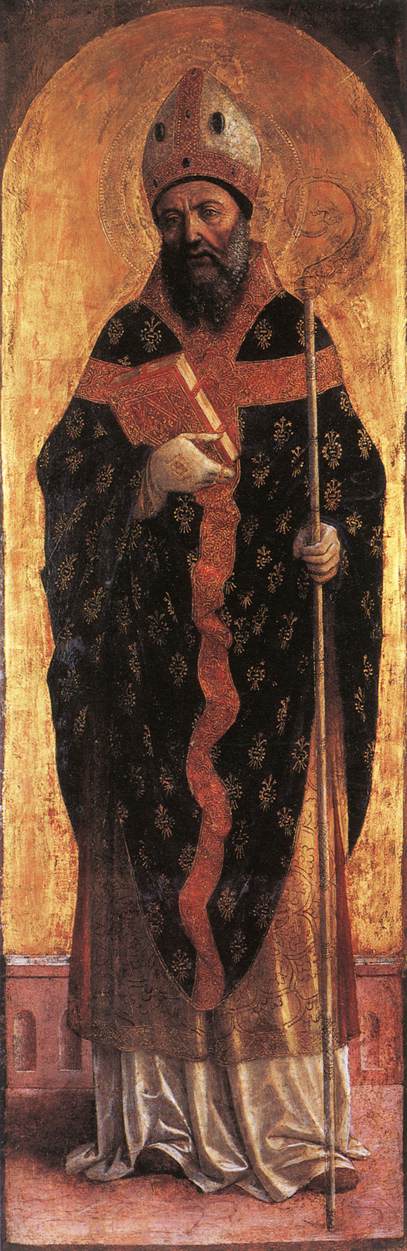
September 13th is the liturgical memorial of Saint John Chrysostom, one of the Church’s greatest bishops ever known. The word “Chrysostom” is a nickname meaning “golden mouth” given to John as archbishop of Constantinople (present day Istanbul) to honor his gift in preaching Jesus Christ. The saint lived (347-407) in an era much like our own with some people living a tepid discipleship with the Lord and weak morals. Saint John’s preaching was based on sacred Scripture and the Tradition of the Church; his sermons were (and continue to be) persuasive. A recent biographer said of Chrysostom: “by word and example he exemplifies the role of the prophet in giving comfort to the disturbed and disturbing the comfortable.” And so he was exiled and suffered greatly for the Gospel; he was certain of Christ crucified and resurrected that he could be and do nothing else: to be the voice and hand of Christ to his people. A portion of his sermon on 2 Thessalonians follows. It’s deals with love and how to live in love with others.


For that your faith grows exceedingly, and the love of each one of you all toward one another abounds.


St John Chrysostom.jpgAnd how, you say, can faith increase? That is when we suffer something dreadful for it. It is a great thing for it to be established, and not to be carried away by reasonings. But when the winds assail us, when the rains burst upon us, when a violent storm is raised on every side, and the waves succeed each other– then that we are not shaken, is a proof of no less than this, that it grows, and grows exceedingly, and becomes loftier. For as in the case of the flood all the stony and lower parts are soon hidden, but as many things as are above, it reaches not them, so also the faith that is become lofty, is not drawn downwards. For this reason he does not say your faith grows; but grows exceedingly, and the love of each one of you all toward one another abounds.

Do you see how this contributes for the ease of affliction, to be in close guard together, and to adhere to one another? From this also arose much consolation. The love and faith, therefore, that is weak, afflictions shake, but that which is strong they render stronger. For a soul that is in grief, when it is weak, can add nothing to itself; but that which is strong does it then most. And observe their love. They did not love one indeed, and not love another, but it was equal on the part of all. For this he has intimated, by saying, of each one of you all toward one another. For it was equally poised, as that of one body. Since even now we find love existing among many, but this love becoming the cause of division. For when we are knit together in parties of two or three, and the two indeed, or three or four, are closely bound to one another, but draw themselves off from the rest, because they can have recourse to these, and in all things confide in these; this is the division of love– not love. For tell me, if the eye should bestow upon the hand the foresight which it has for the whole body, and withdrawing itself from the other members, should attend to that alone, would it not injure the whole? Assuredly. So also if we confine to one or two the love which ought to be extended to the whole Church of God, we injure both ourselves and them, and the whole. For these things are not of love, but of division; schisms, and distracting rents. Since even if I separate and take a member from the whole man, the part separated indeed is united in itself, is continuous, all compacted together, yet even so it is a separation, since it is not united to the rest of the body.


For what advantage is it, that you love a certain person exceedingly? It is a human love. But if it is not a human love, but you love for God’s sake, then love all. For so God has commanded to love even our enemies. And if He has commanded to love our enemies, how much more those who have never aggrieved us? But, do you say, I love, but not in that way. Rather, you do not love at all. For when you accuse, when you envy, when you lay snares, how do you love? But, do you say, I do none of these things. But when a man is ill spoken of, and you do not shut the mouth of the speaker, dost not disbelieve his sayings, dost not check him, of what love is this the sign? And the love, he says, of each one of you all toward one another abounds.


(Saint John Chrysostom, Homily on 2 Thessalonians 1:1-2; emphasis mine)

Blessed Teresa of Calcutta


Before you speak, it is necessary for you to listen,

for God speaks in the silence of the heart.


Blessed Teresa.jpg 

(August 26, 1910 – September 5, 1997)


O God, who called the virgin Blessed Teresa
to respond to the love of your Son thirsting on the cross
with outstanding charity to the poorest of the poor,
grant us, we beseech you, by her intercession,
to minister to Christ in his suffering brothers and sisters.

A Man Immersed in God

Today is the feast of the illustrious saint and pope, Gregory whom we call “the Great.” In his June 4th 2008 catechesis on Saint Gregory the Great, Pope Benedict said:


… [Saint Gregory the Great] proposes his thought through some significant binomials —
esctasy of St Gregpry the Great.jpgknow how/do, speak/live, know something/act — in which he evokes the two aspects of human life which should be complementary, but which often end up by being antithetical. The moral ideal, he comments, consists in achieving always a harmonious integration between word and action, thought and commitment, prayer and dedication to the duties of one’s state: This is the road to attain that synthesis thanks to which the divine descends into man and man is raised to identification with God.

The inspirational principle, which links together the various addresses [of this great Pope], is summarized in the word “praedicator”: Not only the minister of God, but also every Christian, has the duty to make himself a “preacher” of what he has experienced in his own interior, following the example of Christ who became man to take to all the proclamation of salvation. The horizon of this commitment is eschatological: The expectation of fulfillment in Christ of all things is a constant thought of the great Pontiff and ends by being the inspirational motive of his every thought and activity. From here flow his incessant calls to vigilance and commitment to good works.


Perhaps the most organic text of Gregory the Great is the Pastoral Rule, written in the first years of his pontificate. In it Gregory intends to delineate the figure of the ideal bishop, teacher and guide of his flock. To this end he illustrates the gravity of the office of pastor of the Church and the duties it entails: Therefore, those who are called to such a task were not called and did not search for it superficially, those instead who assume it without due reflection feel arising in their spirit an onerous trepidation.

Taking up again a favorite topic, he affirms that the bishop is above all the “preacher” par excellence. As such, he must be above all an example to others, so that his behavior can be a reference point for all. Effective pastoral action requires therefore that he know the recipients and adapt his addresses to each one’s situation. Gregory pauses to illustrate the different categories of faithful with acute and precise annotations, which can justify the appraisal of those who have seen in this work a treatise of psychology. From here one understands that he really knew his flock and spoke about everything with the people of his time and of his city.


The great Pontiff, moreover, stresses the daily duty that a pastor has to acknowledge his own misery, so that pride will not render vain — before the eyes of the supreme Judge — the good he accomplished. Therefore, the last chapter of the rule is dedicated to humility. “When one is pleased about having attained many virtues it is good to reflect on one’s own insufficiencies and humble oneself. Instead of considering the good accomplished, it is necessary to consider what one has failed to accomplish.” 


Amen, for now. 


What Providence disposed: Saint Elizabeth Ann Seton

The September 1st issue of America Magazine, the Jesuit weekly, there is a good article

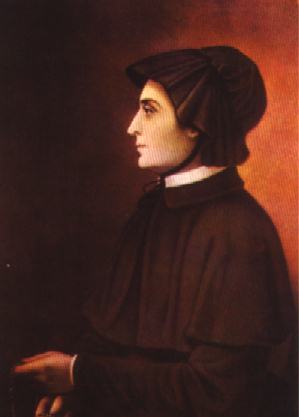
seton.jpgto read on America’s first canonized saint, Elizabeth Ann Seton. Sister of Charity Regina Bechtle’s article “An American Daughter: Elizabeth Ann Seton and the birth of the U.S. Church” is a good read for those generally interested in matters pertaining to Catholicism in America. Who wouldn’t be thrilled to know that Saint Elizabeth Ann Seton is the first American born canonized a saint by Pope Paul VI in 1975?


What’s the point of this “stuff” about Seton in late August when her feast day is in January? Well, for one, August 28th marked her 234th birthday and mid-September marks 33 years since Seton was canonized. Too, this year is the 200th anniversary of Pope Pius VII named Baltimore an “archdiocese” along with 4 other Catholic dioceses.


We might also consider the possibility of making a pilgrimage to one of the shrines dedicated to Seton. In a real sense it is less important that we end up at a holy spot just for doing it than it is to take stock of our spiritual lives with God’s grace and with assistance of a particularly singular saint, Elizabeth Ann Seton, who made a deliberate choice to follow Christ through His sacrament, the Catholic Church. (BTW, she was a believing Christian but she did not possess the fullness of Truth as we know it in Catholicism.) A pilgrimage, therefore, may open for us an opportunity to acknowledge the exceptional Presence before us like we’ve never understood before now. So, what happens to us on the way to a holy shrine is very important indeed. Hence, we follow Christ!


In case you want to visit the shrines of Saint Elizabeth Ann Seton on the east coast there

Seton Shrine.jpgare two:


1. The National Shrine of Saint Elizabeth Ann Seton, Emmitsburg, Maryland


2. The Shrine of Saint Elizabeth Ann Seton at Our Lady of the Rosary Parish, New York City


Lord God, you blessed Elizabeth Ann Seton with gifts of grace as wife and mother, educator and foundress, so that she might spend her life in service to your people. Through her example and prayers, may we, whose Faith Community is dedicated in her honor, learn to express our love for you in our love for all your children. We ask this through Christ, Our Lord. Amen.

The just shall flourish: the witness of Saint John the Baptist


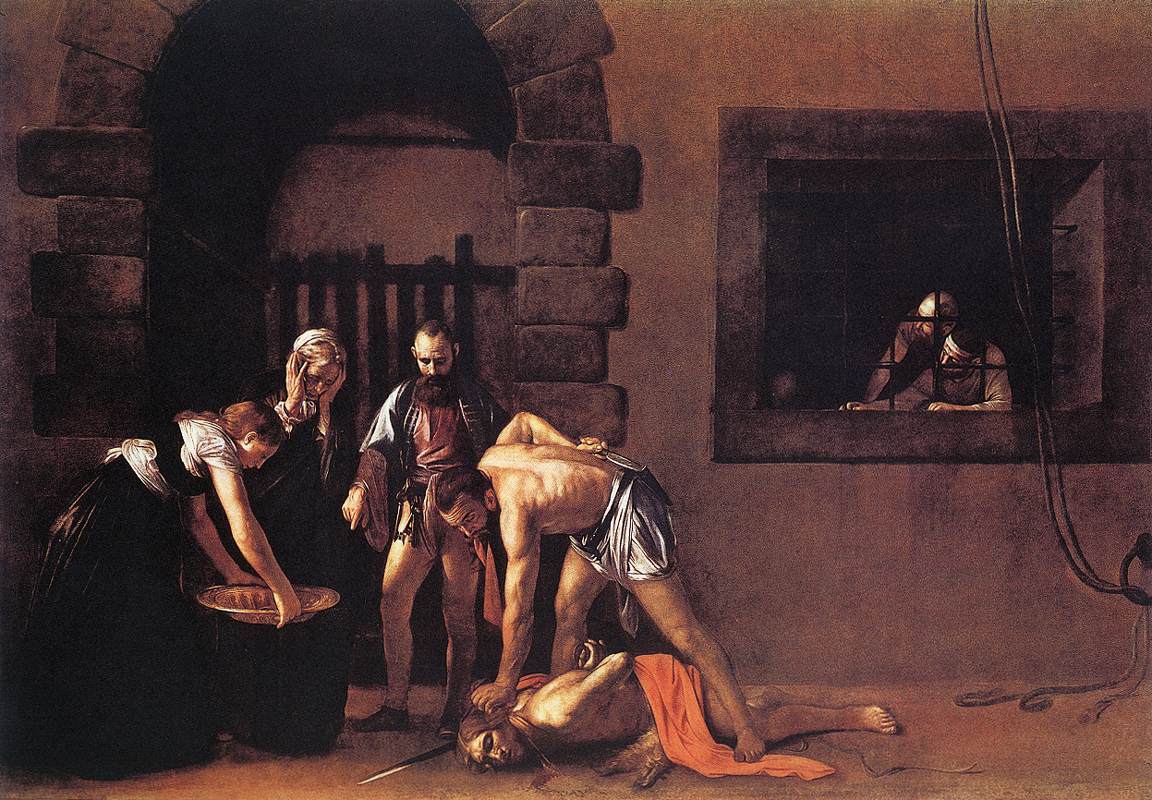
Martyrdom of St John Baptist.jpg“This great man after a long agony of captivity, ended his life on earth with the shedding of his blood. He who preached the freedom of heavenly peace was thrown into captivity by wicked men. He who was called a burning and shining light by Christ the light, was imprisoned in darkness: he who was granted the privilege of baptizing the Redeemer of the world was given baptism in his own blood” (Saint Bede the Venerable).


We beseech Thee, O Lord, may the holy festival of Saint John the Baptist, Thy Precursor and Martyr, obtain for us help unto salvation.

A love of God fixed deep in the heart: remembering Saint Augustine

Today is the great feast of Augustine, the convert (at age 32 at the hands of St. Ambrose in Milan) who was ordained a priest in 391 and elected bishop of Hippo in 395. His life and work are remarkable to say the least. In addition to Saint
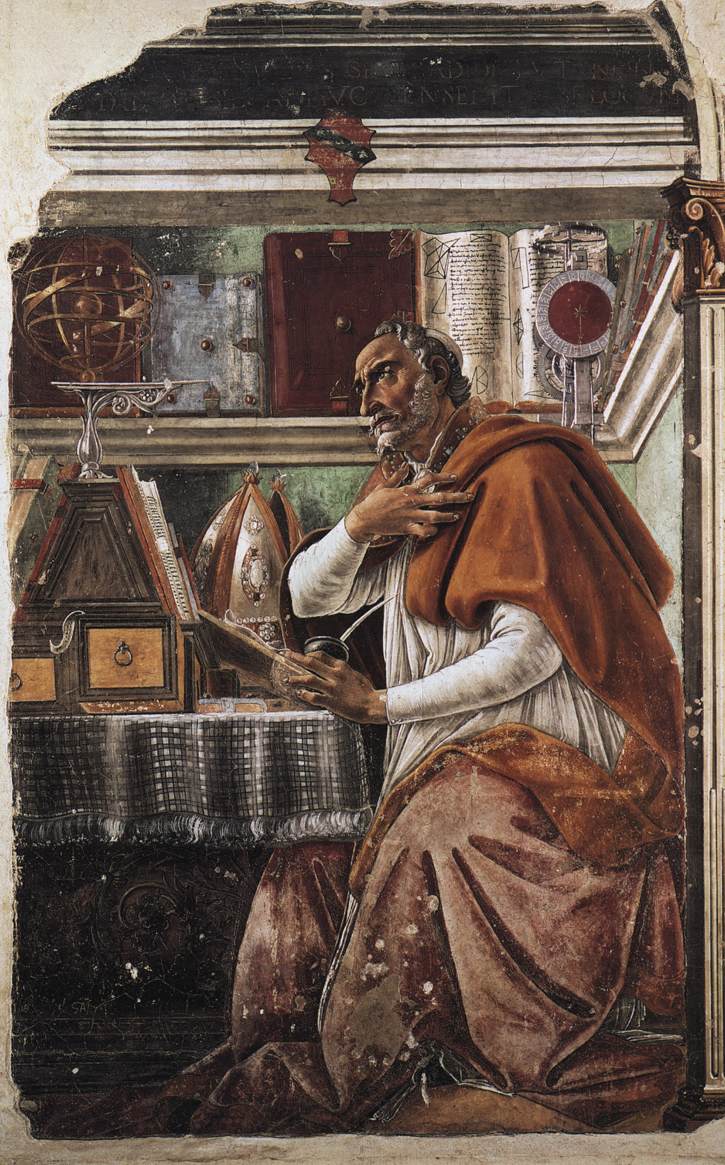
St Augustine1.jpgThomas Aquinas, Saint Augustine is one of the Church’s most significant theologians.


Calling Augustine “the greatest Father of the Latin Church,” Pope Benedict spoke on three occasions in January 2008 to the gathered people in Vatican City about Augustine’s life, his thought and his pastoral ministries. The texts of the Pope are found here:


In the meantime, I offer a 1930 text by Pope Pius XI on Augustine together for our reading pleasure right now.


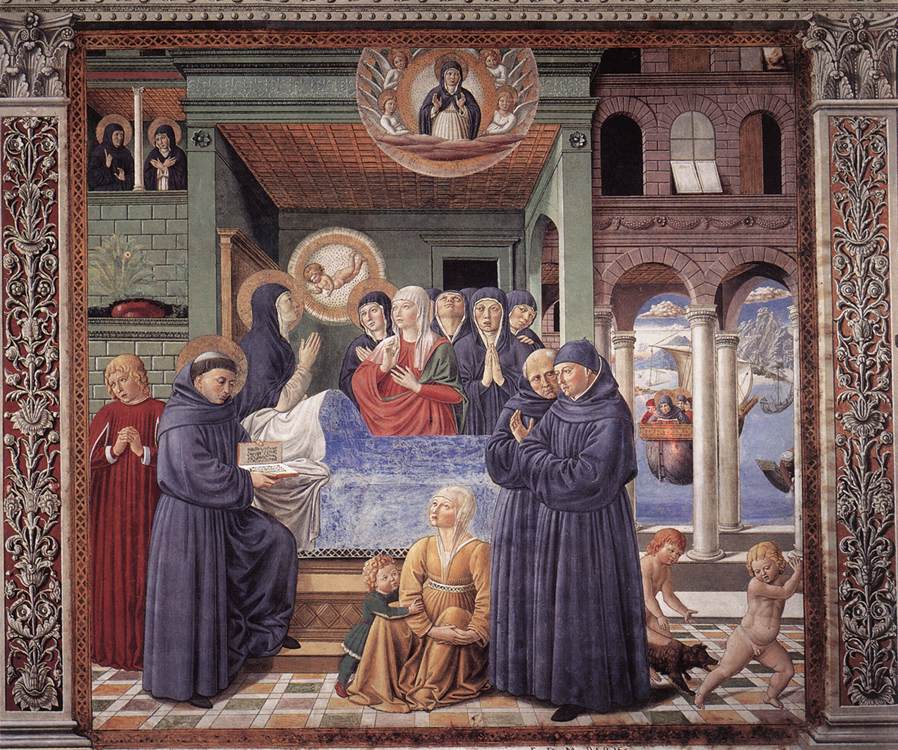
For to begin with the queen of all the virtues, our Saint, leaving all else aside, made the love of God so completely the goal of his desires and efforts, and fed its flame so steadfastly in his soul, that he is fittingly portrayed as holding in his hand a burning heart. No one, who has even once turned the pages of the “confessions,” can forget the conversion between mother and son, at the window of the house in Ostia. The narrative, with its lifelike charm, makes us feel that we see Augustine and Monica there, side by side, absorbed in the contemplation of heavenly things. He writes: “Alone together we held most sweet converse. Forgetting the things that lay behind and stretching out to those that were before, we questioned each other, in the presence of Truth, which Thou art, about the nature of the eternal life of the Saints, which eye has not seen, nor ear heard, nor hath it entered into the mind of man to conceive. Mentally with parted lips we hung over the supernal rills of Thy fountain–the fountain of life with Thee–if happily we might be refreshed, so far as our condition would allow, and in some sort ponder so profound a mystery… And while we conversed with eager longing, with the heart’s supreme effort we made some approach thereto. We sighed and there left fettered the firstlings of the spirit, then to return to the sound of our voices, where the word begins and ends. Yet what bears any likeness to Thy Word, who is our Lord, who abides within Himself and ages not, who makes all things new?”


St Augustine.jpgWe must not imagine that it was an exceptional thing for Augustine thus to lift mind and heart above the life of the body. Any time he could spare from his daily duties and tasks, he devoted to meditation on the Sacred Scriptures he knew so well, that he might draw thence the relish and the light of truth. Rising on thought’s pinions from a consideration of the works and mysteries that reveal God’s surpassing love for us, he was borne aloft little by little to the Divine perfections themselves, into which he plunged–if we may so speak–as deeply as the heavenly grace given him allowed.


“Often I do this [he says, sharing with us his secret], this is my delight, and withdrawing from such activity as necessity imposes, I take refuge in this kind of pleasure. In all the things traversed by my mind, while I confer with Thee, I find no safe place for my soul except in Thee. In Thee are linked in unison my wandering strains. From Thee may nothing of mine depart. Sometimes, too, Thou dost admit me to a deep and unwonted interior emotion, to an indescribable sweetness. If that he brought to its perfection within me, I know of nothing which that life will not contain.”

Hence it was that he cried: “Too late have I loved Thee, O beauty so ancient, yet so new! Too late have I loved Thee!”

Again, how lovingly he contemplated the life of Christ, striving to reproduce an ever more
St Augustine4.jpgperfect image of it in himself and to repay love with love. In his counsel to virgins, he impressed on them the same lesson: “Let Him be fixed deep in your heart, who for you was fastened to the cross.” As his love of God burned with a more ardent flame as days went on, so too did he make incredible progress in the rest of the virtues. No one can refuse his admiration to a man–whom all venerated, extolled, consulted, hearkened to for his lofty genius and sanctity–both in his writings destined for publication and in his letters, making it his great concern not only to refer to the Author of all good the praise offered himself, as being due to God alone, and to encourage and praise others, as far as truth allowed, but also to lavish honor and reverence on his colleagues in the episcopate. These were especially his mighty forerunners, such as Cyprian and Gregory of Nazianzus, Hilary and John Chrysostom, Ambrose–his master in the Faith–whom he revered as a father and whose teaching and life he was wont to recall. But especially there shone with luster in our Saint the love of souls, a love inseparable from love of God, of those souls particularly who were committed to his pastoral care.


Pope Pius XI, Ad Salutem Humani  (On Saint Augustine), 20 April 1930

Saint Monica: THE example of perseverance


Death of St Monica.jpg[Monica] is the unflagging prayer, the piety that does not fall asleep. She knows no great fluctuations in prayer. She is very much surrendered to God and also to the Church. The intensive dimension of her prayer lies above all in its perseverance. She is able to repeat one and the same prayer for the longest time with the same energy. Vocal prayer, for her, never becomes merely something mouthed with the lips. She possesses in fact the prayer of children, those who are able to pray in a very intensive way, but without knowing an answer will come from God, without even expecting such an answer, but also without at all thinking that no answer will come. One simply brings before God what one has to say to him, with the greatest possible love. There is not much more to it than this. (
Adrienne von Speyer, Book of All Saints.)


Let us pray. O God, the comforter of the sorrowful and the salvation of them that hope in Thee, Who had merciful regard to the pious tears of blessed Monica in bringing about the conversion of her son Augustine: grant us by their united intercession to grieve over our sins and obtain Thy merciful pardon. Through Christ our Lord.

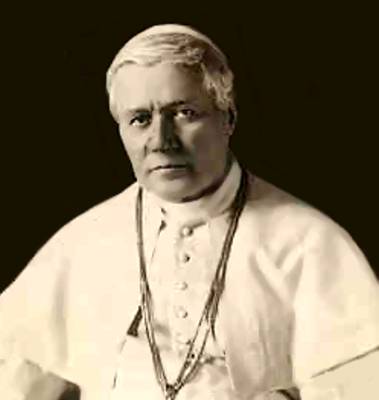
Saint Pius X, pope and confessor

O God, who for the defense of the Catholic faith and to restore all things in Christ, filled saint Pius, the supreme Pontiff, with heavenly wisdom and apostolic strength; mercifully grant that following his teaching and example, we may attain to our eternal reward. Through Christ our Lord.


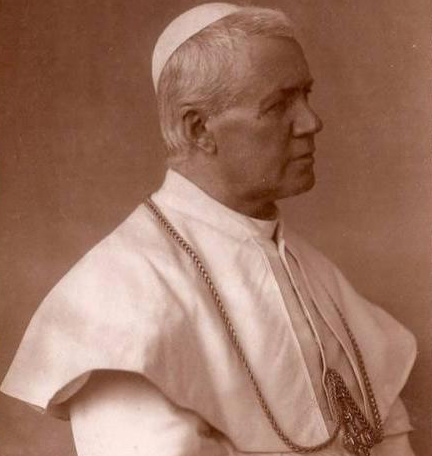
Pius Xa.jpg


Born    2 June 1835

Ordained priest       18 September 1858

Ordained bishop     20 November 1884

Created cardinal  12 June 1983

Appointed to Venice  15 June 1893

Elected Pope   4 August 1903

Died    20 August 1914

Beatified         3 June 1951

Canonized       29 May 1954


A beautiful, but brief description of the person of Saint Pius was written by Adrienne von Speyer, in Book of All Saints. This book was recently published by Ignatius Press and it would make a great addition to your library.

Saint Maximilian Kolbe and Fr. Michael J. McGivney: 2 models of holiness

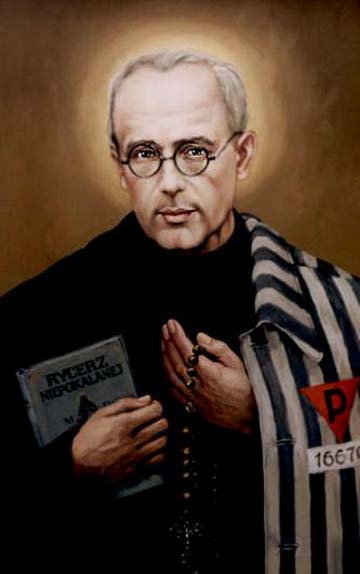
Today’s the feast of the martyr Saint Maximilian Kolbe (January 8, 1894-August 14,
Kolbe.jpg 1941), the Apostle of Consecration to Mary.
Pope Benedict reminded us recently that the death of Kolbe was a witness of the love which “defeats the darkness of egoism and hatred.” The Holy Father recalled words attributed Saint Maximilian Kolbe: “Hatred is not a creative force: only love is.” On August 14, 1941, the saint died in place of Franciszek Gajowniczek.


When Pope John Paul II canonized Kolbe in the presence of Franciszek Gajowniczek he said that Saint Maximilian Kolbe was not a confessor, but a martyr. He is one of ten 20th-century martyrs from across the world who are depicted in statues above the Great West Door of Westminster Abbey, London.


Saint Maximilian is the patron saint for those living with drug addictions, the imprisoned people, journalists, political prisoners, prisoners, and the pro-life movement.


Kolbe is a special saint for me because from my school days his image and story were imprinted in my mind and heart by the Nazareth sisters. How could the story of Fr. Kolbe not move you? When I visited the Nazi concentration camps in 1996, and prayed in Kolbe’s cell, his offering was very present to me. Through Kolbe’s intercession before the Throne of Grace we ask for world peace and peace in our hearts.


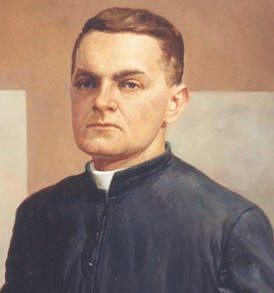
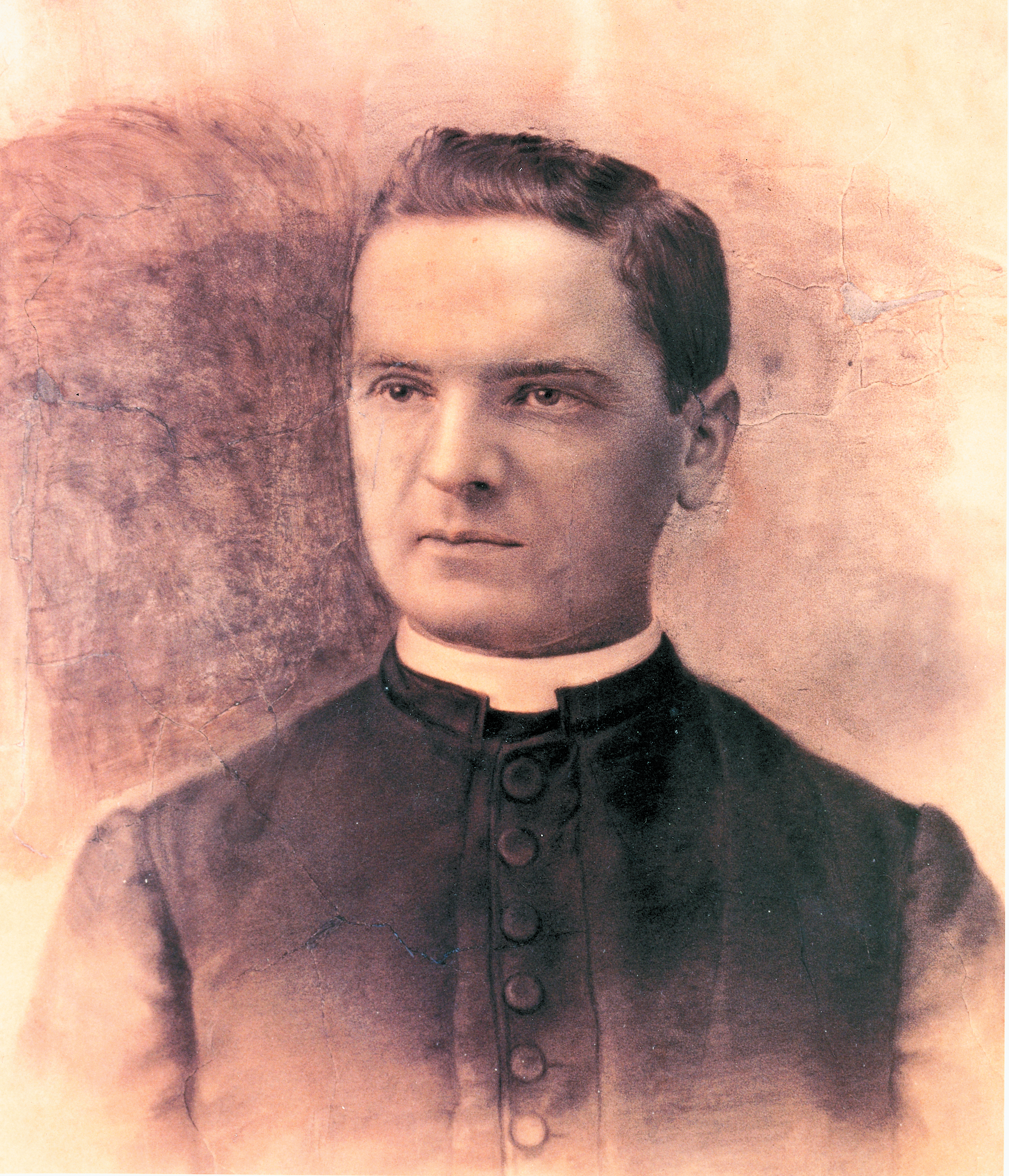
michaeljmcgivney.jpg118 years ago the Venerable Servant of God Michael J. McGivney died at the age of 38. A diocesan priest of the Hartford Diocese and founder of the Knights of Columbus, McGivney urged holiness and missionary activity with the Knights and his parishioners. The only way to manage this is to adhere 100% to Jesus Christ.


The prayer for canonization is an excellent summary of McGivney’s work and a challenge for us to similarly respond to God and service of neighbor. The McGivney Guild which promotes McGivney’s cause for sainthood by giving relevant information on Fr. McGivney and it has a number of devotional items to encourage devotion to him. The Guild publishes a newsletter 6 times per year. Membership is open to all people and free.


Prayer for the Canonization of

Father Michael J. McGivney


God, our Father, protector of the poor and defender of the widow and orphan, you called your priest, Father Michael J. McGivney, to be an apostle of Christian family life and to lead the young to the generous service of their neighbor.


Through the example of his life and virtue may we follow your Son, Jesus Christ, more closely, fulfilling his commandment of charity and building up his Body which is the Church. Let the inspiration of your servant prompt us to greater confidence in your love so that we may continue his work of caring for the needy and the outcast.


We humbly ask that you glorify your servant Father Michael J. McGivney on earth according to the design of your holy will.


Through his intercession, grant the favor I now present (here make your request).


Through Christ our Lord. Amen.


Pruining the Overgrown Soul

Sometimes you can get inspired by reading the blogs. Today, Fr. Mark posted on his blog the Apostolic Exhortation Haerent Animo by Saint Pius X.
papa pio x.jpgGiven that today is the 100th anniversary of the exhortation’s publication and the feast of Saint John Baptist Mary Vianney, reading Haerent Animo was excellent spiritual reading. It took me the better of the morning to ponder what the saintly pontiff was saying, not because the prose was difficult, or the concepts too mysterious but because I kept stopping to reflect on my concrete experience of priestly formation and thinking of the lives of priests I know. I was sadly dwelling on the problems the priesthood has had in recent years.


In writing this exhortation on the occasion of his 50th anniversary of priesthood, the Pope is taking seriously his “responsibility of forming Christ in others.” So, what’s revolutionary about Haerent Animo? Nothing! AND that’s the point. We already know what we have to do to be men of God, holy priests, men of “high dignity” called to be priests, i.e., servants of the Lord and the Church. A good reminder is helpful. Therefore, objectivity the pope presents in Haerent Animo relates to the following work one has to do if a holy priesthood is to exist. The Pope re-proposes:


Thumbnail image for St Pius X.jpg-daily meditation

-daily examination of conscience

-daily celebration of the august rites of the Church with beauty by proper preparation spiritually and intellectually

-daily prayer, particularly the Divine Office

-frequent confession of mortal and venial sins

-self denial

-seeking the Lord’s clemency

-yearly retreat with others

-Lectio Divina (attentive reading of sacred Scripture)

-develop good friendships


The point is that the priest’s conduct must be stellar for fear of causing scandal in others. But fear of causing scandal ought not be the criterion for doing what the Pope re-proposes: the encounter with honesty, faithfulness, love and Christ ought to be included. Say it another way, an overgrown plant will bear no fruit. So our responsibility is to be watchful, be vigilant, and pray. This work will lead us closer to Christ in His words and in His actions; this work will lead to a deeper friendship with the Lord; doing this work will lead to holiness of life.


One thing the pope mentions is forming priestly associations to create a closer union among priests, to help one another in difficult times, to develop a taste of sacred learning, to have a solicitude for each other’s vocation, and to identify the skills needed to effectively preach the Gospel.  It is a fact if one wants to be “good priest” then it being a part of such associations from the first day of one’s ordination. Either join a group or found one: But do something. Seminarians in the Archdioceses of Denver Saint Paul-Minneapolis recently founded priestly associations of type such as Saint Pius recommends.


I recommend that you read Haerent Animo soon. It will be good for you!