Saint Ignatius of Antioch

It is therefore befitting that you should in every way glorify Jesus Christ, who has glorified
St Ignatius of Antioch.jpgyou, that by a unanimous obedience you may be perfectly joined together in the same mind, and in the same judgment, and may all speak the same thing concerning the same thing, 1 Corinthians 1:10 and that, being subject to the bishop and the presbytery, you may in all respects be sanctified.


I do not issue orders to you, as if I were some great person. For though I am bound for the name [of Christ], I am not yet perfect in Jesus Christ. For now I begin to be a disciple, and I speak to you as fellow-disciples with me. For it was needful for me to have been stirred up by you in faith, exhortation, patience, and long-suffering. But inasmuch as love suffers me not to be silent in regard to you, I have therefore taken upon me first to exhort you that you would all run together in accordance with the will of God. For even Jesus Christ, our inseparable life, is the [manifested] will of the Father; as also bishops, settled everywhere to the utmost bounds [of the earth], are so by the will of Jesus Christ.


harp.jpgWherefore it is fitting that you should run together in accordance with the will of your bishop, which thing also you do. For your justly renowned presbytery, worthy of God, is fitted as exactly to the bishop as the strings are to the harp
. Therefore in your concord and harmonious love, Jesus Christ is sung. And man by man, become a choir, that being harmonious in love, and taking up the song of God in unison, you may with one voice sing to the Father through Jesus Christ, so that He may both hear you, and perceive by your works that you are indeed the members of His Son. It is profitable, therefore, that you should live in an unblameable unity, that thus you may always enjoy communion with God.

Saint Ignatius of Antioch (c. 35-110)

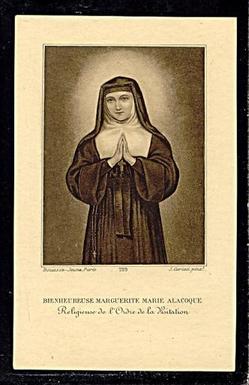
Saint Margaret Mary Alacoque

Alacoque

Today, October 16, is the liturgical memorial of Saint Margaret Mary Alacoque (1647-1690), a Visitation nun who promoted the devotion to the Sacred Heart of Jesus at the request of the Lord Himself. Saint Margaret Mary’s life was filled with suffering, both physical and from interpersonal issues because of her sisters in the monastery. Saint Margaret Mary Alacoque, was often overcome by anguish and uncertainty but with the assistance of Saint Claude la Colombière. She was known to have died saying the Holy Name of Jesus.

Many of us heard of the promises the Lord made through Saint Margaret Mary and we may have known or have done many the things the Lord has asked without really knowing where they come from, so for our edification I have included the promises herewith:

The Twelve Promises of Jesus to Saint Margaret Mary for those devoted to His Sacred Heart:

1.      I will give them all the graces necessary for their state of life.
2.      I will establish peace in their families.
3.      I will console them in all their troubles.
4.      They shall find in My Heart an assured refuge during life and especially at the hour of their death.
5.      I will pour abundant blessings on all their undertakings.
6.      Sinners shall find in My Heart the source of an infinite ocean of mercy.
7.      Tepid souls shall become fervent.
8.      Fervent souls shall speedily rise to great perfection.
9.      I will bless the homes where an image of My Heart shall be exposed and honored.
10.    I will give to priests the power of touching the most hardened hearts.
11.     Those who propagate this devotion shall have their names written in My Heart, never to be effaced.
12.    The all-powerful love of My Heart will grant to all those who shall receive Communion on the First Friday of     nine consecutive months the grace of final repentance; they shall not die under my displeasure, nor without receiving their Sacraments; My heart shall be their assured refuge at that last hour.

Saint Bruno

St Bruno.jpg


Let all mortal flesh keep silence,
And with fear and trembling stand;
Ponder nothing earthly minded,
For with blessing in His hand,
Christ our God to earth descendeth,
Our full homage to demand.

Our Lady of Pompeii & Blessed Bartolo Longo

The devotion I have to praying the Rosary comes from my connection with Our Lady of Pompeii Church, East Haven, Connecticut. The Church ladies as my mother called them, instilled in me–along with the Sisters of the Holy Family of Nazareth–a deep love of the Rosary. These ladies communicated to me the experience of the Rosary being a powerful tool of prayer.  Some speak of the Rosary as the divine tool that decapitates the head of evil. Our Lady of Pompeii Church remains special to me because it is my family’s parish, where my parents were married and where I was Baptized.


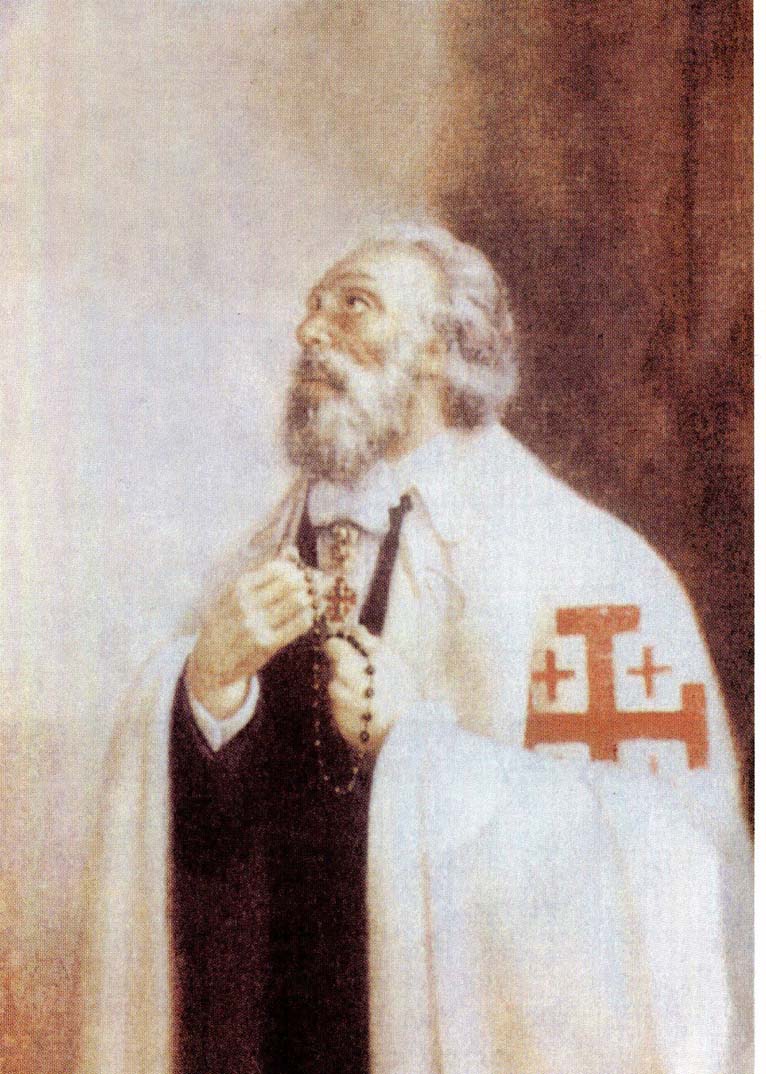
Bl Bartolo Longo.jpgPope John Paul II said of Longo at his beatification: “Rosary in hand, Blessed Bartolo Longo says to each of us: ‘Awaken your confidence in the Most Blessed Virgin of the Rosary. Venerable Holy Mother, in You I rest all my troubles, all my trust and all my hope!'” And of himself, Blessed Bartolo said: “I wish to die a true Dominican tertiary in the arms of the Queen of the Rosary with the assistance of my holy Father Saint Dominic and of my mother Saint Catherine of Siena
.” Blessed Bartolo is a wonderful example of a saintly man who is husband and father.


Today is also the feast of Blessed Bartolo Longo, the author of the following prayer, the Supplica, composed 125 years ago, is always prayed at noon on the first Sunday of October.


Petition to Our Lady of the Rosary of Pompeii

Blessed Bartolo Longo


In the name of the Father and of the Son and of the Holy Spirit. Amen.

O August Queen of Victories, O Sovereign of Heaven and Earth, at whose name the heavens rejoice and the abyss trembles, O glorious Queen of the Rosary, we your devoted children, assembled in your Temple of Pompeii, on this solemn day, pour out the affection of our heart  and with filial confidence express our miseries to You.

From the Throne of clemency, where You are seated as Queen, turn, O Mary, your merciful gaze on us, on our families, on Italy, on Europe, on the world. Have compassion on the sorrows and cares which embitter our lives. See, O Mother, how many dangers of body and soul, how many calamities and afflictions press upon us.

O Mother, implore for us the mercy of your divine Son and conquer with clemency the heart of sinners. They are our brothers and your children who cause the heart of our sweet Jesus to bleed and who sadden your most sensitive Heart. Show all what you are, the Queen of Peace and of Pardon.

Hail Mary


It is true that, although we are your children, we are the first to crucify again Jesus into our heart by our sins and we pierce anew your heart.

We confess it: we are deserving of the most severe punishments but remember that, on Golgotha, You received with the divine Blood, the testament of the dying Savior, who declared You to be our Mother, the Mother of sinners.

You then, as our Mother, are our Advocate, our Hope. And we raise our suppliant hands to You with sighs crying: “Mercy!”

O good Mother, have pity on us, on our souls, on our families, on our relatives, on our friends, on our deceased, especially on our enemies, and on so many who call themselves Christian and yet offend the Heart of your loving Son. Today we implore pity for the misguided Nations, for all Europe, for all the world, so that it may return repentant to your heart. Mercy on all, O Mother of Mercy!


Hail Mary
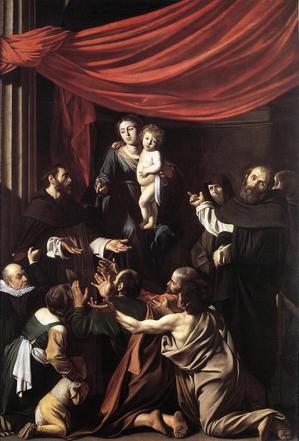


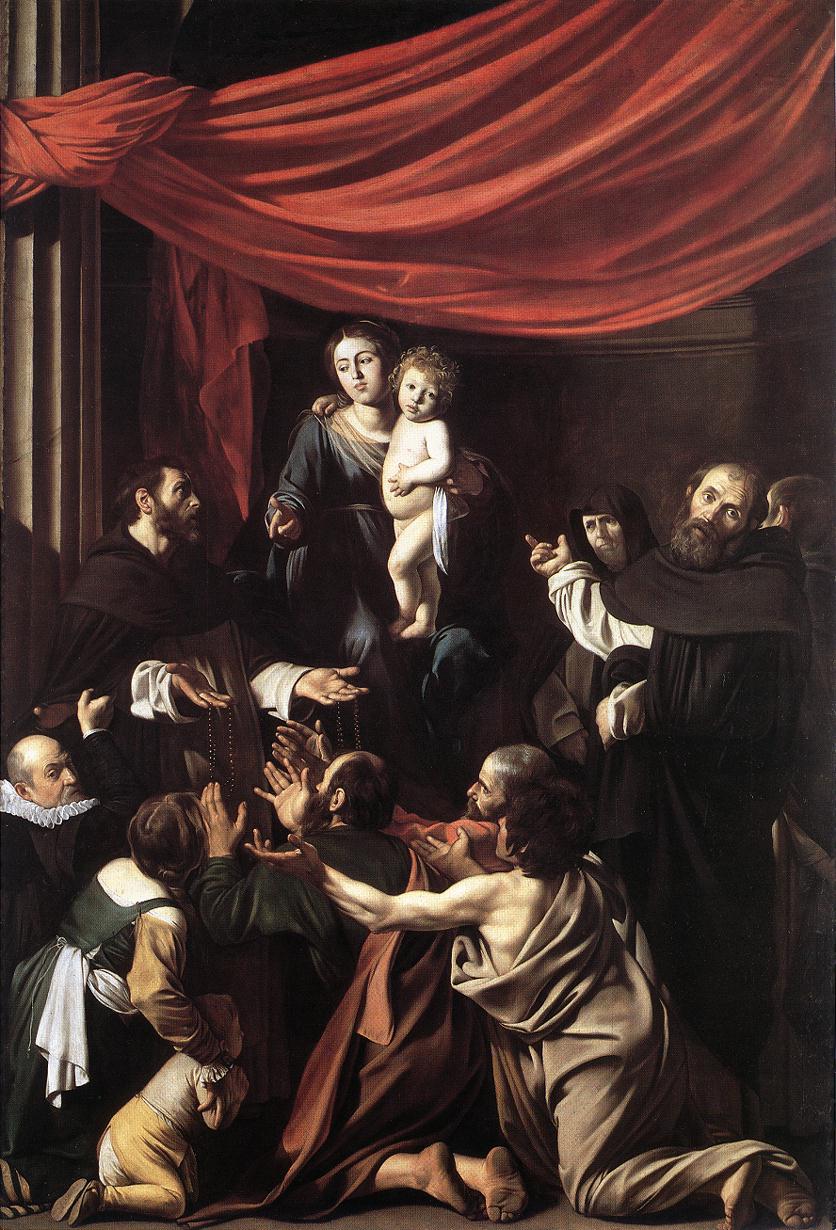
OL Rosary Caravaggio.jpgKindly deign to hear us, O Mary! Jesus has placed in your hands all the treasures of His graces and His mercies. You are seated a crowned Queen, at the right hand of your Son, resplendent with immortal glory above all the Choirs of Angels. You extend your dominion throughout heavens and the earth and all creatures are subject to you. You are omnipotent by grace and therefore You can help us. Were You not willing to help us, since we are ungrateful children and undeserving of your protection, we would not know to whom to turn. Your Mother’s heart would not permit to see us your children, lost. The Infant whom we see on your knees and the mystical Rosary which we gaze at your hand, inspire confidence in us that we shall be heard. And we confide fully in You, we abandon ourselves as helpless children into the arms of the most tender of mothers, and on this very day, we expect from You the graces we so long for.


Hail Mary

One last favor we now ask You, O Queen, which You cannot refuse us on this most solemn day. Grant to all of us your steadfast love and in a special manner your maternal blessing.

We shall not leave You until You have blessed us. Bless, O Mary, at this moment, our Holy Father. To the ancient splendors of your Crown, to the triumphs of your Rosary, whence you are called the Queen of Victories, add this one also, O Mother: grant the triumph of Religion and Peace to human Society. Bless our Bishops, Priests and particularly all those who are zealous for the honor of your Sanctuary. Bless finally all those who are associated with your Temple of Pompeii and all those who cultivate and promote devotion to the Holy Rosary.


O Blessed Rosary of Mary, sweet Chain which binds us to God, Bond of love which unites us to the Angels, Tower of salvation against the assaults of hell, safe Port in our universal shipwreck, we shall never abandon You. You will be our comfort in the hour of agony: to You the last kiss of our dying life. And the last word from our lips will be your sweet name, O Queen of the Rosary of Pompeii, O dearest Mother, O Refuge of Sinners, O Sovereign Consoler of the Afflicted. Be Blessed everywhere, today and always, on earth and in Heaven. Amen.


Salve Regina


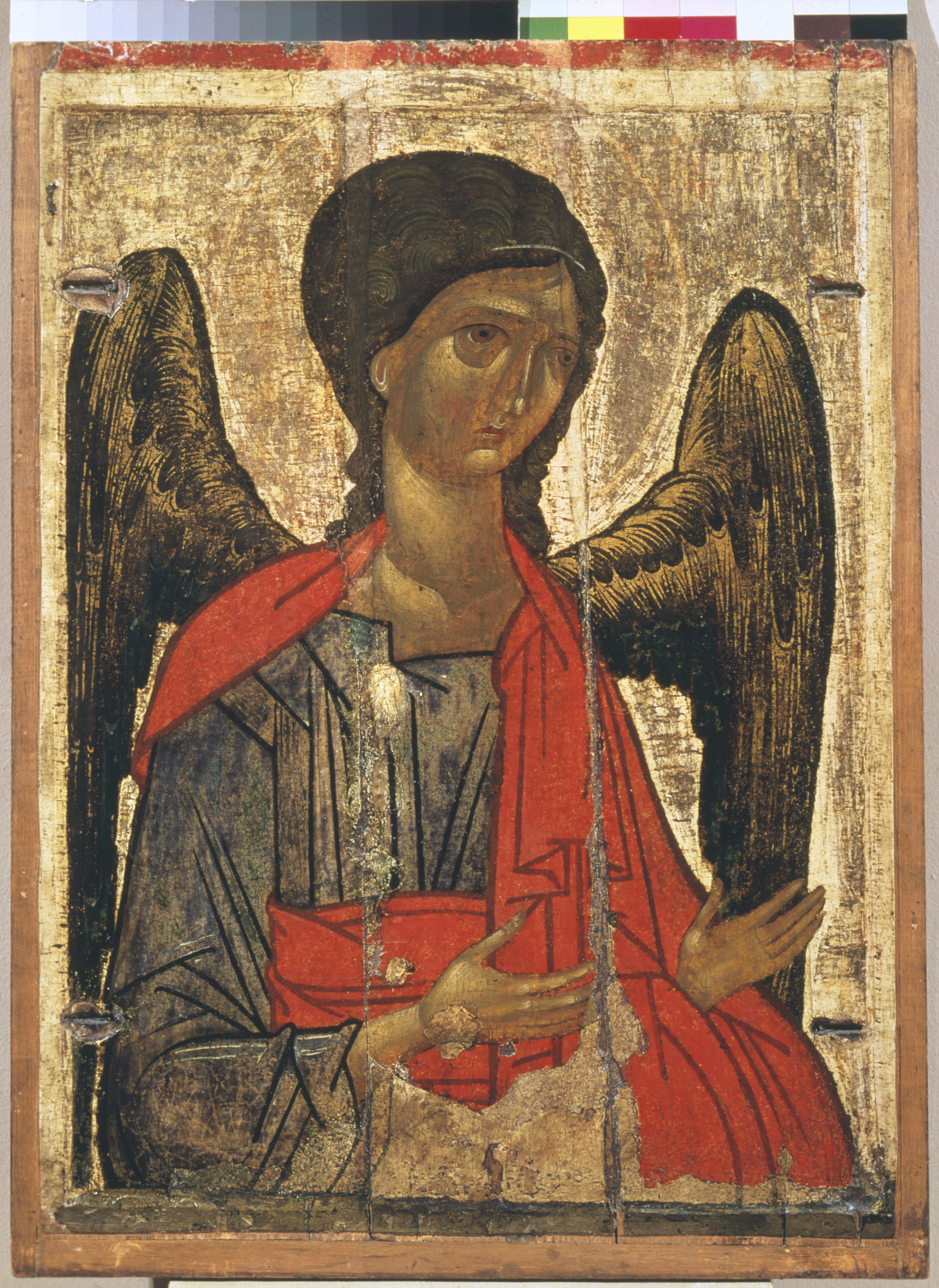
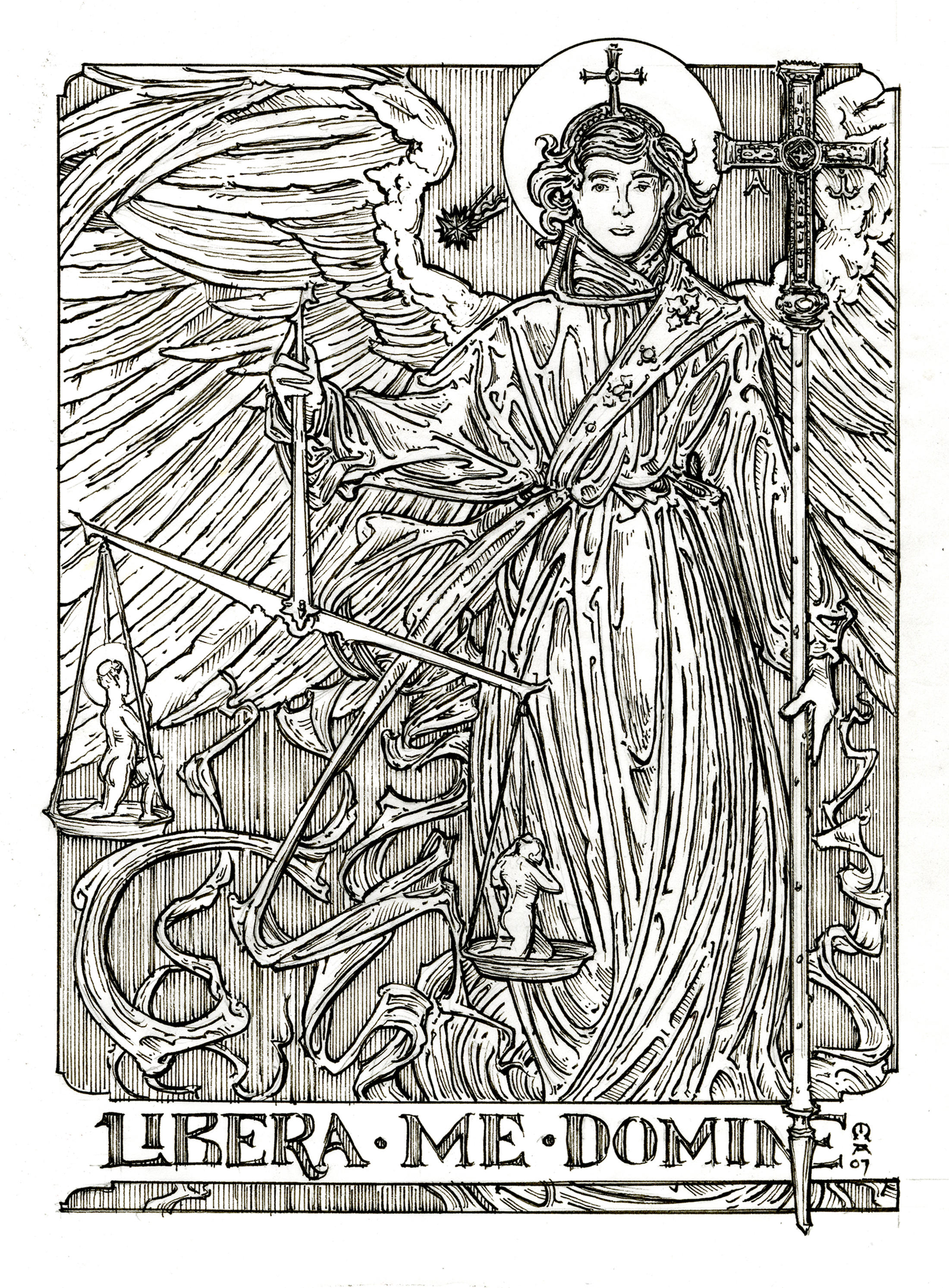
Holy Guardian Angels: Let us praise the Lord, Whom the Angels are praising, Whom the Cherubim and Seraphim proclaim: Holy, holy, holy


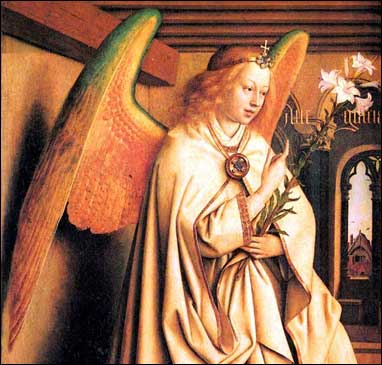
Angel1.jpgO God, Who in Thine ineffable providence hast deigned to send Thy holy Angels to watch over us, grant Thy suppliants always to find safety in their protection and in eternity to share their happiness.


Today we honor the guardian angels and the Church has had this feast on the universal calendar since 1670 as a way of proclaiming God’s protection for all of us, believer and non-believer alike; the guardian angels are not given only to helpless humanity. Today’s memorial also reminds us that there is a spirit world and that there are beings without bodies in our midst, who are of good and evil.

In your prayers today, kindly remember the monks of the American-Cassinese Congregation who are under the patronage of the Guardian Angels. Pray for vocations to the monastic way of life and holiness of life.

This feast may be confusing to some people so I thought presenting some of the Church’s teaching on angels would be good.


The Angels in Relation to God


Holy Writ adjures the angels to praise God and attests that they glorify God by their praise. (Cf. Ps 102, 148, Dn 3:58, Is 6:3, Rev 4:8, Heb 1:6)


The Angels in Relation to Man


De fide


Since the 16th century the Church celebrates a feast of in honor of the guardian angels. The Roman Catechism (IV.9.4) teaches: “By God’s Providence the task is given of protecting the human race and individual human beings, so that they may not suffer any serious harm whatever.”


Holy Writ testifies that all the angels are in the service of mankind. Hebrews 1:14: “Are they not all ministering angels, sent to minister for them who shall receive the inheritance of salvation?” Psalm 90:11ff describes the care of the angels for the just.


According to Origen (De princ. I Praed. 10) it is “a constituent part of the doctrinal promulgation of the Church that there are angels of God and benevolent powers, which serve Him, in order to complete the salvation of mankind.” (Cf. Origen, contra Celsum, VIII 34.)

Sent. certa. 


Angel2.jpgAccording to the general teaching of the theologians, however, not only every baptized person, but every human being, including unbelievers, has his own special guardian angel from his birth. This view is biblically founded on the words of Our Lord. Matthew 18:10: “See that you do not dispise one of these little ones. For I say to you that their angels in heaven always see the face of my Father who is in heaven.”


St. Basil with reference to Matthew 18, teaches: “Every one of the faithful has an angel standing at his side as educator and guide, directing his life” (Adv. Eumonium III.1) According to the testimony of St. Gregory the Wonder-worker and of St. Jerome, every person has from his birth his own special guardian angel. St. Jerome comments on Matthew 18:10: “How great is the value of the (human) soul that every single person has from birth (ab ortu navitatis) received an angel for his protection” (cf. St Gregory the Wonder-worker’s thanksgiving speech on Origen. C.4.S.th.I.113, 1-8).


The Veneration of Angels


The veneration by men of the good angels is justified both by their glorification by God and their relation to men. That which the Council of Trent teaches as to the invocation and veneration of the saints (D 984ff), may also be applied to the angels. The rejection of the veneration of the angels by St. Paul (Col. 2:18) refers to a false, exaggerated veneration of Gnostic false teachers. St. Justin Martyr is an early witness to the Church’s veneration of the angels. (L. Ott, Fundamentals of Catholic Dogma, 1960)

When I was a little boy my grandmothers taught me this prayer by saying it with me every night before bed when I spent the night at their homes. It brought me comfort then, and it brings me confort today. Each time I pray the prayer I am reminded of my grandmothers. Teach your children this prayer and say it yourself.

Angel of God,
my guardian dear,
to Whom His love,
commits me here,
ever this day,
be at my side,
to light and guard,
to rule and guide. Amen.

Finally, there are some in the Church who undoubtedly will be singing this hymn for a communion meditation. Enjoy!!!

Saint Jerome: encourages us to live by the Word

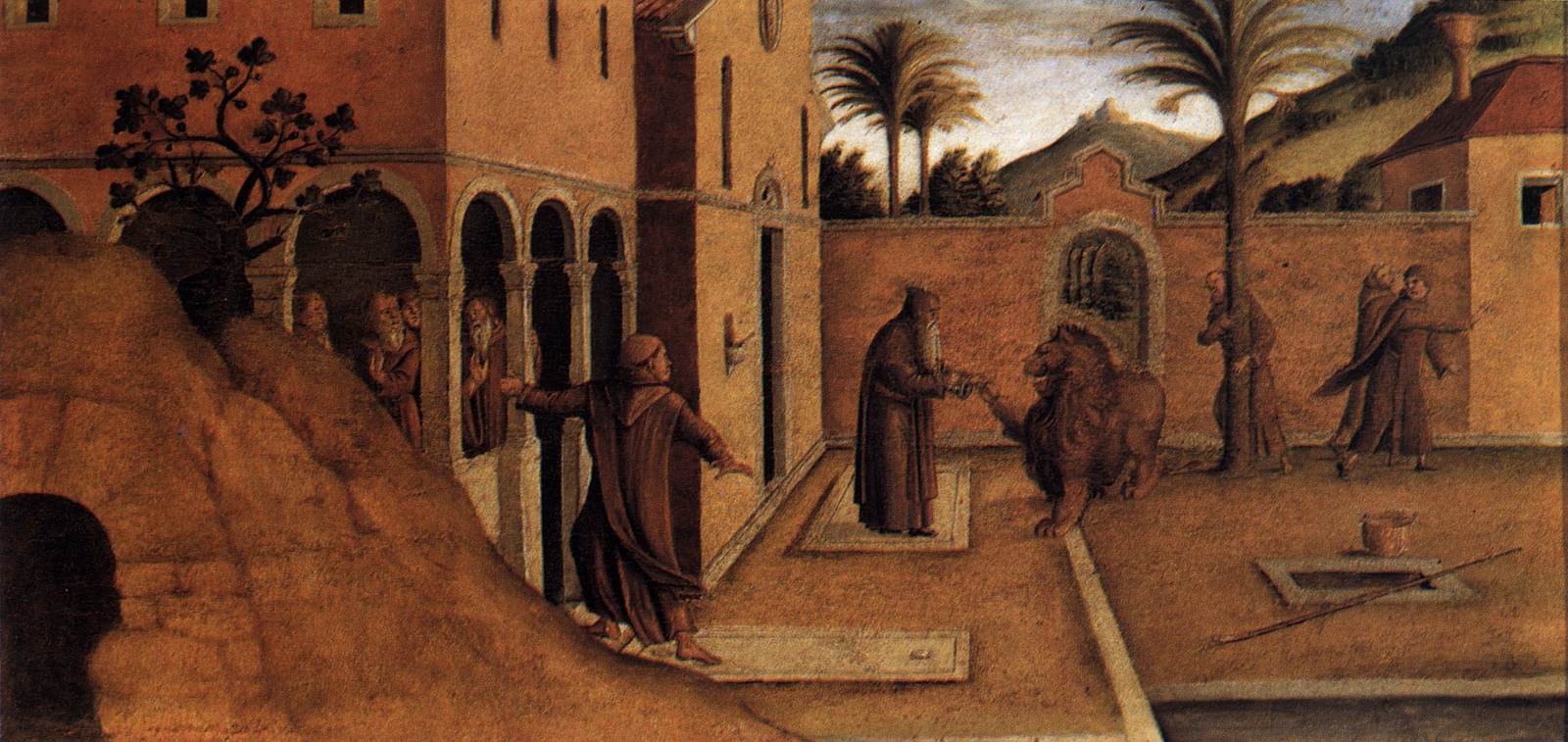
The example of Saint Jerome, priest, confessor of the faith and doctor of the Church lived ca. 341-420. He lived a simple life dedicated to the Church; he made the sacred Scriptures accessible to the people by translating them into Latin and writing commentaries. Saint Jerome was a colorful character and concerned for the welfare of others. 


St Jerome2.jpg

O God,

Who for the expounding of the Holy Scriptures

did raise up in Thy Church the great and holy Doctor Jerome;

we beseech Thee, grant that by his intercession and merits we may,

by Thy help, be enabled to practice what he taught us both by word and by work.

Given that today is a feast day of a great saint dedicated to knowing and living the Scriptures, an excerpt from the work, All About the Bible, seems useful for our meditation today.

Man Shares with God

Making all this known to man was not the work of a moment, from our point of view. God had made man to His own image and likeness. This means that man shares with God the power to know himself and others. Man shares with God the freedom to embrace that which is good. Man can even know the infinite goodness Itself which is God; he has the power to make his whole being center on that goodness of God – to bring about his own human perfection and the perfection of those with whom he lives. 

But man had so distorted this image of God as to seek happiness where there is only misery, peace where there is only disturbance, security where there is only danger. But God is not so weak that He would have to start over with a new human race. God is not so petty as simply to seek revenge on the man who betrayed Him. Because man had made himself an ugly distortion of the image of God, God came into man’s world as Savior to bring beauty out of ugliness. In this is seen the power of God; in this also is known the love of God who can never cease to pursue this fallen man so as to give him greater blessings than those he had thrown away. When God took a hand in our world, He still respected that image of Himself in man that man had distorted. Man doesn’t change overnight from an infant into an adult. He doesn’t learn all things suddenly in a flash of light. This is not the way God made us. In coming to man as his Savior, God dealt with man as God Himself had made him – a being who learns step by step, a being who learns from others and from the world about him, a being who can do only as much as he knows how to do.


To bring to the world the knowledge of the astonishing love and goodness of God was a long process. Two thousand years passed before the full work of God as Savior was established in our world as a living thing. The central point of this work was the coming of Jesus of Nazareth, One who was wholly and completely a man like us in all save sin, and yet true God from all eternity. Christians group all the events that led up to this central event of history under the term “Old Testament.” It was that period between the call of Abraham about 1800 years before Christ to the coming of Christ Himself. It was that patient struggle of God to show man how far he had drifted from God, how little he actually knew about either God or man himself. By His unselfish, relentless pursuit of man, God brought at least some – those who were willing to do what they knew how to do for God – to realize that their only happiness in their own lives and in their nation was to be found in obedience to God.

All About the Bible is a booklet published by the Catholic Information Service. There are more than 60 titles published by CIS to help learn the Catholic faith or just to review some things about the faith.

in the sight of the angels, the psalmist says and Saint Benedict reminds

To keep the place of the angels in the front of our mind, some words from the Pope…


… the Feast of the three Archangels who are mentioned by name in Scripture: Michael,
Archangel Michael2.jpgGabriel and Raphael. This reminds us that in the ancient Church – already in the Book of Revelation – Bishops were described as “angels” of their Church, thereby expressing a close connection between the Bishop’s ministry and the Angel’s mission. From the Angel’s task it is possible to understand the Bishop’s service. But what is an Angel? Sacred Scripture and the Church’s tradition enable us to discern two aspects. On the one hand, the Angel is a creature who stands before God, oriented to God with his whole being. All three names of the Archangels end with the word “El”, which means “God”. God is inscribed in their names, in their nature. Their true nature is existing in his sight and for him. In this very way the second aspect that characterizes Angels is also explained: they are God’s messengers. They bring God to men, they open heaven and thus open earth. Precisely because they are with God, they can also be very close to man. Indeed, God is closer to each one of us than we ourselves are. The Angels speak to man of what constitutes his true being, of what in his life is so often concealed and buried. They bring him back to himself, touching him on God’s behalf. In this sense, we human beings must also always return to being angels to one another – angels who turn people away from erroneous ways and direct them always, ever anew, to God.
If the ancient Church called Bishops “Angels” of their Church, she meant precisely this: Bishops themselves must be men of God, they must live oriented to God. “Multum orat pro populo.”  (Pope Benedict XVI, Ordination of Bishops, 29 September 2007)


The Feast of the Archangels Michael, Raphael and Gabriel, patrons of those who work in radio: pray for us.

Archangels

The Catholic Information Service at the Knights of Columbus publishes a number of booklets on matters pertaining to the Catholic faith. Each of the 60+ booklets gives a very good introduction to what we believe but the booklets are neither the first word nor the last on the subjects they treat. One such booklet is All About Angels, and the following is an excerpt:


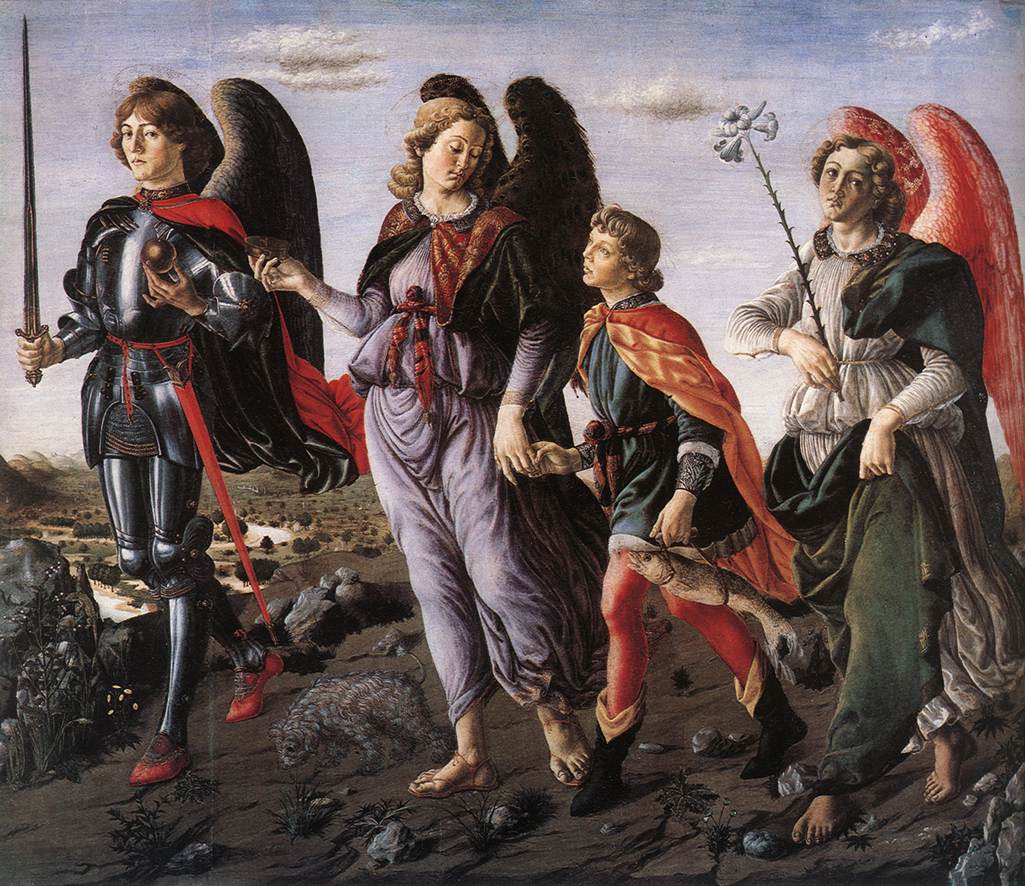
More often, however, angels appear in a multitude (cf. Daniel 7:10). When they do, the Old Testament writers employ military metaphors to describe their collective presence. Metaphors such as “host” or “army of the Lord” and “encampment of God” all suggest that angels could be found in large numbers, arranged in an orderly fashion. In rare displays of cordial greetings between men and angels, we are told the proper names of three angels: Michael (Daniel 10:13), which means “Who is Like God?”; Gabriel (Daniel 8:16), which means “Power of God”; and Raphael (Tobit 7:8), which means “God has healed.” These named beings were later identified by Catholic tradition as “archangels.” Although these personal names tell us something about the nature of God, they should not be considered solely as metaphors for God’s attributes. An archangel’s name, like our own, reveals the identity of a unique, personal being.


3 archangels with Tobias.jpg 
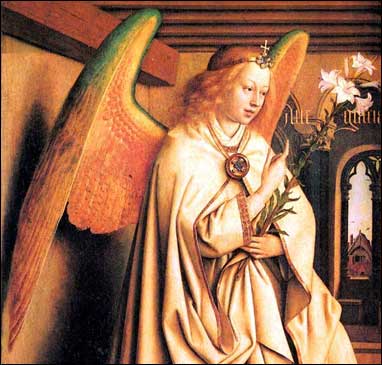
The Archangels are charged with protecting an individual or a multitude of individuals or with delivering solemn messages from God to man, such as when the Archangel Gabriel greeted the Blessed Virgin Mary with the news of the Incarnation.


Finally, the Prayer after Communion on the Feast of the Archangels serves as a reminder that divine providence has placed us “under the watchful care of the angels” so that “we
angel.jpgmay advance along the way of salvation.” Through the liturgy of the Mass we are encouraged, then, to love, respect, and invoke the angels. Invoking the angels may seem like an odd practice, but when we recall that those angels who did not reject God are saints, we quickly realize that there is little difference between this practice and the ancient practice of invoking human saints. We pray to the angels as we do to the saints, for the same reasons, namely, so that they will guide and protect us, as well as intercede with God on our behalf. At the end of the funeral liturgy, in the Prayer of Commendation we invoke the angels and saints to aid and accompany us as we leave this world:


Saints of God, come to his/her aid!

Come to meet him/her, angels of the Lord!

Receive his/her soul and present him/her to God the Most High.

May Christ, who called you, take you to himself;

may angels lead you to Abraham’s side.


The Roman calendar sets aside two feast days to honor God’s invisible servants. In the wake of the Second Vatican Council’s reform of the sacred liturgy, we continue to celebrate (as we have for centuries) the feasts of the Archangels and of the holy Guardian Angels. The feast day of Saint Michael, Saint Gabriel, and Saint Raphael, which the Church now celebrates on September 29, was first approved by the Lateran Council in 745. The feast day of the Guardian Angels, celebrated on October 2, originated in 1411 at Valencia, Spain. The liturgical celebration of these two feast days makes us mindful of our communion with the angels and of the immense expanse of the Church, which encompasses heaven and earth. The Opening Prayer for the feast of the archangels emphasizes the universal scope of God’s providence: “God our Father, in a wonderful way you guide the work of angels and men. May those who serve you constantly in heaven keep our lives safe from all harm on earth.”


Archangel Michael.jpgThe Prayer to Saint Michael the Archangel


Pope Leo XIII speaks of a vision he had at Mass that terrified him. In fact, there seems to be a variety of versions of the narrative. As it goes, either the Pope saw devils congregating around the Holy See or he heard that it was granted to Satan to try to undermine the Church for the next one hundred years. Who is to doubt the either interpretation of the vision? As a result of the vision, Pope Leo composed this prayer to Saint Michael and ordered in 1886 that it be recited after every Low Mass. This custom was suppressed in 1964 as part of the official liturgical acts of the priest at Mass but the tradition of saying the prayer persists. The prayer evokes a strong sense of protection and confidence in the holy work of the Archangel and therefore I strongly recommend that you say it following Mass and daily if you don’t make it to Mass.

Personally, in the past year I started saying this prayer I learned as a child.

Saint Michael the Archangel,
defend us in battle;
be our protection against the wickedness and snares of the devil.
May God rebuke him, we humbly pray:
and do thou, O Prince of the heavenly host,
by the power of God,
cast into hell Satan and all evil spirits
who wander through the world seeking the ruin of souls. Amen.


The Latin text of the prayer is as follows:


Sancte Michael Archangele,
defende nos in proelio.
contra nequitiam et insidias diaboli esto praesidium.
Imperet illi Deus, supplices deprecamur:
tuque, Princeps militiae caelestis,
Satanam aliosque spiritus malignos,
qui ad perditionem animarum pervagantur in mundo,
divina virtute, in infernum detrude. Amen.

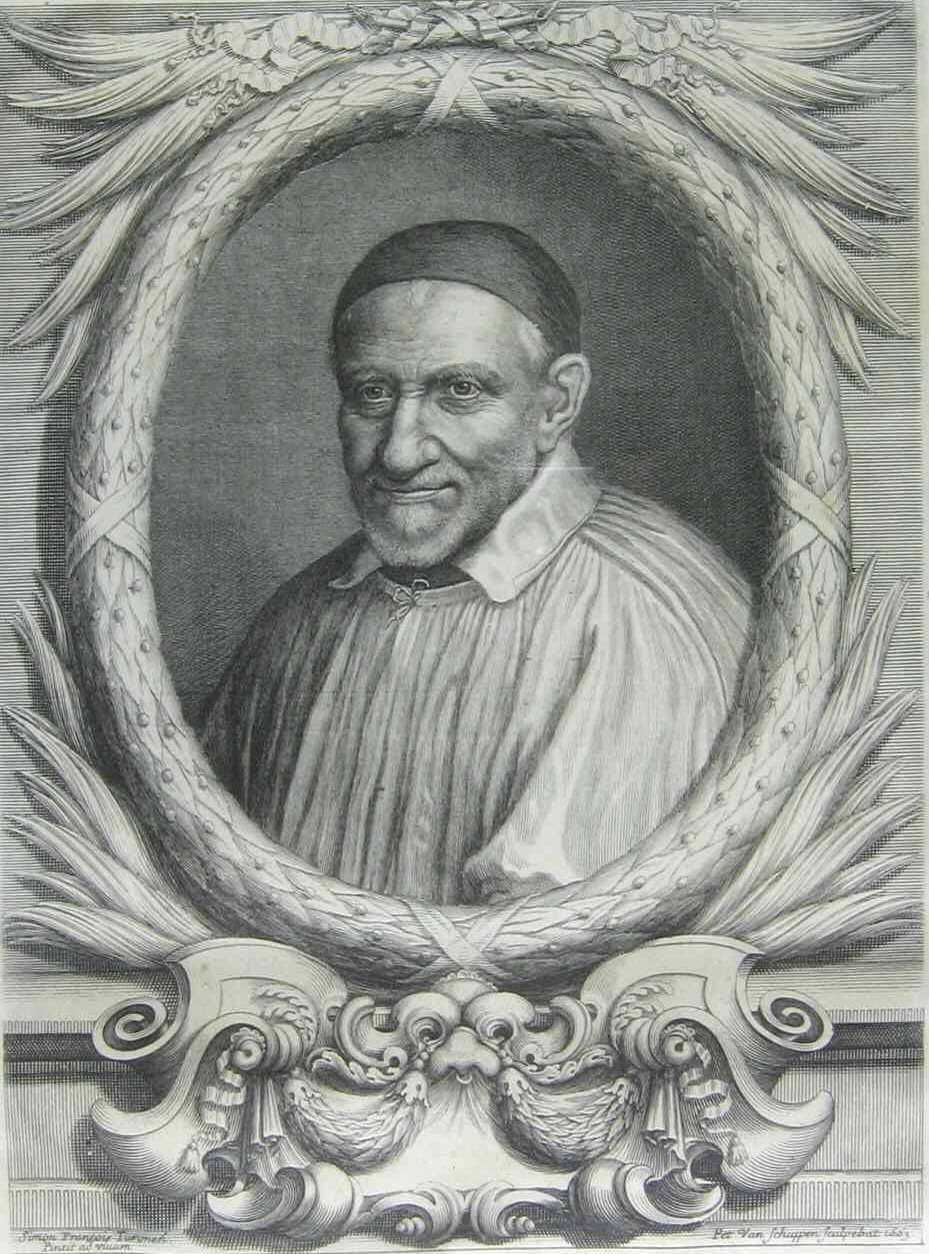
Saint Vincent de Paul: confessor, apostle to the poor & lover of the priesthood


St Vincent de Paul.jpg


O God,

Who did endow blessed Vincent

with apostolic power for preaching the Gospel to the poor

and for promoting the honor of the priesthood;

we beseech Thee, grant that we who venerate his holy life

may be inspired by the example of his virtues.


Three thoughts from Saint Vincent:


Give me persons of prayer and they will be capable of anything.

What! To be a Christian and see a Brother afflicted without weeping with him, without being sick with him, would be to be without charity, to be a mere picture of a Christian, to be without humanity, to be worse than brute beasts!


The Church teaches us that mercy belongs to God. Let us implore Him to bestow on us the spirit of mercy and compassion, so that we are filled with it and may never lose it. Only consider how much we ourselves are in need of mercy.

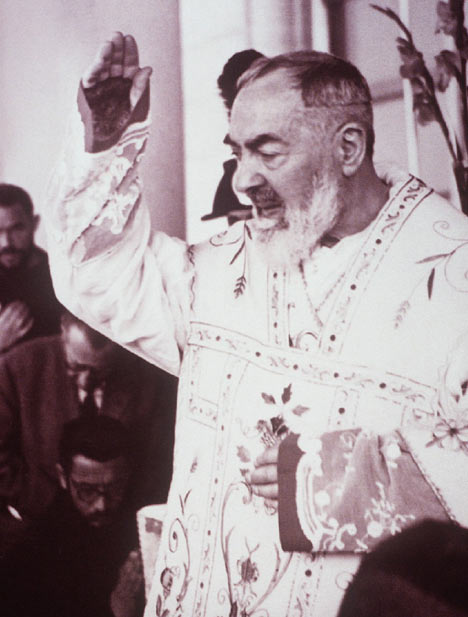
Do we seek greater conformity to Christ crucified? St Pio wants to know


St Padre Pio.jpgPadre Pio’s witness, which is evident from his life and even from his physical condition, suggests to us that this message coincides with the essential meaning of the Jubilee now close at hand: Jesus is the one Savior of the world. In him God’s mercy was made flesh in the fullness of time, to bring salvation to humanity mortally wounded by sin. “By his wounds you have been healed” (1 Peter 2:24), the blessed father repeated to all in the words of the Apostle Peter, he whose body was marked with those wounds.

In 60 years of religious life, practically all spent at San Giovanni Rotondo, he was totally dedicated to prayer and to the ministry of reconciliation and spiritual direction. This was well emphasized by the Servant of God Pope Paul VI: “Look what fame he had…. But why?… Because he said Mass humbly, heard confessions from dawn to dusk and was … the one who bore the wounds of our Lord. He was a man of prayer and suffering” (20 February 1971).

Totally absorbed in God, always bearing the marks of Jesus’ Passion in his body, he was bread broken for men and women starving for God the Father’s forgiveness. His stigmata, like those of Francis of Assisi, were the work and sign of divine mercy, which redeemed the world by the Cross of Jesus Christ. Those open, bleeding wounds spoke of God’s love for everyone, especially for those sick in body and spirit.

And what can be said of his life, an endless spiritual combat, sustained by the weapons of prayer, centred on the sacred daily acts of Confession and Mass? Holy Mass was the heart of his whole day, the almost anxious concern of all his hours, his moment of closest communion with Jesus, Priest and Victim. He felt called to share in Christ’s agony, an agony which continues until the end of the world.

Pope John Paul II
3 May 1999 Padre Pio’s Beatification