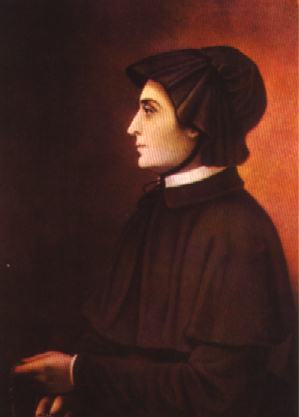
Saint Elizabeth Ann Seton


St Elizabeth Ann Seton2.jpgLord God, You blessed Elizabeth Seton with gifts of grace as wife and mother, educator and foundress, so that she might spend her life in service to Your people. Through her example and prayers may we learn to express our love for You in love for others.


At the Mass which Pope Paul VI declared Seton a saint he said:


 Saint Elizabeth Ann Seton is an American. All of us say this with spiritual joy, and with the intention of honoring the land and the nation from which she marvelously sprang forth as the first flower in the calendar of the saints. This is the title which, in his original foreword to the excellent work of Father Dirvin, the late Cardinal Spellman, Archbishop of New York, attributed to her as primary and characteristic: “Elizabeth Ann Seton was wholly American”! Rejoice, we say to the great nation of the United States of America. Rejoice for your glorious daughter. Be proud of her. And know how to preserve her fruitful heritage. This most beautiful figure of a holy woman presents to the world and to history the affirmation of new and authentic riches that are yours: that religious spirituality which your temporal prosperity seemed to obscure and almost make impossible. Your land too, America, is indeed worthy of receiving into its fertile ground the seed of evangelical holiness. And here is a splendid proof-among many others-of this fact.


May you always be able to cultivate the genuine fruitfulness of evangelical holiness, and ever experience how-far from stunting the flourishing development of your economic, cultural and civic vitality -it will be in its own way the unfailing safeguard of that vitality. Saint Elizabeth Ann Seton was born, brought up and educated in New York in the Episcopalian Communion. To this Church goes the merit of having awakened and fostered the religious sense and Christian sentiment which in the young Elizabeth were naturally predisposed to the most spontaneous and lively manifestations. We willingly recognize this merit, and, knowing well how much it cost Elizabeth to pass over to the Catholic Church, we admire her courage for adhering to the religious truth and divine reality which were manifested to her therein. And we are likewise pleased to see that from this same adherence to the Catholic Church she experienced great peace and security, and found it natural to preserve all the good things which her membership in the fervent Episcopalian community had taught her, in so many beautiful expressions, especially of religious piety, and that she was always faithful in her esteem and affection for those from whom her Catholic profession had sadly separated her.


·         Born in New York City, August 28, 1774

·         Married William Magee Seton, January 25, 1794; mother of 5 children; William died in Pisa, December 27, 1803

·         Received into the Catholic Church, Ash Wednesday, March 14, 1805, by Father Matthew O’Brien in St. Peter’s Church, Barclay Street, NY

·         Formation of the new community in 1808, first Religious Congregation of women in the USA

·         Died at Emmitsburg, Maryland, January 4, 1821

·         Canonized on September 14, 1975 by Pope Paul VI
St Elizabeth Ann Seton4.jpg 

Her devotion to the Eucharist, sacred Scripture, especially the 23rd Psalm, and the Blessed Virgin Mary are hallmarks of Seton’s spiritual life. Following the example of Saints Vincent de Paul and Louis de Marillac hers was an apostolic spirituality.


The Church says officially: In Emmitsburg, Maryland, USA, Saint Elizabeth Ann Seton who, after having been widowed, professed the Catholic Faith and worked competently at educating girls and feeding impoverished children as a member of the Congregation of the Sisters of Charity of Saint Joseph, which she founded. (Martyrologium Romanum, 2005)
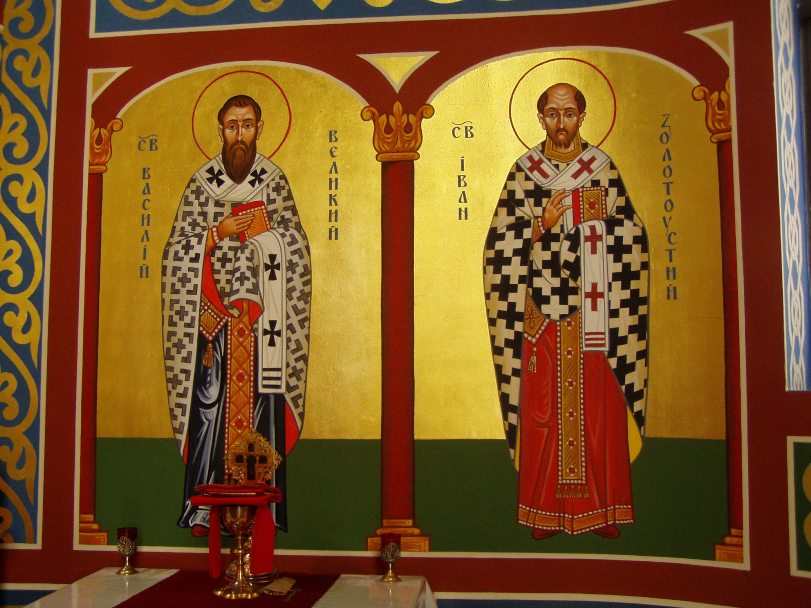
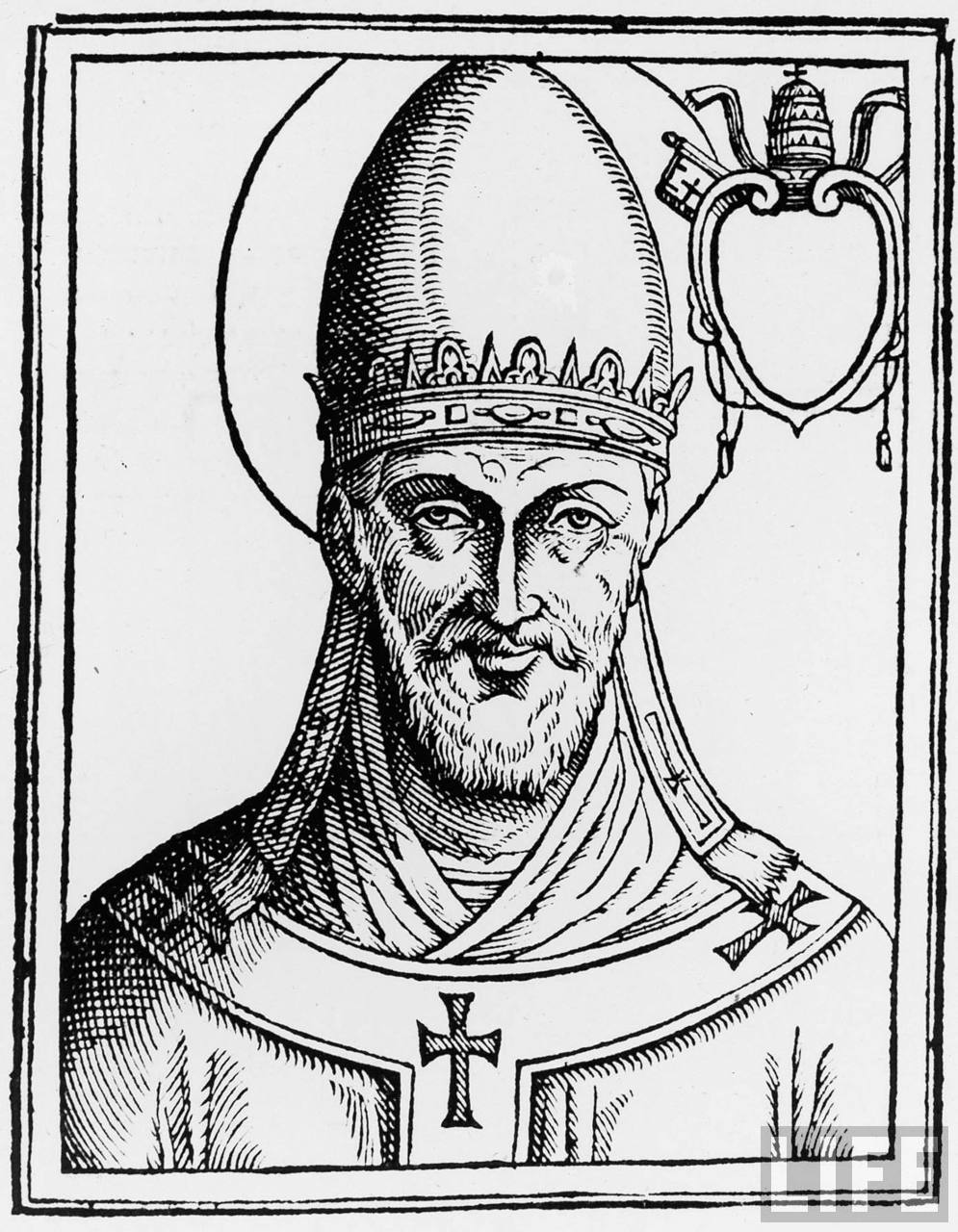
Saints Basil and Gregory


Sts Basil & Gregory.jpgGod our Father, You inspired the Church with the example and teaching of Your saints Basil and Gregory. In humility may we come to know Your truth and put it into action with faith and love.


Just three -of many– things about being a Christian according to Saint Basil the Great:


The Christian ought to be so minded as becomes his heavenly calling, and his life and conversation ought to be worthy of the Gospel of Christ.


The Christian ought to regard all the things that are given him for his use, not as his to hold as his own or to lay up; and, giving careful heed to all things as the Lord’s, not to overlook any of the things that are being thrown aside and disregarded, should this be the case.


Every one ought, as far as he is able, to conciliate one who has ground of complaint against him. No one ought to cherish a grudge against the sinner who repents, but heartily to forgive him. He who says that he has repented of a sin ought not only to be pricked with compunction for his sin, but also to bring forth fruits worthy of repentance.


Pope Benedict’s 2007 catechesis on Saint Basil part I and part II.

Saint Sylvester I, pope

St Sylvester pope.jpg

The Church prays: Lord, help and sustain Your people by the prayers of Pope Sylvester. Guide us always in this present life and bring us to the joy that never ends.

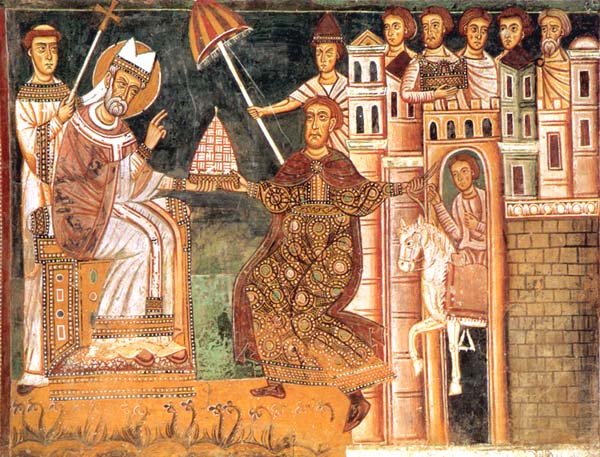
Elected pope in 314, Saint Sylvester served the Church at a time when the Arian heresy and the Donatist schism had provoked great discord. After the peace of Constantine, he contributed greatly to the work of evangelization throughout the Roman world. The saintly pope died in 355. 

Some other thoughts on today’s saint.


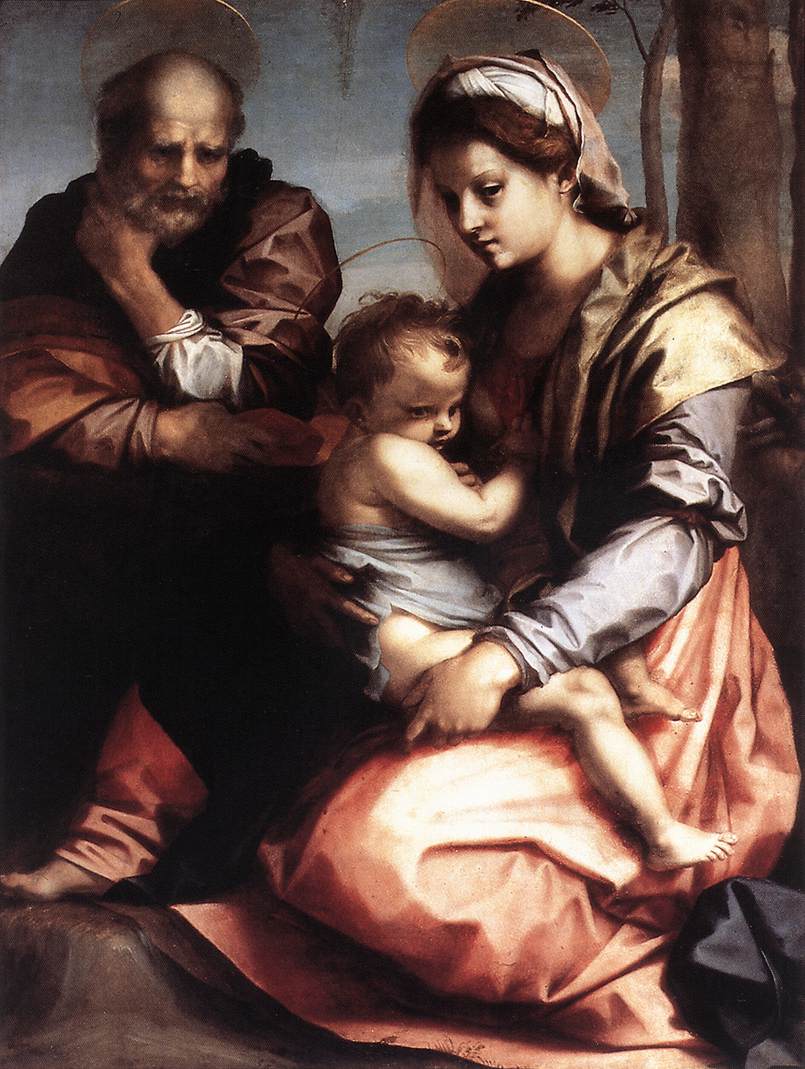
Feast of the Holy Family

Holy Family.jpg


Father in heaven, creator of all, you ordered the earth to bring forth life, and crowned its goodness by creating the family of man.

In history’s moment when all was ready You sent your Son to dwell in time, obedient to the laws of life in our world.

Teach us the sanctity of human love, show us the value of family life, and help us to live in peace with all men that we may share in your life forever.

Saint John the Evangelist (the Beloved Disciple)

Saint John, Saint John was Christ’s disciple,
and Evangelist also;
He for the sake of Jesus Christ
Much pains did undergo,
Because he loved our Saviour Christ,
As Holy Scriptures say,
And was belov’d of him also,
And in his bosom lay.

Chorus

Saint John for love of our Saviour
Did undergo much pain
And never ceased during life
To preach Christ Jesus’ name.

Saint John, he at Jerusalem

St John the Evan.jpgDid preach God’s holy word,
And for the same the spiteful pagans
They did him cruel scourge.
Then did he for the same rejoice,
That he was counted worthy
To suffer for the sake of Christ,
And would him not deny.

To Patmos banish’d was Saint John,
As Scripture doth record,
For the testimony of Christ,
And his most holy word.
And as he was in the Spirit
On the Lord’s blessed day,
Our Saviour by an Angel spake,
and unto him did say,

I am Alpha and Omega,
Which was and is to come;
And what thou seest write in a book
Thus said he to Saint John
And send it to the Churches then,
Which are in Asia seven.
And said the Angel to Saint John,
Which came to him from Heaven.

Continue reading Saint John the Evangelist (the Beloved Disciple)

Yesterday, with exultation: In honor of Saint Stephen

Yesterday, with exultation,
Join’d the world in celebration
Of her promised Saviour’s birth;
Yesterday the Angel-nation
Pour’d the strains of jubilation
O’er the Monarch born on earth;


But today o’er death victorious,
By his faith and actions glorious,
by his miracles renown’d,
See the Deacon triumph gaining,
‘Midst the faithless faith sustaining,
First of holy Martyrs found.

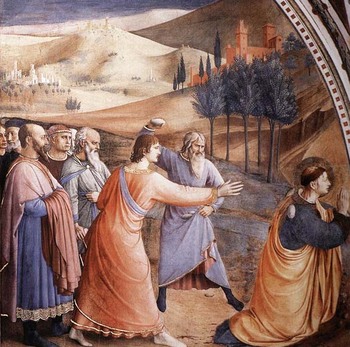
Thumbnail image for St Stephen.jpg 

Onward, champion, falter never,
Sure of sure reward for ever,
Holy Stephen, persevere;
Perjured witnesses confounding,
Satan’s synagogue astounding
By thy doctrine true and clear.


Thine own Witness is in Heaven,
True and faithful, to thee given,
Witness of thy blamelessness:
By thy name a crown implying,
Meet it is thou shouldst be dying
For the crown of righteousness.


For the crown that fadeth never
Bear the torturer’s brief endeavour;
Victory waits to end the strife:
Death shall be thy life’s beginning,
And life’s losing be the winning
Of the true and better life.


Fill’d with God’s most Holy Spirit,
See the Heav’n thou shalt inherit,
Stephen, gaze into the skies:
There God’s glory steadfast viewing,
Thence thy victor-strength renewing,
Pant for thy eternal prize.


See, as Jewish foes invade thee,
See how Jesus stands to aid thee,
Stands at God’s right hand on high:
Tell how open’d Heav’n is shown thee,
Tell how Jesus waits to own thee,
Tell it with thy latest cry.


As the dying martyr kneeleth,
For his murderers he appealeth,
For their madness griefing sore;
Then in Christ he sleepeth sweetly,
And with Christ he reigneth meetly,
Martyr first-fruits, evermore.


Words: “Heri mundus exultavit,” Adam of S. Victor (d. 1192). Translation by John Mason Neale; Music: “Heri Mundus Exultavit,” by Walter Macfarren; Meter: 887 887. Hymns Ancient and Modern. London: William Clowes and Sons, Ltd., 1922, #64, p. 64-5.

Saint Lucy


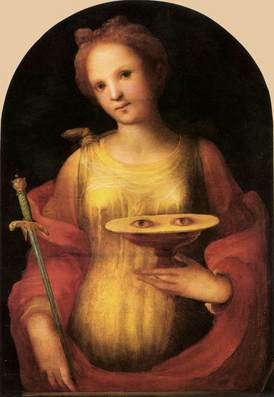
Thumbnail image for Thumbnail image for Thumbnail image for St Lucy.jpg


A Nocturnal upon St. Lucy’s Day

by John Donne


‘Tis the year’s midnight, and it is the day’s,

Lucy’s, who scarce seven hours herself unmasks;

         The sun is spent, and now his flasks

         Send forth light squibs, no constant rays;

                The world’s whole sap is sunk;

The general balm th’ hydroptic earth hath drunk,

Whither, as to the bed’s feet, life is shrunk,

Dead and interr’d; yet all these seem to laugh,

Compar’d with me, who am their epitaph.


Study me then, you who shall lovers be

At the next world, that is, at the next spring;

         For I am every dead thing,

         In whom Love wrought new alchemy.

                For his art did express

A quintessence even from nothingness,

From dull privations, and lean emptiness;

He ruin’d me, and I am re-begot

Of absence, darkness, death: things which are not.


All others, from all things, draw all that’s good,

Life, soul, form, spirit, whence they being have;

         I, by Love’s limbec, am the grave

         Of all that’s nothing. Oft a flood

                Have we two wept, and so

Drown’d the whole world, us two; oft did we grow

To be two chaoses, when we did show

Care to aught else; and often absences

Withdrew our souls, and made us carcasses.


But I am by her death (which word wrongs her)

Of the first nothing the elixir grown;

         Were I a man, that I were one

         I needs must know; I should prefer,

                If I were any beast,

Some ends, some means; yea plants, yea stones detest,

And love; all, all some properties invest;

If I an ordinary nothing were,

As shadow, a light and body must be here.


But I am none; nor will my sun renew.

You lovers, for whose sake the lesser sun

         At this time to the Goat is run

         To fetch new lust, and give it you,

                Enjoy your summer all;

Since she enjoys her long night’s festival,

Let me prepare towards her, and let me call

This hour her vigil, and her eve, since this

Both the year’s, and the day’s deep midnight is.


John Donne. Poems of John Donne. Vol. I. E. K. Chambers, ed. London: Lawrence & Bullen, 1896. 45-46.


Saint Damasus I


St Damasus Ic.jpgThe Lord led the just in right paths. And the Lord showed him the Kingdom of God.


Eternal Shepherd, graciously guard Thy flock, and through blessed Damasus, Thy Supreme Pontiff, whom Thou did appoint pastor of the universal Church, keep it under Thy continual protection.


Answering the question: who is Jesus Christ, we would say…


Pope Damasus I (366-384) in a letter to the bishops of the East dated around 374, pointed out and at the same time rejected the errors of both Arius and of Apollinaris, “These (i.e., the Arians) posit in the Son of God an imperfect divinity, while the others (i.e., the Apollinarists) falsely affirm that the humanity of the Son of Man is incomplete. If the Son of God did not become fully man, then God’s work is imperfect and our salvation is imperfect, because the whole man has not been saved! We, who know that we have been saved in the fullness of the human being, profess according to the faith of the Catholic Church that God in the fullness of his being has assumed human nature in its fullness.”


This letter of Damasus, written fifty years after Nicaea, was directed principally against the Apollinarists (cf. DS 146). A few years later the First Council of Constantinople (381) condemned all the heresies of the time, including Arianism and Apollinarism. It thereby confirmed what Pope Damasus I had declared about Christ’s humanity, which has by nature a real human soul (and therefore a real human intellect and free will) (cf. DS 146, 149, 151). (from the Conciliar Definitions of Christ, 9 March 1988)


Two biographical sketches of Pope Saint Damasus I here and here.


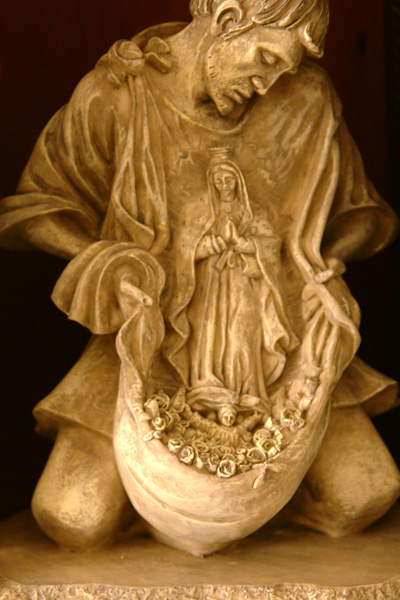
Saint Juan Diego


St Juan Diego.jpgLord God, through Saint Juan Diego you made known the love of Our Lady of Guadalupe toward your people. Grant by his intercession that we who follow the counsel of Mary, our Mother, may strive continually to do your will.


The information about him that has reached [the Church] praises his Christian virtues: his simple faith, nourished by catechesis and open to the mysteries; his hope and trust in God and in the Virgin; his love, his moral coherence, his unselfishness and evangelical poverty.  Living the life of a hermit here near Tepeyac, he was a model of humility. The Virgin chose him from among the most humble as the one to receive that loving and gracious manifestation of hers which is the Guadalupe apparition. Her maternal face and her Saint image which she left us as a priceless gift is a permanent remembrance of this. In this manner she wanted to remain among you as a sign of the communion and unity of all those who were to live together in this land. (Pope John Paul II, Beatification homily 6 May 1990)