Saint Joseph the Worker

Pray for us, Saint Joseph, alleluia.

Thou faithful protector of all our work, alleluia.
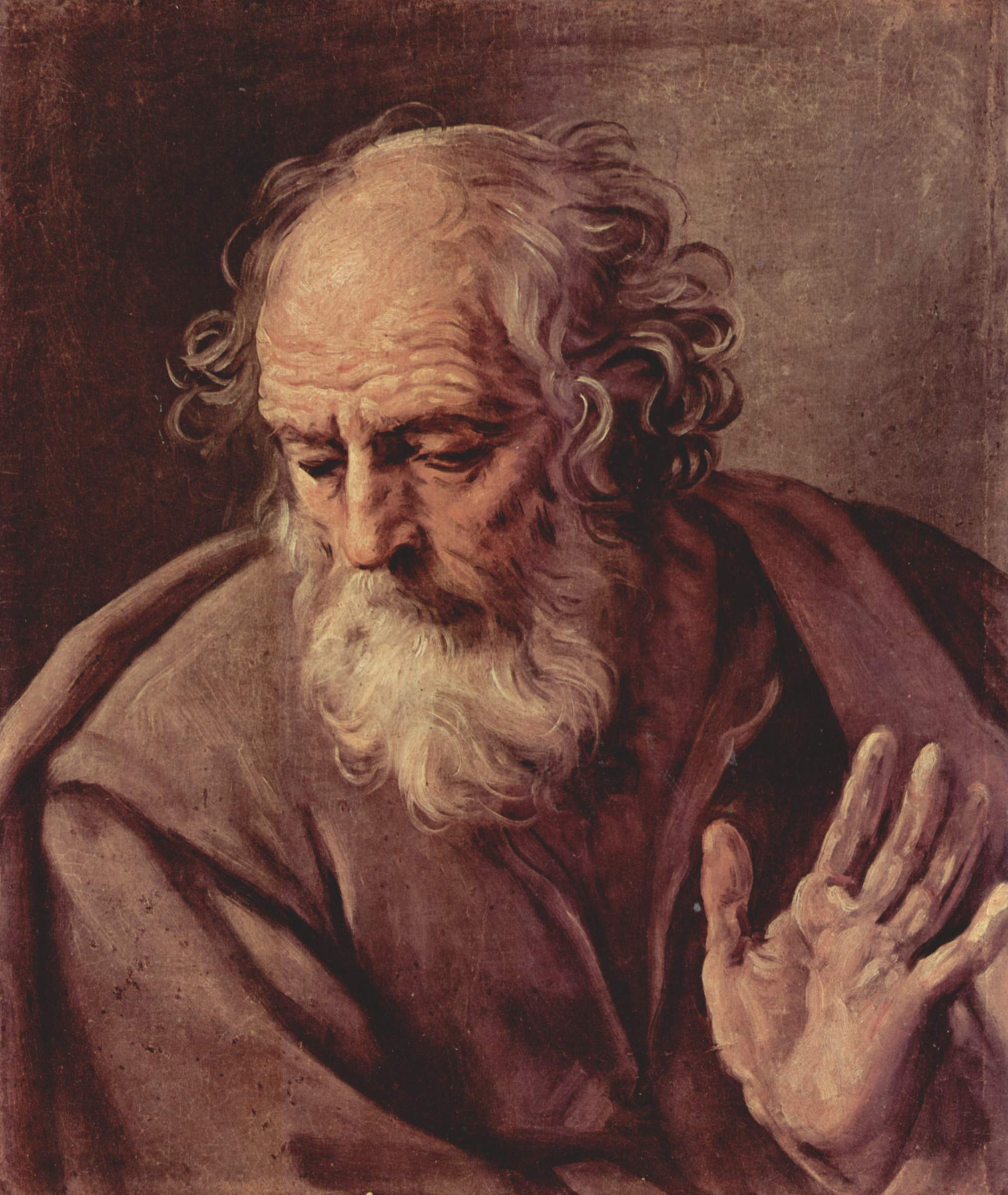
St Jospeh GReni.jpg

Work was the daily expression of love in the life of the
Family of Nazareth. The Gospel specifies the kind of work Joseph did in order
to support his family: he was a carpenter. This simple word sums up Joseph’s
entire life. For Jesus, these were hidden years, the years to which Luke refers
after recounting the episode that occurred in the Temple: “And he went
down with them and came to Nazareth, and was obedient to them” (Lk 2:51).
This “submission” or obedience of Jesus in the house of Nazareth
should be understood as a sharing in the work of Joseph. Having learned the
work of his presumed father, he was known as “the carpenter’s son.”
If the Family of Nazareth is an example and model for human families, in the
order of salvation and holiness, so too, by analogy, is Jesus’ work at the side
of Joseph the carpenter. In our own day, the Church has emphasized this by
instituting the liturgical memorial of St. Joseph the Worker on May 1. Human
work, and especially manual labor, receive special prominence in the Gospel.
Along with the humanity of the Son of God, work too has been taken up in the
mystery of the Incarnation, and has also been redeemed in a special way. At the
workbench where he plied his trade together with Jesus, Joseph brought human
work closer to the mystery of the Redemption.

In the human growth of Jesus “in wisdom, age and
grace,” the virtue of industriousness played a notable role, since
“work is a human good” which “transforms nature” and makes
man “in a sense, more human.”

The importance of work in human life demands that its
meaning be known and assimilated in order to “help all people to come
closer to God, the Creator and Redeemer, to participate in his salvific plan
for man and the world, and to deepen…friendship with Christ in their lives,
by accepting, through faith, a living participation in his threefold mission as
Priest, Prophet and King.”

What is crucially important here is the sanctification of
daily life, a sanctification which each person must acquire according to his or
her own state, and one which can be promoted according to a model accessible to
all people: “St. Joseph is the model of those humble ones that
Christianity raises up to great destinies; …he is the proof that in order to
be a good and genuine follower of Christ, there is no need of great things-it
is enough to have the common, simple and human virtues, but they need to be
true and authentic.”

Pope John Paul II, Redemptoris Custos, 1989

Blessed Pauline von Mallinckrodt

Bl Pauline Von MallinckrodtMerciful God,source and goal of all life, you gave Blessed Pauline the grace to seek and do your will in all the changing circumstances of her life. Through her intercession help us to trust in your guidance and to bear witness to your love. We ask this through Christ our Lord. Amen.

Blessed Pauline is the founder of The Sisters of Christian Charity

Mother Adalberta Mette’s biography of Blessed Pauline von Mallinckrodt

The source of Mother Pauline’s competence and self-assurance in dealing with people was Christ. It was said of her:

Christ was the center of her life–Christ, “the kindness and love of God” (Titus 3, 4) made visible. In Christ, in the encounter with him in his Word and in the Eucharist, as well as in the “least of his brothers and sisters,” she found love that does not count, that does not calculatingly repay like with like, but gives itself away out of pure mercy, without reservation, without restriction, without intention, and which gives witness of the fidelity, the mercy, the affection of God for us people. It is that love which accepts the risk to let the other free to accept this affection but in the same way knows how to awaken the best in others and may raise them to the light.  She wanted every Sister of her congregation to feel impelled by this love.

Saint Pius V, pope

St Pius V.jpgThe Lord led the just in right paths, alleluia.

And showed him the kingdom of God, alleluia.
O God, Who for the crushing of the enemies of Thy Church and the restoration of divine worship, did deign to choose blessed Pius as Supreme Pontiff; grant that we may be defended by his patronage and so cleave unto Thy service, that overcoming all the snares of the enemies, we may rejoice in eternal peace.
Pope Saint Pius’ brief biography can be read here.

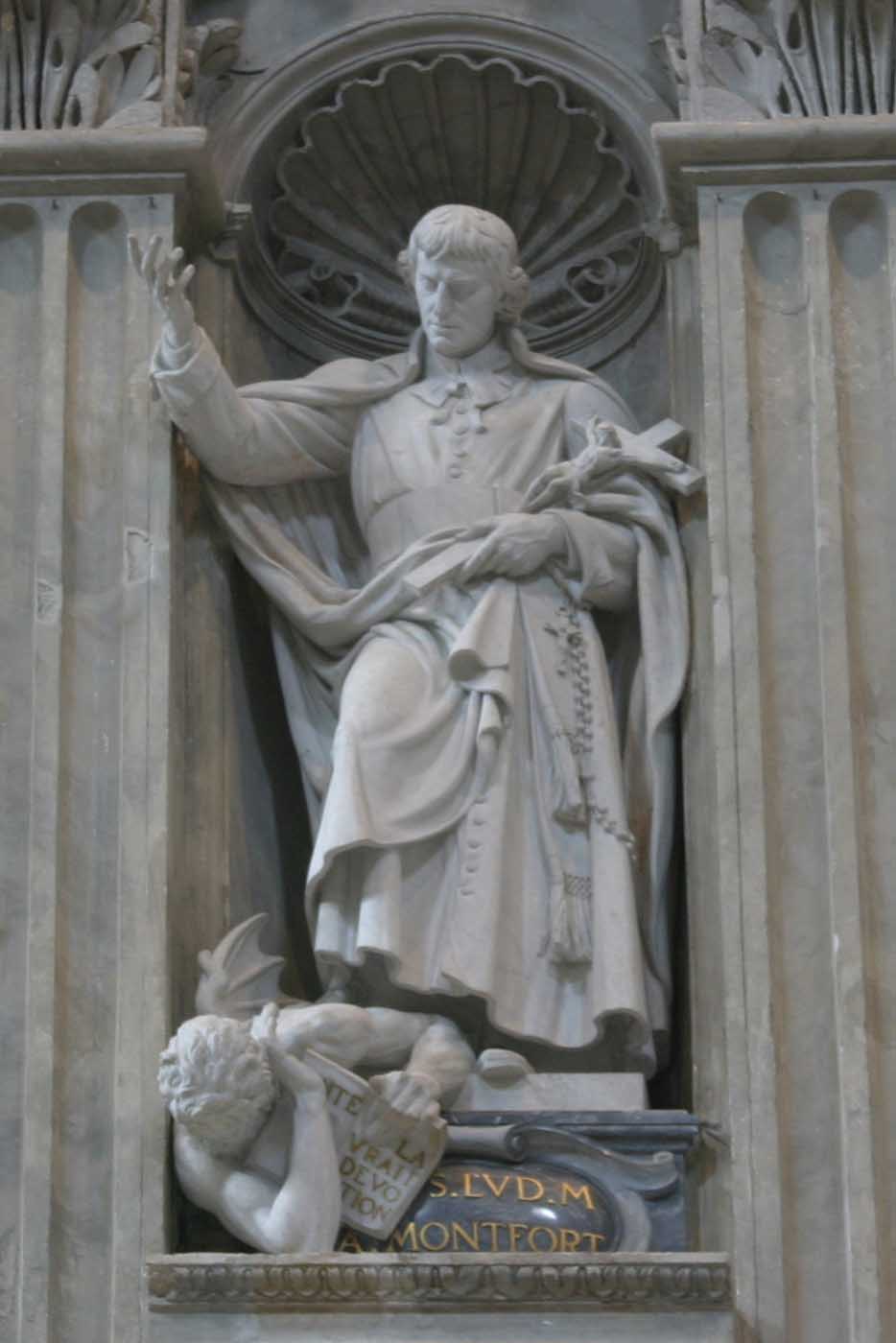
Saint Louis-Marie Grignion de Montfort


St Louis de Montfort.jpg


O God, who willed to guide the steps of your priest, saint
Louis-Marie, into the way of salvation and of delight in Christ in the company
of the Blessed Virgin, grant that we, by following his example, may meditate
the mysteries of your love and devote ourselves tirelessly to the upbuilding of
your Church.


Saint Louis-Marie’s Total Consecration to the Blessed Virgin
Mary
can
be followed here.

And if you want to know more about the rosary, read a classic: The Secret
of the Rosary
by Saint Louis-Marie Grignion de Montfort.

A brief biography of Saint Louis-Marie can be read here.

All of Montfort’s works are worthy of time but especially noteworthy is the Total Consecration.

Saint Mark


St Mark.jpgO ye holy and just ones, rejoice in the Lord, alleluia. God hath chosen you unto Himself for an inheritance, alleluia
.


O God, Who didst exalt blessed Mark, Thine Evangelist, by the grace of teaching Thy Gospel; grant we beseech Thee, that we may ever profit by his teachings and be defended by his prayers.

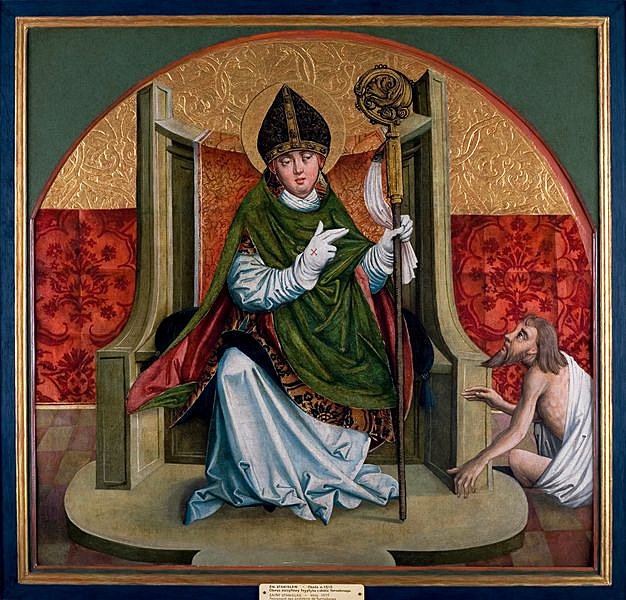
Saint George


St George.jpgYe daughters of Jerusalem, come and see the Martyrs with the crowns wherewith the Lord hath crowned them, on the day of their solemn feast and rejoicing, alleluia, alleluia
.


O God, Who dost gladden us by the merits and intercession of blessed George. Thy Martyr; mercifully grant that as we seek Thy blessings through him, we may obtain them by the gift of Thy grace.

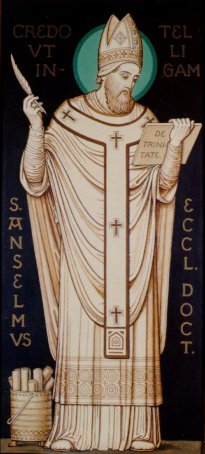
Saint Anselm

Saint Anselm, Abbot, Bishop, Doctor of the Church (1033 – 1109)

St Anselm.jpgThis year marks the ninth centenary of the death of Saint Anselm, often referred to as the “Father of Scholasticism,” though he is one among many who are said to be the “Father of Scholasticism,” a philosophical movement which sought to express religious dogma within a philosophical framework dependent on the Fathers of the Church, especially Saint Augustine of Hippo, and the teaching of Aristotle. He relied on reason to argue for the existence of God and other theological tenets.

Three of Anselm’s best known works of more than 10 known works, On Divine Being (Monologion),  Why God Became Man (Cur Deus Homo) and the treatise on the Knowledge of the Existence of God (the Proslogion) continue to keep his name alive in philosophical and theological circles.

Born in Aosta, Italy, he traveled to France for his education where he eventually became a monk at the newly founded monastery of Bec in Normandy. In 1063 he was appointed Prior of the monastery. He was profoundly influenced by the charismatic scholar and abbot, Lanfranc, who was to become the close friend of the Norman Duke, William, famous for his conquest of England in 1066. Lanfranc was appointed archbishop of the primatial See of Canterbury, continuing to be the trusted advisor of the king and pursuing a policy of reforming the Church in England along Norman lines through ecclesiastical administration, liturgical ritual, and Romanesque architecture.

Anselm, after his election as abbot of Bec (1078), was able to use his long tenure in office for scholarly and spiritual pursuits, a life to which he was ideally suited. Under Anselm Bec as an intellectual center expanded. Following Lanfranc’s death, William II nominated Anselm to the See of Canterbury (1093), where, however, his temperament and continual conflicts with the Anglo-Norman kings caused him bitter disappointment and exile.


We beseech Thee, O Lord, graciously enlighten Thy Church, that being illumined by the teaching of blessed Anselm, Thy Confessor and Bishop, she may attain to eternal gifts.

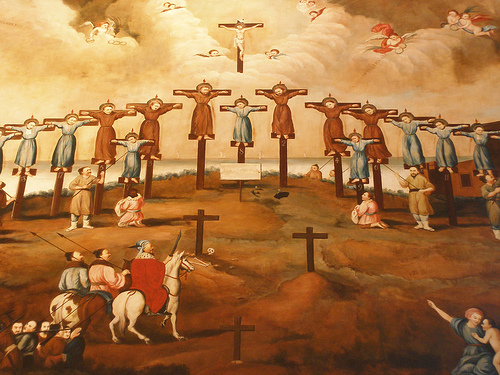
Silence: a film on the 17th century Japanese martyrs


Japanese martyrs.jpgThe martyrdom of Japanese Christians in the 17th century is the subject of a film being produced by the Italian-American director Martin Scorsese. The film is based on the novel Chinmoku (“Silence”) written by Japanese Catholic writer Endo Shusaku [1923-1997]. He describes the persecution suffered by Japanese Christians during
Edo period, especially in the Nagasaki region. The novel, written in 1966, tells the story of a Jesuit Portuguese missionary in Japan in early 17th century, during the time of the anti-Christian persecution. The title, “Silence”, harkens back to the silence of God in front of Christ’s cross, and recounts the forced recantation of the faith by the missionary after enduring horrendous torture. The books of Endo Shusaku reflect his special research of Christianity in the oriental culture, and present his particular vision of human fragility, sin and grace. The announcement of the film comes shortly after the beatification of 188 Christian martyrs of that period. That event took place on the 24th of November 2008. According to Japanese bishops, this event represented a milestone for the history Japan where the Christian religion had been prohibited for centuries. Shooting will begin around the end of the year in New Zealand. (courtesy of the Jesuit Press)

Ite ad Joseph, go to Joseph

Behold a faithful and prudent servant, whom the Lord has set over His household. (Magnificat antiphon)


St Jospeh DMcManus.jpgThe instinct of Mother Church to go to Joseph is an incredible insight: the one who looked after, formed and cherished the Son of God also looks after us, the adopted children of God. Experience from childhood when the Sisters of the Holy Family of Nazareth lived a life that I would characterize as centered on S the example of Saint Jospeh certainly demonstrated to me that a life as a Catholic is somewhat deficient with an acknowledgement, no, a reliance upon the foster Father of the Savior. At Notre Dame High School (W. Haven, CT) the Brothers of Holy Cross taught me to have a very simple reliance on Saint Joseph. There was a constant reminder of their beatus’ picture in the main office, that of Blessed Brother André, who had an infectious devotion to Saint Joseph (but one that didn’t eclipse his following Jesus) that manifested itself in fidelity and then the building of Montreal‘s Saint Joseph‘s Oratory. Blessed Brother André said once: “When you invoke Saint Joseph, you don’t have to speak much. You know your Father in heaven knows what you need; well, so does His friend Saint Joseph. Tell him, ‘If you were in my place, Saint Joseph, what would you do? Well, pray for this in my behalf.'”


Later in life, the famed emeritus archabbot of Saint Meinrad Archabbey, Lambert, told me that his own religious life and service as a priest would have been less than adequate without his devotion to Saint Joseph. He seemed always to say: Go to Jospeh. In fact, he attributes the flowering of the archabbey and seminary to the intercession of Saint Joseph. This also became true for me in that I attribute meaningful for myself and my father through the intercession of Joseph.


The March 2009 issue of Touchstone magazine published an article by Joseph R. Fornieri entitled, “The Good Father.” A worthwhile look at Joseph’s place in Christianity.


At last night’s Vespers Cameron the Pope delivered a homily speaking of Saint Joseph as a man fully alive and someone who lived the gift of fatherhood fully. Two lines stand out for me: “Joseph teaches us that it is possible to love without possessing,” and “The life of Saint Joseph, lived in obedience to God’s word, is an eloquent sign for all the disciples of Jesus who seek the unity of the Church.”


What would a friendship, a family, a parish community, a Benedictine abbey, indeed the world be like if we actually loved the other person without possessing him or her and if we followed (a truer meaning of the word ‘obedience’) the Word of God? Would our happiness explode? Would we live without counting the cost? Would we loose anything of value of ourselves?


The Catholic Information Service has a wonderful booklet on Saint Joseph. I recommend getting it. Email cis@kofc.org or call 203.752.4267.