Category: Saints
Saint Elizabeth Ann Seton
But we lack
courage to keep a continual watch over nature, and therefore, year after year,
with our thousand graces, multiplied resolutions, and fair promises, we run
around in a circle of misery and imperfections. After a long time in the
service of God, we come nearly to the point from whence we set out, and perhaps
with even less ardor for penance and mortification than when we began our
consecration to him.
Saint Elizabeth Ann Seton
Divine Office, Office of
Readings
There are very few American women who have had an impact on civil and religious society because today’s saint, Elizabeth Ann Seton, with the work of education and hospitals and other institutions of culture that her order, the Sisters of Charity, did for all of us.
Ask Saint Elizabeth Ann Seton to intercede for us right now to help us to make Jesus known through acts of charity and mercy.
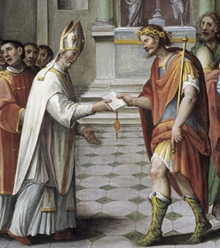
Saint Sylvester, pope
The feast day of Saint Sylvester, located so close to the Christmas liturgical cycle was an early decision of the Fathers of the Church, but it has no relation to the Mystery of the Incarnation. Today’s feast Saint Sylveser, according to Pius Parsch is among the oldest in the Church’s liturgical life because his memory was among the first to receive public recognition by the laity due to his exemplary holiness and concern for the welfare of the faithful, especially the poor. He’s considered to be a confessor of the faith but also acknowledged as a martyr. Sylvester’s feast day was for a long time a holy day of obligation.
- taught the orthodox Catholic faith in the face of heresy and schism
- taught that the sign of the Cross was given to him by the Lord
- cared for the poor and expected the clergy to do the same
- cared for those in the Order of Virgins and Widows
- determined that bishops had the exclusive right to consecrate chrism
- instructed priests, when baptizing, also were to anoint with chrism
- determined that deacons were to wear the dalmatic with a linen maniple
- determined that bread was to be consecrated as Eucharist only a linen corporal
- determined those ordained should be stable in that order before taking a higher order
- instructed the laity should not sue the clergy
- instructed the clergy should not sue another in civil court
- called the 1st and 7th days of the week the “Lord’s Day” and the “Sabbath”
- among the first use the word “feria” (a free day) for weekdays of the liturgical calendar without a commemoration.
Saint Thomas Becket
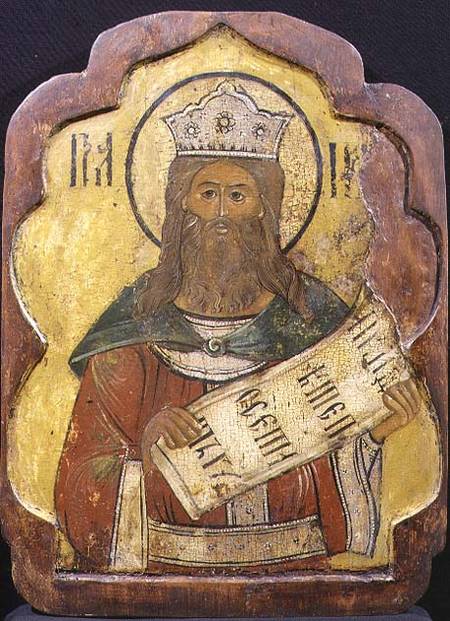
King Saint David, prophet
Today is the feast of King David, the revered Old Testament king and prophet. The Orthodox Church remembers King David on December 26th. The Latin Church, however, does not typically commemorate David as a saint on the universal calendar but he is listed in the Roman Martyrology (2005). It is the Eastern Church that recalls and commemorates more seriously King David in the Liturgy than the Latin Liturgy does. In any event, the Roman Martyrology says:
Commemoratio sancti David, regis et prophetae, qu, filius Iesse Bethlehemitae, gratiam invenit ante Deum et oleo sancto a Samuele propheta unctus est, ut populum Israel regeret; in civitatem Ierusalem Arcam foederis Domini transtulit ac Dominus ipse mox ei iuravit semen eius in aeternum mansurum esse, eo quod ex ipso Iesus Christus secundum carnem nasciturus esset.
We should recall what the Catechism says, “the shepherd who prays for his people and prays in their name” (2579), pointing to the figure of David at an OT figure of Jesus.
More on King Saint David can be found here.
Saint John, Apostle & Evangelist
Saint Stephen, the first killed for Christ
In the blood of the holy Levite Stephen “the Church dedicates the first-fruits of martyrdom” to the King of martyrs.
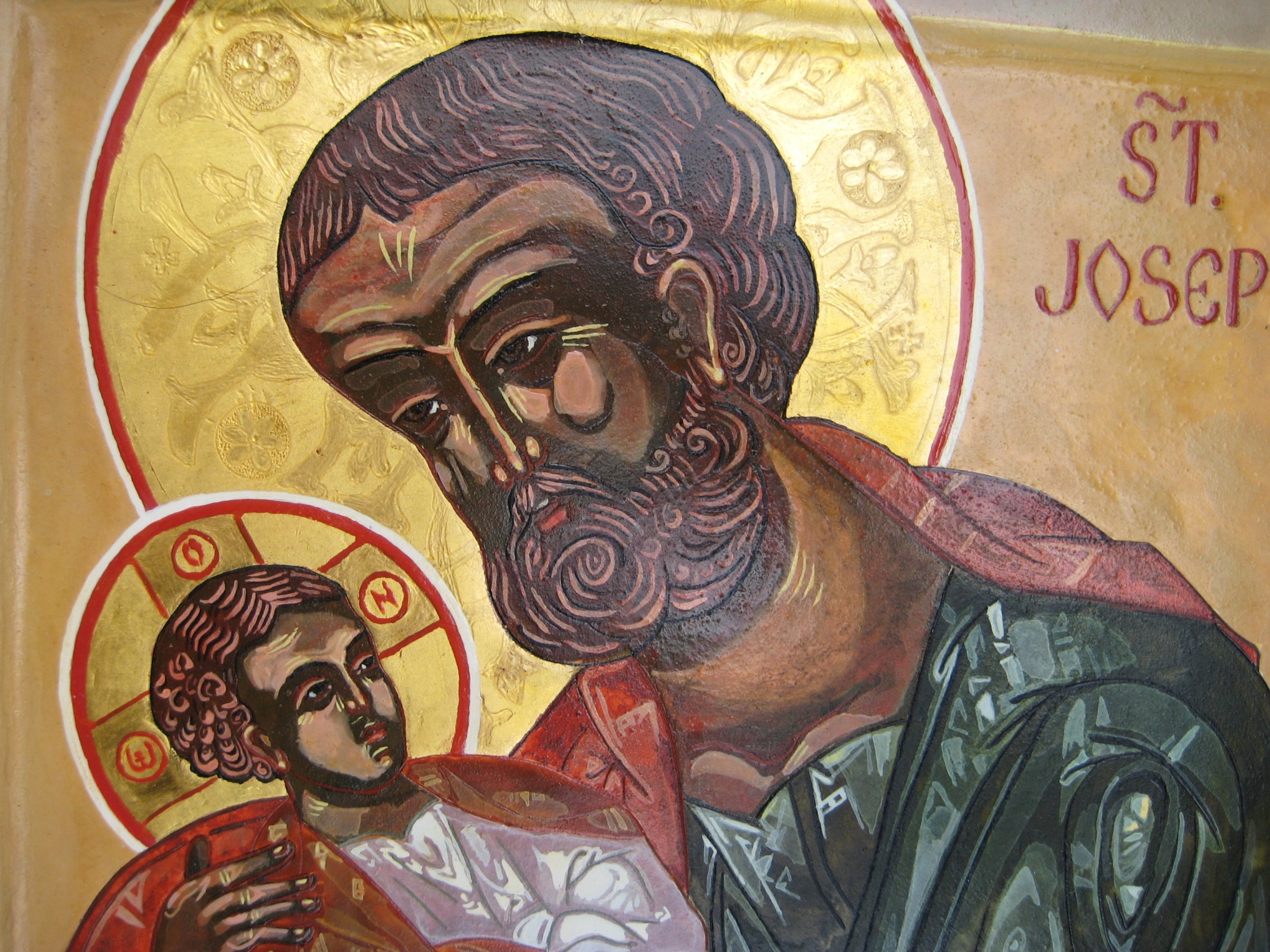
In Saint Joseph we look to the future with confidence & courage, total trust in God’s mercy, Pope says
In the Season of Advent there are so many people to emulate: Jesus, Mary, the martyrs, various other saints, and Joseph in particular. Saint Joseph factors into Catholicism so much that one can reasonably ask, Can any good Catholic not pay attention to Saint Joseph? Obviously not. I took as my oblation name with the Benedictine oblates “Meinrad-Joseph” primarily because of the virtues of Saint Meinrad and for the devotion shown by Joseph for Jesus; in taking the name Meinrad-Joseph I honor my father, Edward Joseph.
The Pope spoke on Sunday at the Angelus on the great foster father of Jesus and the patron saint against doubt, cabinetmakers, Canada, carpenters, China, confectioners, craftsmen, dying people, engineers, families, fathers, happy death, holy death, house hunters, Korea, laborers, Mexico, New France, people in doubt, Peru, pioneers, protector of the Church, social justice, travelers, Universal Church, Vatican II, Viet Nam, workers, working people. AND now the Pope adds pastors to this list under Saint Joseph’s care.
At Sunday’s Angelus Pope Benedict XVI had this to say about Saint Joseph:
On this fourth Sunday of Advent the Gospel of St. Matthew tells us how the birth of Jesus came about, taking the perspective of St. Joseph. He was the betrothed of Mary, who, “before they lived together, was found to be with child by the power of the Holy Spirit” (Matthew 1:18). The Son of God, realizing an ancient prophecy (cf. Isaiah 7:14), became man in the womb of a virgin, and such a mystery simultaneously manifests the love, wisdom and power of God on behalf of humanity wounded by sin. St. Joseph is presented as a “just man” (Matthew 1:19), faithful to God’s law, ready to do his will. On account of this he enters into the mystery of the Incarnation after an angel of the Lord appears to him in a dream and tells him: “Joseph, son of David, do not be afraid to take Mary your wife with you. In fact the child that has been conceived in her comes from the Holy Spirit; she will give birth to a son and you will call him Jesus: he in fact will save his people from their sins” (Matthew 1:20-21). Forgetting the thought of repudiating Mary in secret, he takes her in because his eyes now see the work of God in her.
St. Ambrose comments that “in Joseph there was amiability and the figure of a just man to make the quality of his witness more worthy” (Exp. Ev. sec. Lucam II, 5: CCL 14,32-33). “He,” Ambrose continues, “could not have contaminated the temple of the Holy Spirit, the Mother of the Lord, the fruitful womb of the mystery” (ibid. II, 6: CCL 14, 33). Although he had been concerned, Joseph “did as the angel of the Lord ordered him,” certain of doing the right thing. Also giving the name “Jesus” to that child who rules the entire universe, he enters into the ranks of the faithful and humble servants, like the angels and prophets, like the martyrs and the apostles — in the words of ancient eastern hymns. St. Joseph proclaims the wonders of the Lord, witnessing Mary’s virginity, the gratuitous deed of God, and caring for the earthly life of the Messiah. So, we venerate the legal father of Jesus (Code of Canon Law, 532), because the new man takes form in him, who looks to the future with confidence and courage, does not follow his own project, but entrusts himself totally to the infinite mercy of him who fulfills the prophecies and inaugurates the season of salvation.
Dear friends, to St. Joseph, universal patron of the Church, I would like to entrust all pastors, exhorting them to offer “to faithful Christians and the whole world the humble and daily proposal of the words of Christ” (Letter Proclaiming the Year for Priests). May our life be evermore conformed to the person of Jesus, precisely because “the one who is himself the Word takes on a body, he comes from God as a man and draws the whole of man’s being to himself, bearing it into the Word of God” (Jesus of Nazareth, San Francisco, 2008, 334). Let us invoke the Virgin Mary with confidence, the one who is full of grace, “adorned by God,” so that at Christmas, which is already near, our eyes may open and see Jesus, and the heart rejoice in this wondrous encounter of love.
Holy Youths Hananiah, Azariah and Mishael
The Byzantine Church honors many Old Testament prophets and holy people that the Church in the West recognizes but does not commemorate in the sacred Liturgy, though the Roman Martyrology noted the holy youths yesterday. I actually think we ought to honor the OT figures as saints in our Liturgy, but greater minds will have to make that decision. Being faithful to the Divine Office you’ll recall that we pray the Canticle of the Three Youths (Daniel 3:57-88; 56) at Lauds at Sunday I. The pertinent section of the canticle follows:
O Israel, bless the Lord. Priests of the Lord, bless the
Lord; Servants of the Lord, bless the Lord. Spirits and souls of the just,
bless the Lord; Holy men of humble heart, bless the Lord. Hananiah, Azariah,
Mishael (Shadrach, Meshach & Abednego), bless the Lord; Praise and exalt him above all forever. Let us bless
the Father and the Son and the Holy Ghost; Let us praise and exalt God above
all forever. Blessed are you in the firmament of heaven; Praiseworthy and
glorious forever.
Saint Lucy, martyr
In your patience, O Lucy, you
possessed your soul; you have hated the things of this world, O bride of
Christ, and so received glory among the angels; you vanquished the adversary, O
martyr, with your own blood.
(Magnificat Antiphon, First Vespers of St. Lucy)
Today is a good day to remember in prayer before Saint Lucy the people of Sicily, those who live with blindness, diseases of the eye, salesmen and for my friend and seminarian Ken Dagliere on his birthday.