Saint Bartholomew

St Bartholomew MdiGiovanni.jpgNathanael was one of Christ’s first converts, yet his name does not occur again till the last chapter of St. John’s Gospel, where he is mentioned in company with certain of the Apostles, to whom Christ appeared after His resurrection. Now, why should the call of Nathanael have been recorded in the opening of the Gospel, among the acts of Christ in the beginning of His Ministry, unless he was an Apostle? Philip, Peter, and Andrew, who are mentioned at the same time, were all Apostles; and Nathanael’s name is introduced without preface, as if familiar to a Christian reader. At the end of the Gospel it appears again, and there too among Apostles. Besides, the Apostles were the special witnesses of Christ, when He was risen.  He manifested Himself, “not to all the people,” says Peter, “but unto witnesses chosen before of God, even to us, who did eat and drink with Him after He rose from the dead.” [Acts x. 41.] Now, the occasion on which Nathanael is mentioned, was one of these manifestations. “This is now the third time,” says the Evangelist, “that Jesus was manifested to His disciples, after that He was risen from the dead.” It was in the presence of Nathanael, that He gave St. Peter his commission, and foretold his martyrdom, and the prolonged life of St. John. All this leads us to conjecture that Nathanael is one of the Apostles under another name. Now, he is not Andrew, Peter, or Philip, for they are mentioned in connexion with him in the first chapter of the Gospel; nor Thomas, James, or John, in whose company he is found in the last chapter; nor Jude (as it would seem), because the name of Jude occurs in St. John’s fourteenth chapter. Four Apostles remain, who are not named in his Gospel,–St. James the Less, St. Matthew, St. Simon, and St. Bartholomew; of whom St. Matthew’s second name is known to have been Levi, while St. James, being related, was not at any time a stranger to our Lord, which Nathanael evidently was. If then Nathanael were an Apostle, he was either Simon or Bartholomew. Now it is observable, that, according to St. John, Philip brought Nathanael to Christ; therefore Nathanael and Philip were friends: while in the other Gospels, in the list of Apostles, Philip is associated with Bartholomew; “Simon and Andrew, James and John, Philip and Bartholomew.” [Matt. x. 3.] This is some evidence that  Bartholomew and not Simon is the Nathanael of St. John. On the other hand, Matthias has been suggested instead of either, his name meaning nearly the same as Nathanael in the original language. However, since writers of some date decide in favour of Bartholomew, I shall do the like in what follows.

What then do we learn from his recorded character and history? It affords us an instructive lesson. When Philip told him that he had found the long-expected Messiah of whom Moses wrote, Nathanael (that is, Bartholomew) at first doubted. He was well read in the Scriptures, and knew the Christ was to be born in Bethlehem; whereas Jesus dwelt at Nazareth, which Nathanael supposed in consequence to be the place of His birth,–and he knew of no particular promises attached to that city, which was a place of evil report, and he thought no good could come out of it.

Philip told him to come and see; and he went to see, as a humble single-minded man sincerely desirous to get at the truth. In consequence, he was vouchsafed an interview with our Saviour, and was converted.

Blessed John Henry Newman
Plain and Parochial Sermons

Saint Pius X


St Pius X.jpgO God, who to safeguard the Catholic faith and to
restore all things in Christ, filled Pope Saint Pius the Tenth with heavenly
wisdom and apostolic fortitude, graciously grant that, following his teaching
and example, we may gain an eternal prize.


Saint Pius was known as an ardent defender
of the purity of Christian doctrine. He’s one of those popes that really got
what it means follow the 5th century Saint Prosper of Aquitaine’s emphasis on the Liturgy as the heart of our faith, that is, to be “liturgical.” Pius knew the full value of the sacred Liturgy
as it forms our worship, believe system and life as Christians. He’s credited for
the renewal of our worship, the promotion of plainchant and beauty public
prayer. Most people will recall that Pius established the practice of early,
frequent and daily communion. 

Pope Pius X was born in 1835, known as an intelligent, industrious and pious priest and bishop, died August 20, 1914 and canonized on
May 29, 1954.

Saint Maximillian Kolbe

Maximilian Kolbe.jpgCome, you blessed of my Father, says the Lord. Amen I say to you: Whatever you did for one of the least of my brethren, you did it for me.

O God, who filled the Priest and Martyr Saint Maximilian Kolbe with a burning love for the Immaculate Virgin Mary and with zeal for souls and love of neighbor, graciously grant, through his intercession, that, striving for your glory by eagerly serving others, we may be conformed, even until death.
Saint Maximilian is clearly one of the 20th centuries most notable martyrs we have. I can think of anyone who has really followed so closely the entrance antiphon (noted above) than Kolbe.
Earlier today I had a visit from a friend, Brother Maximilian of Newark Abbey, who was visiting family. I am also reminded of Brother Maximilian of St Louis Abbey today, especially as he prepares to go to studies for the priesthood.
Enhanced by Zemanta

Saint Jane Frances de Chantal

O God, who made Saint Jane Frances de Chantal radiant with outstanding merits in different walks of life, grant us, through her intercession, that walking faithfully in our vocation, we may constantly be examples of shining light.

visitation cross.jpg

While today is Sunday and Saint Jane’s feast is not celebrated by the Church at Mass, the Visitation nuns will observe her feast with great solemnity. I saw one of the St Louis Visitandine nuns yesterday at the ordination of the two monks and we had a good laugh and a few moments talking about important things, like my coveting the cross of a Visitation nun (look at the picture closely). It is, for me, a strikingly beautiful sign of Christ’s love and human commitment to that love. I really want one!

I pray for the nuns of the Order of Visitation whom I have known over the years and I keep in prayer the Monasteries in Georgetown, St Louis, and Tyrringham.

Saint Jane Frances de Chantal, keep us “walking faithfully in our vocation,” pray for us.

Saint John Marie Vianney

St JM Vianney.jpg

Almighty and merciful God, who made the Priest Saint John Vianney
wonderful in his pastoral zeal, grant, we pray, that through his
intercession and example we may in charity win brothers and sisters for
Christ and attain with them eternal glory.

The August liturgical memorial for Saint John Marie Vianney, the patron of priests, is yet another reminder we ought to have in interceding on behalf of priests. God needs to hear from us n this subject…

May Saint John Vianney approach the Throne of Mercy for all priests.

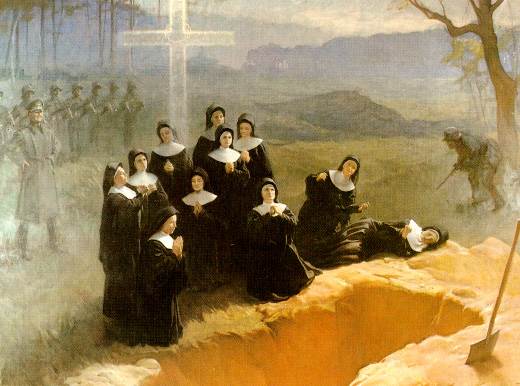
Sister Stella and Companions or Blessed Martyrs of Nowogródek

Nowogrodek martyrs.jpgThis picture of the Blessed Martyrs of Nowogródek has been imprinted in my mind and heart since I was in grammar school with the Sisters of the Holy Family of Nazareth. It recalls the murder of the nuns on this date in 1943. How could one be not moved by the death of these women?

The martyrdom of Sister Stella and her 10 companions by the Nazi occupation is one the events in history that keeps me attune to the possibilities of men and women doing evil things to others.

Today, let’s pray for the grace to resist doing evil by keeping heart and mind focussed on Christ and his Gospel. Blessed Stella and companions, pray for us.
Enhanced by Zemanta

Saints Martha, Mary and Lazarus

In the Benedictine Ordo, Saints Martha, Mary and Lazarus are commemorated together and recalled for their gift of friendship and hospitality shown to the Lord. The familiar setting of their Bethany home shows us the priority of welcoming the guest, while remembering the need to be attentive to prayer and work. This portion of the biblical narrative gave rise to Saint Benedict writing in his Holy Rule that guest’s ought to be welcomed as Christ. Martha’s word of faith to Jesus is key for us too, “You are the Christ, the Son of the living God.” Let us pray through the intercession of Saints Martha, Mary and Lazarus that we be hospitable to the stranger, not only to family and friends.

O, Martha, Mary, Lazarus,
Most joyfully we sing your praise;
You often welcomed Christ as guest,
To hear him, on his face to to gaze.
You, Martha we as Christ once said,
“Solicitous in many things”
Yet it was love for him that caused
The Anxious care that such love brings.
For, while you gladly served the guest,
The others could at ease partake
Of those great words of life and grace
From Jesus, made man for our sake.
Now came a farewell meal for him
Who must for us in death’s pains share,
So Mary’s nard anoints his feet,
Which she wipes dry with her own hair.
Lord Jesus, give our hearts this grace,
That in your saving word believe,
To welcome guests at any time
And with a heartfelt warmth receive.
To Father, Son and Spirit true
May we eternal glory sing
And may at last your kindly prayer
Bring us to God’s great welcoming.

Text trans. Kenneth Tomkins, OSB, 1992, Quarr Abbey, Ryde, Isle of Wight

Saints Joachim and Anne, grandparents of the Lord

Let us praise Joachim and Anne, to whom, in their generation, the Lord gave him

who was a blessing for all the nations. (entr. ant.)


St Joachim and Ann.jpg

Since the sixth century the Eastern Church has venerated the memory of Saints Joachim and Anne; it was in the tenth century that the Western Church entered Anne’s name into the martyrology and only recently have both been acknowledged together as the grandparents of Jesus.


Let’s pray for grandparents, living and deceased through the intercession of Saints Joachim and Anne.


On grandparents, the Pope has said in 2008,


As regards the family, grandparents continue to be witnesses of unity, of solid values of faithfulness and that singular love from which faith and the joy of living flow…. In the face of the crisis of the family could it not be time to draw even more upon the presence and testimony of those — grandparents — who have a greater richness of values and experience? We couldn’t, in fact, plan the future without recalling a past characterized by significant experiences and spiritual and moral points of reference. Thinking of grandparents, of their witness of love and faith to live, there come to mind the biblical figures of Abraham and Sara, Elizabeth and Zechariah, of Joachim and Anne, just like the elderly Simeon and Anna, or even Nicodemus: in every age, all of these recall for us how the Lord asks each to bring their own talents.

Saint James

St james AdiVanni.jpg

As he walked by the Sea of Galilee, Jesus saw James the son of Zebedee and John his brother mending their nets and he called them. (entr. ant.)

Almighty ever-living God, who consecrated the first fruits of your Apostles by the blood of Saint James, grant, we pray, that your Church may be strengthened by his confession of faith and constantly sustained by his protection.

Today, we pray for the Church in Spain as they venerate this great Apostle James (this site has a lot on the saint) who is buried in Compostella.

We pray for those who need deeper conversion in Christ, as James did.

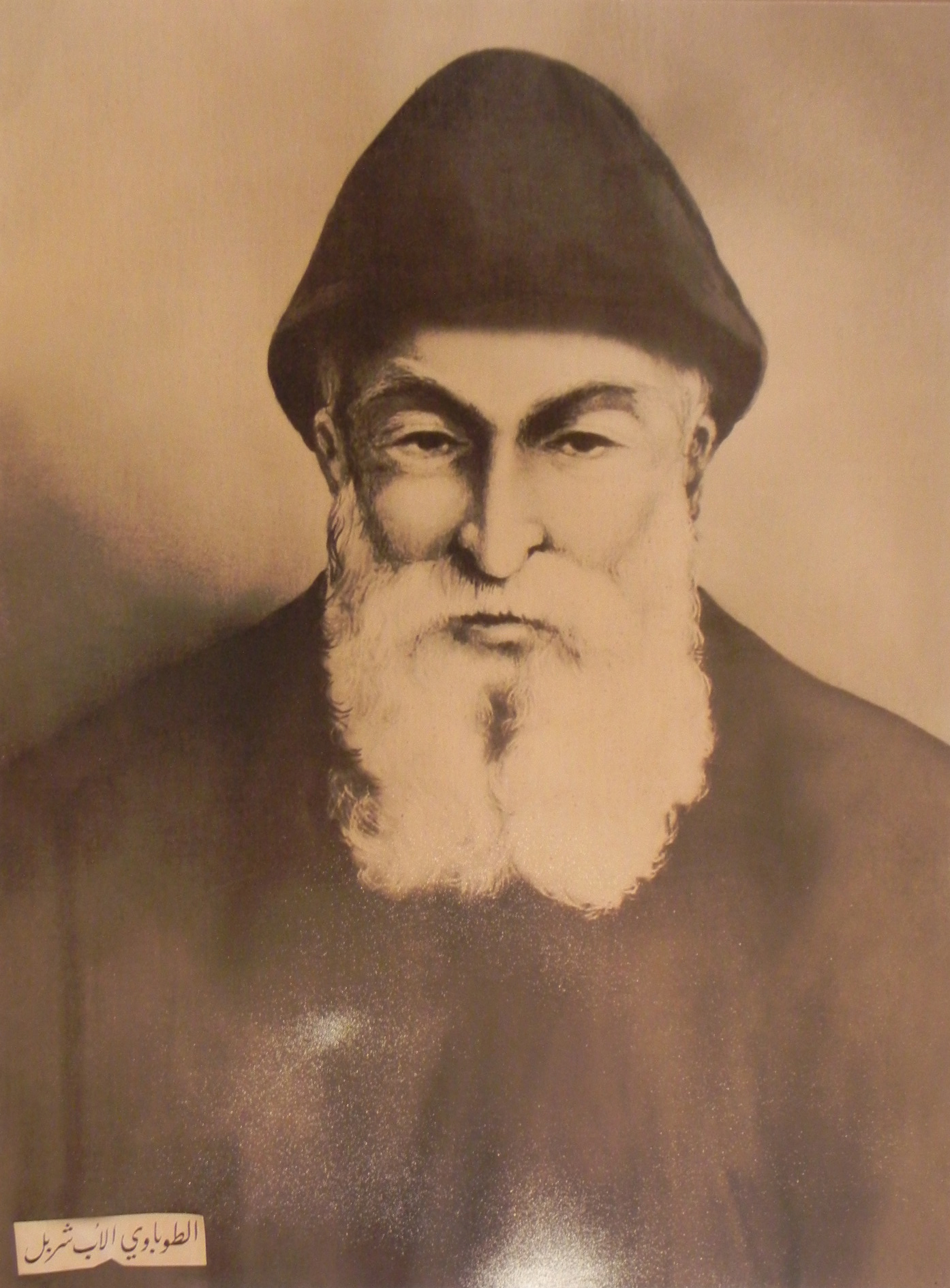
Saint Sharbel Makhūf

Saint Charbel.jpgO God, who called the Priest Saint Sharbel Makhūf to the solitary combat of the desert and imbued him with all manner of devotion, grant us, we pray, that, being made imitators of the Lord’s Passion, we may merit to be co-heirs of his Kingdom.

The saint proposed by the Church is a relatively unknown hermit. Saint Sharbel (1828-1898) was a man who fought with the devil in the desert and lived according to tradition given by the Maronite Church. He’s known as the wonder-worker of the Middle East. When Church officials opened the grave of Sharbel they found an intact body with sweet aroma.
A hermit may not be a recognized value for the laity but if you look at the Mass prayer above it notes what we all are after: to be imitators of the Lord’s Passion. The Christian always orients his or her life to the Paschal Mystery (the Life, Death, Resurrection & Ascension of the Lord).