Saint Agnes

OTHER128892_ArticoloSaint Jerome spoke these words in a sermon for today’s feast: “This is a virgin’s birthday; let us follow the example of her chastity. It is a martyr’s birthday; let us offer sacrifices; it is the birthday of holy Agnes: let men be filled with wonder, little ones with hope, married women with awe, and the unmarried with emulation. It seems to me that this child, holy beyond her years and courageous beyond human nature, receives the name of Agnes [Greek: pure] not as an earthly designation but as a revelation from God of what she was to be.”

Two very young lambs were blessed by Pope Francis in the Urban VIII Chapel. When the wool is ready, they will be shorn and the wool used to make the pallia for the recently appointed metropolitan archbishops. At this writing, there are no new archbishops in the USA who will receive one of the pallia unless a new archbishop in Anchorage is appointed soon.

You would recognize the pallium as the outer stole worn by the Pope and the archbishops while they offer Holy Mass. Each pallium is white decorated with six black crosses and 3 pins symbolizing their pastoral communion and authority share with the Pope. The white connects the purity of heart each bishop ought to have with the chaste love he has for the Church. The white pallium recognizes her faithfulness. The quote taken from Saint Jerome above gives the real sense of what is going on today with the lambs viz. Agnes viz. the archbishops.

The name Agnes means “lamb” in Latin and “pure” in Greek. The young virgin-martyrd Agnes lived in the early 4th century and was known for her consecrated virginity. Her life was taken from her because she believed in Jesus Christ as the Messiah and not pagan gods. Saint Agnes is buried in the Basilica of Saint Agnes on the via Nomentana.

The Trappist monks raise the lambs to a certain age before they given to the Benedictine nuns at St Cecilia Abbey in Trastevere weave the pallia and given to the Apostolic Household to be placed in an urn at the tomb of Saint Peter until the Pope blesses them on June 29, the feast of Sts. Peter and Paul.
Saint Hilary of Poitiers

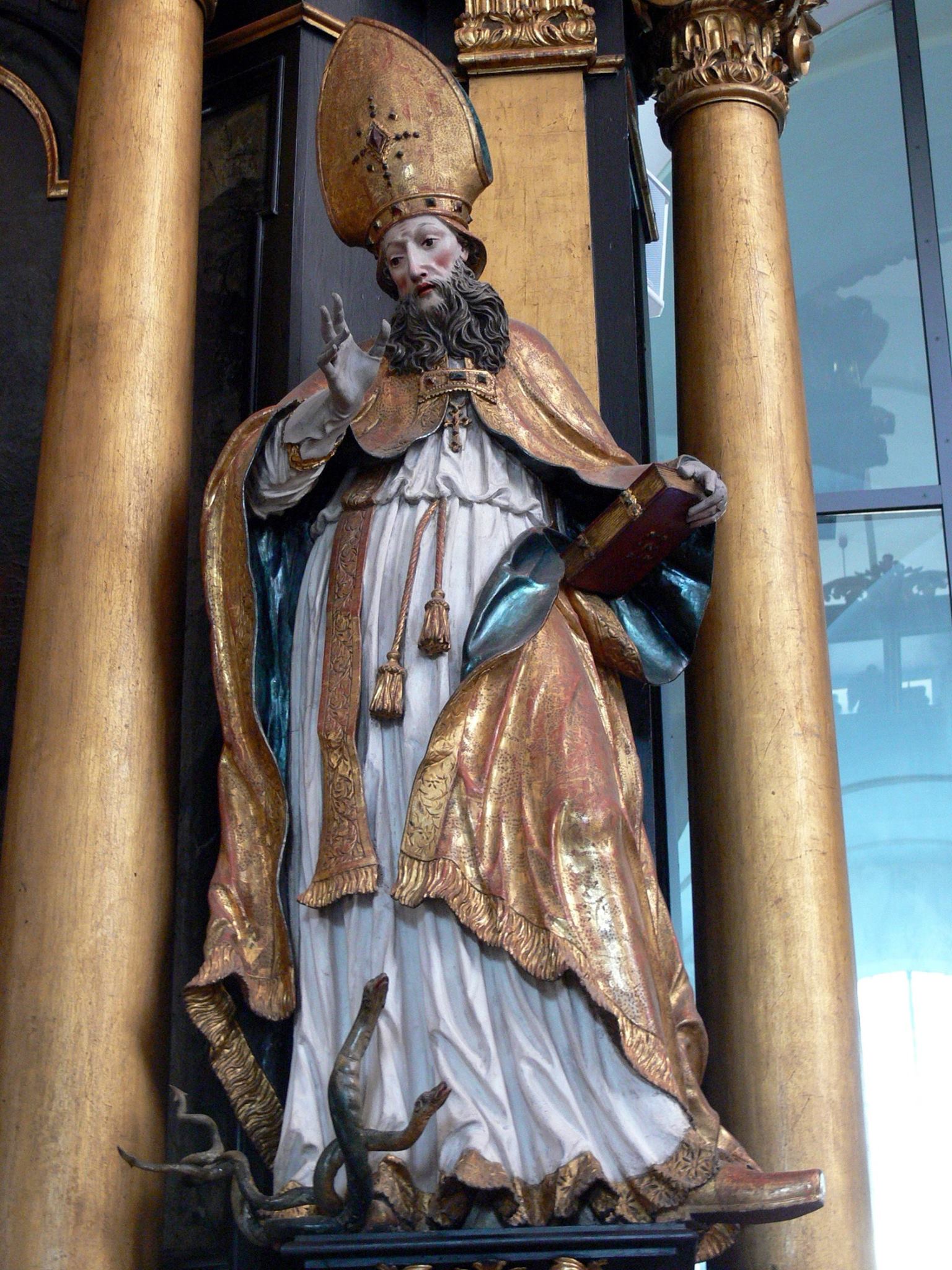
St HilaryI think Hilary is a most fascinating saint given his humanity, the vigor of his intellect and the beauty of his lived faith. He is a convert at the age of 35. His first premise is the love of God and our response to the love. The incarnation of the Eternal Word of God, Jesus –love: God stooped down to us so that can reach up to touch Him.

A skilled administrator and an exceptional priest Hilary paid for his single-mindedness in ecclesial matters and the teaching of the faith. After all, he was an apologist for Love.

A bridge between East and West, Saint Hilary fought Arianism and he introduced Eastern theology to the Western Church. Mother Church through the ministry of Pope Pius IX named Saint Hilary a Doctor of the Church in 1851.

What we believe to essential about a feast day or saint is found in the Mass prayers. Today, the Church prayed to God the Father that “we may rightly understand and truthfully profess the divinity of your Son.” So let’s be constant in this regard.

From a sermon on the Trinity by Saint Hilary:

May I serve you by making you known

I am well aware, almighty God and Father, that in my life I owe you a most particular duty. It is to make my every thought and word speak of you.

In fact, you have conferred on me this gift of speech, and it can yield no greater return than to be at your service. It is for making you known as Father, the Father of the only-begotten God, and preaching this to the world that knows you not and to the heretics who refuse to believe in you.

In this matter the declaration of my intention is only of limited value. For the rest, I need to pray for the gift of your help and your mercy. As we spread our sails of trusting faith and public avowal before you, fill them with the breath of your Spirit, to drive us on as we begin this course of proclaiming your truth. We have been promised, and he who made the promise is trustworthy: Ask, and it will be given to you; seek, and you will find; knock, and it will be opened to you.

Yes, in our poverty we will pray for our needs. We will study the sayings of your prophets and apostles with unflagging attention, and knock for admittance wherever the gift of understanding is safely kept. But yours it is, Lord, to grant our petitions, to be present when we seek you and to open when we knock.

There is an inertia in our nature that makes us dull; and in our attempt to penetrate your truth we are held within the bounds of ignorance by the weakness of our minds. Yet we do comprehend divine ideas by earnest attention to your teaching and by obedience to the faith which carries us beyond mere human apprehension.

So we trust in you to inspire the beginnings of this ambitious venture, to strengthen its progress, and to call us into a partnership in the spirit with the prophets and the apostles. To that end, may we grasp precisely what they meant to say, taking each word in its real and authentic sense. For we are about to say what they already have declared as part of the mystery of revelation: that you are the eternal God, the Father of the eternal, only-begotten God; that you are one and not born from another; and that the Lord Jesus is also one, born of you from all eternity. We must not proclaim a change in truth regarding the number of gods. We must not deny that he is begotten of you who are the one God; nor must we assert that he is other than the true God, born of you who are truly God the Father.

Impart to us, then, the meaning of the words of Scripture and the light to understand it, with reverence for the doctrine and confidence in its truth. Grant that we may express what we believe. Through the prophets and apostles we know about you, the one God the Father, and the one Lord Jesus Christ. May we have the grace, in the face of heretics who deny you, to honor you as God, who is not alone, and to proclaim this as truth.

Saint John Neumann

St John NeumannBishop John Neumann is the first American bishop to be beatified. The saintly bishop died on January 5, 1860 at the age of 48. He was canonized by Pope Paul VI on June 19, 1977. He is buried in Saint Peter the Apostle Church in Philadelphia.

Archbishop Lori said in a homily to the KofC Convention in Philadelphia last year: “St. John Neumann is an example to all of us of humility and zeal, a missionary priest and bishop who offered himself to his people in self-giving love.” (August 3, 2015)

May St. John Neumann inspire all of us to follow Christ more closely as servant and defender of the Faith.

Saint Elizabeth Ann Seton

St Elizabeth Ann Seton Paca StreetOur first native born saint is the great Saint Elizabeth Ann Seton (1774 – 1821). A New York native, wife and mother, Seton was a convert to Catholicism who after the death of her husband, she founded a religious community in 1808-9 and a school for poor children at Emmitsburg, near Baltimore, Maryland. Seton is credited with founding the Catholic school system in the USA. Mother Seton died in 1821. The Sisters of Charity continue Seton’s charism to this day.

One saint expands upon the life and work of another:

“You pray, you deny yourself, you work in a thousand apostolic activities, but you don’t study. You are useless then unless you change. Study, professional training of whatever type it be, is a grave obligation for us.” (St. Josemaria Escriva, “The Way,” no. 334)

One of the great works of Saint Elizabeth Ann Seton and her congregation of sisters is teaching, of critical study for the building up of the Kingdom and for life.

Saint Elizabeth, pray for us!

Saints Basil the Great and Gregory Nazianzen

On this second day of the new year, the Church gives us the liturgical memorial of Saints Basil the Great and Gregory Nazianzen, Bishops and Doctors of the Church. They were both well educated. These fathers of the Cappadocia were instrumental in forming our theological precision, for example, on the monastic life, the Holy Spirit, the Holy Trinity and the Creed. Saint Basil, a convert, comes from a family of saints, was a monk, a priest and worked for church unity, and worked to the reform of prostitutes and thieves. He was ordained a bishop at age 40.

Perhaps the best description of true friendship ever written was by Saint Gregory Nazianzen:

Basil and I were both in Athens. We had come, like streams of a river, from the same source in our native land, had separated from each other in pursuit of learning, and were now united again as if by plan, for God so arranged it.

I was not alone at that time in my regard for my friend, the great Basil. I knew his irreproachable conduct, and the maturity and wisdom of his conversation. I sought to persuade others, to whom he was less well known, to have the same regard for him. Many fell immediately under his spell, for they had already heard of him by reputation and hearsay.

What was the outcome? Almost alone of those who had come to Athens to study he was exempted from the customary ceremonies of initiation for he was held in higher honor that his status as a first-year student seemed to warrant.

Such was the prelude to our friendship, the kindling of that flame that was to bind us together. In this way we began to feel affection for each other. When, in the course of time, we acknowledged our friendship and recognized that our ambition was a life of true wisdom, we became everything to each other: we shared the same lodging, the same table, the same desires, the same goal. Our love for each other grew daily warmer and deeper.

The same hope inspired us: the pursuit of learning. This is an ambition especially subject to envy. Yet between us there was no envy. On the contrary, we made capital out of our rivalry. Our rivalry consisted, not in seeking the first place for oneself but in yielding it to the other, for we each looked on the other’s success as his own.

We seemed to be two bodies with a single spirit. Though we cannot believe those who claim that “everything is contained in everything,” yet you must believe that in our case each of us was in the other and with the other.

Our single object and ambition was virtue, and a life of hope in the blessings that are to come; we wanted to withdraw from this world before we departed from it. With this end in view we ordered our lives and all our actions. We followed the guidance of God’s law and spurred each other on to virtue. If it is not too boastful to say, we found in each other a standard and rule for discerning right from wrong.

Different men have different names, which they owe to their parents or to themselves, that is, to their own pursuits and achievements. But our great pursuit, the great name we wanted, was to be Christians, to be called Christians.

Saint Sylvester

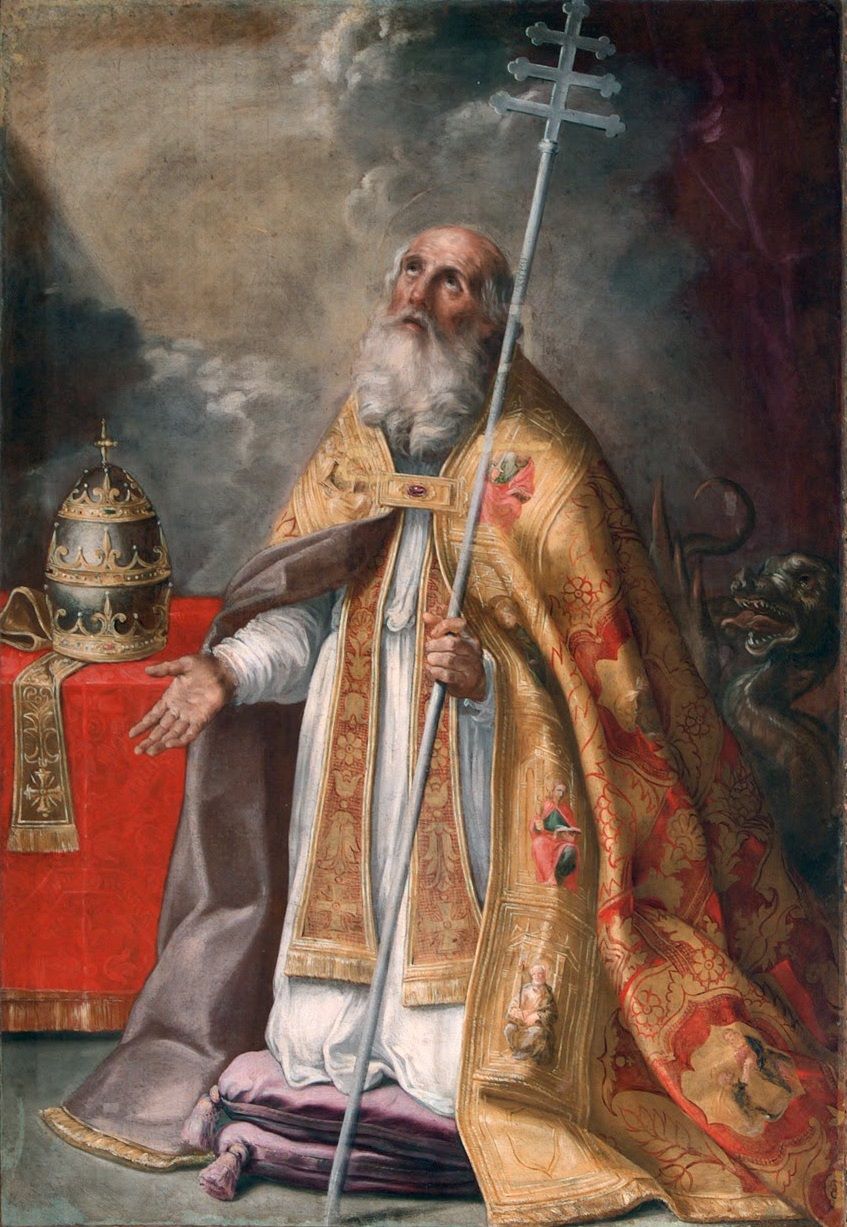
Saint SylvesterThe final day of the calendar year has us commemorating the Roman born pope Saint Sylvester (280-335). He was an ardent defender of Catholic faith (making him a confessor of the faith) in a period of harsh trial. Elected bishop of Rome, Sylvester served in that capacity for 21 years. We learn from him the truth of Ubi Petrus, ibi ecclesia: Where Peter is, there the Church is.

In this era of a lack historical awareness, Pope Sylvester is remembered for the Council of Nicea, the Baptism of Constantine, and the triumph of the Church. Some dispute the date of Constantine’s conversion to Christ but apparently there are sources that attest to his Baptism during this papacy. We know that with his acceptance of Jesus as Lord and Savior the Edict of Milan in 313 was created and the rest is history.

Saint Thomas Becket

BecketAs Becket’s biographers have noted,

“A few words which the capricious Henry spoke to certain courtiers who hated Thomas, sufficed for the latter to decide to do away with the prelate who contravened all their unchristian doings. They violated a monastic cloister and chapel to enter there while he was assisting at Vespers; the Saint himself prevented the monks from resisting the assassins at the door. Refusing to flee the church as the assassins summoned him to do, he was slain before the altar, by cruel and murderous repeated blows on the head. He died, saying: I die willingly, for the name of Jesus and for the defense of the Church.

“The actions of the Pope in this conflict make clear what all of history teaches: the lives of the Church’s Saints themselves comprise the history of the world. The humility of Thomas had prompted him, after a moment of weakness he had manifested in a difficult situation, to judge himself unfit for his office and offer his resignation as Archbishop. The Pope did not hesitate a moment in refusing his resignation. He judged with apostolic wisdom that if Thomas should be deprived of his rank for having opposed the unjust pretensions of the English royalty, no bishop would ever dare oppose the impingements of iniquity on the Church’s rights, and the Spouse of Christ would be no longer sustained by marble columns, but by reeds bending in the wind.”

Archbishop Thomas Becket was canonized by Pope Alexander III on Ash Wednesday, 1173, barely three years after his death on this date in 1170. Let us pray for Becket’s guidance and intercession before the Throne of Grace for 2016.

Saint Stephen

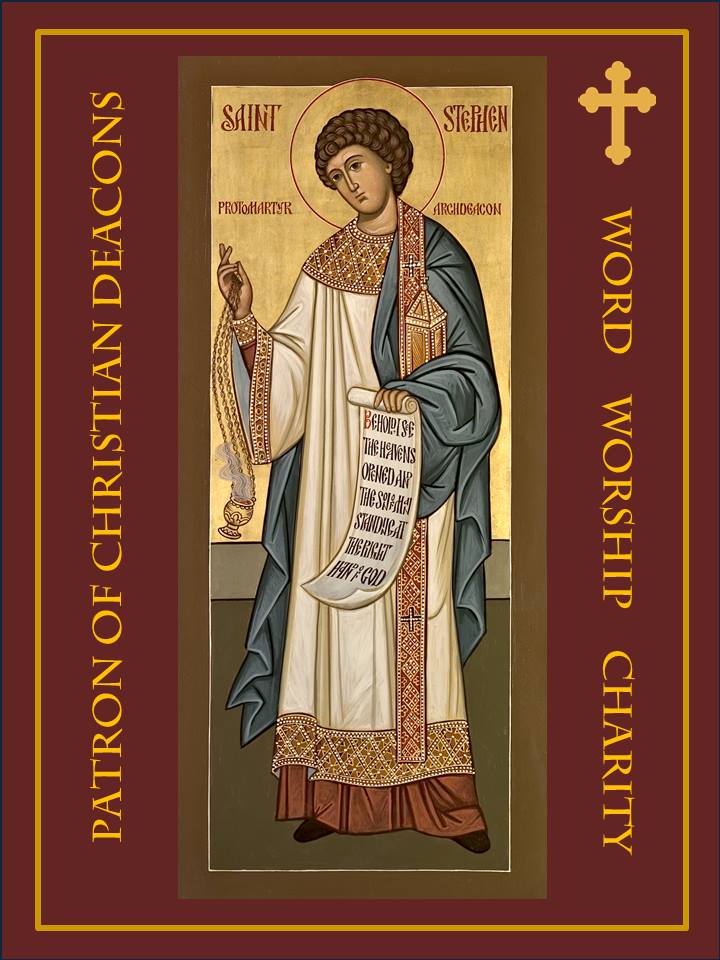
St StephenA Deacon’s Prayer

Come to my assistance my Lord and my God, that I may do for You all that you ask. Strengthen me in adversity and do not let me succumb to my feelings of worthlessness. Help me to feel in my heart all that You speak to me, and help me to understand. May I be to others what they need: a body to work when others cannot; a heart to love those who are forgotten; a shoulder to console those whose soul is in need; a smile to brighten the most somber of Your children; a mouth to proclaim Your love. Let me be to You, as a brush is to a painter, worthless without You, but capable of transforming the human heart by the power of Your mercy. Send me, my Lord if you need me, to touch others as You would touch them, to hold them as You would, to love them as only You can. Make my heart like Yours, that I may forgive everything and love beyond my own human frailty. Come live within me, that I may die to myself so You may fill my very being. Let me serve others as You would serve them, that in doing so I may serve You. Do not let me fail, oh Lord, or lead Your people astray. Allow me to live in Your presence today, that tomorrow I may die in Your hands and may You raise me one day that I may touch your face and live in Your glory.

Saint Stephen, pray for us!

The prayer was written by Deacon Lazaro J. Ulloa

Blessed Teresa of Kolkata to be made saint

Saint TeresaIt is reported today that His Holiness, Pope Francis authorized on Thursday the Congregation for the Causes of Saints to promulgate a decree regarding a miracle attributed to the intercession of Blessed Teresa (nee Agnes Gonxha Bojaxhiu). The Pope met privately with Cardinal Amato on December 17th. The relevant data was presented to the experts (bishops, theologians, doctors, etc) who help discern with the Pope the reputed sanctity of a candidate and the miracle said to be attributed to the person. The miracle at Blessed Teresa’s intercession was of a Brazilian man cured of brain abscesses.

No date has been set for the canonization.

Mother Teresa is likely the most recognizable Catholic in the world because of her work among the poor. Blessed Teresa was born in Albania on August 26, 1910 and died September 5, 1997. She was foundress of the Missionaries of Charity in 1950.

Reflecting on the declaration of Blessed Teresa’s being declared a saint, Archbishop Thomas D’Souza, the Archbishop of Calcutta [Kolkata] said, “Her entire life was spent doing works of mercy,” he said. “Her entire life was spent in service to the poor…she was reflecting God’s love here among the poorest of the poor, and so it comes as a very significant event in this Year of Mercy that the Holy Father has given to the Church.”

Mother Teresa was beatified by Saint John Paul II on October 19, 2003.

Saint Ambrose

Anthonisvan DyckToday, the Church celebrates the feast Saint Ambrose of Milan, who offers us a model of public Christian witness, and he is one of the Church’s great doctors. You know most of the salient points of the person of Ambrose: In A.D. 374 Ambrose became archbishop of Milan, a city taken over by the Arian heresy. Milan was also the residence of one of the Roman co-emperors; this new vocation was forced upon him. The saint quickly embraced an ascetical life, was charitable toward the poor, and reformed the Liturgy of his mammoth diocese; endured hardships, including an assassination attempt ordered by the Western empress herself. Ambrose’s mission was to convert the heretics of his diocese back to belief in the divinity of Christ. What got him elected as the bishop was his fine reputation as an eloquent speaker; later he revealed the talent of being author on Christian doctrine and composer. Many will always credit him for his role in the conversion of Saint Augustine, whom Ambrose baptized in A.D. 387.

One of the things that sticks out about Saint Ambrose today is his insistence on being a good churchman, one who doesn’t coddle the people. This quote gives you a sense of what I mean:

For there is this difference between good and bad rulers, that the good love freedom, the bad slavery.  And there is nothing in a Bishop so offensive in God’s sight, or so base before men, as not freely to declare his opinions… I prefer then, to have fellowship with your Majesty in good rather than in evil; and therefore the silence of a Bishop ought to be displeasing to your Clemency, and his freedom pleasing.  For you will be implicated in the danger of my silence, you will share in the benefits of my outspokenness. I am not then an officious meddler in matters beyond my province, an intruder in the concerns of others, but I comply with my duty, I obey the commandment of our God. This I do chiefly from love and regard to you, and from a wish to preserve your well-being.  But if I am not believed, or am forbidden to act on this motive, then in truth I speak from fear of offending God. (Ambrose, Epist. XL.2-3, trans. H. Walford, 1881)

Today, I am praying through the intercession of the holy bishop and doctor of the Church Ambrose for all my friends of Milan.