Advent in the Maronite Church

Do you know if Advent’s begun? It has if you are a Maronite Catholic. The typical 4 week Advent season for many Catholics of the Latin Church is not the norm for all Catholics.


qoorbono.jpgSeason of the Glorious Birth of the Lord

(Season of soboorey, or “Happy Announcements”)

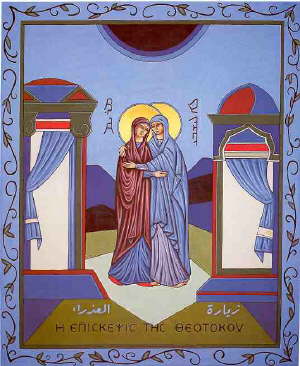
Visitation1.jpgThe pre-Christmas Cycle has six Sundays, which all focus on the unfolding revelation of the Birth of the Messiah. This is done in the context of the immediate family of Jesus, centering on Mary and Joseph (Matthew 1, 2; Luke 1, 2). This is certainly in line with the Antiochene emphasis on the humanity of Jesus and its appreciation of the historical aspect of Scripture. The greatest Announcement, of course, is that of the angels on Christmas.


There are one or two Sundays after Christmas (depending upon the day of the week that Christmas occurs), one of which is always celebrated: the Finding in the Temple. On 1 January the liturgical commemoration is Feast of the Circumcision (Naming) of the Child Jesus, with a second commemoration of the common Eastern observance of Saint Basil.


The Sundays of the Advent Season in the Maronite Church are:


  • Announcement to Zechariah
  • Announcement to the Virgin Mary
  • Visitation to Elizabeth
  • Birth of John the Baptizer
  • Revelation to Joseph
  • Genealogy Sunday
  • The Finding in the Temple

In celebrating the Finding in the Temple (Sunday after Christmas) the Maronite Church uses the 3rd Infancy Narrative of Luke (chapter 2) to parallel closely the Gospel development of Jesus’ own growth. He is seen in the Temple, recognizing his true “Father” (his divine Origin) and preparing himself for his Baptism and public life. In addition, Joseph disappears from all the Gospel narratives: Joseph’s earthly fathering is done, and Jesus will now proclaim the heavenly Father. The Twelve Days of Christmas take us to the Feast of the Epiphany (Theophany).


Season of Epiphany (in Syriac this feast is called Denho)


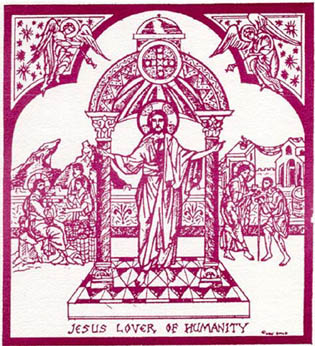
Jesus lover of humanity.jpgTaking the Baptism of Jesus (6 January) as the model, the Maronite Church celebrates our new life of Baptism and Chrismation in this Season. In Syriac it is called denho. For some Syriac Churches, this season is the traditional time of reception of catechumens into the Church. But for all Syriac Christians, denho is a time to reflect on our baptism. During the first three days of the Sixth Week of Epiphany (Monday-Wednesday) the Maronite Church observes “Nineveh Days.” These three days are penitential and serve to anticipate the Season of Great Lent. In one form or another, these days are observed by all the Syriac Churches, East and West.

(Thanks to R. Dom Bartholomew Leon, OSB, Saint Rafka Mission, Greenville, SC)

Veterans Day

Today we remember those who served the country in the armed forces.


Veterans Day.jpgO God, by whose mercy the faithful departed find rest, look kindly on your departed veterans who gave their lives in the service of their country. Grant that through the passion, death, and resurrection of your Son they may share in the joy of your heavenly kingdom and rejoice in you with your saints forever. We ask this through Christ our Lord.


O God, we thank you for raising up men and women to serve and defend our country in times of war and peace. We thank you for bringing each one home to their families, friends and neighbors, as we mourn those who gave their lives for our freedom. We ask your special blessing on all those in current service at home and abroad, that you keep them safe from all harm; kindle in them a lively faith in your mercy, and shield them from all temptation, that they may return to us unsullied by the aggressions of men; through Jesus Christ our Lord, who with you and the Holy Spirit reign over all the nations under heaven. Amen.

Dedication of the Archbasilica of Saint John Lateran

How Lovely is thy dwelling place, O Lord of Hosts! My soul longs, yea, faints for the courts of the Lord; my heart and flesh sing for joy to the living God.

(Psalm 84)


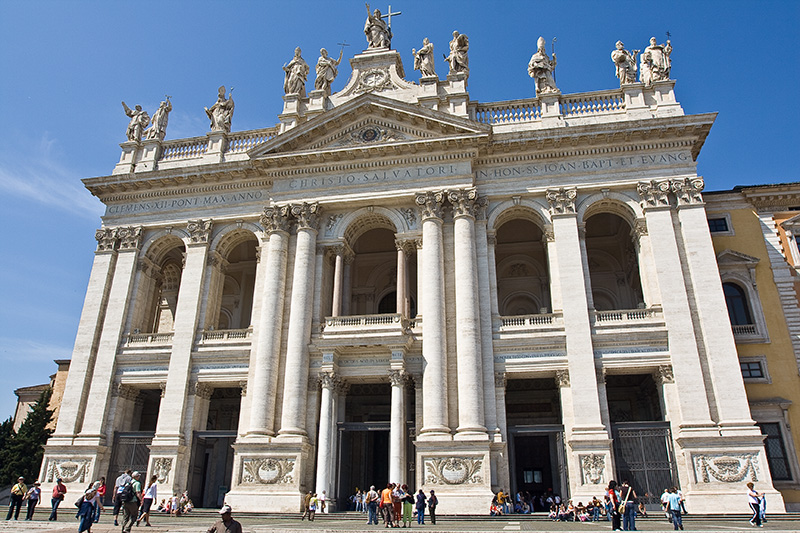
Lateran.jpgToday is a most unusual feast of the Church, the Dedication of the Archbasilica of Saint John Lateran, a day when a church is born and dedicated for sacred rites. But the celebration is more than architecture; it is about the birth of men and women into eternal life through faith in Jesus Christ under the power of the Holy Spirit through the sacraments of He established for this purpose. The proper name of the Pope’s cathedral -not Saint Peter’s–is the Archbasilica of the Most Holy Savior, Saint John Baptist and Saint John the Evangelist at the Lateran. The honor the Church bestows on us today is remembrance of the cathedral on the day it was consecrated. It ought to be noted that the Church in Rome also liturgically remembers the basilica on the feast of the Transfiguration (August 6). The Lateran Basilica is “omnium urbis et orbis ecclesiarum mater et caput…the Mother and head of all the Churches of the City and the World.”


The basilica was built by Constantine and dedicated by Pope Sixtus III in the 4th century.
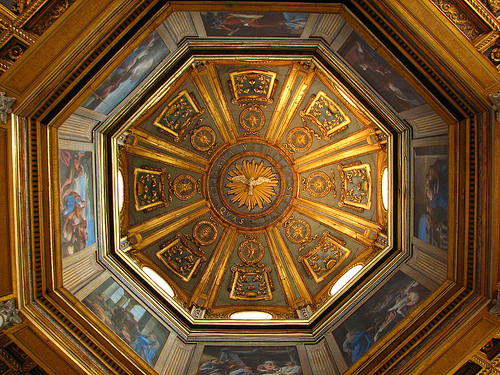
Lateran baptistery.jpgOne of the best things about the Lateran is the baptistery, though it is a beautiful church in general, but I love the 8-sided baptistery. There one reads:


Here is born a people of noble race, destined for Heaven, whom the Spirit brings forth in the waters he has made fruitful. Mother Church conceives her offspring by the breath of God, and bears them virginally in this water. Hope for the Kingdom of Heaven, you who are reborn in this font. Eternal life does not await those who are only born once. This is the spring of life that waters the whole world, Taking its origin from the Wounds of Christ. Sinner, to be purified, go down into the holy water. It receives the unregenerate and brings him forth a new man. If you wish to be made innocent, be cleansed in this pool, whether you are weighed down by original sin or your own. There is no barrier between those who are reborn and made one by the one font, the one Spirit, and the one faith. Let neither the number nor the kind of their sins terrify anyone; Once reborn in this water, they will be holy.


And so we say with the words of Scripture: zeal for your house consumes me.

Liturgical diversity for saints & souls


Angel Gabriel Angelico.jpgIt is easy to think that uniformity is more valuable than diversity in unity. Through the centuries the Church in Rome allowed for different liturgical calendars to flourish which sort of exists down until today. AND this is the beauty of being Catholic. Lest we forget, the Church Universal allows for a variety of liturgical observances in local churches and religious orders in addition to the ones designated for the “person in the pew” by the Supreme Pontiff in the Roman Missal. Life does not need to be so restricted to think one way is better or more exclusive than the another. For example, consider the various observances of All Saints and All Souls noted below (if I am missing a group let me know). Benedictines and Dominicans celebrate All Saints and All Souls on November 1 & 2 respectively and days dedicated to the saints and souls of their religious families.


The Observance of All Saints and Blesseds in Various Orders


November 5, Society of Jesus


November 7, Order of Preachers


November 13, Augustinians, Benedictines, Cistercians, Order of Prémontré


November 14, Order of Carmelites Discalced & Order of Carmelites


November 29, Franciscan Family


The Commemoration of All Souls in Various Orders


November 3, Society of Jesus


November 8, Order of Preachers


November 13, Carthusians


November 14, Benedictines, Cistercians


November 15, Order of Carmelites Discalced & Order of Carmelites


November 25, Franciscan Family


REQUIEM aeternam dona eis, Domine, et lux perpetua luceat eis. Requiescant in pace. Amen.

Do you desire eternal life?

Dear brothers and sisters!

Yesterday, on All Saints’ Day, we dwelt upon “the heavenly city, Jerusalem, our mother” (Preface of All Saints). And today, our souls turn again to these last things as we commemorate all the faithful departed, those “who have gone before us marked with the sign of faith and sleep in peace.” It’s very important for us Christians to live our relationship with the dead in the truth of faith, and to look at death and the afterlife in the
death.jpglight of Revelation. Already the Apostle Paul, writing to the first communities, exhorted the faithful to “not be downhearted, like the others who have no hope.” “If in fact” he wrote, “we believe that Jesus died and rose, so also God, by means of Jesus, will gather up with him all those who have died” (1 Thes 4:13-14). It’s necessary even today to spread the message of the reality of death and eternal life — a reality particularly subject to superstitious and syncretic beliefs, for the Christian truth cannot risk itself to be mixed up with mythologies of various sorts.

In my encyclical on Christian hope, I myself investigated the mystery of eternal life. I asked: even for the men and women of today, the Christian faith is a hope that can transform and sustain their lives? Even more radically: the men and women of our time likewise desire eternal life? Or maybe their earthly existence has become their only horizon? In reality, as St Augustine already observed, everyone wants the “blessed life,” that happiness. We don’t know what it is or what it’s like, but we feel ourselves attracted toward it. This is a universal hope, shared by people of all times and places. The expression “eternal life” gives a name to this insuppressible expectation: not a progression without end, but the immersion of oneself in the ocean of infinite love, where time, the beginning and end exist no more. A fullness of life and of joy: it’s this for which we hope and await from our being with Christ.

Let us today renew our hope in eternal life, one really drawn in the death and resurrection of Christ. “I am risen and now I am always with you,” the Lord tells us, and my hand sustains you. Wherever you might fall, you will fall in my hands and I will be present even at the gate of death. Where none can accompany you any longer and where you can bring nothing, there I await you to transform for you darkness into light. Christian hope is never something merely individual, it’s always a hope for others. Our lives are deeply linked, one to another, and the good and bad each one does always impacts the rest. So the prayer of a pilgrim soul in the world can help another soul that continues purifying itself after death. And for this, today the church invites us to pray for our beloved dead and to spend time at their tombs in the cemeteries. Mary, star of hope, make stronger and more authentic our faith in eternal life and sustain our prayer of suffrage for our departed brothers.


Benedictus XVI PP


Dies Irae

Day of wrath, day that
Crucifixion ANDREA DA FIRENZE.jpgwill dissolve the world into burning coals,
as David bore witness with the Sibyl.


How great a tremor is to be,
when the judge is to come
briskly shattering every (grave).


A trumpet sounding an astonishing sound
through the tombs of the region
drives all (men) before the throne.


Death will be stunned and (so) will Nature,
when arises (man) the creature
responding to the One judging.


The written book will be brought forth,
in which the whole (record of evidence) is contained
whence the world is to be judged.


Therefore when the Judge shall sit,
whatever lay hidden will appear;
nothing unavenged will remain.


O Thou, God of Majesty,
Trinity Ballen.jpgnourishing brilliance of the Trinity,
join us with the Blessed.


What am I the wretch then to say?
what patron I to beseech?
when scarcely the just (man) be secure.


King of tremendous Majesty,
who saves those-to-be-saved free,
save me, Fount of piety.


Remember, faithful Jesus,
because I am the cause of your journey:
do not lose me on that day.


Thou has sat down as one wearied seeking me,
Thou has redeemed (me) having suffered the Cross:
so much labor let it not be lost.


Just judge of the avenging-punishment,
work the gift of the remission (of sins)
before the Day of the Reckoning.


I groan, as the accused:
my face grows red from (my) fault:
spare (this) supplicant, O God.


O Thou, God of Majesty,
nourishing brilliance of the Trinity,
join us with the Blessed.


Thou who forgave Mary [the sinful woman],
and favorably heard the (good) thief,
hast also given me hope.


My prayers are not worthy,
but do Thou, Good (God), deal kindly
lest I burn in perennial fire.


Among the sheep offer (me) a place
and from the goats sequester me,
placing (me) at (Thy) right hand.


After the accursed have been silenced,
given up to the bitter flames,
call me with the blest.


Kneeling and bowed down I pray,
burial.jpgMy heart contrite as ashes:
Do Thou {, my End,} care for my end.


That sorrowful day,
on which will arise from the burning coals
Man accused to be judged:
therefore, O God, do Thou spare him.


Faithful Lord Jesus,
grant them rest. Amen.


O Thou, God of Majesty,
nourishing brilliance of the Trinity,
join us with the Blessed. Amen.

All Souls

The Commemoration of all the Faithful Departed -All Souls–follows the Solemnity of All Saints. The Church’s remembrance of our deceased friends and loved dates back to Saint Isidore of Seville’s Rule for Monks but it wasn’t until the monks of the Abbey of Cluny under the leadership of Abbot Odilio, who in 998 ordered all the Cluniac houses to observe a day in which the dead were prayerfully remembered. By the 13th century the custom was extended to the entire Church in the West; the Churches in the East have a similar day depending on what ecclesiastical community we are talking about. The custom of singing the Dies Irae set the tone and theology of this observance; today one rarely hears the Dies Irae sung in parishes because it is considered a “downer” and thus completely neglecting what the hymn says; it seems, however, to be making a come-back (even the 1928 BCP included the Dies Irae post World War I) as an apt expression of grief rooted not in civil secularity but in theology reminding faithful that we neither make not sustain ourselves. This feast like all other liturgical feasts points to God and to his love and mercy more than to us and our to condition.


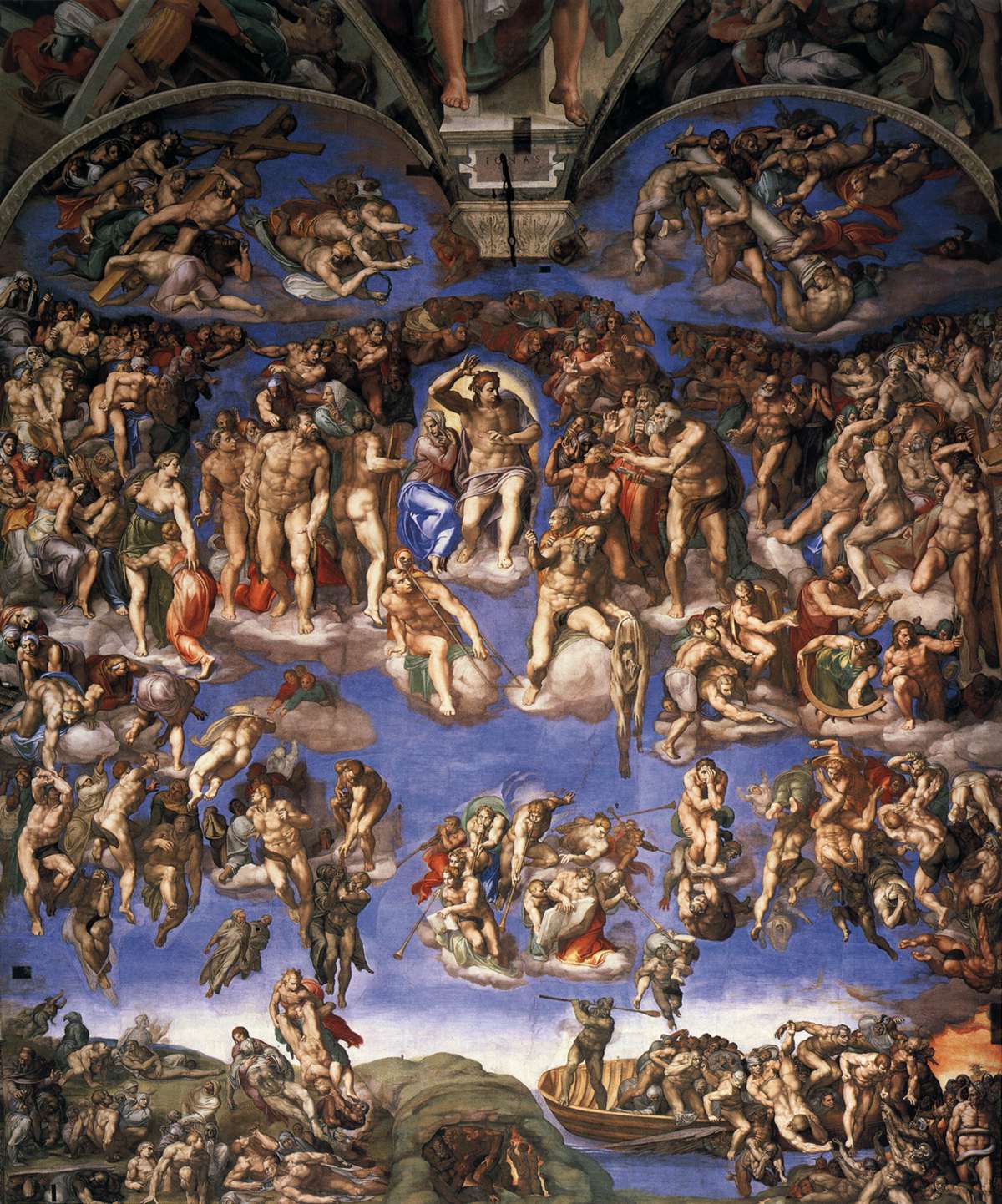
Last Judgment.jpg 

An excerpt of an oration of Saint Gregory of Nazianzus


“What is man that you should be mindful of him, mere mortal  that you should care for him?” What is  this new mystery confronting me? I am both small and great, both lowly and exalted, mortal and immortal, earthly and heavenly. I am to be buried with Christ and rise again with him, to become a co-heir with him, a son of God, and indeed God himself.


This is what the great mystery means for us; this is why God became man and became poor for our sake: it was to raise up our flesh, to recover the divine image in us, to re-create mankind, so that all of might become one in Christ  who perfectly became in us everything that he is himself. So we are no longer to be “male and female, barbarian and Scythian, slave and free” -distinctions deriving from the flesh–but to bear within ourselves only the seal of God, by whom and for which we were created. We are to be so formed and molded by him that we are recognized as belonging to his one family.


If only we could be now what we hope to be, by the great kindness of our generous God! He asks so little and gives so much in this life and in the next, to those who love him sincerely. In a spirit of hope and out of love for God, let us then “bear and endure all things” and give thanks for everything that befalls us, since even reason can often recognize these things as weapons to win salvation. Meanwhile let us commend to God our own souls and the souls of those who, being more ready for it, have reached the place of rest before us although they walked the same road as we do now.


Lord and creator of all, and especially of your human creatures, you are the God and Father and rule of your children; you are the Lord of life and death; you are the guardian and benefactor of our souls. You fashion and transform all things in their due season through your creative Word, as you know to be best in your deep wisdom and providence. Receive this day those who have gone ahead of us in our journey from this life.


(Gregory of Nazianzus, Oration 7, 23-24; PG 35, cols 786-7; ET by ICEL)


V. From the gate of hell.

R. Deliver their souls, O Lord.


V. May they rest in peace.

R. Amen.


V. O Lord, hear my prayer.

R. And let my cry come unto Thee.


V. The Lord be with you.

R. And with your spirit.


Let us pray.


O God, Creator and Redeemer of all the faithful, grant to the souls of Thy servants and handmaids the remission of all their sins, that through our devout prayers they may obtain pardon which they have always desired. Who lives and reigns with God the Father in the unity of the Holy Spirit, God, world without end. Amen.


V. Eternal rest grant unto them, O Lord.

R. And let perpetual light shine upon them. Amen.

Blessing of Animals


For the feast of Saint Francis of Assisi the blessing of animals is observed.
St Francis preaching to birds.jpgHerewith are two blessings: one for healthy animals and one for sick ones.


Blessing of Animals


V. Our help is the name of the Lord.

R. Who made heaven and earth.


V. The Lord be with you.

R. And with your spirit. (or use the new form)


Let us Pray.


O God, our refuge and our strength, give ear to the entreaties of Your Church, You are the Source of mercy, and grant that what we seek in faith, we may receive in fact. Through Christ our Lord. Amen.


Let us Pray.


Almighty and everlasting God, Who did assist Saint Antony [and Saint Francis of Assisi] to emerge unscathed from many temptations of this world, grant Your servant to progress in virtue by his illustrious example; and by his merits and intercession, free us from the ever-present dangers of life. Through Christ our Lord. Amen.


Let us Pray.


Let these animals receive Your blessing, + O Lord, to the benefit of their being, and by the intercession of Saint Antony [and Saint Francis], deliver them from all harm. Through Christ our Lord. Amen.


They are sprinkled with holy water.


Blessing of Sick Animals


Vested in surplice and purple stole, the priest says:


V. Our help is in the name of the Lord.

R. Who made heaven and earth.


V. Deal not with us, O Lord, according to our sins.

R. Nor take vengeance upon our transgressions.


V. You, O Lord, shall heal men and animals.

R. For You, O God, do proffer full mercy.


V. You open Your hand.

R. And fill every creature with blessing.


V. O Lord, hear my prayer.

R. And let my cry come unto You.


V. The Lord be with you.

R. And with your spirit. (or use the new form)


Let us Pray.


O God, You give consolation to mankind when afflicted, and even to mute beasts. Wherefore, we suppliantly pray – let these animals not perish, for they are indispensable to our needs. Through Christ our Lord. Amen.


Let us Pray.


Your mercy, O Lord, we humbly and perseveringly implore, that these animals afflicted with sever sickness may be cured in Your name and by the power of Your blessing +. Let any effects in them of evil spirits become extinct, lest sickness afflict them again, and You, Lord, are the guardian of their existence and the remedy to health. Through Jesus Christ, Your Son, our Lord, Who lives and reigns with You in the unity of the Holy Spirit, God, for all eternity. Amen.


Let us Pray.


Turn away every scourge from Your servants, we beseech You, Lord, and drive out from these beasts the destroying sickness. For just as You punish us when we deviate from Your paths, so reward us with Your mercy when we correct our evil ways. Through Christ our Lord. Amen.


They are sprinkled with holy water.

Pope Benedict’s Homily at Albano Cathedral, Italy


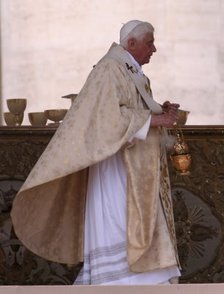
Pope incensing.jpgALBANO, Italy, SEPT. 21, 2008 (Zenit.org).- Here is a translation of Benedict XVI’ homily today at Mass in the Cathedral of Albano, Italy, near the papal summer residence at Castel Gandolfo. The cathedral’s altar was dedicated at this Mass.
(emphasis mine)


* * *

Dear Brothers and Sisters!


Today’s celebration is so rich in symbols and the Word of God that has been proclaimed helps us to understand the meaning and value of what we are doing here. In the first reading we heard the story of Judas Macabeus’ purification of the Temple and the dedication of the new altar of holocausts in 164 B.C., three years after the Temple had been profaned by Antiochus Epiphanes (cf. 1 Macabees 4:52-59). The Feast of the Dedication, which lasted eight days, was instituted to commemorate that event. This feast, initially linked to the Temple, where the people went in procession to offer sacrifices, was also connected with the illumination of the houses, and it survived in this form after the destruction of Jerusalem.


The sacred author rightly underscores the joy that characterizes that event. But how much greater, dear brothers and sisters, must our joy be, knowing that every day on this altar, that we are preparing to consecrate, the sacrifice of Christ is offered; on this altar he will continue to immolate himself, in the sacrament of the Eucharist, for our salvation and that of the whole world. In the Eucharistic mystery, that is renewed on every altar, Jesus is really present. His is a dynamic presence, which seizes us in to make us his, to assimilate us to him; it draws us with the power of his love, bringing us out of ourselves to unite us with him, making us one with him.


Christ’s real presence makes each of us his “house,” and we all together form his Church, the spiritual edifice of which St. Peter speaks. “Come to him,” the apostle writes, “a living stone, rejected by human beings but chosen and precious in the sight of God, and, like living stones, let yourselves be built into a spiritual house to be a holy priesthood to offer spiritual sacrifices acceptable to God through Jesus Christ” (1 Peter 2:4-5).


Somewhat developing this beautiful metaphor, St. Augustine observes that through faith men are like wood and stone gathered from forests and mountains for building; through baptism, catechesis and preaching they are cut, squared, and filed down; but they only become the Lord’s house when they are ordered by charity. When believers are reciprocally connected according to a determinate order, mutually and closely arranged and bound, when they are united together by charity they truly become the house of God that does not fear ruin (cf. Sermon 336).


It is therefore the love of Christ, the charity that “never ends” (1 Corinthians 13:8), the spiritual energy that unites those who participate in the same sacrifice and who nourish themselves from the same Bread broken for the salvation of the world. Is it indeed possible to be in communion with the Lord if we are not in communion with each other? How can we present ourselves divided and far from each other at God’s altar? May this altar upon which the sacrifice of the Lord will soon be renewed be for you, dear brothers and sisters, be a constant invitation to love; always draw near to it with a heart open to the love of Christ and to spreading it, to receiving and bestowing forgiveness.


In this regard the Gospel passage that was proclaimed a little while ago offers us an important lesson for life (cf. Matthew 5:23-24). It is a brief but pressing and incisive call to fraternal reconciliation, a reconciliation that is indispensable if we are to present our offering worthily at the altar; it is a reminder that takes up again a teaching that is already quite present in the preaching of the prophets. The prophets vigorously denounced the uselessness of those acts of worship that lacked the correspondent moral dispositions, especially in relation to one’s neighbor (cf. Isaiah 1:10-20; Amos 5:21-27; Micah 6:6-8). Every time that you come to the altar for the Eucharistic celebration your soul opens to forgiveness and fraternal reconciliation, ready to accept the apologies of those who have hurt you and ready, in turn, to forgive.


In the Roman liturgy the priest, having offered the bread and wine, bows toward the altar

LITURGY.JPG and prays in a low voice: “Lord, we ask you to receive us and be pleased with the sacrifice that we offer with humble and contrite hearts.” The priest thus prepares to enter, together with the whole assembly of the faithful, into the heart of the Eucharistic mystery, into the heart of that celestial liturgy to which the second reading, taken from the Book of Revelation, refers.

St. John presents an angel who offers “incense together with the prayers of all the saints, burning them on the altar of gold placed before the throne” of God (cf. Revelation 8:3). The altar of sacrifice becomes in a certain way the point of encounter between heaven and earth; the center, we could say, of the one Church that is at the same time heavenly and in pilgrimage on earth, where, in the midst of the persecutions of the world and God’s consolations, the Lord’s disciples proclaim his passion and death until he returns in glory (cf. Lumen Gentium, No. 8). Indeed, every Eucharistic celebration already anticipates the triumph of Christ over sin and the world, and shows in mystery the splendor of the Church, “immaculate bride of the immaculate Lamb, Bride that Christ loved and gave himself up for to make her holy (cf. Lumen Gentium, No. 6).


These reflections draw our attention to the rite that we are about to perform in this cathedral of yours, which we admire today in its renewed beauty and that we rightly desire to continue to make welcoming and decorous. It is a task that involves all of you and that, in the first place, calls upon the whole diocesan community to grow in charity and in apostolic and missionary dedication. Concretely, it is a matter of bearing witness with your life to your faith in Christ and the total confidence that you place in him.


It is also a matter of cultivating ecclesial communion that is, first of all, a gift, a grace, fruit of God’s free and gratuitous love, that is, something divinely efficacious, always present and working in history, beyond all contrary appearances. Ecclesial communion is, however, also a task entrusted to the care of each individual. May the Lord grant you to live an evermore convinced and active communion, in cooperation and co-responsibility at every level: among the priests, the consecrated, and the laity, among the different Christian communities of your region, among the various lay groups.

****

Certainly … difficulties, challenges and problems are not lacking, but the hopes and the opportunities for announcing and witnessing to God’s love are also great. May the Spirit of the risen Lord, who is also the Spirit of Pentecost, disclose his horizons of hope to you and strengthen the missionary drive in you to the vast horizons of the new evangelization. Let us pray for this, continuing our Eucharistic celebration.

O Cross, our one reliance

The Feast of the Exaltation of the Holy Cross, which, the day after the dedication of the Basilica of the Resurrection raised over the tomb of Christ, is exalted and honored, in the manner of a memorial of His paschal victory and the sign which is to appear in the sky, already announcing in advance His second coming. (Roman Martyrology)


The Church presents to us today a feast which commemorates the discovery of the Holy

Relics.jpgCross by Emperor Saint Constantine’s mother Saint Helena in Jerusalem (AD 325).  The Tradition says that Saint Helena found the Cross and the relics of the holy Passion and then brought them to Rome where they are venerated at the Basilica of the Holy Cross in Jerusalem. On the spot of the discovery, she built the Basilica of the Holy Sepulcher keeping a portion of the Cross at there.


The sacred Liturgy gives us the image of the Holy Cross because it brings together the historical reality of the Cross with its theological import:  mystery of the life and death of Christ. This is not a feast celebrating a “terrific find” at an archaeological dig; it is a feast of our faith as the Cross is a central symbol of our faith.


Pazzi crucifxion.jpg

Hymnus in Honore Sanctae Crucis


Vexilla regis prodeunt,
fulget crucis mysterium,
quo carne carnis conditor
suspensus est patibulo.


Confixa clavis viscera
tendens manus, vestigia
redemptionis gratia
hic inmolata est hostia.


Quo vulneratus insuper
mucrone diro lanceae,
ut nos lavaret crimine,
manavit unda et sanguine.


Inpleta sunt quae concinit
David fideli carmine,
dicendo nationibus:
regnavit a ligno deus.


Arbor decora et fulgida,
ornata regis purpura,
electa, digno stipite
tam sancta membra tangere!


Beata cuius brachiis
pretium pependit saeculi!
statera facta est corporis
praedam tulitque Tartari.


Fundis aroma cortice,
vincis sapore nectare,
iucunda fructu fertili
plaudis triumpho nobili.


Salve ara, salve victima
de passionis gloria,
qua vita mortem pertulit
et morte vitam reddidit.


In Festo Exaltationis Sanctae Crucis:

in hac triumphi gloria!


(“Vexilla Regis” was written by Venantius Fortunatus (530-609) and is considered one of the greatest hymns of the sacred Liturgy. This is the full hymn but when used liturgically at Vespers verses 2, 4, 7 are omitted.)