The Candle

A Blessed Christmas feast to you and your family. I ended up going to the midnight Mass at the local monastery of Dominican nuns to help with a potential problem of crowds given a C19 crisis at the Catholic parish whose pastor was exposed. Luckily, the crowd was small. Protecting the nuns is of the utmost concern. Since I am in bed nightly at 9:30 I have a renewed appreciation for those who make the sacrifice to spend it in watching –in vigil– with the Lord. So much of the important biblical narratives happens at night thus making the night solemn, holy, peaceful, set-apart. Keeping vigil with the Holy Family refocusses me on the desire to be with the Lord as he gives witness through His Life-giving Incarnation for the life of the world.

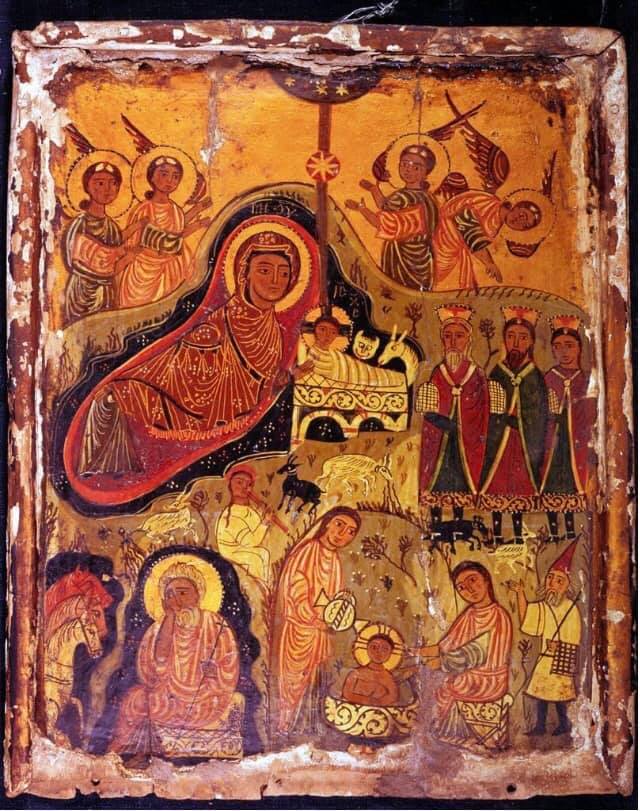
On Christmas Day I assisted at my Melkite parish of St Ann (Waterford). The emphasis of the Christmas troparia (the hymns) was not only on the Nativity in the Flesh of our Lord and God and Savior Jesus Christ,

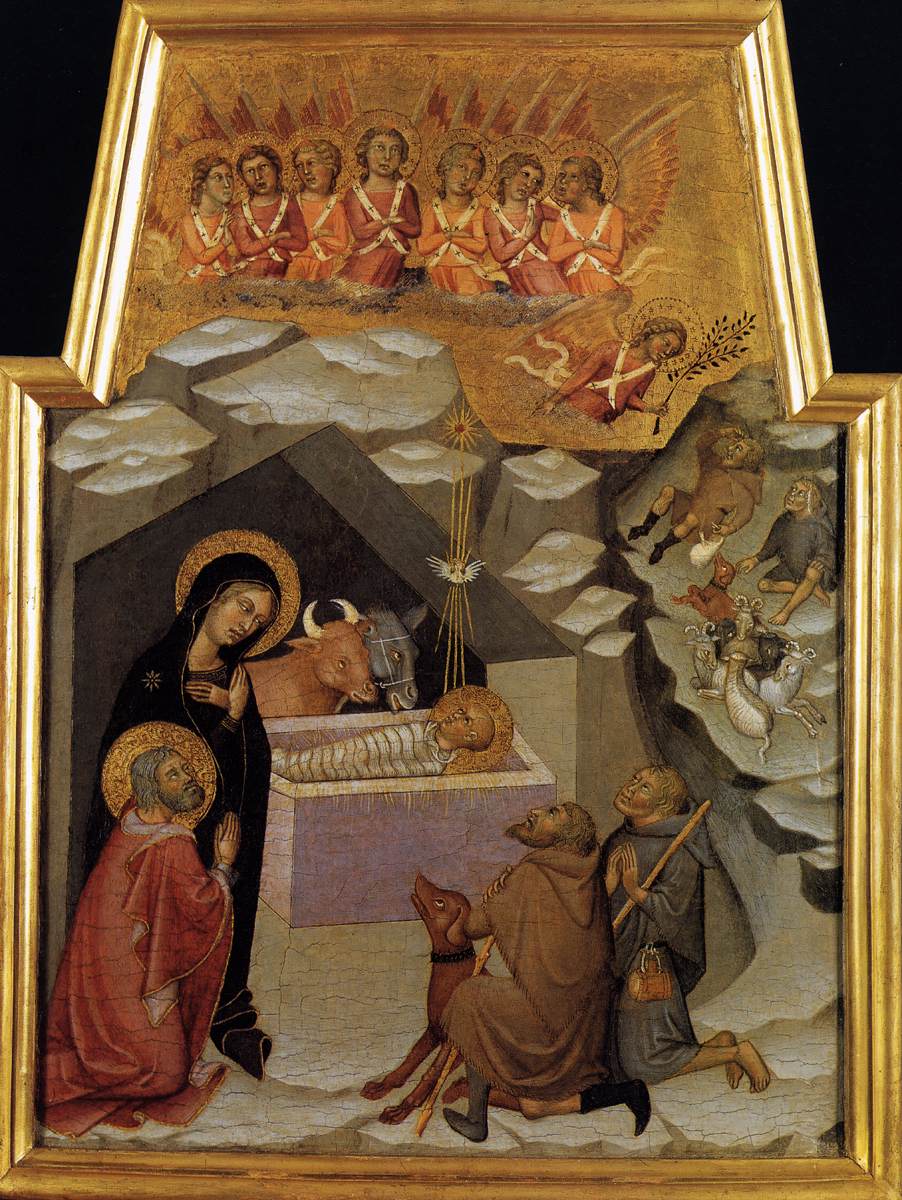
“Today the Virgin gives birth to the Transcendent One, and the earth offers a cave to the Unapproachable One! Angels, with shepherds, glorify Him! The wise men journey with a star! Since for our sake the Eternal God is born as a little child” (Kontakion).

BUT also to reframe the pagan (unbelieving) crowd who hold to secular and folks tales as true offering them the possibility of salvation with, in and through Jesus Christ –the True Sun of Righteousness (Malachi 4). The false beliefs of the pagans of 2000 years ago are the same today: the rejection of the revelation of the One, Triune God in Jesus’ becoming flesh for our redemption. There is a polemic established in the Church’s troparion because it puts aside pagan worship and gives truth and adored. The Church sings,

“Your Nativity, O Christ our God, has shone to the world the light of wisdom! For by it, those who worshipped the stars were taught by a star to adore You, the Sun of Righteousness and to know You, the Orient from on high (LK 1:78 also translated as Dawn or Dayspring). O Lord, glory to You!”

The pulsating heart and mind comes to accept and confess that at Christmas we know and love and adore Son of God became man so that man might become divine, sons and daughters of God the Father by the indwelling of the Holy Spirit.

Father Alexander Men (1935-90) was martyred for the Christian Faith by the Soviets. Men is a compelling preaching in part because of heritage a convert from Judaism to the Orthodox Church. My friend Bishop Seraphim Joseph Sigrist posted this poem about Men by Alexander Zorin, “The Candle”. Zorin helps us better understand the mystery we are observing today using the Father Alexander’s a mirror to Jesus the New Light.

The Candle
(A Poem about Fr. Alexander Men)

“He came out to guide us to the gate,
but then became our escort through the forest.
Black on black
the night stood like a wall, close in.
On a rolled-out, starry scroll
super-worldly letters twinkled.
His candle cast its light
and from the darkness–sheds, a brick-pile,
footbridges, ditches, a muddy road
spiraling beyond our comprehension,
leading on through time and ages.
He joked: from here on out this star here
will guide you. Follow it gracefully.
And since it seems no one else here below
will light the way, he raised his candle high.”

Translated by Richard Dauenhauer
(third working draft, Advent 2007)
Something greater to come

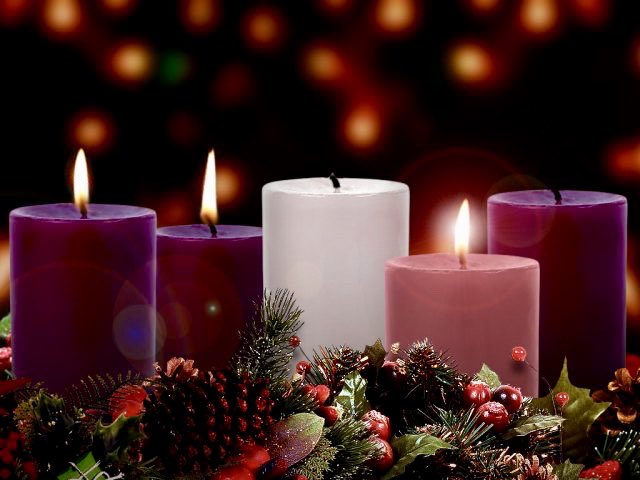
On this Third Sunday of Advent —Gaudete Sunday—, or the Sunday of the Forefathers (as it is called on the Byzantine liturgical calendar) we have some things to consider.

As friend drew my attention to Dietrich Bonhoeffer’s reflection on Advent which really caused me to think about the state of my soul. Complacency (mediocrity) is an enemy to one’s preparation to receive the Newborn Lord at Christmas. Of course, Gaudete Sunday with its exhortation to rejoice is has its own strength to mind. Here’s what Bonhoeffer said: “The celebration of Advent is possible only to those who are troubled in soul, who know themselves to be poor and imperfect, who look forward to something greater to come. For these, it is enough to wait in humble fear until the Holy One himself comes down to us, God in the child in the manger. God comes. The Lord Jesus comes. Christmas comes. Christians rejoice!”

Right now I am feeling troubled of soul, poor and imperfect; sin has taken over and there is a need for reconciliation. Perhaps you are feeling something similar. The sacred Liturgy of the Latin Church for Gaudete Sunday teaches us something we need to bring to our discernment of things. Deep down in my being I know that I need to be humble in fact, and not merely as an abstraction. Deep down in my being I desire “to attain the joys of so great a salvation” known affectively “with solemn worship and glad rejoicing” through the beauty of living reality as it is and not as I want it to be. Deep down in my being I want “something greater.” I want to the Lord.

Moving through the Nativity Fast that is observed by the Byzantine Church preparing for the newborn Lord, we acknowledge and desire that what the martyrs experienced, “in their struggle,” we may “receive an incorruptible crown from you.” And that “With your strength, they brought down the tyrants and broke the cowardly valor of demons.”

I can tell you from experience that the struggle against the demons is difficult. What I also know is that only God’s grace and the companionship of others makes it possible to receive the gift of the incorruptible crown.

Bonhoeffer names the truth for us that ought not be missed in the season’s chaos —our looking forward to something greater to come: “Holy One himself … God in the child in the manger.”
May we know the substance of what the priest prays: “that with this divine sustenance [the Gospel proclaimed and preacher AND Eucharist] may cleanse us of our faults and prepare us for the coming feasts” (The Prayer after Communion).

May St. Benedict guide us.

The Twofold Coming of Christ

At this seventh day of Christmas, I am thinking of who it is we preach these days. A piece from Saint Cyril of Jerusalem is helpful to contextualize the question especially we are day before the Octave Day of Christmas: the giving of the Holy Name, the only one that truly saves us. The saint preached:

We do not preach only one coming of Christ, but a second as well, much more glorious than the first. The first coming was marked by patience; the second will bring the crown of a divine kingdom.

In general, whatever relates to our Lord Jesus Christ has two aspects. There is a birth from God before the ages, and a birth from a virgin at the fullness of time. There is a hidden coming, like that of rain on fleece, and coming before all eyes, still in the future.

At the first coming He was wrapped in swaddling clothes in a manger. At His second coming He will be clothed in light as in a garment. In the first coming He endured the cross, despising the shame; in the second coming He will be in glory, escorted by an army of angels.

We look then beyond the first first coming and await the second. At the first coming we said: Blessed is He who comes in the name of the Lord. At the second we shall it again; we shall go out with the angels to meet the Lord and cry out in adoration: Blessed is He who comes in the name of the Lord.

Merry Christmas

Sweet Jesus, you chose to be born in humility of a humble handmaiden, who humbly wrapped you in the swaddling clothes of humility and laid you in a manger. Most merciful Lord, grant that the holiness of new life may be reborn in me through the ineffable mystery of your nativity. Thus may I be wrapped in the swaddling clothes of the religious habit and strive to live within the constraints of Christian discipline – placed as it were in the manger – to lead me to the summit of true humility. And as you deigned to share in our humanity and mortality, grant that I may share in your divinity and eternity. Amen.

A prayer of Ludolph of Saxony

Blessing of Chalk

In the Latin Church there is a pious custom, at least in the churches of the Slavic and Germanic lands, where the priest blesses chalk. We chalk each house (or the room where one resides) with the initials CMB (which stand for “Christus mansionem benedicat”, which also commemorates the 3 Magi), crosses (which are to scare the demons), and numbers (which signify the number of years that have passed since the original three kings came to Bethlehem).
 
The chalk is blessed, there is a special exorcism over the chalk. Done correctly, the house is incensed and sprinkled with holy water.
 
May the Magi intercede for us.

Epiphany

“Stars cross the sky, wise men journey from pagan lands, earth receives its savior in a cave. Let there be no one without a gift to offer, no one without gratitude as we celebrate the salvation of the world, the birthday of the human race. Now it is no longer, Dust you are and to dust you shall return, but “You are joined to heaven and into heaven you shall be taken up.”

St. Basil the Great
Feast of the Epiphany

God’s mercy reaches us

Let Your goodness Lord appear to us, that we,
made in your image, conform ourselves to it.
In our own strength
we cannot imitate Your majesty, power, and wonder
nor is it fitting for us to try.
But Your mercy reaches from the heavens
through the clouds to the earth below.
You have come to us as a small child,
but you have brought us the greatest of all gifts,
the gift of eternal love
Caress us with Your tiny hands,
embrace us with Your tiny arms
and pierce our hearts with Your soft, sweet cries.

a Christmas Prayer attributed to Saint Bernard

Presentation of the Lord

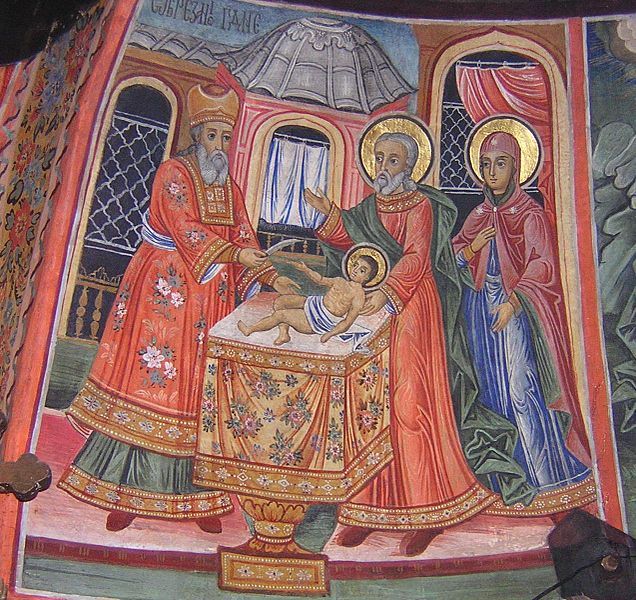
A mosaic of Mary and Joseph presenting the child Jesus to Simeon decorates the chapel of the Jesuit infirmary in Rome June 8. The Vatican's Congregation for Divine Worship and the Sacraments is establishing an office to promote the development and use of appropriate liturgical art, architecture and music. (CNS photo/Paul Haring) (Nov. 14, 2012) See CONGREGATION-ART Nov. 14, 2012.
A mosaic of Mary and Joseph presenting the child Jesus to Simeon decorates the chapel of the Jesuit infirmary in Rome. (CNS photo/Paul Haring, 2012)

Today’s feast brings to the end the Christmas cycle: 40 days ago we celebrated the Incarnation on Christmas Day. This feast has another name: the Byzantine Church calls it the Encounter of Our Lord. Western Catholics will call it Candlemas.

Why celebrate the Presentation of the Lord in the Temple? What impact does it have for us?

Look to Luke’s Gospel in which we see the honoring of the requirement of the Moasic Law for a mother’s purification forty days after giving birth. She comes to the Temple for prayer and re-incorporation into the community of faith. At this time child birth made the woman unclean to for a period of time. The Church uses the appearance of Joseph and Mary for these rituals to underline the paradox that God, author of the Law, here submits to the Law.

It is important to note that St. Luke records this particular observance of the Law. “The Church uses the appearance of Joseph and Mary for these rituals to underline the paradox that God, author of the Law, here submits to the Law.” Also biblically tied into the Temple visit was the recognition of Israel’s first-born sons who, when Egypt, were killed prior to the Exodus event; hence by tradition parents were bound to present an offering to claim their child.

Luke also reveals to us the prophetic utterance of Simeon and Anna who recognize and encounter the child Jesus as the glory of Israel, the light of revelation for all people. This encounter realizes the revelation of Jesus as the foretold Messiah — a fulfillment of an expectation.

Christ appears in his humanity and divinity

epiphany-relief

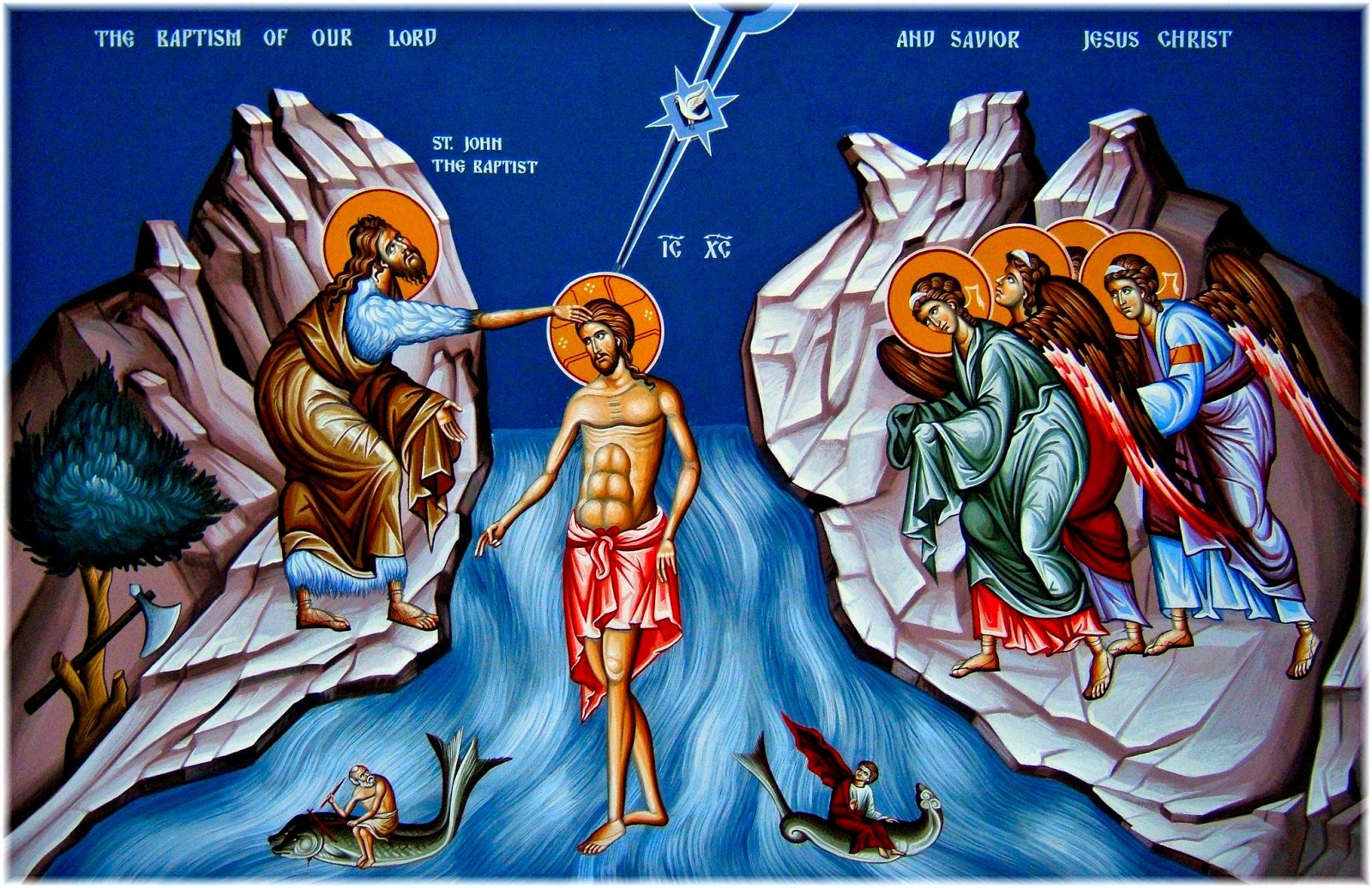
Today is the feast of the Epiphany. The splendor of this feast recalls God’s manifestation to all people, to the whole world. On Christmas Day, God’s goodness became visible to us under the form of a baby, in the sacred humanity of Christ, God’s only begotten Son and the Father’s true image and substance.

Through faith, we know the mystery of the Incarnation, and Christ’s appearance in our midst changed forever the course of human history. God appeared in our world as a small baby, but he came to it as Savior. He came to save us!

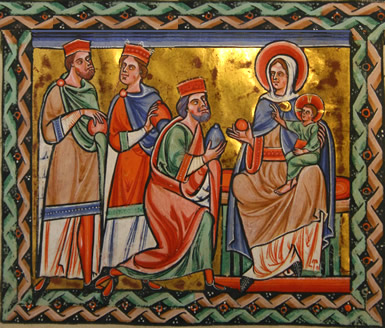
In the Latin-Mediterranean countries, the feast of the Epiphany is commonly known as the Feast of the Three Kings. Guided by a brighter than usual star, they came from afar to the humble cave of Bethlehem to render homage to a tiny child, the King of Kings. In the Gospel story, the evangelists make sure to imply that the Magi represented the gentiles, thus Jesus did not just come to save Israel’s Chosen People, but to save all humankind, Jews and gentiles alike.

Brother Victor-Antoine D’Avila-Latourrette
A Monastic Journey To Christmas

***The church calendar can be confusing to some. In the Eastern Churches and with the Traditional Roman Missal the great feast of the Epiphany/Theophany is celebrated on January 6. The Novus Ordo group celebrates the feast today.