St. Francis Xavier Cabrini

I have, for many years, admired Mother Cabrini for reasons known and unknown. Today’s feast gives us the space of time to consider the vocation and mission of a great woman called by Jesus to serve Him. The following prayer should keep us focussed.

Prayer of St. Cabrini after Confession

My dearest Jesus, I have told all my sins as well as I could. I tried hard to make a good confession. I feel sure that you have forgiven me. I thank You. It is only because of all Your sufferings that I can go to confession and free myself from my sins. Your Heart is full of love and mercy for poor sinners. I love You because You are so good to me. My loving Saviour, I shall try to keep from sin and to love You more each day. My dear Mother Mary, pray for me and help me to keep my promises. Protect me and do not let me fall back into sin. Almighty God, kneeling before Your Divine Majesty, I adore You and because You command me, I dare approach Your divine Heart. But what shall I say if You do not enlighten me with a ray of Your divine light?

Speak to my soul, O Lord, and command me to listen to Your voice. Enlighten my will to put Your words into practice. Pour Your grace into my heart; lift up my soul weighed down by my sins; raise my mind to heavenly things, so that earthly desires may no longer appeal to me. Speak to my soul with Your divine omnipotence, for You are my salvation, my life, and my peace, in time and in eternity. Strengthen me with the grace of Your Holy Spirit and give Your peace to my soul that I may be free from all needless worry and care. Help me to desire always that which is pleasing and acceptable to You so that Your Will may be my will, Grant that I may rid myself of all unholy desires, and that for Your love I may remain unknown in this world, and be known only to You.

Do not permit me to attribute to myself the good that You perform in me and through me, but rather, referring all honor to Your majesty, may I glory only in my weakness, so that renouncing sincerely all vain glory which comes from the world, I may aspire to the true and lasting glory which comes from you. Amen.

Pushing to know Jesus

In a treasure trove books on Christology (secondary theological reflection) we have densely packed pages reflection on the of Jesus and what it means to say He is the Christ. It seems to me that the theological and spiritual questions and research have to be re-oriented. What if we reflect on what Jesus says in the Gospels, and how he acts? Jesus asks Peter, “Who do you say I am?” AND NOT “Who do the theologians say that I am?” Jesus does not ask us what Fr. John Meyendorff or Fr. Alexander Schmemann, or Sr. Vassa Larin or NT Wright, or Fr. Hans Urs von Balthasar thought.

Knowing about Jesus is different than knowing Jesus. As to Peter so to us: “Who do you say that I am?”, a question that demands our own personal response based on our own personal experience of Jesus in prayer, divine Liturgy, Lectio Divina, and his subtle yet very real, mysterious presence in everyday life.

Theological reflection, first and second levels, are critical in having a comprehensive view of who Jesus Christ is. The personal encounter is a aided and challenged by theological reflection so as to keep us honest and correct. In today’s world we are tempted to think that any experience and any book is orthodox, that is, without error. We know by reason, however, this is incorrect. Knowing Jesus and not merely about Jesus is experienced with several contexts: worship (adoration), personal conversion, a communal life and works of charity; you can think of these points as pillars: prayer, study, community, and service. Truth is symphonic and verifiable. Book knowledge is useful but it is useless unless we are led us into a deeper relationship, a deeper engagement with Jesus. Otherwise, valuable space in the brain is wasted.

Praising God as the angels, really

Earlier this month we the Church liturgical recalled the Guardian Angels and in late September we did the same for the Archangels. I have been thinking of the presence of the angels of late and came across this line from St. John Chrysostom who tells us of our angelic calling:
 
“On high the armies of the angels are giving praise. Here below in the Church the human choir takes up after them the same doxology. Above us, angels of fire make the thrice Holy hymn resound magnificently. Here below is raised the echo of their hymn. The festival of heaven’s citizens is united with the inhabitants of earth in a single thanksgiving, a single upsurge of happiness, a single chorus of joy.”
 
On Ozias, Homily 4,1(PG 56,120)
 
Olivier Clement, trans. Roots of Christian Mysticism: Texts from the Patristic Era with Commentary, second edition. (New York: New City Press, 2013), 118.

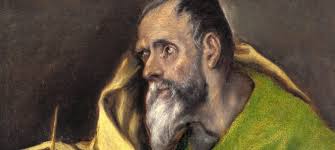
St Luke

“Luke’s Gospel is marked by a special concern for the poor, the marginalized, women, and social outcasts. His account of the nativity, with its stress on the faith of Mary, emphasizes the humbleness of Jesus’ birth and its significance in fulfilling the hopes of the poor. It is in Luke’s Gospel that Jesus preaches, “Blessed are the poor” and where we find the parable of the rich man and the poor beggar Lazarus, offering such a striking image of the relation between mercy and justice in this life and in the life to come.”
Blessed Among Us, by Roger Ellsberg, p. 600.

Pastors need to face humanity

In life I wonder desire to know what is going on in reality. By what authority do pastors admit when they are in front of other people? The person in the hospital bed, the husband about to be without a job, the student about to be dismissed from university studies because she committed an act of plagiarism, the senior person facing dementia and cancer? What is the occasion for pastoral leadership and by what light is reality judged (evaluated) and addressed? Is it ideology or reality? Too often the clergy are without a method, or a reasonable measure of leadership or a substantial spiritual life.

Pope Benedict XVI, in his message to the Presidents of Europe’s 34 Episcopal Conferences, exhorted them “not to be afraid of facing up to the present-day pastoral challenges, being in position to listen to the concrete conditions of man’s personal and social life, ready to proclaim the Gospel of hope to all. The Gospel is a light entrusted to Christians of the third millennium so that, through a courageous and credible witness it may give light to the whole house (cf. Mt 5,15)“.

Pro-Life is to be pro-Liturgical Life

A recent article by Peter Kwasniewski, “Why pro-life Catholics should strive for a higher and deeper life” caught my attention and I think you ought to read it.

Kwasniewski states,

“…to be pro-life in its most profound sense is to be pro-liturgical life. As the Second Vatican Council says about the baptized: “Participating in the Eucharistic sacrifice, the source and culmination of the whole Christian life, they offer the Divine Victim to God, and offer themselves along with It” (Lumen Gentium §11). “The liturgy is the summit toward which the activity of the Church is directed; at the same time, it is the font from which all her power flows” (Sacrosanctum Concilium §10). The font from which all her power flows … The power to welcome children, to love them into the Church, to care for them over all the years; the power to value every human person, well or ill, hale or handicapped, conscious or comatose, embryonic or elderly; the power to build a culture of life, a culture of beauty, a culture of intellect consecrated to the truth—all this flows from the Holy Mysteries. Without the Church’s liturgy, we fail to grasp the infinite dignity God has bestowed on us in Christ. We miss out on the flesh-and-blood encounter with the Source of Life, Life incarnate, Life outpoured for eternal life.

“Correctly understood, then, the pro-life movement is pro-human life, pro-intellectual life, pro-cultural life, and pro-liturgical life. When we see this movement in its full breadth and depth, we see the prerequisites of our vision, the scope of our struggle, the source of our strength, and the glorious destiny of our toil.

Read the entire article here.

St. John XXIII, pope

Today is the liturgical memorial of St. John XXIII. This is the first time the universal Church is permitted to observe this feast. He was the beloved Servant of the Servants of God.

Here is the opening prayer for the Novus Ordo Liturgy.

Almighty and eternal God, who in the Pope, Saint John XXIII, gave to the whole world the shining example of a good shepherd, grant that, through his intercession, we may with joy spread abroad the fullness of Christian charity.

Through our Lord Jesus Christ, your Son, who lives and reigns with you in the unity of the Holy Spirit, one God, for ever and ever.