Holy Innocents

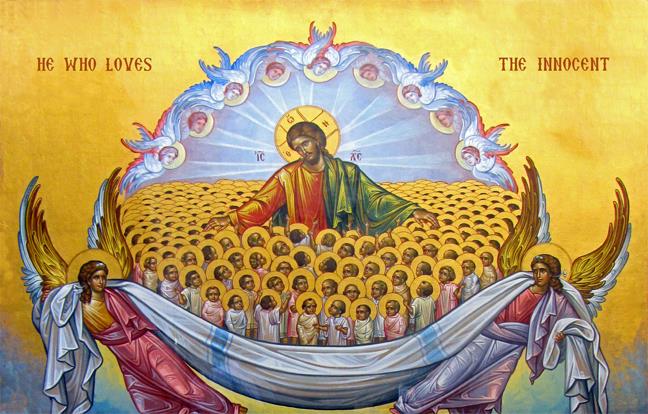
Today, in the days following the feast of the Incarnation, we honor the memory those who were among the first to die as martyrs for faith in Jesus Christ. It is amazing that 2000 years ago we had very young people, innocents, killed due to sin and hardness of heart. The feast day for the Holy Innocents marks the martyrdom of an unnumbered group of boys aged 2 and under during the reign of King Herod. The murder of these young boys fulfills the prophecy of St Jeremiah:

Then was fulfilled that which was spoken through Jeremiah the prophet, saying, ‘A voice is heard in Ramah, mourning and great weeping, Rachel weeping for her children and refusing to be comforted, because her children are no more.’ (Jer 31:15)

They did not die on account of their own personal misdeeds; a confession of faith was not required of them. Why did they die? We don’t know; that answer is known to God alone; but we trust that their eternal life is better than any life they had on earth; happiness, and beatitude. We know that they died in retaliation in Herod searching out competition. And Jesus was that competitor. As the Latin hymn says, Crudelis Herodes, Deum Regem venire quid times? Non eripit mortalia, Qui regna dat caelestia (Cruel Herod what do you fear in the King and God to come? He seizes not earthly things who gives heavenly kingdoms). Indeed, it IS his fear that drives Herod.

In our own era we have similar deaths of innocents –while not laying their lives down for Jesus in the same way, but violent and egregious nonetheless with the victims of abortion. Plus, we can’t forget the children plagued with human trafficking and domestic violence. Some young people are trafficked for sex, forced labor, immigration and war. Nonetheless, the killing of babies and the very young is unbelievable.

What does this all mean for our prayer and mission? Pope Francis said last year on this feast day: “To contemplate the manger also means to contemplate this cry of pain, to open our eyes and ears to what is going on around us, and to let our hearts be attentive and open to the pain of our neighbors, especially where children are involved.”

Archpriest David Petras wrote, “The holy innocents are only the first of thousands upon thousands who will have to die for the spiritual kingdom of God. God does not oppose the violence of this world with weapons or an army, but he calls upon all to hear the truth and to love and not hate. This part of the Christmas gospel may make us extremely uncomfortable – almost by definition, but it reminds us of the struggle faith will have in this world, and that every Christian must be prepared to offer his or her life for God.”

On this feast of the Holy Innocents during the Octave of the Nativity, the Christ Child and the innocents have something definite to teach us: that we are to protect human life at this very tender stage. In honoring these little ones we also reflect upon the need for our atoning for forgetting about the deaths of these youths. May the intercession of the Holy Innocents be with those in need, with all of us.
God’s mercy reaches us

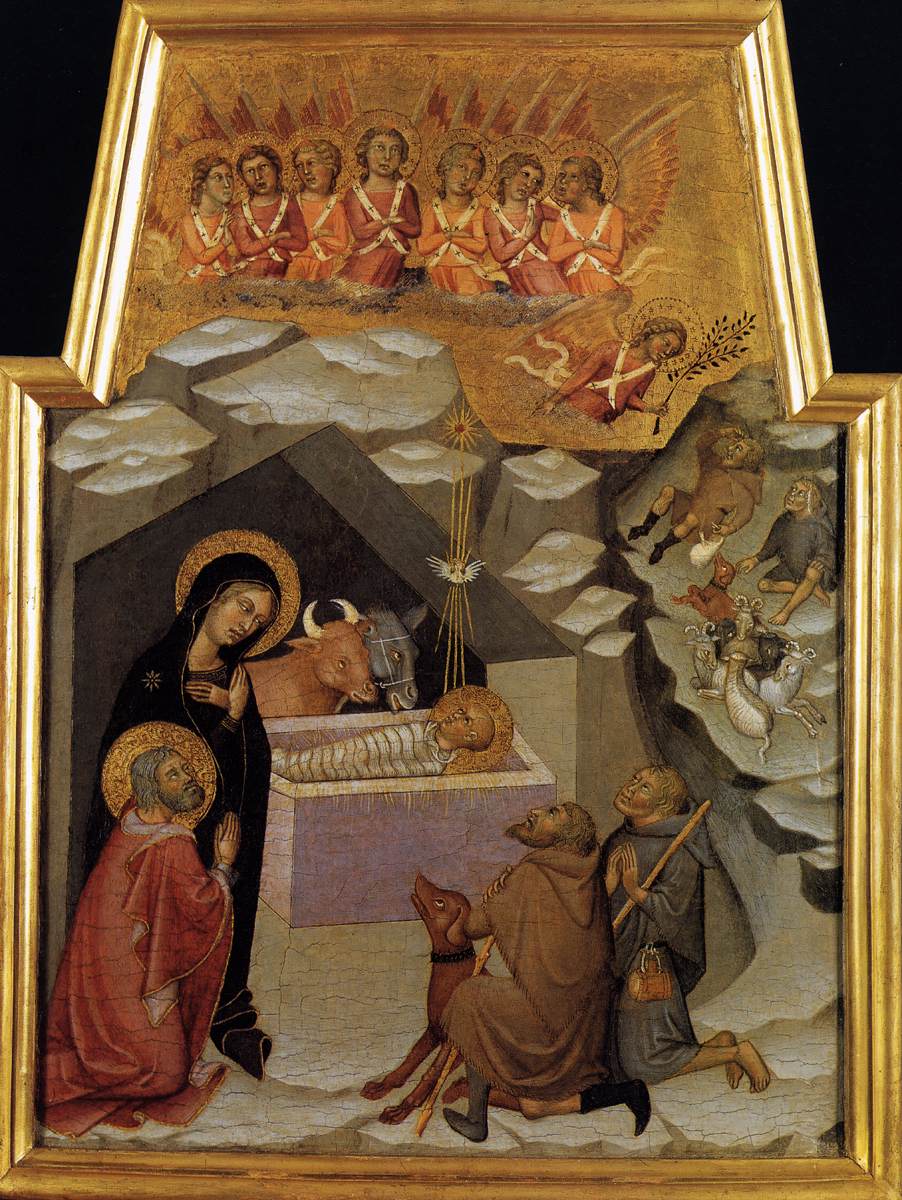
Let Your goodness Lord appear to us, that we,
made in your image, conform ourselves to it.
In our own strength
we cannot imitate Your majesty, power, and wonder
nor is it fitting for us to try.
But Your mercy reaches from the heavens
through the clouds to the earth below.
You have come to us as a small child,
but you have brought us the greatest of all gifts,
the gift of eternal love
Caress us with Your tiny hands,
embrace us with Your tiny arms
and pierce our hearts with Your soft, sweet cries.

a Christmas Prayer attributed to Saint Bernard

St Peter Canisius

“At length, it was as if you [Lord] opened to me the heart in your most sacred body: I seemed to see it directly before my eyes. You told me to drink from this fountain, inviting me, that is, to draw the waters of my salvation from your wellsprings, my Savior. I was most eager that streams of faith, hope and love should flow into me from that source. I was thirsting for poverty, chastity, obedience. I asked to be made wholly clean by you, to be clothed by you, to be made resplendent by you.”

St Peter Canisius, pray for us.

Rosary Priest moves ahead in sainthood study

On 18 December 2017, the Holy Father received Cardinal Angelo Amato, S.D.B., Prefect of the Congregation for the Causes of Saints, and among the decrees issued was this one on the cause for canonization of Father Patrick Peyton. The notice reads:

The heroic virtue of the Servant of God Patrick Peyton, a priest of the Congregation of Holy Cross. He was born January 9, 1909 in Carracastle (Ireland) and died in San Pedro, California, on June 3, 1992.

The Venerable Servant of God Father Patrick Peyton was founder of the Holy Cross Family Ministries, dedicated his life to serving God by bringing a message of hope to families around the world and encouraging family prayer of the rosary.

Blessed be God

Our Lady of the Expectation, Lady of ‘O’

Today is the feast of Our Lady of the Expectation. This Marian feast is sadly no longer on the universal liturgical calendar but it is retained in some places like Spain, Portugal, Italy and Poland plus with a few religious orders. Yet, “Our Lady of Expectation” educates all of us, especially the Christian family.

With Our Lady of the Expectation we have a view at Divine Motherhood which takes the opportunity to contemplate the great longing and anticipation of Advent, in which “all creation is groaning in labor pains” oriented toward the promise of the Messiah. Divine Motherhood puts our attention to the meaning of new life brought about by mothers who ought to find in Mary the great model: “Of all women you are the most blessed, and blessed is the fruit of your womb” (Luke 1:42).

The Church prays, “O God who wished that your Word would take the flesh from the womb of the Virgin as announced by the Angel and whom we confess to be the true Mother of God, may we be helped by her intercession.”

In Spain, the place where this feast day originated, (cf. the Tenth Council of Toledo, AD 656), this feast day is Nuestra Senora de la O: Our Lady of the O, the “O” coming from the expression of longing said in the office of the Mozarabic Liturgy. In the Latin Rite, today’s feast comes in the middle of the “O” Antiphons (where we get the words for the hymn Veni, Veni, Emmanuel — in English O Come, O Come Emmanuel).

Immaculate Conception of the Mother of God

The dogma of the Immaculate Conception has this as its sole significance: that no human being can set in motion salvation by their own powers alone, but that their Yes is wrapped around and supported by that divine love which comes first and before all else.

Joseph Ratzinger

May  Our Lady intercede for the United States of America!

Holy Mother of God, pray for us.

St Nicholas

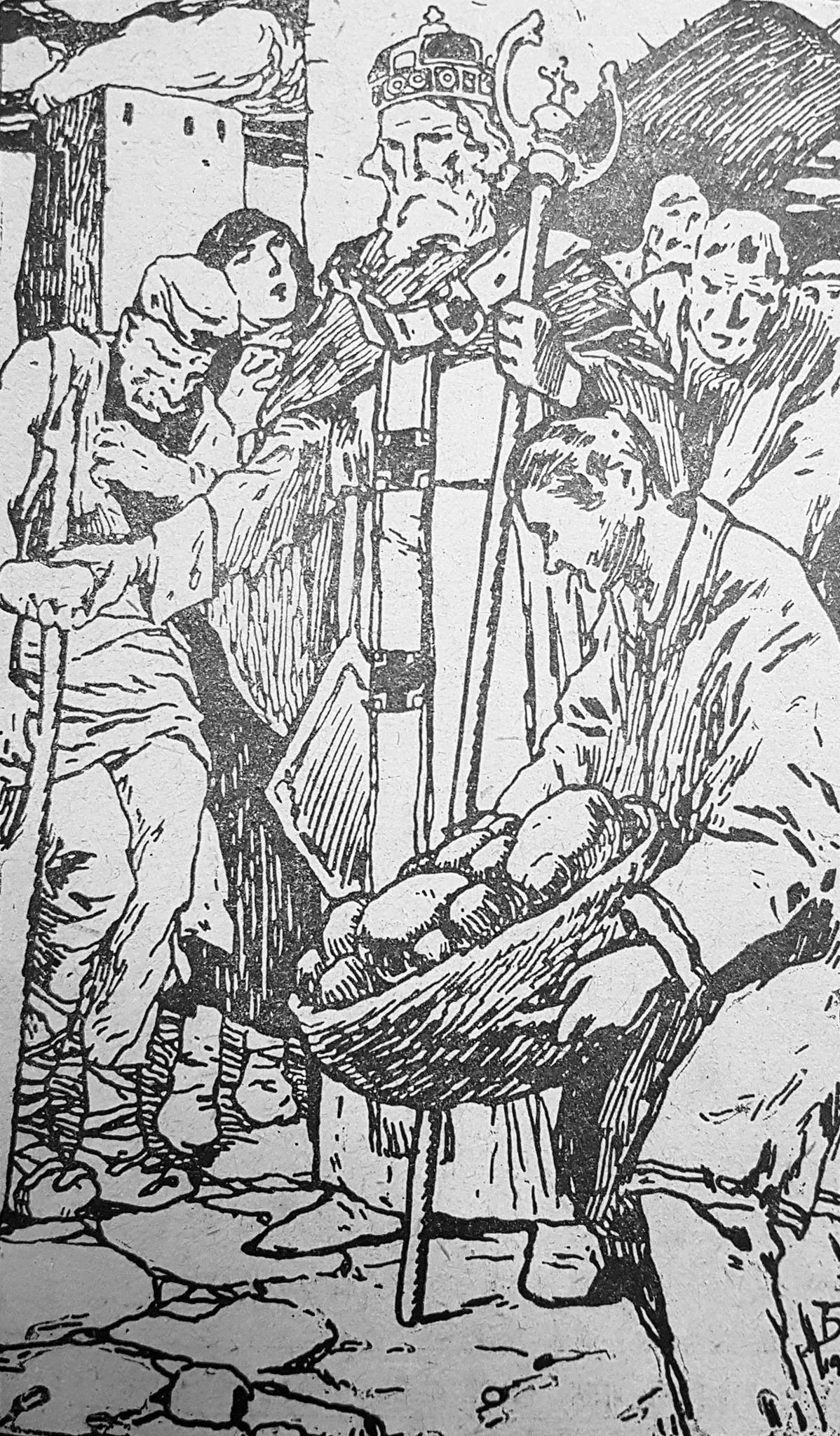
An illustration of St. Nicholas, the Wonderworker, Archbishop of Myra in Lycia whose feast we celebrate today.

St. Nicholas is the patron saint of the Ruthenian Greek Catholic Church in the United States, and protector of our children. Traditionally, before bed the prior night, children would leave their shoes out and upon waking on December 6th they would find them filled with treats left by the saint from the night before. This is a custom observed by many East Slavs throughout the world.

In the illustration St. Nicholas is depicted feeding the poor while wearing the vestments of a Byzantine bishop, notably the omophorion, epigonation, and mitre. The mitre which is topped by a cross, and resembling an imperial crown, was not worn by bishops until after the fall of Constantinople; however, this is how the saint is traditionally depicted in Byzantine iconography.

(Artwork by Yosyf Bokshai, 1922; h/t MW)

Advent is to proclaim salvation

Tonight, the Latin Church begins her preparation for the Nativity of the Lord. Pope Benedict said at one of his addresses at the Sunday Angelus:

… we have been experiencing the liturgical season of Advent: a time of openness to God’s future, a time of preparation for Christmas, when he, the Lord, who is the absolute novelty, came to dwell in the midst of this fallen humanity to renew it from within. In the Advent liturgy there resounds a message full of hope, which invites us to lift up our gaze to the ultimate horizon, but at the same time to recognize the signs of God-with-us in the present. The Lord wants to do in Advent: to speak to the heart of his people and, through them, to the whole of humanity, to proclaim salvation.


As a Benedictine Oblate, I have to myself:

How has my Oblation lifted my gaze to my ultimate horizon? That is, in what ways does my Oblate life lead me closer to my destiny with God? In what ways does my Oblate life open my heart to hear the Lord speaking to me and open my hands in putting my faith into action?

St Andrew

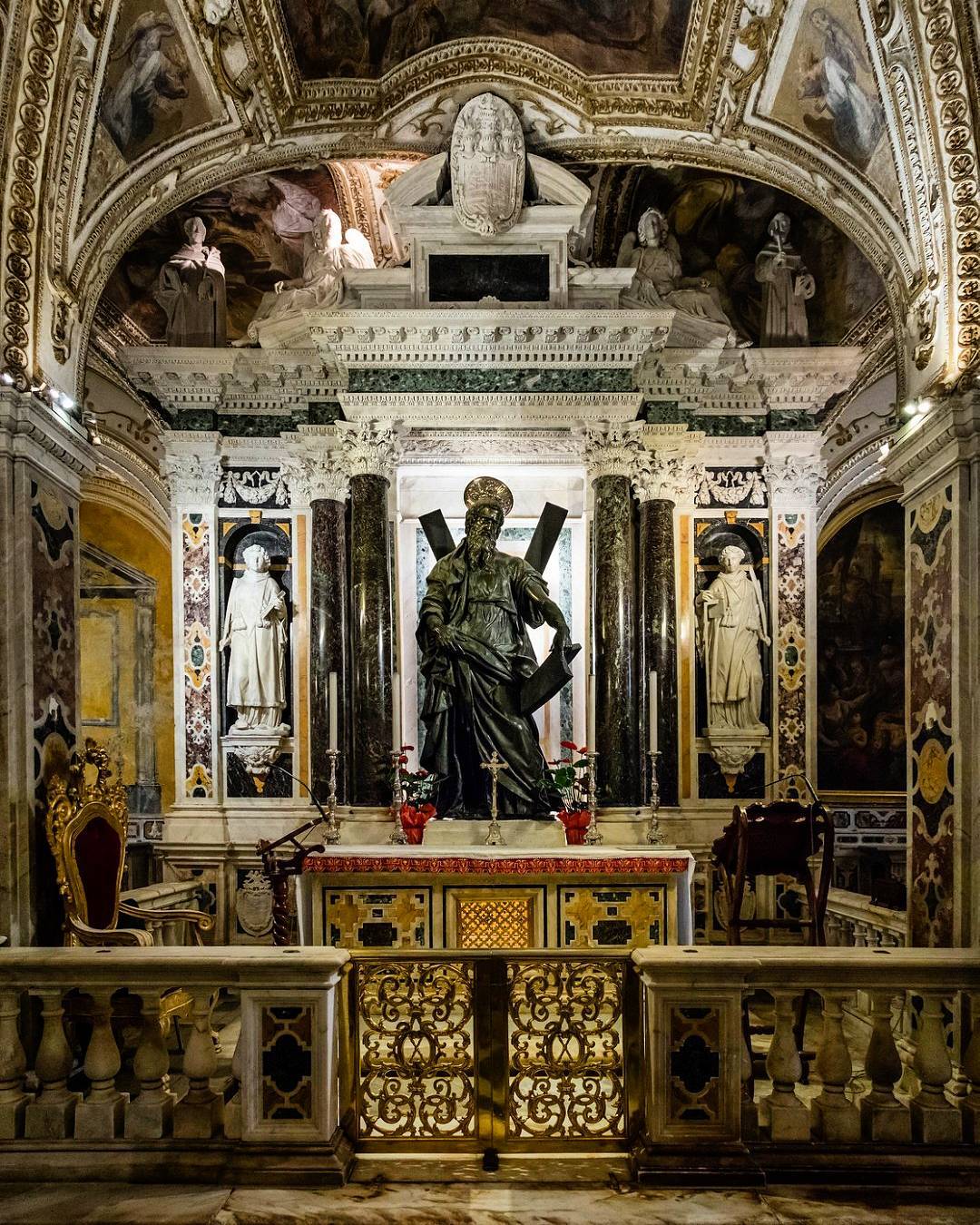
A later tradition … tells of Andrew’s death at Patras, where he too suffered the torture of crucifixion. At that supreme moment, however, like his brother Peter, he asked to be nailed to a cross different from the Cross of Jesus. In his case it was a diagonal or X-shaped cross, which has thus come to be known as “St Andrew’s cross”.

This is what the Apostle is claimed to have said on that occasion, according to an ancient story (which dates back to the beginning of the sixth century), entitled The Passion of Andrew:

“Hail, O Cross, inaugurated by the Body of Christ and adorned with his limbs as though they were precious pearls. Before the Lord mounted you, you inspired an earthly fear. Now, instead, endowed with heavenly love, you are accepted as a gift.

“Believers know of the great joy that you possess, and of the multitude of gifts you have prepared. I come to you, therefore, confident and joyful, so that you too may receive me exultant as a disciple of the One who was hung upon you…. O blessed Cross, clothed in the majesty and beauty of the Lord’s limbs!… Take me, carry me far from men, and restore me to my Teacher, so that, through you, the one who redeemed me by you, may receive me. Hail, O Cross; yes, hail indeed!”.

Here, as can be seen, is a very profound Christian spirituality. It does not view the Cross as an instrument of torture but rather as the incomparable means for perfect configuration to the Redeemer, to the grain of wheat that fell into the earth.

Here we have a very important lesson to learn:  our own crosses acquire value if we consider them and accept them as a part of the Cross of Christ, if a reflection of his light illuminates them.

It is by that Cross alone that our sufferings too are ennobled and acquire their true meaning.

The Apostle Andrew, therefore, teaches us to follow Jesus with promptness (cf. Mt 4: 20; Mk 1: 18), to speak enthusiastically about him to those we meet, and especially, to cultivate a relationship of true familiarity with him, acutely aware that in him alone can we find the ultimate meaning of our life and death.

Benedict XVI
Audience, June 14, 2006

Image: Fr. Kevin Kim’s