First priest ordained in the USA

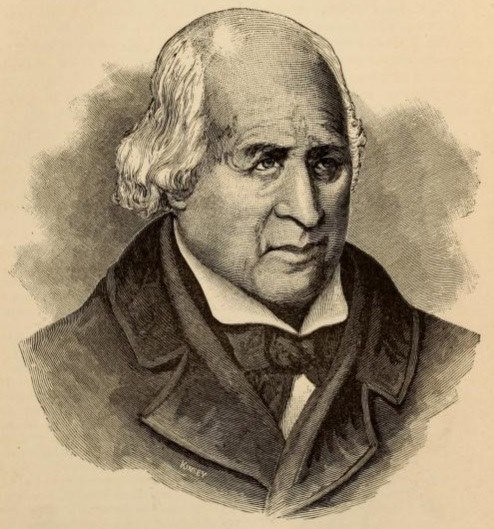
Fr. Stephen Theodore Badin, was the first priest to be ordained in the United States on this day in 1793. He fled his home in France to escape the persecutions of the French Revolution, ordained by Bishop John Carroll.

Father Badin was known as the “Apostle of Kentucky”.

These weeks we see many of the seminarians ordained priest. Let us pray for them and beg God to send more good men to serve the Church.

Peter Maurin’s anniversary of death

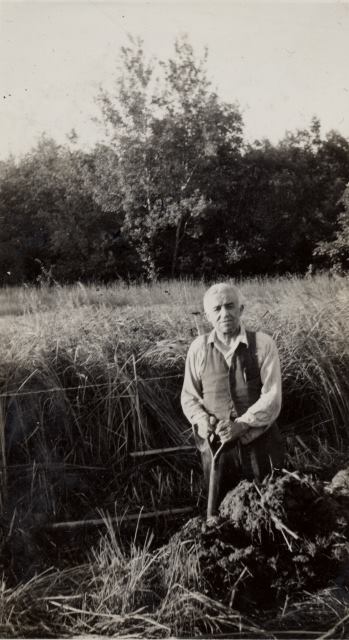
Today is the anniversary of Peter Maurin’s death. Dorothy credited Peter with being the real founder of the Catholic Worker, in fact, she insisted, that he was the real founder of the Catholic Worker Movement in 1933.

Peter Maurin (May 9, 1877 – May 15, 1949) was a theologian, former DeLaSalle Christian Brother and social activist. He had a devotion to St Francis of Assisi while Dorothy Day was devoted to  St Benedict.

Dorothy Day said, “He has shown us the way, with his poverty and his works of mercy, and that way is Christ.” “Without him I never would have been able to find a way of working that would have satisfied my conscience.”

The photo was taken by Mary Humphrey, Peter Maurin, St. Isidore’s Farm, Aitkin, MN, 1941.

May Magnificat

MAY MAGNIFICAT
Gerard Manley Hopkins

MAY is Mary’s month, and I
Muse at that and wonder why:
Her feasts follow reason,
Dated due to season—

Candlemas, Lady Day;
But the Lady Month, May,
Why fasten that upon her,
With a feasting in her honour?

Is it only its being brighter
Than the most are must delight her?
Is it opportunest
And flowers finds soonest?

Ask of her, the mighty mother:
Her reply puts this other
Question: What is Spring?—
Growth in every thing—

Flesh and fleece, fur and feather,
Grass and greenworld all together;
Star-eyed strawberry-breasted
Throstle above her nested

Cluster of bugle blue eggs thin
Forms and warms the life within;
And bird and blossom swell
In sod or sheath or shell.

All things rising, all things sizing
Mary sees, sympathising
With that world of good,
Nature’s motherhood.

Their magnifying of each its kind
With delight calls to mind
How she did in her stored
Magnify the Lord.

Well but there was more than this:
Spring’s universal bliss
Much, had much to say
To offering Mary May.

When drop-of-blood-and-foam-dapple
Bloom lights the orchard-apple
And thicket and thorp are merry
With silver-surfèd cherry

And azuring-over greybell makes
Wood banks and brakes wash wet like lakes
And magic cuckoocall
Caps, clears, and clinches all—

This ecstasy all through mothering earth
Tells Mary her mirth till Christ’s birth
To remember and exultation
In God who was her salvation.
St Richard Pampuri

Don Gius’ first recorded mention of St. Riccardo Pampuri: «But excuse me», he says, «devotion to the saints has a special meaning because they are contemporary: they remind us that the mystery of Christ is present to us. And the life of Saint Pampuri is impressive in its absolute simplicity, like that of a farmer, of a country doctor whom nobody knew, [or would know] but for the goodness with which he treated his patients. And then he went into the monastery, where he was not recognized for what he was, and died like that after three years. But this is the greatest miracle of these decades that I know of, because the miracle is the demonstrating of the power with which God “leads everybody by the nose”, doing great things without anyone’s involvement! So watch out about making fun of the names of the saints and be devoted to them instead. The first devotion must be to the saints contemporary with us. If the Church makes Riccardo Pampuri a saint now or makes Giuseppe Moscati a saint now it’s because, through them, it wants to teach what is important for the Church today»
A-Game Paolicelli – here’s the reference: http://www.30giorni.it/articoli_id_14250_l3.htm

St Benedict Joseph Labre

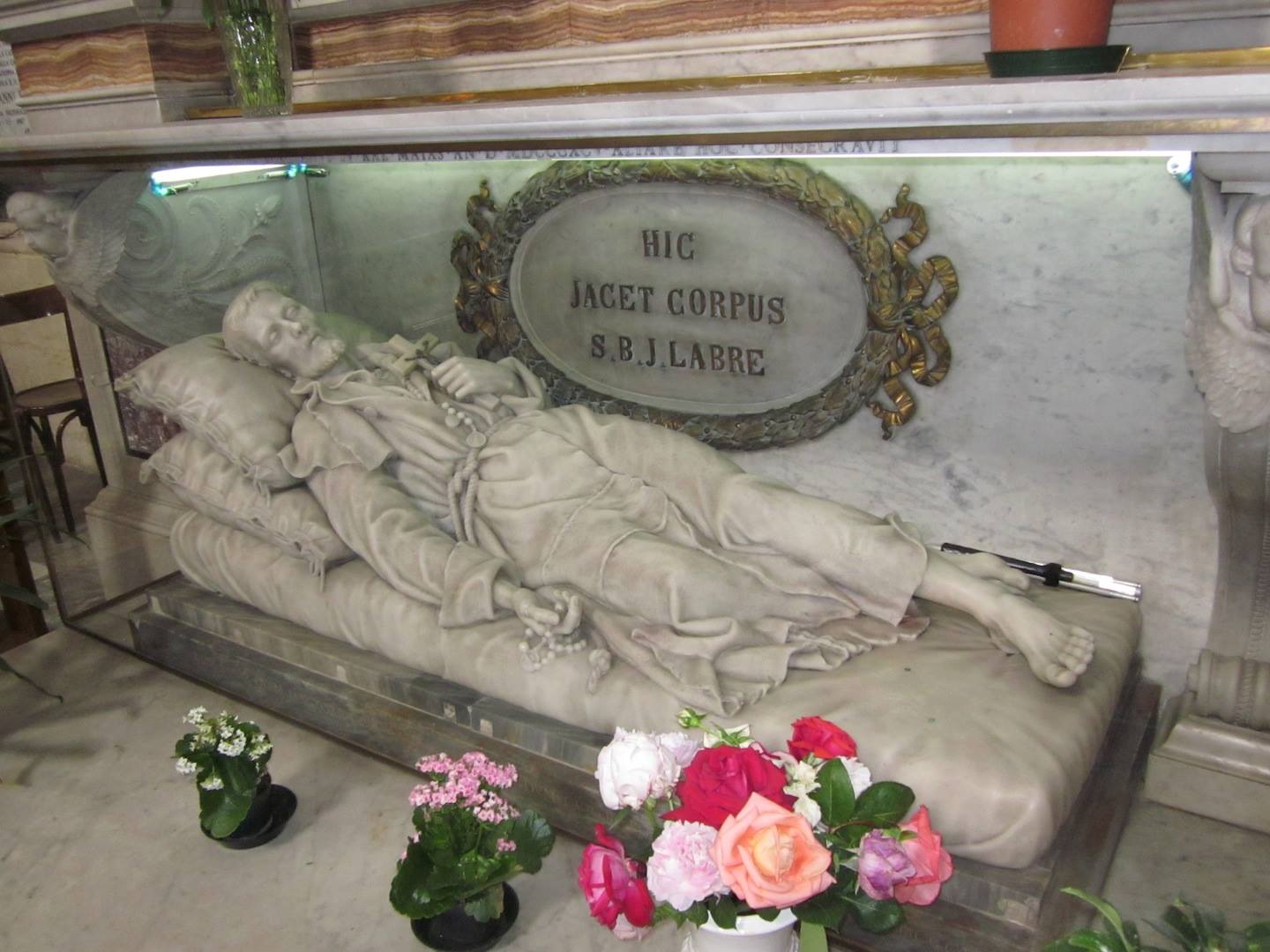
Today’s saint, Saint Benedict-Joseph Labre, was a homeless street person. His home, it is reported, used to be in a hole in the Colosseum. Probably a rarity, other street persons gave testimony for Labre’s canonization process.

For many, the Labre is a great witness to the Gospel and therefore frequently visit the Church near the Colosseum and the Angelicum, Santa Maria ai Monti, where he is entombed.

Saint Benedict-Joseph thought his vocation was to the contemplative life and therefore tried to join the Trappists, the Common Observance Cistercians, and the Carthusians; but was denied profession of vows. In many ways his cloister was the world. Wandering Europe, especially Rome, in complete poverty, spending his days in perpetual adoration of the Blessed Sacrament. He begged in the streets, and if he was given more than he needed for the day, he would give the remainder to a person he considered more in need. Benedict-Joseph healed some of his fellow homeless, and was reported to have multiplied bread for them; he was also the spiritual director for many. Given to religious ecstacies when contemplating the crown of thorns; reputed to float, soar, and bilocate when in these swoons. He died in a hospice, exhausted from his life of austerity.

Father Marconi, Labre’s confessor and biographer, describes 136 miraculous cures attributed to him within three months of his death.

May Saint Benedict-Joseph Labre show us the face of Christ today.

On Benedictine Life

The BBC profiled 3 Benedictine monasteries in the Great Britain: Pluscarden Abbey (Scotland), Downside and Belmont Abbey. The video is modeled on the way the Carthusians were portrayed in the documentary “Into Great Silence” no interviews or telling of the narrative, just observing the daily routine and some insight into life of a Benedictine monk. Quirky, yes, but worth the view even if videos are long and a bit tedious at points.

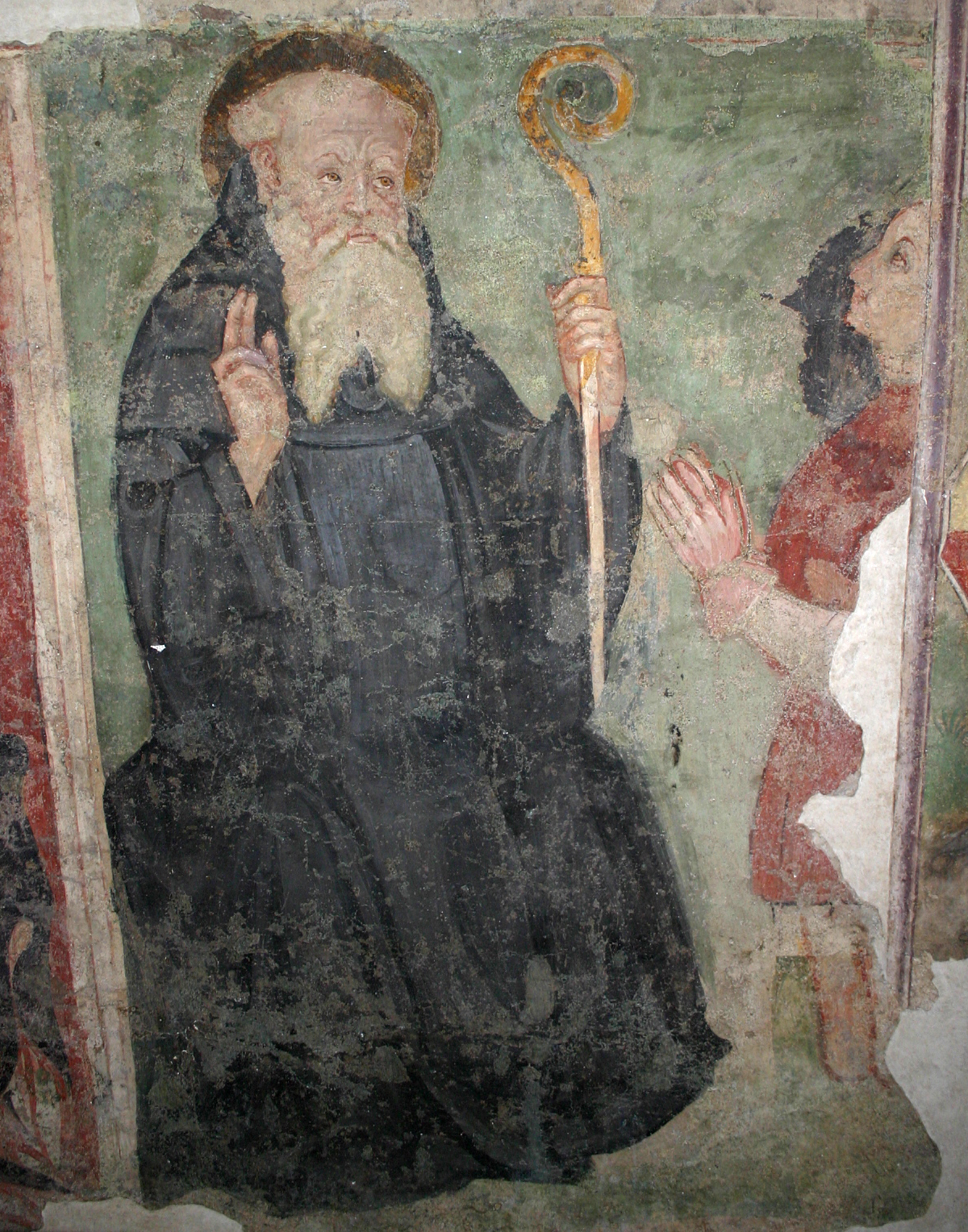
The whole point is to follow the Rule of Saint Benedict with as much faithfulness and reasonableness for today’s era.

The description of one of the three documentaries, in part reads,

Filmed with an eye to the beauty and peace of the ancient surroundings, the film has a painterly quality that creates a feeling of restfulness and quiet contemplation. And by focusing on the natural sounds of nature and the peace of the abbey we have created a meditative soundtrack that adds to this unique experience.

  1. Downside Abbey
  2. Pluscarden Abbey
  3. Belmont Abbey