Martyrdom of the Baptist

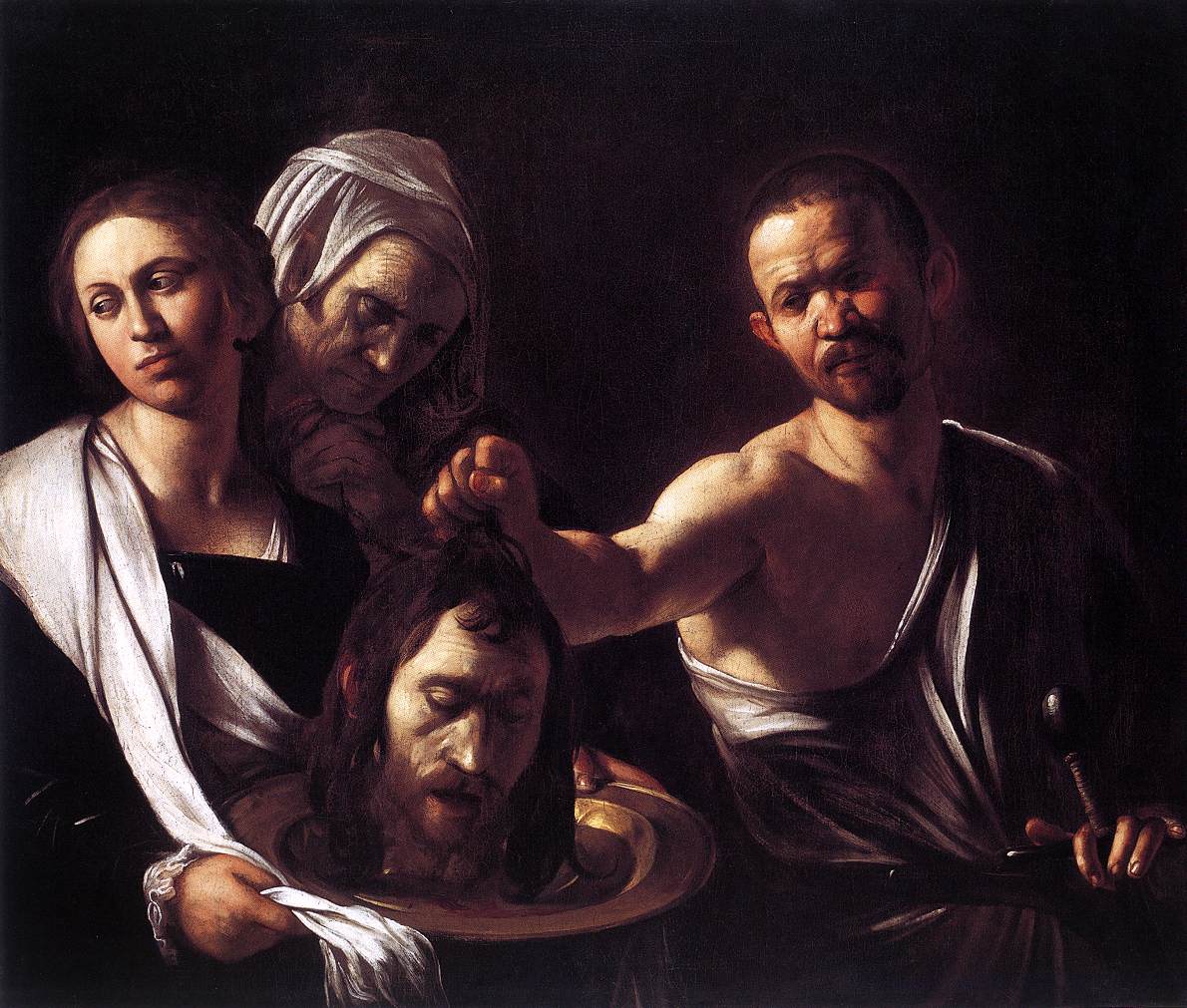
Today is the feast of the beheading of St. John the Forerunner and Baptist.

Sacred Scripture reveals that John the Baptist was a cousin of Our Lord whose mission was to preach repentance to Israel in preparation for the coming of the Messiah. The famous rebuke of King Herod for his unlawful marriage to Herodias, his brother’s wife, landed John in prison and on the wrong end of Herodias’ admiration. Concluding Salome’s dance for the King’s birthday he promised to give her whatever she asked for, even up to half his kingdom. Salome asked for the head of John the Baptist on a platter. Herod ordered the execution. We honor St. John the Baptist as the last and greatest of the Old Testament prophets.

The Kondakion (in the Byzantine Liturgy) reads:

The beheading of the forerunner was indeed a dreadful crime, somehow fitting into the plan of God, for John thereby became the herald of the savior’s visit to those in hades. As for you, Herodias, cry your eyes out, bewail your deed, for you preferred murder to the law of God, rejecting eternal, everlasting life, for a false and passing one.
Assumption of Mary

Who shall declare the Assumption of Mary? For the glory wherewith she is crowned in heaven is as singular as the grace she found upon earth was incomparable.

If eye has not seen nor ear heard, nor has it entered into the heart of man what things God has prepared for them that love Him (1 Cor.2:9) who can say or conceive what He has prepared for her that bore Him and that loves Him – which no one doubts – with a love unparalleled?

Oh, happy in truth is Mary and doubly happy in that she has both received the Savior and has been received by the Savior. In both these signal honors the dignity of the Virgin Mother appears to us equally admirable, in both the condescension of the Divine Majesty appears equally worthy of praise.

First Sermon for the Feast of the Assumption
St. Bernard of Clairvaux

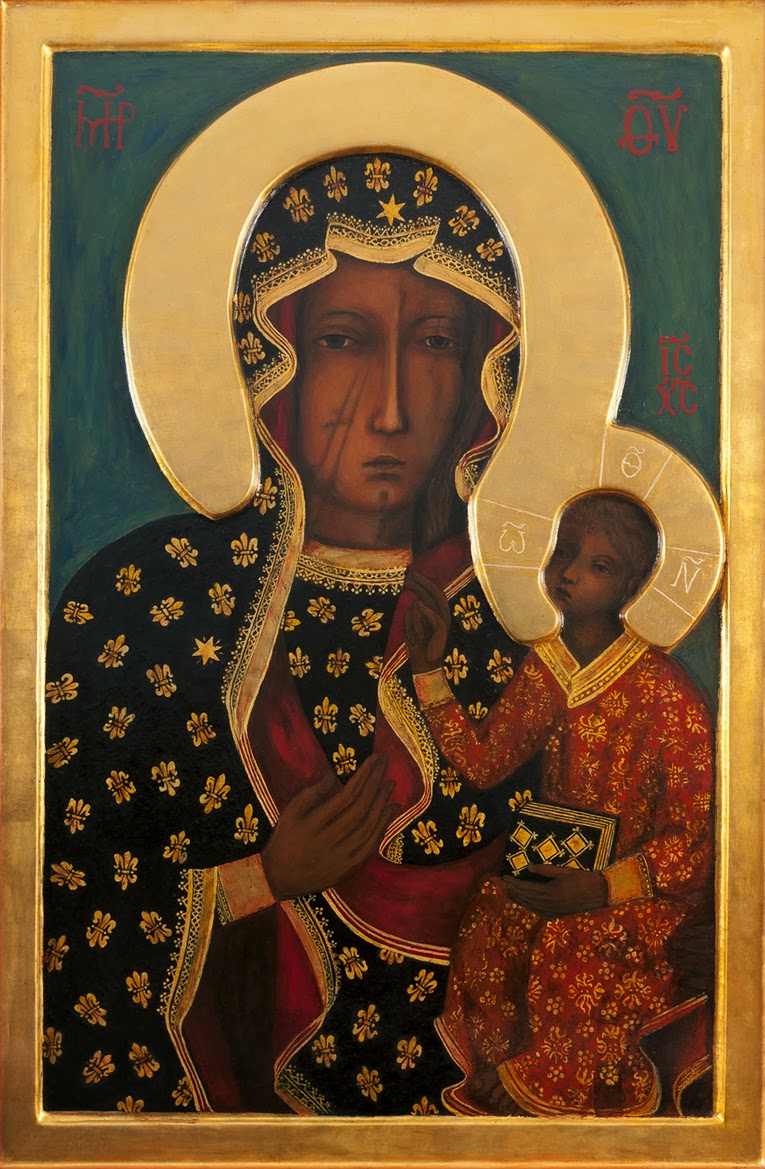
Our Lady of Częstochowa, not only the Queen of Poland

Today is not just another feast of Mary, the Mother of God. No, it is the feast of Our Lady of Czestochowa, Queen of the Slavs, Queen of the World.

Since I was a boy Our Lady of Czestochowa has been of keen importance to me. She even is the image on my iPhone.

Here is a beautiful article on this image of Our Lady by John Sikorski, a PhD student at my alma mater, the University of Notre Dame.

May we stay close the Mother of God.

Our Lady of Czestochowa, pray for us.

Restoring the Earth – Apostolic Farming

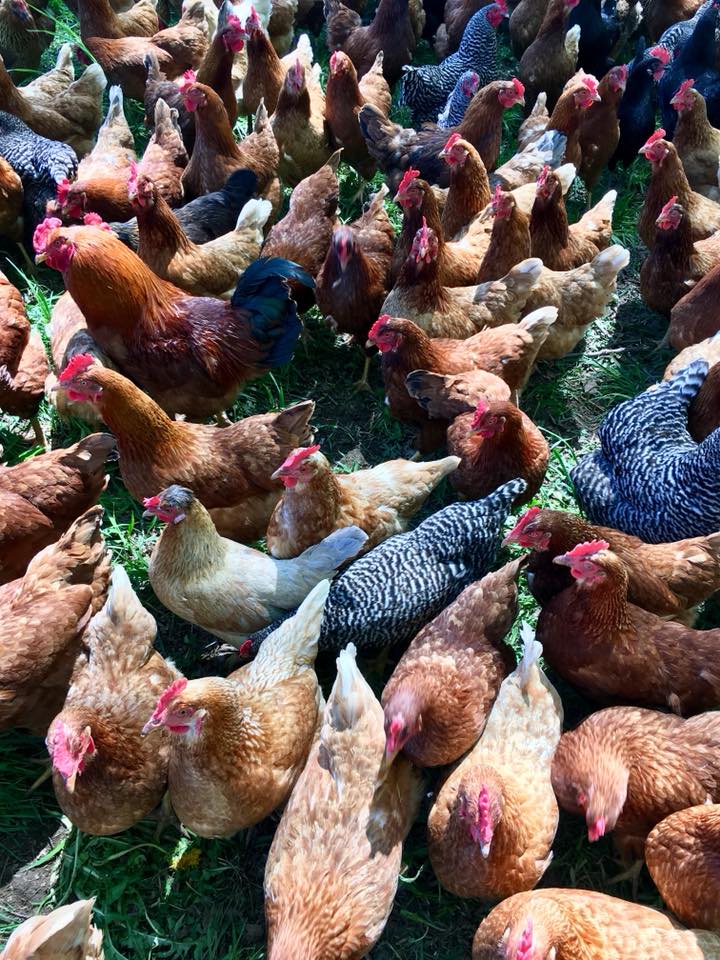
One of  my loves is agriculture. Not many would have guessed it. This love has its roots in several places: family, church and the love of food and good health. Catholics and Orthodox Christians have a very long interest in being good stewards of land and water, animals, fish, fowl and agriculture. How we treat these things indicates how we think about ourselves. Neglect and abuse of the land ends badly for everybody. One of the things that I have keenly learned is that too many of have become so disconnected from the land and unconcerned with the quality of our food, the dignity of hard work and the recognition of what we have is given to us as a gift from God.

Benedict XVI reminded us in Caritas in Veritate:

It is necessary, then, to point in a truly unified way to a new balance between agriculture, industry and services, so that development be sustainable, and no one go without bread and work, and so that air and water and the other primary resources be preserved as universal goods (No. 27).

We need to look at some thinking and experience of farming that only begins to put some things together to as to understand work of faith and ecology. Let me propose “Restoring the Earth” some guiding ideas  from Madonna House. We can also call it what Catherine Doherty called, Apostolic Farming.

Just as Pope John Paul gave us a superb theology of the body, we now need to connect that theology with a renewed and robust theology of creation. Many forget that we actually have a theology of creation! This proposal is one that needs to be echoed loudly that shows that farms and farmers incarnate in a particular way God in the world. And because of this fact, we need to be good stewards of the land because God gave us the land and natural resources. Farmers have a vocation  that really mirrors the Order of Deacon: a way to serve and feed others.

St Jane Frances de Chantal

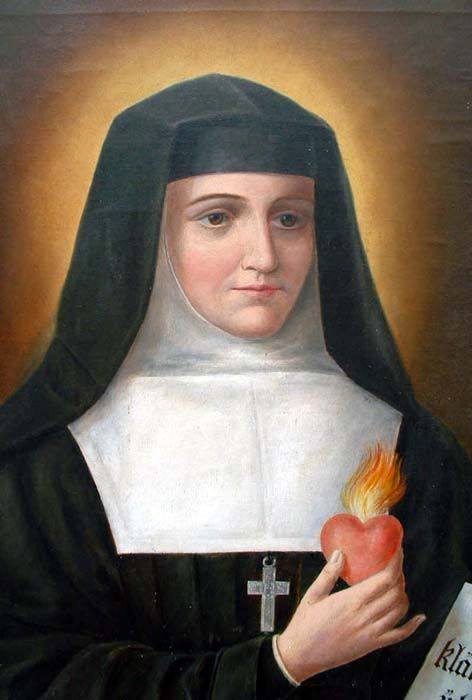
St. Jane Frances de Chantal (1572–1641) is honored today on the liturgical calendar. She was born in Dijon, France, and the daughter of the president of parliament.

By 21 she married a baron and had six children. Jane was a refined, cheerful, and beautiful woman, committed to Catholic faith, and widow after 7 years of marriage.  A daily Mass go-er she also gave alms to the poor, and was a good administrator.

At 32 she met St. Francis de Sales after a mystical vision while praying for a spiritual director. On love for Christ she made a private vow of chastity to which she added obedience to his direction, while continuing to provide for her children. By 45 all of her family obligations were met and with Bishop Francis de Sales founded a religious institute for women, the Order of the Visitation, giving witness to the virtues of the Virgin Mary at the time of the Visitation.

The Visitation sisters accepted women who were rejected from other religious orders due to age or illness, and were notable for their active charitable works. Jane’s counsel was sought by all people, high and low in society. She also traveled extensively to found new Visitation houses, leaving 86 at the time of her death, and 164 at the time of her canonization.

St Teresa Benedicta of the Cross

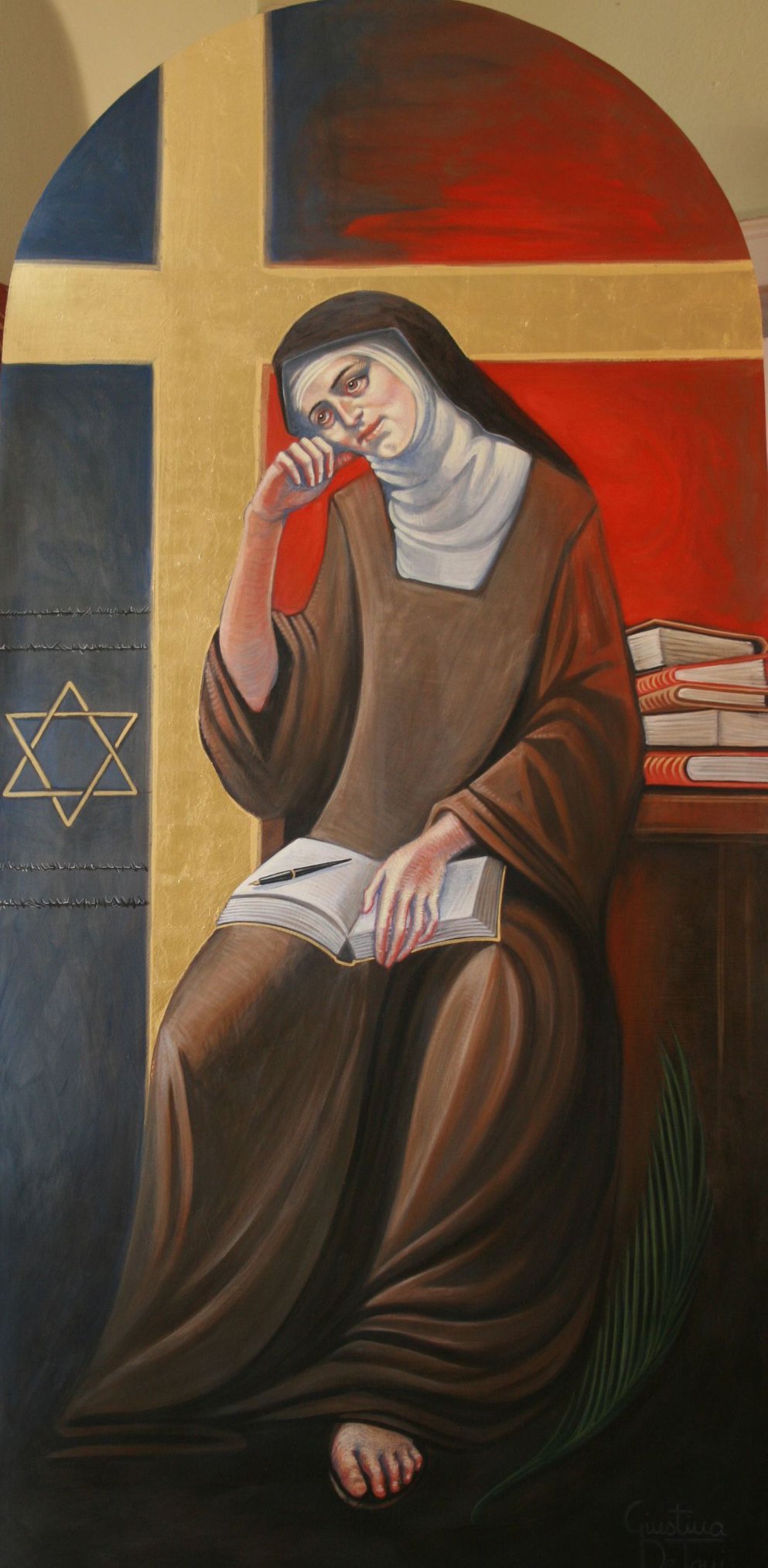
The Latin Church observes the liturgical memorial of St. Teresa Benedicta of the Cross, known in history and professionally as Edith Stein. A woman of great import for us today.

Stein was born a Jew and was killed at Auschwitz because she was a Jew.

She was a brilliant philosopher, studying phenomenology with Husserl. One of her academic accomplishments was making a translation into German John Henry Newman’s works, which the young Ratzinger brothers read at seminary after the war. After studies and a period of teaching and research, Stein became a Carmelite nun because she read the life of St. Teresa of Avila. Leaving Germany she fled with her sisters to the Netherlands.

St. Teresa Benedicta of the Cross died as a Christian Martyr because of retaliation against the Church in the Netherlands, which opposed Nazi racist attacks against Jews and other minorities. As one said, “She is a bridge between Jews and Christians and our faithful opposition to fascist racism then and now.”

Ora pro nobis, on this your feast, St. Teresa Benedicta of the Cross.

St Dominic

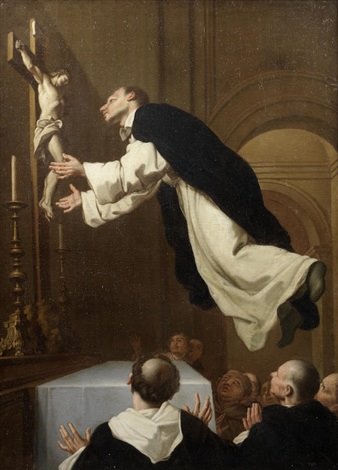
Far more impressive and splendid than all St Domini’s miracles, though, were the exceptional integrity of his character and the extraordinary energy of divine zeal which carried him along. Without  difficulty he found his way into people’s hearts as soon as they saw him. Everywhere, in word and deed, he showed himself to be a man of the gospel….  Everybody was enfolded in the wide embrace of charity, and since he loved everyone, everyone loved him. He made it his own business to rejoice with those who were rejoicing and to weep with those who wept. He was full of affection and gave himself utterly to caring for his neighbors and to showing sympathy for the unfortunate.

The Libellus
Blessed Jordan of Saxony

St Ignatius of Loyola

Today is the liturgical memorial of one of the most influential saints of the 16th century, Saint Ignatius of Loyola. His clarity of thought, his discernment of Spirits and determination to serve the Lord in everything is what set the world on fire with a new charism.

Our moment-to-moment task is to keep the Divine Name on our lips “His Name is like fire burning in my heart” (see Jeremiah 20:8), we ought to do everything to serve and love. By no other name are saved but Jesus’.

The Spiritual Exercises are a great gift to the Church; his rules of discernment, contemplation on Divine Love, and thinking with the Church are key to the spiritual life.

In the 16the century Loyola wanted to serve the Lord in model of Saint Dominic and Saint Francis; what ended up happening was a renewal in the manner by which the Church is apostolic — and he (and his spiritual sons had great success until the 1960s. Today, mentioning the word Jesuit is to say “I follow a left-leaning agenda.” One can think of various theologians, philosophers, writers and pastoral ministers who are ordained and professed members of the Society of Jesus. The disasters in ministry, hence, orchestrated by the Jesuits has been scandalous.

We need Loyola and the true beauty of the Society of Jesus; we need real men; we need men who will sacrifice themselves for the greater glory of God; we need Jesuits who will preach the received Gospel and to administer the sacraments according the to mind and heart of the Church. What we don’t need is the faithless Jesuits who do not think with the Church and follow closely what their sainted founder (and the patrimony of saints and blesseds) set out to do for Christ Jesus and His Church.

Saint Ignatius Loyola, pray for us!

Theodore McCormick resigns College of Cardinals

From the Holy See today:

Yesterday evening the Holy Father received the letter in which Cardinal Theodore McCarrick, Archbishop Emeritus of Washington (U.S.A.), presented his resignation as a member of the College of Cardinals.

Pope Francis accepted his resignation from the cardinalate and has ordered his suspension from the exercise of any public ministry, together with the obligation to remain in a house yet to be indicated to him, for a life of prayer and penance until the accusations made against him are examined in a regular canonical trial.