Almighty and merciful God, you filled the hearts of the
peoples of the Orient with the knowledge of your only-begotten Son through the
preaching of your holy martyrs, Ignatius, Francis, Alphonsus and their
companions. Through their prayers may you now confirm those same peoples in the
faith.
Author: Paul Zalonski
2 bishops reviewed: Cardinal O’Malley & Archbishop Burke get the once-over in Time Magazine
Not sure there is much of a story here, but Amy Sullivan of Time magazine tries to make some kind of evaluation of style of two churchmen, Cardinal Sean O’Malley (of Boston) and Archbishop Raymond Burke (of the Holy See & formerly of St Louis). Judge for yourself…
Blessed Simon Ballachi
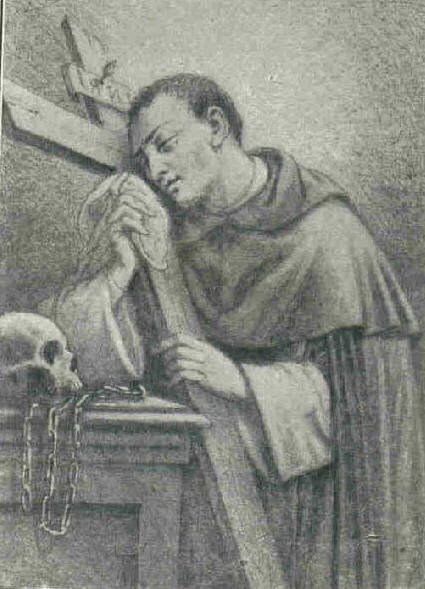
O God, you called Blessed Simon from a concern for worldly things and gave him the gifts of prayer and humility. By following his example may we learn to seek you alone here on earth and obtain the rewards promised to the humble.
Blessed Simon, a Dominican lay brother, comes from a distinguished family who gave themselves to ecclesial and civil service. While relatively uneducated in Letters, he received good training in military discipline. In a real way he was a soldier for Christ. Simon entered the Order of Preachers at the age of 27 and is reported to have lived an exemplary life as a Dominican. His biographers bring to light Brother Simon’s work as a convent gardener, thus bringing natural beauty and good food to the table. The biographer wrote, “He labored with his own hands, and strove to bring each flower and plant to perfection according to its kind.”
Brother Simon is also known to have had enjoyed the beauty of mystical union with the Lord, His Mother, St Dominic, St Peter Martyr and the angels. He also endured the annoyance of Satan. Grace triumphed. In his last days Brother Simon bore the burden of blindness, as did the Prophet Tobias.
The Lord called Brother Simon to himself on November 3, 1319. In 1817 Pope Pius VII named Brother Simon a “Blessed” of the Church.
May we follow the example of Blessed Simon who closely followed the Lord in prayer and work.
Honoring the dead, the companionship of saints–the Catholic way
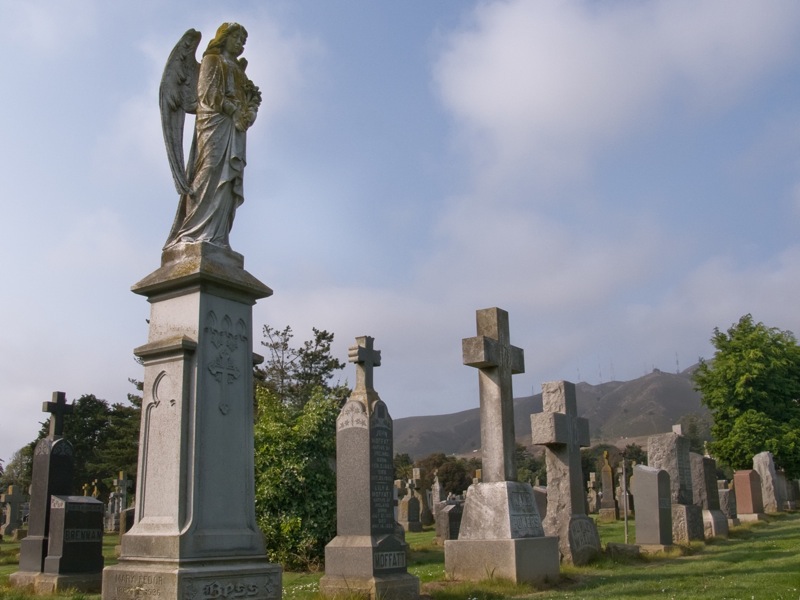
… while we visit cemeteries, let us remember that there, in
the tombs, only the mortal remains of our loved ones rest, while awaiting the
final resurrection. Their souls — as Scripture says — already “are in
the hand of God” (Wisdom 3:1). Hence, the most appropriate and effective
way to honor them is to pray for them, offering acts of faith, hope and
charity. In union with the Eucharistic sacrifice, we can intercede for their
eternal salvation, and experience the most profound communion while awaiting to
be reunited again, to enjoy forever the love that created us and redeemed us.
… how beautiful and consoling is the communion of saints! It is a
reality that infuses a different dimension to our whole life. We are never
alone! We form part of a spiritual “company” in which profound
solidarity reigns: the good of each one is for the benefit of all and, vice
versa, the common happiness is radiated in each one. It is a mystery that, in a
certain measure, we can already experience in this world, in the family, in
friendship, especially in the spiritual community of the Church. May Mary Most
Holy help us to walk swiftly on the way of sanctity and show herself a Mother
of mercy for the souls of the deceased. (Pope Benedict XVI, Angelus Address, November 2, 2009)
O loving and sustaining Lord: in honor of Saint Charles Borromeo
 1. O loving and sustaining Lord,
A joyful song your people raise
On this, our patron’s festive day
And sing your love in thankful praise.
2. A bishop faithful to your word,
A pastor loving to the sheep,
Charles preached the Gospel truth to all,
And strove th’Apostles’ faith to keep.
3. A lover of the Cath’lic faith,
He worked to build within his see
A knowledge and a love of God
That all in Christ be fully free.
4. His tireless striving for the poor
Was modeled on the Christ, his Lord;
He taught the doubter and the lost
And brought the beggar to his board.
5. All glory, Lord, to you we sing,
And thanks for Charles your bishop bring,
As we the Father now adore
And Holy Spirit, evermore.
J. Michael Thompson
Copyright © 2009, World Library Publications
LM
PUER NOBIS, WINCHESTER NEW
The Sacred Heart Tee Shirt at Old Navy

It is unlikely that the designers at Old Navy knew that their design for this tee shirt had theological implications. But it is a good looking design.
May be this is part of the Divine design!
I may just go out get a few shirts! You?
Saint Charles Borromeo
 The Lord led the just in right paths. And showed him the kingdom of God.
We beseech Thee, O Lord, keep Thy Church under the continual protection of Saint Charles Thy Confessor and Bishop; and as his pastoral care made him glorious, so may we through his intercession ever grow in fervor of love for Thee.
On Saint Charles…
I want to keep in our intentions the seminarians of St Joseph’s Seminary (Dunwoodie), the all faithful of the Archdiocese of Milan and the Missionary Fraternity of Saint Charles Borromeo and the Franciscan Order, since Saint Charles was a protector of the Order.
Prayer to Saint Vincent de Paul
 O glorious Saint Vincent
de Paul, the mention of your name suggests a litany of your virtues: humility,
zeal, mercy, and self-sacrifice. It also recalls your many foundations:
Works of Charity, Congregations, and Societies.
Inspire all charitable workers,
especially those who minister to both the spiritually and the materially poor. Ask
the Lord to grant us the grace to relinquish the temptation of material things
in our daily effort to minister to the poor. Amen.
especially those who minister to both the spiritually and the materially poor. Ask
the Lord to grant us the grace to relinquish the temptation of material things
in our daily effort to minister to the poor. Amen.
Thinking about the natural in the face of the supernatural
H2O News has a news article on a meeting in Rome with Dr. Robert Moynihan, editor of Inside the Vatican, where he made a presentation looking at how world of the senses articulates the world of the supernatural by drawing our attention more deeply into the Incarnation. Dr Moynihan says a few good things on the video clip.
Blessed Rupert Mayer

O God, You made Your priest Blessed Rupert a steadfast confessor of the
faith and a servant of the poor. Through his intercession, raise up in Your
Church fearless heralds of the Gospel and give us all a heart open to the needs
of others.
More on the life of Blessed Rupert